

Derzeit sind keine Veranstaltungen geplant.
Katar: Ein aufstrebender Akteur in der internationalen Diplomatie und Konfliktmediation
Dialogprogramm für Prof. Dr. Norbert Lammert und Dr. Gerhard Wahlers
Vom 5. bis 7. Mai organisiert das Regionalprogramm Golf-Staaten der Konrad-Adenauer-Stiftung (KAS) ein Dialogprogramm für Prof. Dr. Norbert Lammert und Dr. Gerhard Wahlers in Doha, Katar. Die Delegation wird hochrangige katarische Regierungsvertreter treffen, um regionale Entwicklungen, Konfliktmediation und Möglichkeiten für eine vertiefte deutsch-katarische Zusammenarbeit in den Bereichen Energie, Sicherheit und Diplomatie zu besprechen. Das Programm wird zudem einen Austausch mit Vertretern bedeutender kultureller und akademischer Einrichtungen in Katar ermöglichen.
Saudi-Arabien und die VAE als wirtschaftliche und politische Schlüsselakteure im Nahen Osten
Dialogprogramm für vier Mitglieder des Deutschen Bundestages
Vom 21. bis 26. April 2025 organisiert das Regionalprogramm Golf-Staaten der Konrad‑Adenauer‑Stiftung (KAS) einen Delegationsbesuch nach Riad, Abu Dhabi und Dubai für vier Mitglieder der neu gewählten CDU/CSU‑Bundestagsfraktion: MdB Tilman Kuban, MdB Jan Metzler, MdB Johannes Volkmann und MdB Vanessa‑Kim Zobel. Das Dialogprogramm zielt darauf ab, diesen Vertreterinnen und Vertretern der stärksten Partei der bevorstehenden Regierungskoalition in Deutschland Einblicke aus erster Hand in die ambitionierten innenwirtschaftlichen Transformationsagenden Saudi‑Arabiens und der Vereinigten Arabischen Emirate (VAE) zu vermitteln. Darüber hinaus soll der Besuch Erkenntnisse über die politische Positionierung dieser Länder in einer sich rasch wandelnden Region liefern. Der hochrangige Besuch eröffnet somit Möglichkeiten für eine vertiefte Zusammenarbeit zwischen der Bundesrepublik Deutschland und diesen beiden Golf-Staaten.
Transformative Diplomatic Strategies for Contemporary Geopolitical Challenges
Panel Discussion at the Doha Forum
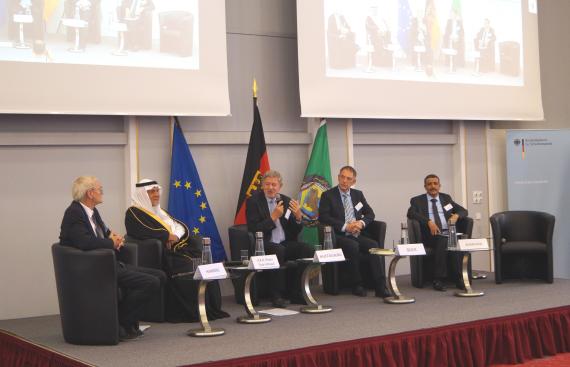
Today’s geopolitical challenges require new thinking and diplomatic approaches such as flexible and inclusive strategies, leveraging advanced technologies, and applying creative solutions. Unlike traditional diplomacy, which often relies on formal protocols, bilateral negotiations, and the promotion of specific ideologies, innovative approaches to diplomacy transcend traditional Western and non-Western divides. It embraces diverse actors, digital platforms, and collaborative initiatives to foster dialogue, build consensus, and achieve shared goals. Through virtual summits, digital platforms, and citizen engagement, it promotes transparency, inclusivity, and participatory global governance. This empowers non-state actors, facilitates rapid communication and information sharing, and enables a more agile response to crises, including humanitarian emergencies, peacebuilding efforts, climate change, global health threats, and economic development. This panel in partnership with the Center for International Policy Research (CIPR) and The Institute for International Political Studies (ISPI) will illuminate different innovative diplomatic practices, examining the foreign policies of Qatar, Germany, Italy, and UAE.
The Future of Labour and Migration in Saudi Arabia and the Gulf
Highly Skilled Migration to the Gulf
Dezentralisierung, wirtschaftliche Diversifizierung und Schaffung von Arbeitsplätzen im Oman
Forum zu Dezentralisierungsreformen im Rahmen der „Oman Vision 2040“
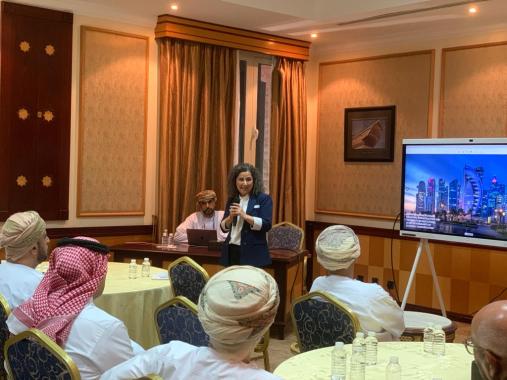
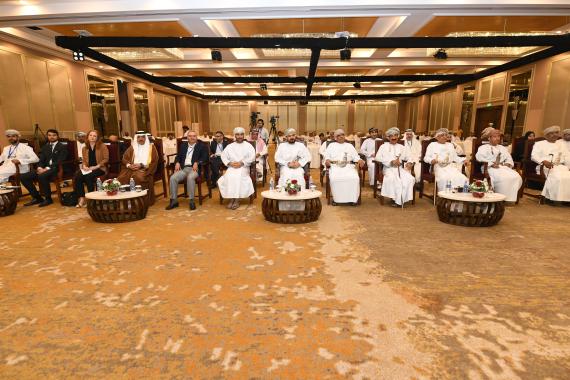
In cooperation with the Oman Chamber of Commerce and Industry and Smart Investment Gateway, the KAS Regional Programme Gulf States is organising a workshop on 26 November 2024 in Muscat, Oman to discuss the country’s decentralisation reforms, which form a pillar of the Sultanate’s ambitious Vision 2040 agenda. Titled “Decentralisation and its Role in Economic Diversification and Employment Generation in the Omani Governorates,” the workshop will feature inputs from German experts in the fields of economics and political science, who will present on the historical development of Germany’s federal system of government, along with challenges that the Federal Republic faces today with respect to spurring regional economic transformation and development. From the Omani side, presentations from His Highness Dr Adham Turki Al Said and Shaikh Saeed bin Rashid Al Qutbi will focus on the strategic importance of decentralisation to Oman’s Vision 2040 and the relationship between decentralisation and regional economic development in Oman. The workshop will be held under the patronage of His Highness Qais Mohammed Al Yousef, Oman’s Minister of Commerce, Industry, and Investment Promotion.
Gulf Asia Cooperation: Prospects, Challenges and Implications for Europe
Publication Roll-out
The past decade has witnessed a significant strengthening of ties between the Gulf Cooperation Council (GCC) and key Asian countries. This burgeoning relationship spans multiple dimensions - economic, political, and cultural - rooted in mutual interests and strategic priorities. Concurrently, Europe has also cultivated deeper relations with Asia. The European Union (EU) maintains comprehensive partnerships with major Asian powers, particularly South Korea, India, and Japan. These relationships have taken on renewed significance in light of recent global developments: the Russian invasion of Ukraine, Europe's resulting energy crisis, the ongoing transformation of the global order, and escalating United States-China tensions. These factors have underscored the critical importance of enhanced EU-Asia collaboration, especially within the GCC region. This discussion brings together experts who have examined these complex relationships through various lenses. Their analysis addresses several crucial questions: · How have Gulf-Asia relations evolved, and what implications does this hold for European engagement in the region? · What opportunities and challenges does strengthening Gulf-Asia cooperation present for Europe's vision of open strategic autonomy and initiatives like the EU's Global Gateway? · How can Europe effectively leverage and contribute to Gulf states' third-party partnerships? · Given their strategic geographic position, how can Gulf states facilitate Asian connectivity projects while ensuring European interests are served? · Do the GCC's relationships with Asia and Europe operate as complementary or substitutionary forces, and what are the implications for future regional cooperation and global strategic partnerships?
Ausbau erneuerbarer Energien und sauberer Technologien in Saudi‑Arabien
Chancen und Herausforderungen
Together with the Hydrogen Diplomacy (H2Diplo) Office in Saudi Arabia, the Konrad-Adenauer-Stiftung (KAS)'s Regional Programme Gulf States will organise the second meeting of its Fireside Chats on Energy, Climate, and Sustainability series in Jeddah, Saudi Arabia. Featuring inputs from leading Saudi academics and practitioners in the field of energy and climate research, this fireside chat will provide a space to discuss the opportunities and challenges characterising the Kingdom's efforts to expand the proportion of renewables in its domestic energy mix and decarbonise its industries. The fireside chat will take place under the Chatham House Rule. Please note that this is a closed event.