








Asset Publisher

Monitor

Publications

Adobe Stock / bluedesign

Increased interest in Europe

Results from representative surveys on European political attitudes after the European elections

The study analyses how the Germans' attitudes towards the European Union have changed. How has trust in the EU developed? To what extent is the EU associated with peace, security, prosperity and strength in the world? Which voting motives were particularly important for the decision to vote for a specific party in the European elections and do the voting motives differ compared to the last Bundestag elections? The results of the study confirm the positive attitude of Germans towards the European Union that previous studies by the Konrad Adenauer Foundation have already shown.

Adobe Stock / Huy Nguyen

The Economic Race in Southeast Asia – and why Europe is falling behind

How Europe can compete with China, Japan, and the United States?

In rapidly emerging Southeast Asia, global economic powers are vying for influence. While China, the United States, and Japan have strategically repositioned themselves in the region, Europe risks falling behind. What unites these three nations is their use of various models of cooperation between government and business as part of a comprehensive strategy to support their companies' market entry into Southeast Asia. Europe should learn from the strategic adjustments of its competitors and align its political measures more closely with the interests of European businesses in the region.

Adobe Stock / sebastien montier

Concerns and fears of the electorate – Results from representative surveys

What Germans are afraid of – On feelings of threat among the German population

Representative results on feelings of threat show how deeply certain crises affect society. Developments over time provide information on whether fears and concerns have increased and which threats are perceived as permanent. Has the Russian war of aggression had a lasting effect on Germans' sense of security? How great is the fear of the effects of climate change? And how have the feelings of threat among party supporters developed since the last federal election in 2021?

Adobe Stock / DarwelShots

The Future of NATO in the Aftermath of the U.S. Elections

More European responsibility for transatlantic relations

The outcome of the November 5 election will have a major impact on NATO’s future - and by extension, the fate of the most successful defense alliance of all time. It is evident that the geopolitical priorities of the USA will continue to pivot towards the Indo-Pacific region in the coming years, despite the ongoing armed conflict in Europe. This shift underscores the urgent need for decision-makers in Germany and other European NATO countries to strengthen their defense policies and take greater responsibility for regional security.

IMAGO / Schöning

Analysis of the parliamentary election in Brandenburg on September 22, 2024

Report on the final result, the main voting determinants, voter migration and social structure

In the Brandenburg state election the SPD gains slightly more votes than the AfD. Prime minister Dietmar Woidke declared to continue office only if his social democratic party SPD gains more votes than the AfD. This resulted in a highly polarizied election campaign. SPD and AfD profited substantially while all other parties suffered.

adobe stock / Simone

Analysis of the parliamentary election in Saxony on 1 September 2024

Report on the final result, the main voting determinants, voter migration and social structure.

The CDU becomes the strongest party in Saxony once again. The election analysis explains the result in comparison to the pre-election, voter migration and the main reasons for the election result. Based on the election day polls and surveys in the run-up to the election, the significance of the assessments of the leading candidates, party competences and the assessment of the government's performance for the election result are explained.

IMAGO / Ardan Fuessmann

Analysis of the parliamentary election in Thuringia on 1 September 2024

Report on the final result, the main voting determinants, voter migration and social structure

The AfD becomes the strongest party in a state election for the first time. The election analysis explains the result in comparison to the pre-election, voter migration and the main reasons for the election result. Based on the election day polls and surveys in the run-up to the election, the significance of the assessments of the leading candidates, party competences and the assessment of the government's performance for the election result are explained.

Adobe Stock/Pavel Losevsky

Russia's War Economy – an Assessment of Russia´s Military Industrial Complex

A Long-Term Plan

Since the beginning of the brutal Russian war of aggression against Ukraine, analyzes have been carried out about the strength and endurance of the Russian military. Considering the importance of the military-industrial complex (MIC) during the Soviet era and its place in Putin's Russia leaves no doubt about the Kremlin's determination. There is no price we wouldn't pay for victory, is the message.

Adobe Stock / Diki

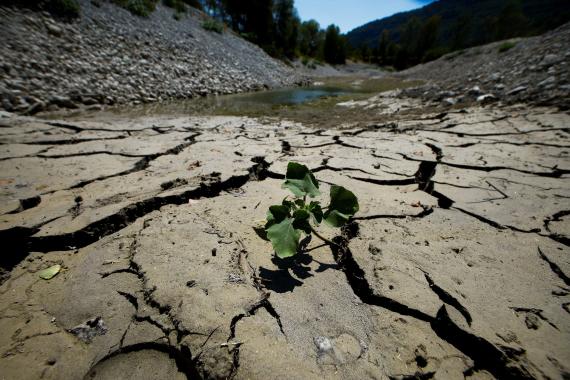
CO2 compensation – climate protection instrument, fraudulent labelling or modern indulgence trade?

On the controversial role of CO2 offsetting and the importance of binding global standards to avoid greenwashing – with insights from Latin America

In order to combat the consequences of advancing climate change, all appropriate instruments should be used. In addition to urgently avoiding and reducing greenhouse gas emissions, this also includes offsetting them in areas where damage limitation is (still) the only way to contribute to climate protection. However, internationally valid quality standards for offsetting projects must be defined and appropriately communicated to producers, consumers, and people in the implementing regions.

Adobe Stocke / Wojciech Wrzesień

Critical Junctures – The Future of the North

Latest development in the Baltic Sea Region

The accession of Finland and Sweden to NATO brings new strategic implications and defense opportunities for the Baltic Sea region. At the same time, it poses additional challenges for the alliance in light of Russian ambitions in the region. As NATO develops agile defense strategies, cooperation between the Baltic and Nordic states becomes even more crucial.

Showing 41 to 50 of 155 entries.

Asset Publisher

About this series

The Monitor series deals with one main topic at a time from the perspective of KAS experts and places it in the political and social context on the basis of a few key points.

Order details

The contributions appear exclusively online and can therefore not be ordered.


The current main topics are “Development policy”, “Sustainability” and “Election and social research”. The contributions of these sub-series are presented for you on separate overview pages in addition to the overall series.