The boundaries of democracy under Germany’s Basic Law, examined through the example of the Alternative for Germany party
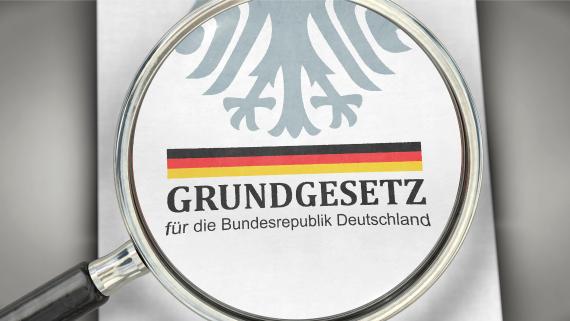
Liberal democracy is under pressure. Using the Alternative for Germany (AfD) as an example, this study examines where the boundary lies between legitimate political criticism and efforts directed against the constitutional order. It focuses on human dignity and equality, freedom of religion, the separation of powers and independent institutions, as well as the relationship with Europe and the freedom of political parties. The analysis identifies areas in which AfD positions conflict with fundamental principles of Germany’s Basic Law.
Prof. Dr. Hans Hofmann
October 5, 2026
Monitor
smarterpix / macor
Fault Lines of the Public. Representative Survey on the Consumption of Political Information
Representative survey on the consumption of political information and the evaluation of the public broadcasters in Germany
The political public is divided along two fault lines. On the one hand, younger and older people have different ways of obtaining political information. Younger people use online media, while older people rely on newspapers and television. On the other hand, there is a divide along political attitudes: People who advocate for lower taxes coupled with reduced social benefits, prioritizing economic growth over climate protection, and stricter restrictions on immigration feel significantly less represented in public media. Both divides make it difficult to reach a common understanding on political issues.
Dr. Jochen Roose, Jonas Schwarzenberger
October 1, 2026
Monitor Election and Social Research
smarterpix / Fidaolga
Emotions in Democracy
Representative survey on the influence of emotions on political attitudes in East and West Germany
Emotions can be relevant to political attitudes and behaviour in many ways, especially fear and anger. The present study examines how widespread positive and negative emotions are and how they differ between voter groups. A total of eight different feelings are examined, three positive (happy, calm and composed, lots of energy) and five negative feelings (depressed, angry, overwhelmed, anxious, lonely). The negative emotions are examined in more detail and their influence on democratic attitudes is analysed.
Dr. Sabine Pokorny
September 24, 2026
Monitor Election and Social Research
smarterpics / Boarding_Now
Analysis of the state election in Mecklenburg-Western Pomerania on 20 September 2026
Analysis based on preliminary results, on the main determining factors, voter migration and social structure
In the state election in Mecklenburg-Western Pomerania, the AfD emerged as the largest party, ahead of the SPD. For the first time, the CDU failed to win a seat in a state parliament. Our election analysis provides explanations for the results, examining voter shifts and the key factors that influenced them. Drawing on exit polls and pre-election surveys, it explains the significance of voters’ assessments of leading figures, party capabilities and political issues for the election result.
Dr. Viola Neu, Dr. Sabine Pokorny
September 22, 2026
Monitor Election and Social Research
IMAGO / Emmanuele Contini
Analysis of the election for the Berlin House of Representatives on 20 September 2026
Analysis based on preliminary results, on the main determining factors, voter migration and social structure
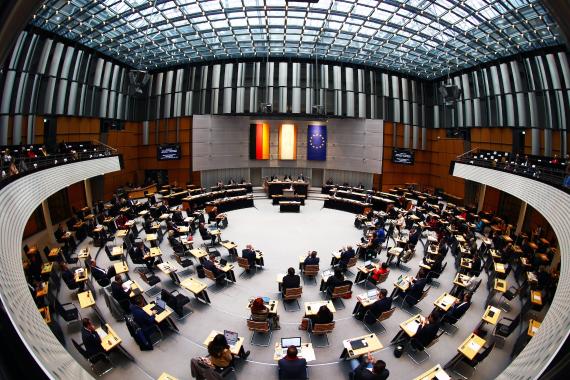
Following the elections in Berlin and Mecklenburg-Western Pomerania, the 2026 election year draws to a close with a mixed picture that does not allow any conclusions to be drawn about the 2027 elections. Our election analysis examines voter shifts and the key factors determining the election result. Drawing on exit polls and pre-election surveys, it explains, amongst other things, the significance of assessments of leading figures, party capabilities and political issues.
Dr. Viola Neu, Dr. Sabine Pokorny
September 21, 2026
Monitor Election and Social Research
AlexNosenko, smarterpix
100 Percent schools: How to Ensure Basic Competencies for All Children
A data-driven support framework combining assessment, adaptive support and tutoring to ensure that all children meet the expected standards in reading, writing and mathematics
The latest PISA results highlight the urgent need for action: Too many students fail to meet minimum standards in basic competencies. 100 Percent Schools address this challenge but aim beyond a minimum level of education: All children should meet proficiency standards in reading, writing and mathematics. The model combines data-informed school development, adaptive support, Response to Intervention and tutoring, while systematically involving students, parents, teachers and support staff. A coherent overall architecture rather than a collection of additive individual programmes is key.
Prof. Anne Sliwka, Ekkehard Thümler
September 18, 2026
Facts and Findings
mit der KI Adobe Firefly generiert, Konrad-Adenauer-Stiftung e. V.
Recruitment of Children and Adolescents by Organized Crime
A Growing Problem
rganized crime is increasingly using children and adolescents as criminal accomplices in serious crimes. They are often recruited through social media, messaging apps, or gaming platforms. This article analyses the causes and dynamics of this growing phenomenon, evaluates international prevention approaches, and identifies potential solutions for the Federal Republic of Germany. It focuses on evidence-based prevention measures and the fight against criminal networks as key areas of action.
Felix Neumann
September 17, 2026
Facts and Findings
IMAGO / Funke Foto Services
Stopping Russia’s Shadow Fleet
Germany Should Respond to Hybrid Attacks, Including at Sea
Disinformation campaigns, sabotage, attacks o, and the foiled drone attack at Leipzig Airport: Moscow is intensifying its hybrid operations against Germany. Berlin should respond firmly, yet prudently. One effective point of leverage is Russia’s shadow fleet operating in the Baltic and North Seas.
Dr. Edmund Ratka, Johannes R. Fischbach
September 14, 2026
kurzum
IMAGO / Fotostand
Analysis of the state election in Saxony-Anhalt on 6 September 2026
Analysis based on the final results, on the main determining factors, voter migration and social structure
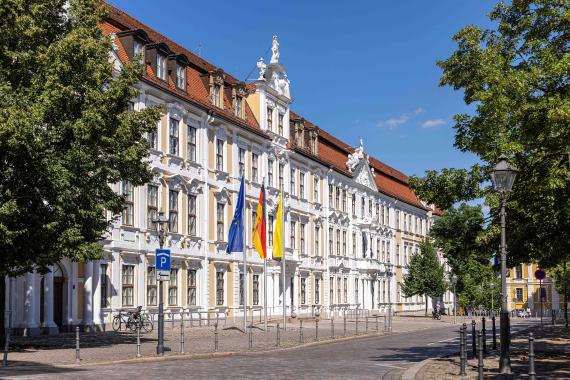
In the state election in Saxony-Anhalt, the AfD achieved by far the best result in its history. Based on election day polls and surveys conducted in the run-up to the election, we explain the significance of assessments of leading politicians, party competencies and political issues for the election results.
Dr. Viola Neu, Dr. Sabine Pokorny
September 7, 2026
Monitor Election and Social Research
KALUZA+SCHMID Studio
The Encyclical Magnifica Humanitas and the Renewal of the Social Market Economy in the Digital Age
A Discussion Paper
Pope Leo XIV’s encyclical Magnifica Humanitas on the preservation of humanity in the age of artificial intelligence can be read as a regulatory wake-up call: it applies the principles of Catholic social teaching to the digital economy and deliberately builds on the founding principles of the social market economy. This discussion paper therefore interprets the encyclical from an economic policy perspective and puts forward the thesis that the encyclical identifies five areas for regulatory innovation aimed at further developing the social market economy in the age of AI.