
Asset Publisher

Further publications

Asset Publisher

IMAGO / SNA

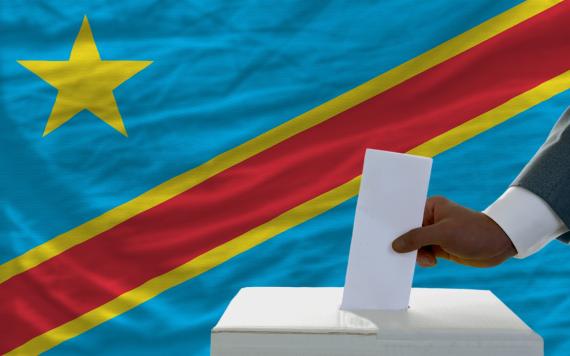
Congo-Brazzaville: Before the election remains after the election

The 2026 presidential elections in the Republic of Congo under the shadow of systemic competition

The Republic of Congo is exploiting the systemic competition between the EU, China and Russia to maximise its scope for action in terms of financing, infrastructure and security. While the EU remains a natural partner on environmental and transformation issues, deficits in the rule of law, accountability and electoral integrity limit the depth of cooperation. China is rapidly delivering large-scale infrastructure in exchange for resource commitments; Russia fills normative gaps with a discourse of sovereignty and non-interference and anchors energy and security policy agreements. No politically transformative results are to be expected from the 2026 presidential elections; rather, the strategic relevance lies in the continuation of an authoritarian-stabilised order that presents itself as a guarantor of peace and development. In this constellation, the focus for European actors is shifting from short-term election observation to medium- and long-term levers: green industrialisation, critical raw materials and logistics corridors, governance safeguards, youth-centred employment and a realistically calibrated mix of principledness and pragmatism.

IMAGO / ZUMA Press Wire

Columbia elects a fragmented parliament

Strong Results for the Government Camp and “Uribismo” Reshuffle the Deck for the Presidential Election

The parliamentary elections in Colombia have reshaped the political landscape. Unclear majorities characterize the new Congress. Colombians were also called upon to select candidates for the presidential elections through primaries. Here, the center‑right camp gained new momentum thanks to the unexpectedly strong performance of Paloma Valencia. Yet behind the election results lies much more: a country caught between demands for reform, security crises, and growing mistrust in institutions.

IMAGO / ZUMA Press Wire

War in the Middle East

How countries in the region are responding to the escalation between Israel and the U.S. with Iran

The American-Israeli attack on Iran and the massive backlash have plunged the entire region into a renewed state of emergency. From Israel to North Africa to the Gulf, governments are taking sides, societies are divided, and diplomatic tensions are growing. This report, from the Konrad Adenauer Foundation's offices in the Middle East and North Africa, provides an overview of the political lines, security risks, and regional dynamics.

IMAGO / Anadolu Agency

Mexico after the blow against "El Mencho": Security situation, World Cup risks and trade prospects

In February 2026, Mexican armed forces succeed in arresting and eliminating Nemesio Oseguera Cervantes ("El Mencho"), the leader of the country's most powerful cartel. This is immediately followed by coordinated acts of retaliation and demonstrations of power: roadblocks, arson attacks and armed clashes between security forces and cartel members, claiming around 60 lives. Mexico's precarious security situation is thus temporarily back in the international spotlight. The government is striving to restore stability quickly, not least with a view to the upcoming 2026 World Cup. A sustained escalation would further fuel the debate that has already arisen about possible venue changes. At the same time, the operation strengthens the Mexican government's position vis-à-vis the United States. The elimination of a globally wanted cartel leader is intended to demonstrate Mexico's ability to act in terms of security policy and to refute arguments for US intervention. With a view to the upcoming renegotiation of the North American Free Trade Agreement (T-MEC), this is of considerable importance, as the T-MEC remains Mexico's economic lifeline. The outlook for German and European companies in Mexico in 2026 is generally positive, mainly due to the planned modernisation of the EU-Mexico Global Agreement. Although the violence is increasing uncertainty in the short term, a renewed nationwide escalation is considered unlikely. If the operation strengthens Mexico's position in the T-MEC negotiations, this would be advantageous for German and European companies based in Mexico.

Imago/ Xinhua

Open to goods, closed to immigration?

China’s stance on labour migration

China has so far remained largely closed to foreign immigration. Yet, with a rapidly aging population, China’s economic model is increasingly reaching its limits, which may soon make targeted recruitment of foreign labour necessary. For Germany and Europe, China could emerge as a new competitor in the global race for talent.

IMAGO / ANP

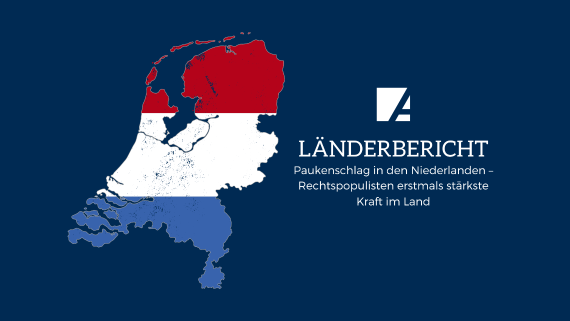
New (minority) government in the Netherlands

Compromise becomes a key issue

On February 23, 2026, the Netherlands will have a new government led by Prime Minister Rob Jetten. The minority government, consisting of the liberal-progressive Democraten 66 (D66), the right-wing liberal Volkspartij voor Vrijheid en Democratie (VVD) and the Christian Democratic Christen-Democratisch Appèl (CDA), was sworn in by King Willem-Alexander 117 days after the election. With its coalition agreement “Aan de slag” (“Let's get to work”) , a clearly structured work program, the new government has set itself ambitious goals: domestically, it is reform-oriented and willing to invest in the economy and defense; foreign policy-wise, it is clearly pro-European. Now the “Jetten Cabinet” must prove that it can win majorities for its plans even without its own parliamentary majority in politically polarized times. The Netherlands does not have much experience with minority governments, but the “experiment” at least offers the chance to overcome the political paralysis left behind by right-wing populist Geert Wilders with parties from the political center and to tackle the pressing domestic and foreign policy challenges.

IMAGO / ZUMA Press Wire

One year of Mahama and NDC government in Ghana

Between macroeconomic stabilisation and unresolved structural problems

The year 2025 marked a political turning point in Ghana: with John Dramani Mahama's return to the presidency in January 2025, an experienced political figure who stands for both substantial infrastructure investment and economic turmoil in Ghanaian politics once again took the helm. One year on, the question now is: where does Ghana stand today? What progress has the new NDC government made – and what challenges remain?

IMAGO / CTK Photo

Czechia's defense and Ukraine policy under the new Babiš government – a first impression

From expansion to stagnation

The security policy environment in which the Czech Republic has found itself since Russia's war against Ukraine has led to a change in defense planning in recent years. Under Petr Fiala's (ODS) government, Czechia was prepared to gradually increase defense spending and left no doubt about its support for Ukraine. However, the new coalition government of Andrej Babiš, formed by the populist ANO party, the right-wing extremist anti-system SPD (Freedom and Direct Democracy) party, and the populist-conservative Motorists' Party, is charting a new course in many areas.

Smarterpix/ Ale_Mi

Perceptions of Jordanian Foreign Policy: Change and Continuity

Surveys show shifts in foreign policy priorities and partnerships while maintaining the basic orientation of Jordanian foreign policy

In the context of regional instability, Jordanian foreign policy remains shaped by a pragmatic approach and a focus on maintaining security and stability. At the same time, economic challenges are leading to an increasing public expectation for specific foreign policy results for Jordan’s economy. While the US and Saudi Arabia continue to lead the field of Jordan’s partner countries, confidence in the US’s stabilizing role in the region is shrinking. The image of Germany is recovering compared to the previous year, despite criticism in the context of the Gaza war.

IMAGO / Anadolu Agency

Energy as a Strategic Factor: Türkiye’s Growing Importance for Germany and Europe

Successes and potential of Turkish energy policy

Following the EU's import ban on Russian gas, Europe will have to seek alternatives. In this context, Türkiye could become even more important than before. It is continuously diversifying its energy sources and suppliers, while also looking for energy reserves within its own borders. This is gradually making it more independent. Türkiye is already a key energy transit country. Despite its existing dependencies, particularly on Russia, it is expected to become an increasingly attractive energy partner and potentially an energy trader for Germany and Europe in the future. Cooperation in renewable energy holds potential for both sides. The United Nations Climate Change Conference (COP 31) in November in Antalya will provide further insights into how energy and climate policy goals can be aligned.

Showing 71 to 80 of 4,061 entries.