







Asset Publisher

Further publications

Asset Publisher

IMAGO / Pond5 Images

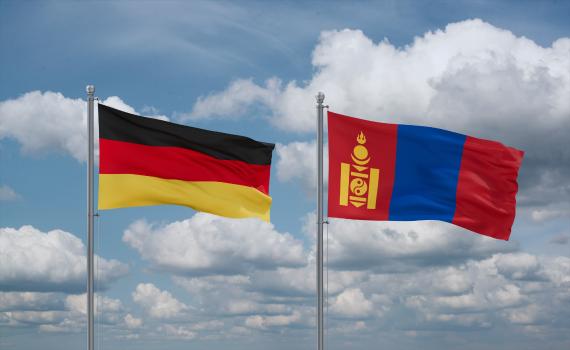
Mongolian President Khurelsukh To Visit Germany

An Attempt to Reinvigorate a Long-Distance Relationship

The President of Mongolia, Khurelsukh Ukhnaa, will visit Germany from 19 to 22 October. Although Mongolia is a geographically distant and relatively small country in terms of population, this visit is important for both sides. Mongolia regards Germany as a preferred partner in helping to preserve its room for manoeuvre between its two powerful neighbours, Russia and China. Germany, for its part, is also seeking to gain and maintain global partners in an increasingly uncertain international environment who share our values and interests. Mongolia is such a partner. The two countries share common interests, particularly with regard to a rules-based international order and cooperation in the field of raw materials. In practice, however, significant challenges remain in the latter area. Domestically, Mongolia is approaching a presidential election in 2027 and parliamentary elections in 2028, the outcomes of which remain uncertain.

IMAGO / Xinhua

China’s ‘Space Silk Road’ – Space Partnerships in Africa

Security Implications for Europe and Germany

China is rapidly expanding its military capabilities in space, while Africa is becoming an increasingly important arena for Chinese space activities. Chinese-funded and Chinese-built satellites, ground stations, and planned spaceports strengthen African space capabilities but may also create new technological and political dependencies. The dual-use potential of these systems allows China to expand its strategic influence in Africa. This paper examines the implications for Germany and Europe and identifies options for European engagement.

IMAGO / Xinhua

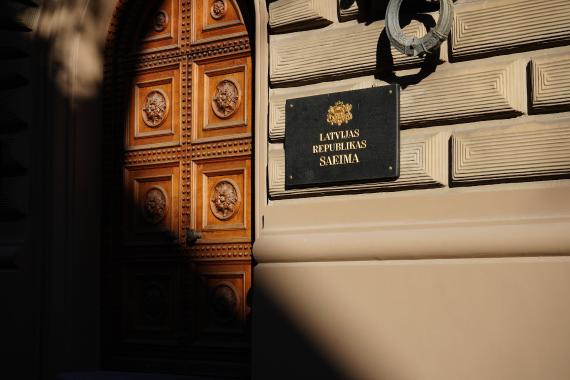
Parliamentary elections in Latvia 2026

Centre-right parties are given the mandate to govern, right-wing populists are strengthened

On 3 October, Latvia elected the 15th Saeima, the country's parliament. In total, over 1.5 million people were eligible to vote in Latvia's five constituencies of Riga, Vidzeme, Latgale, Kurzeme and Zemgale. Fourteen party lists ran for 100 seats with 1,428 candidates. The election result produced a clear winner: Andris Kulbergs' United List (APVIENOTAIS SARAKSTS) received 35.3% of the vote, or 41 seats – a significant increase from the 15 seats it won in 2022. They were followed by the right-wing populists Latvia First (LATVIJA PIRMAJĀ VIETĀ) with 13.1% and Sovereign Power / Alliance of Young Latvians (Suverēnā Vara / Apvienība Jaunlatvieši, SV / AJ) with 11.7%, the national-conservative National Alliance (Nacionālā apvienība) with 8.9%, the (social democratic) Progressives (PROGRESĪVIE) with 7.9% and the EPP party New Unity (Jaunā VIENOTĪBA) with 6.5%. This means that six political forces are moving into the new Saeima. The election took place against a tense international and domestic political backdrop. The Russian war of aggression against Ukraine continues. At the same time, Latvia is facing hybrid pressures ranging from the instrumentalization of migration on the border with Belarus to cyber threats and repeated violations of Latvian airspace by drones. During the 14th legislative period after 2022, the country had three governments under Prime Ministers Krišjānis Kariņš, Evika Siliņa, and Andris Kulbergs since May 2026. The latter thus took office a few months before the election.

IMAGO / MAXPPP

Brazil shifts to the right

Flávio Bolsonaro is narrowly ahead of President Lula in the first round of voting, whilst conservative forces in parliament and in the regions will be calling the shots

The first round of the Brazilian presidential election produced a surprise: contrary to the latest polls, Flávio Bolsonaro, son of former President Jair Bolsonaro and candidate for the Partido Liberal (PL), is just under two percentage points ahead of President Lula da Silva. At the same time, the PL is significantly expanding its influence in the federal states and in Congress, particularly in the Senate. This could have made Lula’s re-election in the run-off on 25 October less likely. Regardless of the outcome, a Congress that has shifted significantly to the right will be a key factor in future governance.

IMAGO / Anadolu Agency

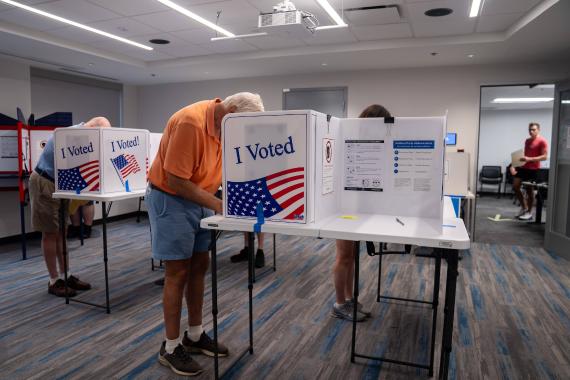
The Final Stretch to the 2026 Midterms

Where America Stands Before Election Day

“Pretend that I’m on the ballot.” With this appeal, Donald Trump is seeking to mobilize his supporters for the midterm elections on November 3, even though he himself is not on the ballot. Voters will elect the entire House of Representatives, a portion of the Senate, as well as numerous state-level offices. Just under seven weeks before Election Day, the campaign is being shaped primarily by economic conditions, the political record of the Trump administration, and the question of future majorities in Washington. Following the summer recess, both parties have intensified their campaign efforts. While Republicans are focusing on voter mobilization and support from President Donald Trump, Democrats are emphasizing the rising cost of living and the consequences of the administration’s policies. The political mood after the summer break offers an indication of the issues currently driving the campaign and the challenges both parties face as the election approaches.

IMAGO / Anadolu Agency

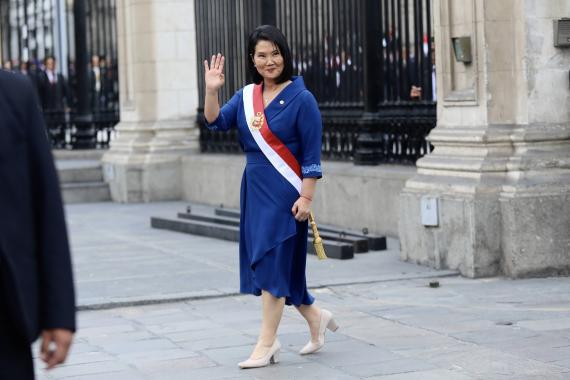
Two months into the Fujimori presidency in Peru

Reconciliation is necessary

Keiko Fujimori began her presidency amid high expectations, but after only a few weeks she is already facing growing pressure. The anticipated rapid progress on public security and preparations for the El Niño climate phenomenon has yet to materialize, while Fujimori’s approval ratings have declined noticeably. Domestically, it has become clear that even with a strong government presence in Congress, reforms can only be implemented through dialogue and compromise. At the same time, Peru is seeking closer ties with the United States without jeopardizing its important economic relationship with China. While Fujimori continues to face significant skepticism, particularly among the population of the Andean south, the visit of the “Peruvian Pope,” Leo XIV, scheduled for November, offers the country an opportunity to promote national dialogue and strengthen unity.

IMAGO / Andia

France After the Senate Elections

Institutional Continuity and Political Shift

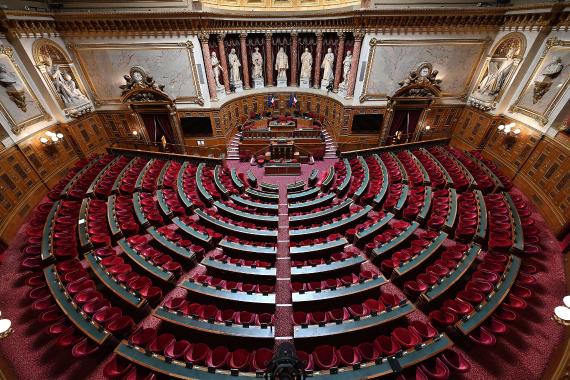
At first glance, the 2026 French Senate elections bring above all continuity: the center-right conservative majority led by Les Républicains (LR) was able to maintain its dominant position in the upper house. At the same time, the Rassemblement National (RN) achieved a significant political and institutional success by reaching, for the first time, the threshold of ten senators required to form its own caucus, as did the far-left party La France Insoumise (LFI), which won a seat in the Senate for the first time. On the one hand, the result confirms the Senate’s remarkable stability compared to the National Assembly; on the other hand, it also shows that changes in the French party system are increasingly being reflected in the chamber, which has traditionally been dominated by moderate forces. It is precisely this coexistence of institutional continuity and political shift that gives the Senate growing significance for political stability in France, particularly with an eye toward the 2027 presidential election and its consequences.

IMAGO / ZUMA Press

Parliamentary elections in Morocco

PAM well ahead of RNI and Istiqlal

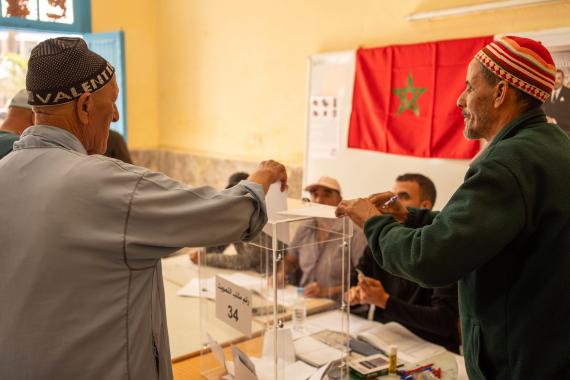
On 23 September 2026, Morocco held elections to the House of Representatives, thereby laying the party-political foundations for the next government. There were 395 seats up for election; approximately 15.8 million people were registered to vote, of whom 38 per cent turned out. For the first time, the PAM emerged as the strongest force from the election, whilst its previous coalition partners, the RNI and Istiqlal, came off second best. However, the political significance of the election extends beyond the distribution of seats. The central question is whether the accelerated economic and infrastructural development of recent years is also being reflected in the everyday lives of those sections of the population who have so far benefited from it only to a limited extent. Expectations are therefore high for the new government.

AlexNosenko, smarterpix

100 Percent schools: How to Ensure Basic Competencies for All Children

A data-driven support framework combining assessment, adaptive support and tutoring to ensure that all children meet the expected standards in reading, writing and mathematics

The latest PISA results highlight the urgent need for action: Too many students fail to meet minimum standards in basic competencies. 100 Percent Schools address this challenge but aim beyond a minimum level of education: All children should meet proficiency standards in reading, writing and mathematics. The model combines data-informed school development, adaptive support, Response to Intervention and tutoring, while systematically involving students, parents, teachers and support staff. A coherent overall architecture rather than a collection of additive individual programmes is key.

mit der KI Adobe Firefly generiert, Konrad-Adenauer-Stiftung e. V.

Recruitment of Children and Adolescents by Organized Crime

A Growing Problem

rganized crime is increasingly using children and adolescents as criminal accomplices in serious crimes. They are often recruited through social media, messaging apps, or gaming platforms. This article analyses the causes and dynamics of this growing phenomenon, evaluates international prevention approaches, and identifies potential solutions for the Federal Republic of Germany. It focuses on evidence-based prevention measures and the fight against criminal networks as key areas of action.

Showing 21 to 30 of 4,091 entries.