






The topic 'securitisation' of climate change plays a very important role especially for developed countries like Germany since it was seen as a way to raise the stakes and elevate the concern on the global front. An important point is Germany's credibility as a pioneer in climate policy as well as its commitment at the highest political level. Germany even initiated a discussion on security risks caused by climate change during its tenure in the UNSC in the year 2011.
In the publication “SWP-Aktuell Nr. 49 September 2018” titled “Klimawandel als Sicherheitsproblem”, Susanne Dröge from the German Institute for International and Security Affairs (SWP) comments on the challenges Germany will face when moving the topic forward. She stresses the importance of connecting the Security Council’s engagement to other climate and development policy processes and fora, such as the implementation of the Paris Agreement and SDGs. Therefore, in order to take this initiative and sincere effort by Germany forward and strengthen concerted multilateral efforts, The Energy and Resources Institute (TERI) together with India Office of Konrad-Adenauer-Stiftung organised a two-day conference on this significant topic.
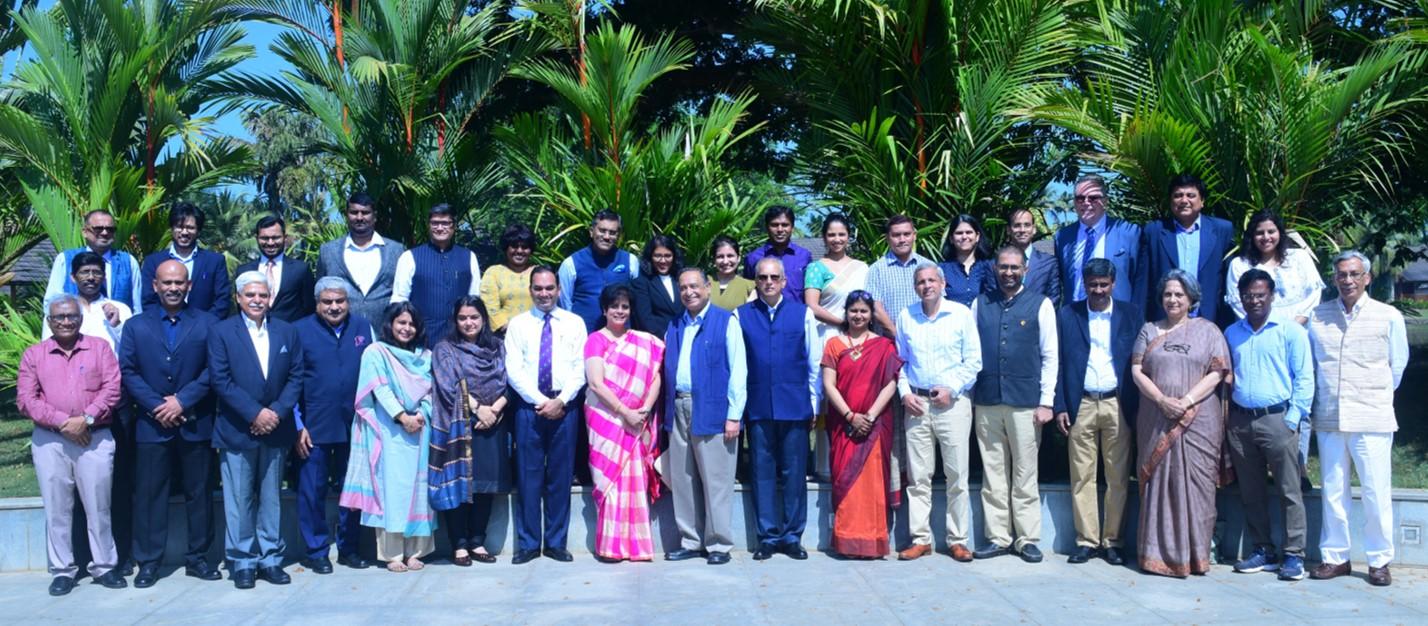
The conference on “Climate Change and Security: Implications of ‘Securitization’ for International and National Realms” commenced with the opening remarks by Mr. Peter Rimmele, Resident Representative of Konrad-Adenauer-Stiftung India, who cited a newspaper headline regarding climate change enunciating that Climate Change is the greatest threat and an issue that affects the whole world which could catalyse state failures. Furthermore, he discussed the youth involvement and movements in Germany and many other countries.
Subsequently, the Distinguished Fellow and Programme Director of TERI and India’s former principal negotiator for climate change negotiations under the UN Framework Convention on Climate Change, R.R. Rashmi, addressed the gathering and mentioned that scientific evidence makes it important for us to discuss it as a serious threat.
“Climate change will induce a major change in geopolitics”, said Chandrashekhar Dasgupta, Member, Governing Board, Centre for Policy Research & Emeritus Distinguished Fellow, The Energy and Resources Institute. He added that climate change is not an independent source of threat but a threat multiplier.
This was followed by the inaugural address by Deepa Gopalan Wadhwa, Governing Council Member, Institute of Chinese Studies and thematic address by Anil Wadhwa, Distinguished Fellow, Vivekananda Foundation and Former Secretary (East), Ministry of External Affairs, Government of India who also commented on the huge need for cooperation at global level.
S.N. Pradhan, Director General, National Disaster Response Force, Ministry of Home Affairs, Government of India, delivered the keynote address. He talked about non-traditional security and human security approach and stressed further on the need for collaborative work and cooperation with various organizations to respond to disasters and bring about a positive change.
There has been a paradigm shift, with regards to the climate change, from vulnerability multiplier to threat multiplier. There have been youth movements and campaigns such as #FridaysForFuture to increase the awareness about climate change.
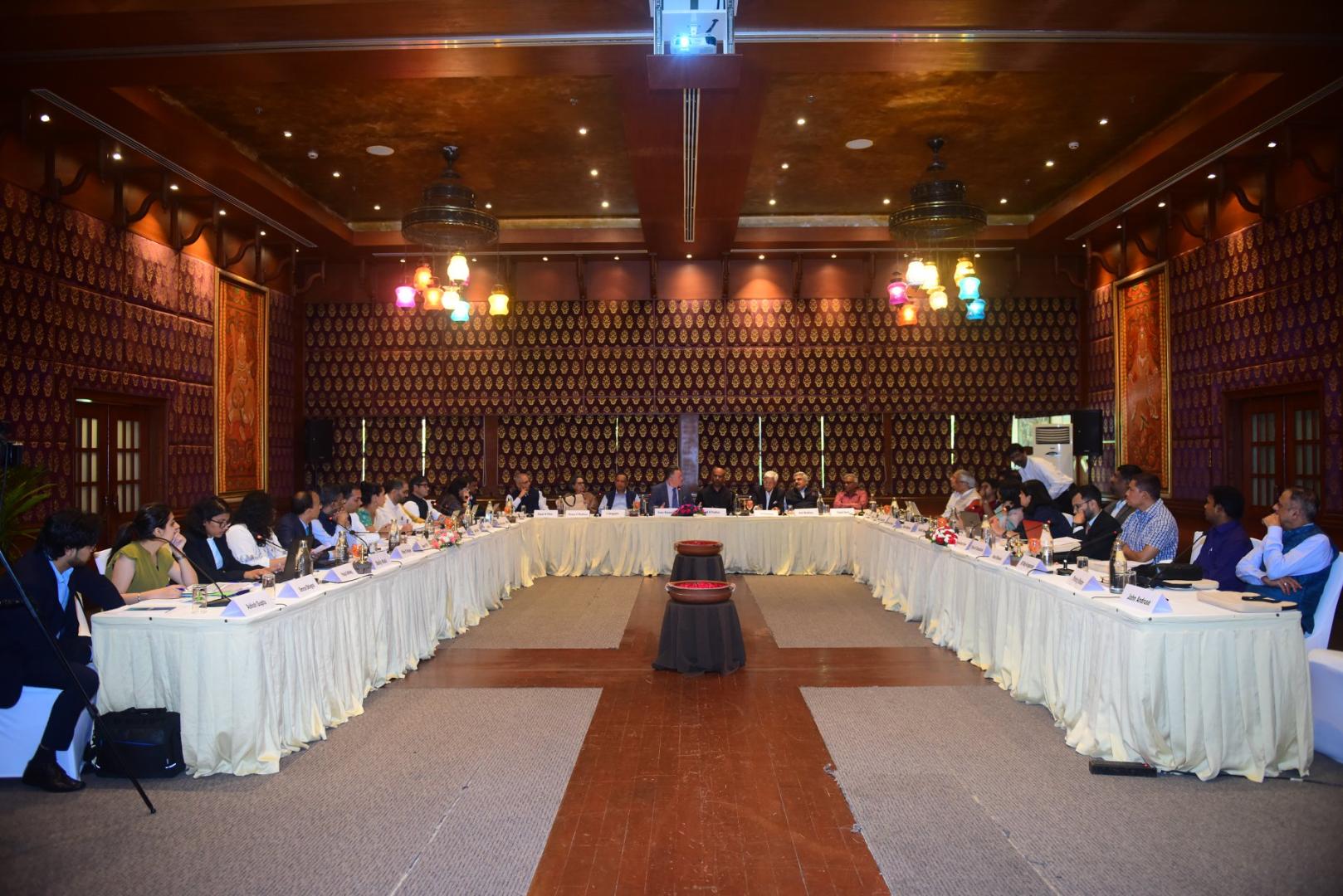
The conference included panel discussions which focused on varied aspects of climate change and security. Session I titled “Contextualizing ‘securitization’ of climate change in global and national discourses” sought to contextualize various levels of security (human security, national security and global security) to climate change risks and responses. Session II encapsulated the non-traditional security dimensions of climate change The aim was to bring together the scientific knowledge on transboundary and intrastate security risks as a result of climate change such as migration, resource conflicts and human security. The session on “Climate change and national security: Implications for defence establishments” brought together the understanding from the perspective of military establishments and strategy. There had been valuable inputs and suggestions as to what the armed forces need for the emerging roles considering the science, intelligence, equipment and operational capability. Moreover, there had been deliberations and presentations on the topic “Climate change and internal security for India” and “Politics of ‘Securitization’ of climate change: By whom and for whom?”
The two-day conference provided insights into the distinct perspectives of the participants and the approaches as well as measures/steps taken by the different institutions. The colloquium was concluded with the discussion on “Moving forward: Congregating ideas and policy recommendations” which gave stimulus and food for thought, thus making it an enriching experience.