

Asset Publisher

Geneva Telegram

75th anniversary of the 1951 Refugee Convention: Insights from the UNHCR Global Trends report

On 28 July 2026, the Geneva Refugee Convention turned 75. Its enduring relevance is particularly evident in light of the record numbers of people forcibly displaced worldwide.

Learn more
Geneva Telegram

The global fight against HIV/AIDS amid financial pressures and an uncertain future for UNAIDS

Although the global fight against HIV/AIDS has made remarkable epidemiological and medical progress, its political, financial, and institutional foundations are coming under increas...

Learn more
Einzeltitel

Advancing Protection under Article I(2) of the 1969 OAU Refugee Convention

Article I(2) of the 1969 OAU Refugee Convention is the ‘most influential conceptual standard of refugee status apart from the [1951] Convention definition itself’.

Learn more
Geneva Telegram

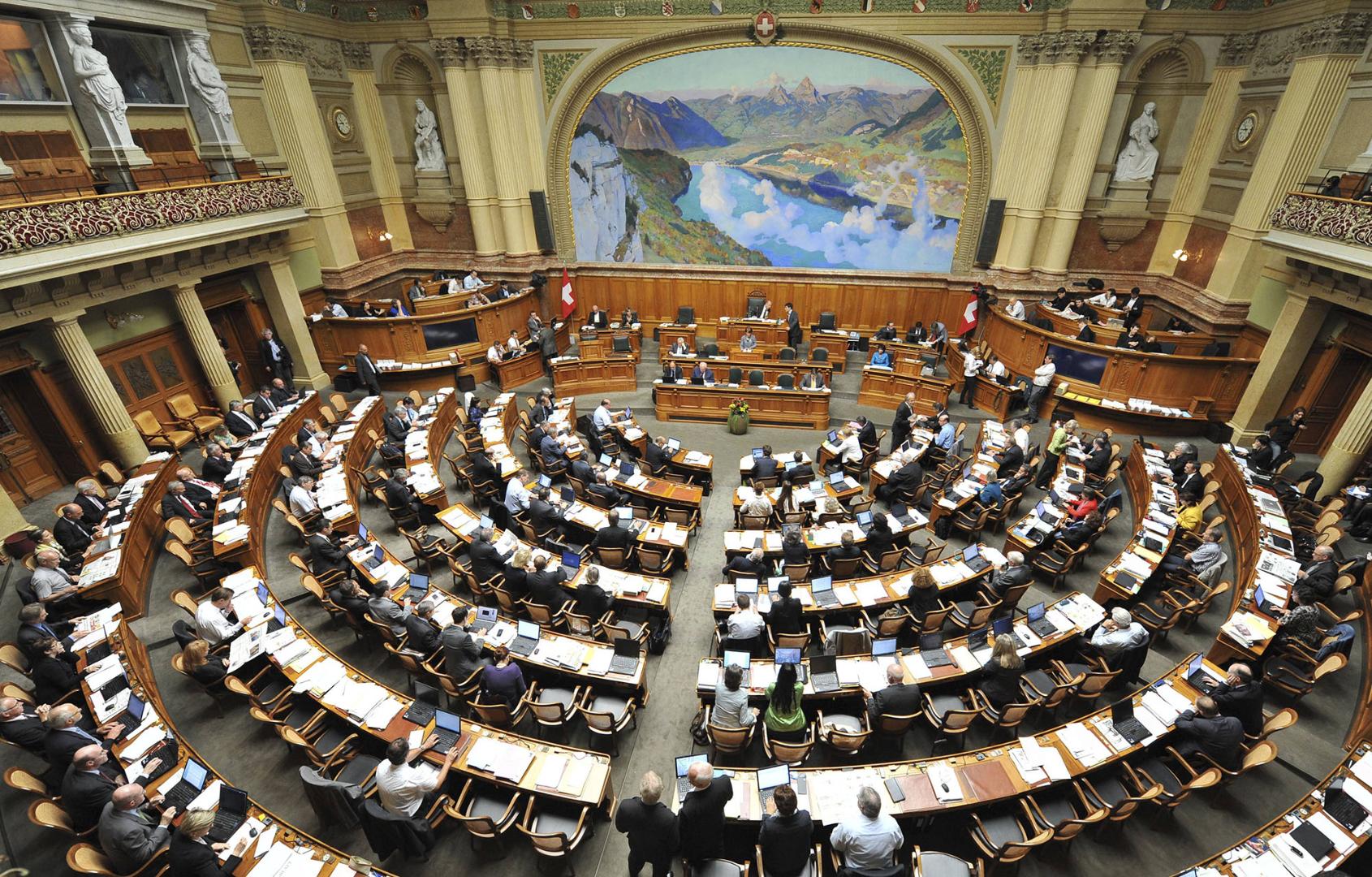
Analysis of the Swiss vote on the 10 Million Initiative on 14 June 2026

On Sunday, 14 June 2026, Swiss voters and cantons delivered a clear verdict on the Swiss People's Party's (SVP) initiative to cap Switzerland's resident population at 10 million.

Learn more
Geneva Telegram

Vote on the 10-million initiative on 14 June 2026

On 14 June, Switzerland will vote on the Swiss People’s Party’s (SVP) 10-million initiative. The SVP aims to strictly limit the population through this measure.

Learn more
Geneva Telegram

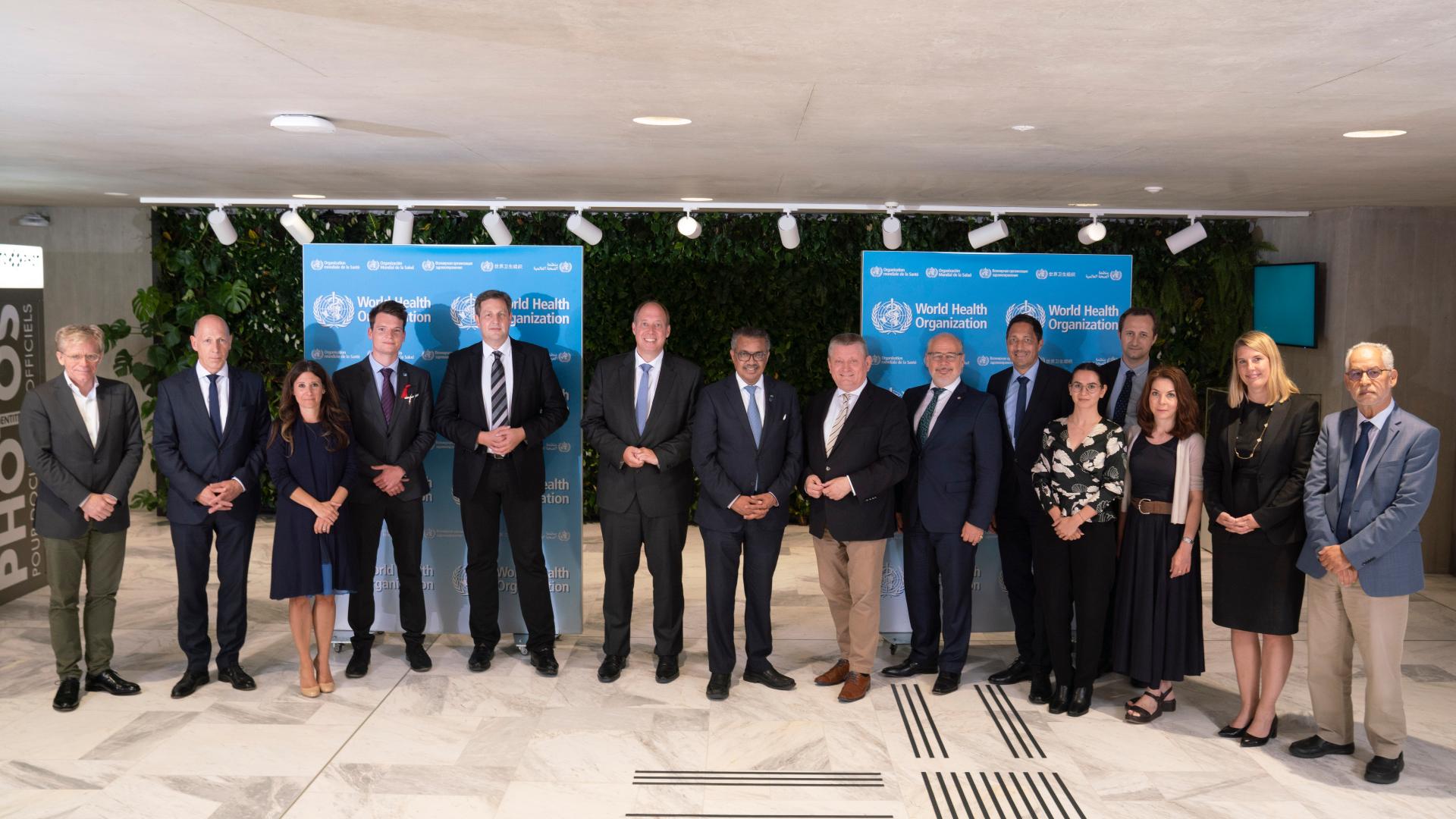
The 79th World Health Assembly 2026

Under the theme “Reshaping global health: a shared responsibility,” the 79th World Health Assembly (WHA) of the World Health Organization (WHO) convened in Geneva from 18 to 23 May ...

Learn more

Asset Publisher

Welcome

Freedom, justice and solidarity are the basic principles underlying the work of the Konrad-Adenauer-Stiftung (KAS). The KAS is a political foundation, closely associated with the Christian Democratic Union of Germany (CDU).
More about us

Asset Publisher

Media library

Neue Folge des Podcasts Multipod

Multipod: WHO macht Fortschritte bei internationalen Gesundheitsvorschriften

Die Covid-Pandemie hat auch auf internationaler Ebene Folgen. Erfahren Sie, wie die Weltgesundheitsorganisation (WHO) und ihre Mitgliedstaaten sich besser für die Zukunft wappnen.

Read now
Neue Folge des Podcasts Multipod

Multipod: Wie können Frauenrechte im Gesundheitssektor gestärkt werden?

Erfahren Sie mehr über die Herausforderungen von Frauen, Ihr Recht auf Gesundheit einzufordern.

Read now
Statement

Norbert Lammert on the 75th anniversary of the Universal Declaration of Human Rights

"Human rights are not laws of nature. [...], they must be protected & defended by people who take the claim to the inviolability of human dignity seriously".

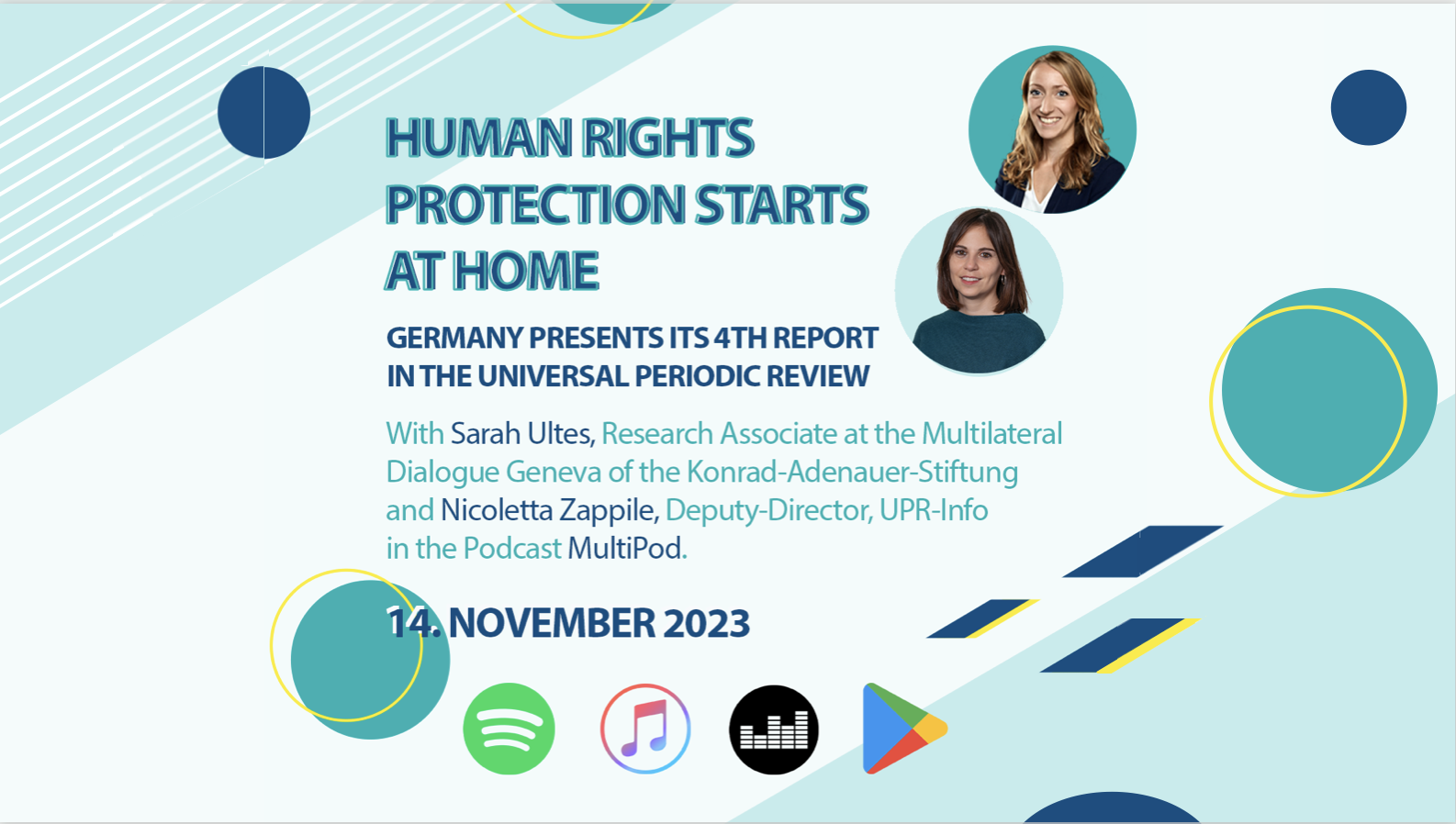
Multipod: Review of Germany in the UPR

Multipod: Human rights protection starts at home. Germany in the UPR

On 9th November 2023, the United Nation's Human Rights Council discussed the human rights situation in Germany

Read now
Genfreise

Geneva Security Debate zum Krieg in der Ukraine

Prof. Dr. Lammert, Botschafter Dr. Heusgen und Botschafter Greminger zu den Auswirkungen des Krieges in der Ukraine auf den Multilateralismus und die Weltordnung

Delegationsreise

Dialogprogramm des Arbeitskreises Globale Gesundheit der Konrad-Adenauer-Stiftung in Genf

Erfahren Sie mehr über die Delegationsreise zu aktuellen Herausforderungen im Bereich Globale Gesundheit vom 7-9. Juni

Asset Publisher

Asset Publisher

Asset Publisher

Map of the Month

The KAS Map of the Month

Publications

Joint Statement of „Friends of Human Rights Multilateralism“, 58th and 61st Human Rights Council

Map of the Month 03/2026

During the 61st session of the UN Human Rights Council, Albania on behalf of a core group (consisting of the Netherlands, Albania, Chile, Kenya and Kyrgyzstan) delivered a joint statement on behalf of a cross-regional group of  91 States in which they reaffirmed their „commitment to multilateral human rights cooperation“. It built on a joint statement on the same topic and led by the same group (without Kenya) which was delivered at the 58th UN Human Rights Council in March 2025. Back then it was endorsed by 71 States. This year’s statement received the total support of 91 States with several countries from the African and Asia-Pacific Group joining (see in light purple). When comparing support, 66 States decided to endorse both statements (see in dark purple). Only five decided not to continue their support in 2026 (in dark grey). The wording of the latest statement is very close to the first one. States commit themselves i.a. to „safeguard a multilateral system that upholds international law, human rights and the rule of law“, to „cooperate in good faith with the OHCHR, the Human Rights Council and its mechanisms, as well as other rights-based mechanisms, and safeguard their independence or to „prioritise securing adequate, predictable and sustainable funding for the UN human rights pillar.“ 

Voluntary contributions to the Office of the High Commissioner for Human Rights (OHCHR) in 2025

Map of the Month 02/2026

In early February, UN High Commissioner for Human Rights, Volker Türk presented his office's annual UN Human Rights Appeal for 2026 and warned that, in light of mounting crises, the world cannot afford a human rights system in crisis. The clear appeal was also made against the backdrop of the “financial shockwave” that the Office of the High Commissioner for Human Rights (OHCHR), like many other UN organizations faced in 2025. There was a funding gap of over $65 million due to both a lack of contributions from the regular UN budget and voluntary contributions from member states. Voluntary contributions amounted to $262 million, accounting for around 60% of the OHCHR's income in 2025. The EU Commission and EU member states alone contributed 60% of all voluntary contributions. Germany was the second largest donor with USD 29 million. Traditionally the United States used to be the biggest donor to the OHCHR. In 2024 it contributed 36 mio. USD. Last year, however, the voluntary contributions by the US went to zero. As a result, several human rights monitoring missions, dialogues and country visits of the Treaty Bodies or Special Rapporteurs could not take place last year. Even the investigative bodies mandated by the UN Human Rights Council were unable to fulfill their mandates fully. The office itself lost around 300 staff (out of a total of 2,000, ca. 15%) and was forced to close or radically reduce its presence in 17 countries.

Support for the 39th special session of the UN Human Rights Council on Iran and the vote on the corresponding resolution

Map of the Month 01/2026

On 23 January 2026, the UN Human Rights Council held its 39th Special Session focusing on the deteriorating human rights situation in the Islamic Republic of Iran after nationwide protests that broke out on 28 December 2025 had been met with a significant escalation of violence. The holding of the Special Session was officially requested on 19 January 2026 by Iceland, Germany, North Macedonia, the Republic of Moldova, and the United Kingdom of Great Britain and Northern Ireland. It received the support of 21 Member States of the Human Rights Council and 30 Observer States. During the Session, a resolution was adopted with 25 States voting in favour, 7 against (China, Cuba, India, Indonesia, Iraq, Pakistan and Viet Nam) and 14 States abstaining. It strongly deplored the violent crackdown of peaceful protests resulting in the deaths of thousands of persons, including children. It extended the mandate of the Independent International Fact-Finding Mission (FFM) on Iran for two years, and the mandate of the Special Rapporteur on the situation of human rights in Iran for one year. It also called for an urgent investigation by the FFM into allegations of recent and ongoing serious human rights violations and abuses and crimes perpetrated in relation to the protests that began on 28 December 2025, including for potential future legal proceedings.

Voting behaviour of the members of the UN Human Rights Council in line with Germany or China in 2025

Map of the Month 01/2026

The map of the month illustrates the voting behaviour of the members of the UN Human Rights Council in line with Germany or China in 2025. During the three regular sessions, 92 resolutions were adopted. Germany supported 13 of the 25 resolutions (52%) that were only adopted after a vote. Another resolution, which aimed to end the mandate of the Special Rapporteur on the human rights situation in Eritrea, was rejected by a vote. It is excluded from the overview. Bulgaria voted most often in line with Germany, closely followed by Albania, Czechia, North Macedonia and Romania. Algeria, Bangladesh, China, the DR Congo, Indonesia, Kuwait and Sudan voted with Germany only once. Of all the Central and South American Council members, Chile, Costa Rica, the Dominican Republic and Mexico voted with Germany most often; of the African states, Malawi, Ghana, Gambia and Morocco did so.

Asset Publisher

Geneva Telegram

75th anniversary of the 1951 Refugee Convention: Insights from the UNHCR Global Trends report

On 28 July 2026, the Geneva Refugee Convention turned 75. Its enduring relevance is particularly evident in light of the record numbers of people forcibly displaced worldwide.

View details

Asset Publisher