

Asset Publisher

Geneva Telegram

PABS Annex to the WHO Pandemic Agreement: IGWG7 brings competing System Models on the Table

Two concrete proposals are on the table for structuring access to pathogen materials and sequence information and the associated sharing of benefits.

Learn more
Geneva Telegram

75th anniversary of the 1951 Refugee Convention: Insights from the UNHCR Global Trends report

On 28 July 2026, the Geneva Refugee Convention turned 75. Its enduring relevance is particularly evident in light of the record numbers of people forcibly displaced worldwide.

Learn more
Geneva Telegram

The global fight against HIV/AIDS amid financial pressures and an uncertain future for UNAIDS

Although the global fight against HIV/AIDS has made remarkable epidemiological and medical progress, its political, financial, and institutional foundations are coming under increas...

Learn more
Einzeltitel

Advancing Protection under Article I(2) of the 1969 OAU Refugee Convention

Article I(2) of the 1969 OAU Refugee Convention is the ‘most influential conceptual standard of refugee status apart from the [1951] Convention definition itself’.

Learn more
Geneva Telegram

Analysis of the Swiss vote on the 10 Million Initiative on 14 June 2026

On Sunday, 14 June 2026, Swiss voters and cantons delivered a clear verdict on the Swiss People's Party's (SVP) initiative to cap Switzerland's resident population at 10 million.

Learn more
Geneva Telegram

Vote on the 10-million initiative on 14 June 2026

On 14 June, Switzerland will vote on the Swiss People’s Party’s (SVP) 10-million initiative. The SVP aims to strictly limit the population through this measure.

Learn more

Asset Publisher

Welcome

Freedom, justice and solidarity are the basic principles underlying the work of the Konrad-Adenauer-Stiftung (KAS). The KAS is a political foundation, closely associated with the Christian Democratic Union of Germany (CDU).
More about us

Asset Publisher

Media library

Neue Folge des Podcasts Multipod

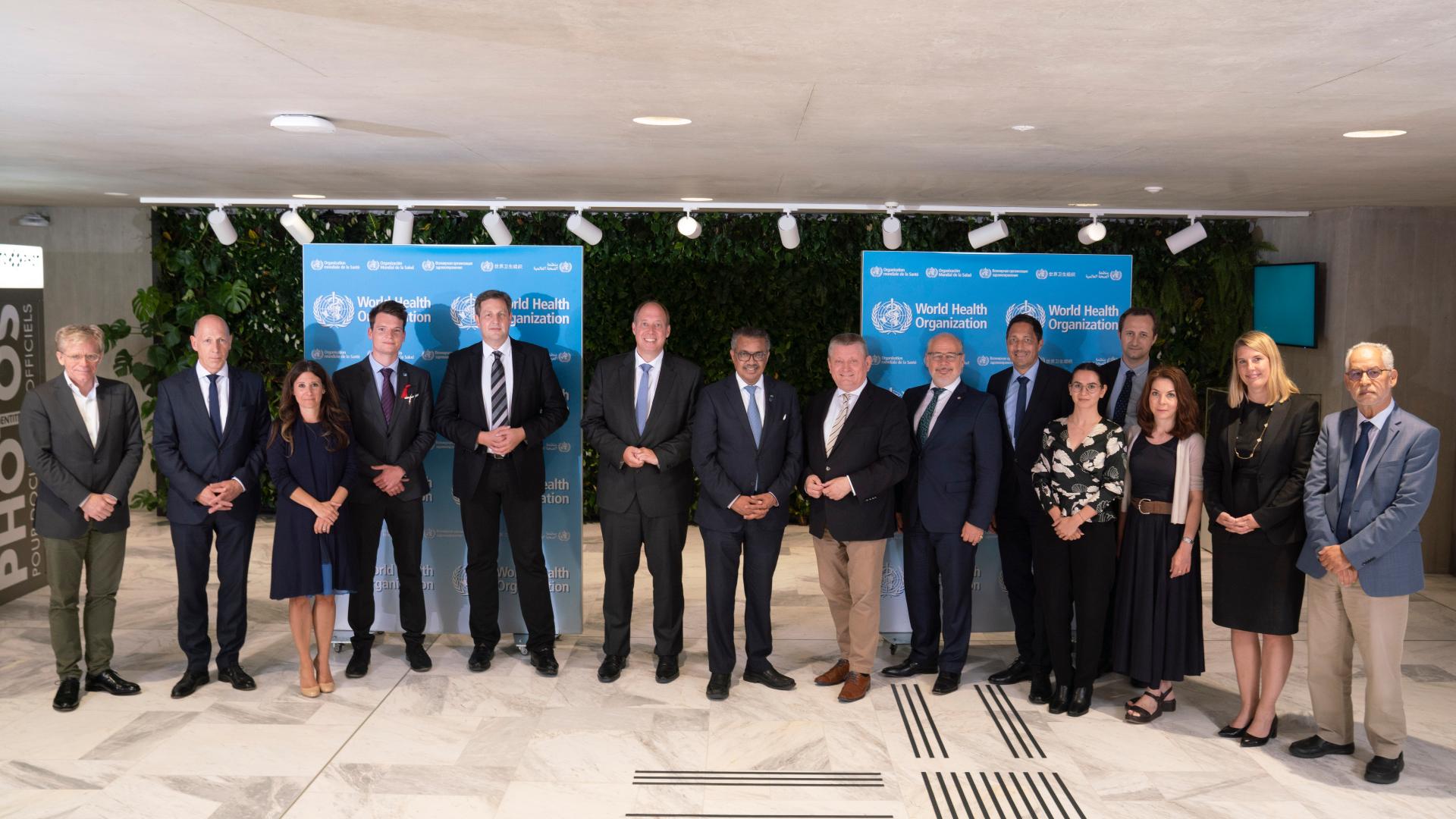
Multipod: WHO macht Fortschritte bei internationalen Gesundheitsvorschriften

Die Covid-Pandemie hat auch auf internationaler Ebene Folgen. Erfahren Sie, wie die Weltgesundheitsorganisation (WHO) und ihre Mitgliedstaaten sich besser für die Zukunft wappnen.

Read now
Neue Folge des Podcasts Multipod

Multipod: Wie können Frauenrechte im Gesundheitssektor gestärkt werden?

Erfahren Sie mehr über die Herausforderungen von Frauen, Ihr Recht auf Gesundheit einzufordern.

Read now
Statement

Norbert Lammert on the 75th anniversary of the Universal Declaration of Human Rights

"Human rights are not laws of nature. [...], they must be protected & defended by people who take the claim to the inviolability of human dignity seriously".

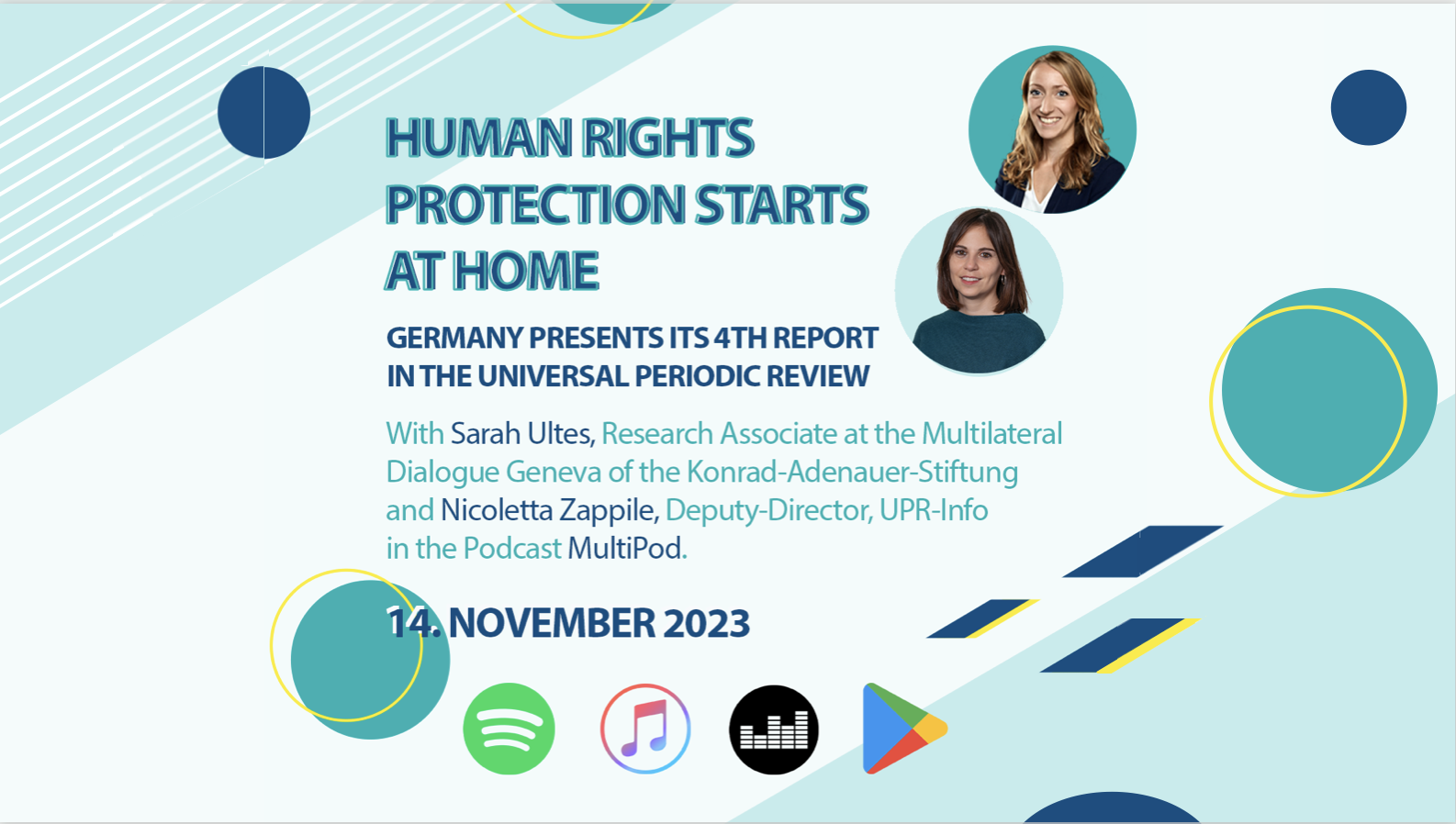
Multipod: Review of Germany in the UPR

Multipod: Human rights protection starts at home. Germany in the UPR

On 9th November 2023, the United Nation's Human Rights Council discussed the human rights situation in Germany

Read now
Genfreise

Geneva Security Debate zum Krieg in der Ukraine

Prof. Dr. Lammert, Botschafter Dr. Heusgen und Botschafter Greminger zu den Auswirkungen des Krieges in der Ukraine auf den Multilateralismus und die Weltordnung

Delegationsreise

Dialogprogramm des Arbeitskreises Globale Gesundheit der Konrad-Adenauer-Stiftung in Genf

Erfahren Sie mehr über die Delegationsreise zu aktuellen Herausforderungen im Bereich Globale Gesundheit vom 7-9. Juni

Asset Publisher

Asset Publisher

Asset Publisher

Map of the Month

The KAS Map of the Month

Publications

Proliferation of Antimicrobial Resistance (AMR) in WHO regions

Map of the Month 10/2025

The WHO Global Antibiotic Resistance Surveillance Report 2025 presents the most comprehensive global analysis to date of the spread of antimicrobial resistance (AMR). The report reveals that in 2023, one in six bacterial infections no longer responded to antibiotics, with resistance increasing in over 40% of monitored pathogen–antibiotic combinations since 2018. Resistance was most prevalent in urinary tract and bloodstream infections, while it occurred less frequently in gastrointestinal and urogenital infections. The South-East Asia, African, and Eastern Mediterranean regions were the most affected. To confront the growing threat of AMR, WHO urges all countries to strengthen laboratory capacity, produce reliable surveillance data, and report high-quality information on resistance and antibiotic use to GLASS by 2030.

Ratifications of the WTO Fisheries Subsidies Agreement

Map of the Month 09/2025

On 15 September 2025, the World Trade Organization's Agreement on Fisheries Subsidies entered into force after Brazil, Kenya, Tonga and Vietnam completed the decisive ratifications. The agreement, which came about after more than 20 years of negotiations, is considered a historic milestone for the WTO and is the first multilateral, legally binding pact on environmental sustainability. 111 ratifications (two-thirds of WTO membership) were required for it to enter into force. The total number of ratifications now stands at 112, with more in the pipeline. The agreement curtails harmful subsidies for illegal, unreported and unregulated fishing (FISH1), while negotiations on subsidies regarding overcapacity and overfishing (FISH2) are still ongoing and must be concluded within four years. In addition, the entry into force of the Agreement also activate the WTO Fisheries Fund, which will support developing countries and least developed countries in implementing the Agreement.

Humanitarian aid under attack - aid workers killed in conflicts in 2024 and 2025

Map of the Month 08/2025

The maps illustrate the number of aid workers who lost their lives while carrying out their work in 2024 and 2025. While 2024 has been the deadliest year on record (since 1997) for aid workers, 2025 is set to be worse. While in 383 fatalities were reported across 27 countries in 2024, 265 fatalities have been reported until August 2025 out of which 173 have been reported from Gaza alone, which - like in the previous year-, remains the deadliest context for aid workers worldwide. The situation is Gaza is followed by Sudan with 36 fatalities, South Sudan with 14 and DR-Congo with 10. The rising numbers not only reflect the intensity of violence in armed conflicts, but also mark a retreat by states from norms of international humanitarian law (IHL). In addition, humanitarian funding is being cut which also affects humanitarian staff and puts them in even greater danger. 

Key votes during the 59th UN Human Rights Council

Map of the Month 07/2025

During the 59th session of the UN Human Rights Council, which convened in Geneva from June 16 to July 9, a total of 25 resolutions and one decision were adopted. Nineteen resolutions (76%) were adopted by consensus and six after a vote. However, a resolution that sought to discontinue the mandate of the UN Special Rapporteur on the situation of human rights in Eritrea was rejected after a vote. Women's rights, as well as issues of sexual orientation and gender identity, were central themes of the Council's June sessions. Several texts were adopted by consensus, such as the mandate of the Working Group on discrimination against women and girls and a first dedicated resolution on female genital mutilation (FGM). On the other hand, the extension of the mandate of the Independent Expert on sexual orientation and gender identity (SOGI) was put to a vote again. Other texts that required a vote included a text on supporting Ukraine in the field of human rights and on access to medicines, vaccines, and other health products, an issue that also caused controversy at the 78th World Health Assembly (WHA) and in the debates on the so-called system for access to and equitable sharing of benefits from pandemic-relevant materials and data, or “PABS” for short. 

Asset Publisher

Geneva Telegram

PABS Annex to the WHO Pandemic Agreement: IGWG7 brings competing System Models on the Table

Two concrete proposals are on the table for structuring access to pathogen materials and sequence information and the associated sharing of benefits.

View details

Asset Publisher