

On 28 July 2026, the Geneva Refugee Convention turned 75. Its enduring relevance is particularly evident in light of the record numbers of people forcibly displaced worldwide.
Although the global fight against HIV/AIDS has made remarkable epidemiological and medical progress, its political, financial, and institutional foundations are coming under increas...
Article I(2) of the 1969 OAU Refugee Convention is the ‘most influential conceptual standard of refugee status apart from the [1951] Convention definition itself’.
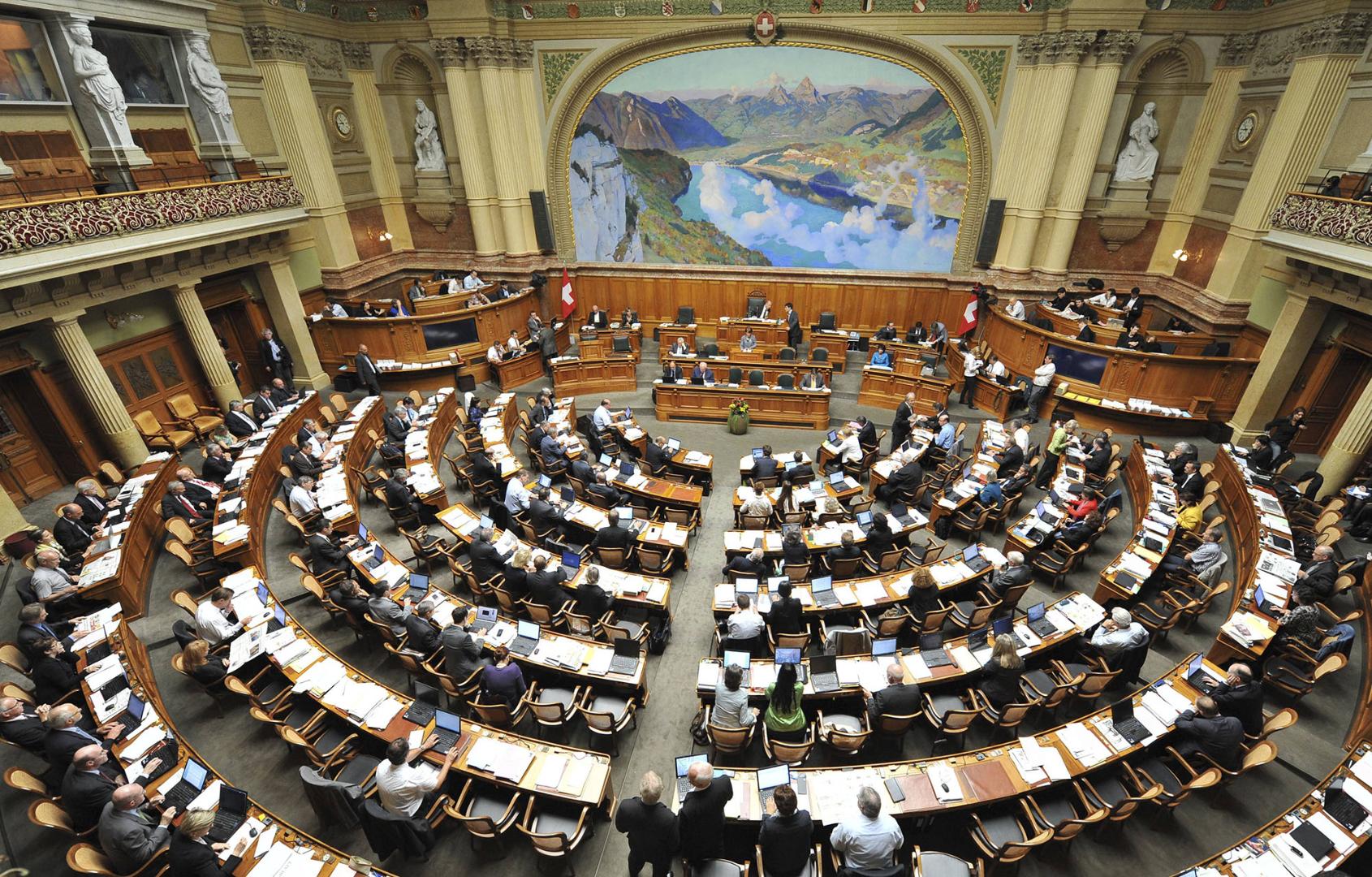
On Sunday, 14 June 2026, Swiss voters and cantons delivered a clear verdict on the Swiss People's Party's (SVP) initiative to cap Switzerland's resident population at 10 million.
On 14 June, Switzerland will vote on the Swiss People’s Party’s (SVP) 10-million initiative. The SVP aims to strictly limit the population through this measure.
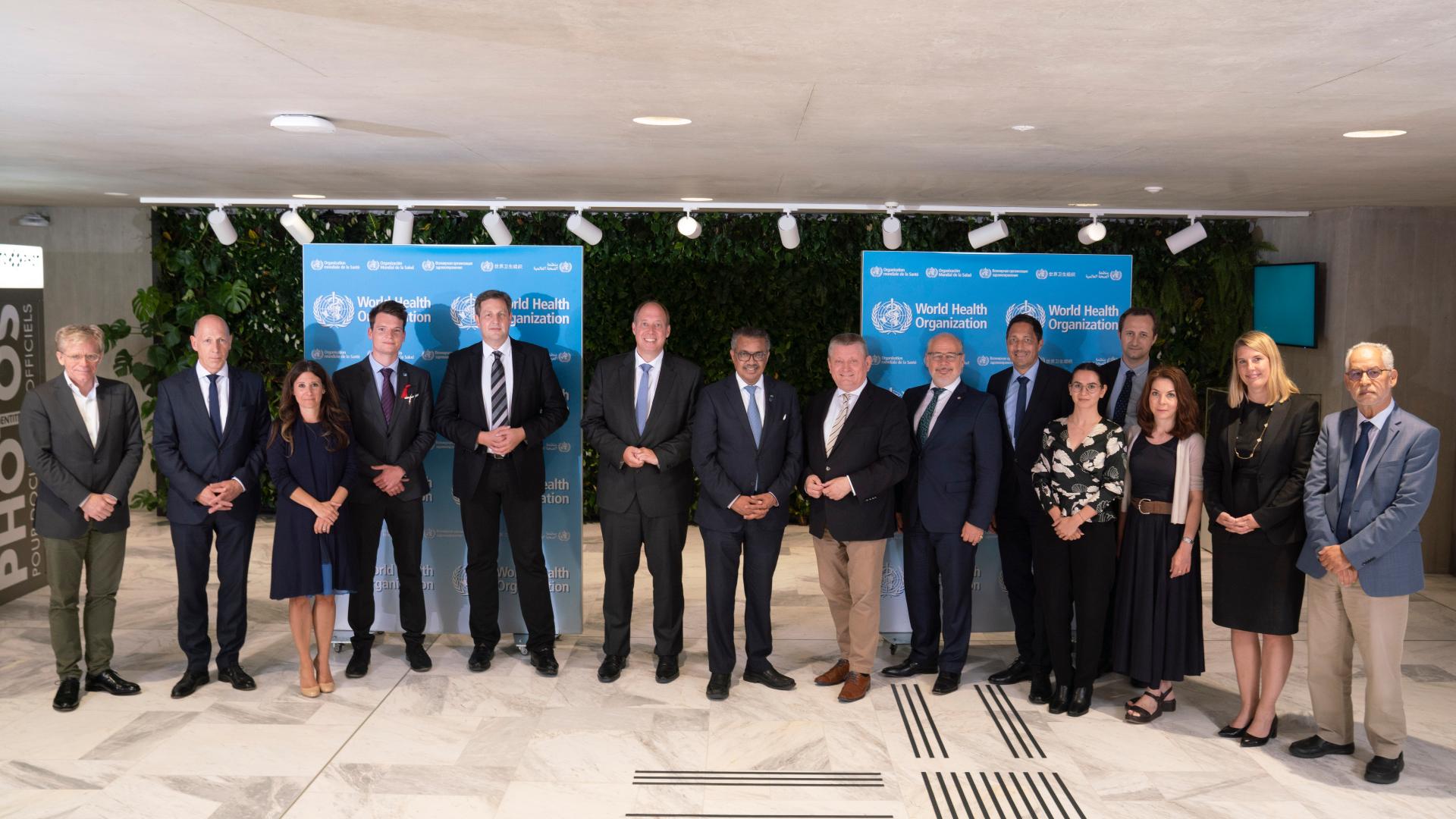
Under the theme “Reshaping global health: a shared responsibility,” the 79th World Health Assembly (WHA) of the World Health Organization (WHO) convened in Geneva from 18 to 23 May ...
Freedom, justice and solidarity are the basic principles underlying the work of the Konrad-Adenauer-Stiftung (KAS). The KAS is a political foundation, closely associated with the Christian Democratic Union of Germany (CDU).
Multipod: WHO macht Fortschritte bei internationalen Gesundheitsvorschriften
Die Covid-Pandemie hat auch auf internationaler Ebene Folgen. Erfahren Sie, wie die Weltgesundheitsorganisation (WHO) und ihre Mitgliedstaaten sich besser für die Zukunft wappnen.
Or adjust your cookie settings under privacy policy.
Statement
Norbert Lammert on the 75th anniversary of the Universal Declaration of Human Rights
"Human rights are not laws of nature. [...], they must be protected & defended by people who take the claim to the inviolability of human dignity seriously".
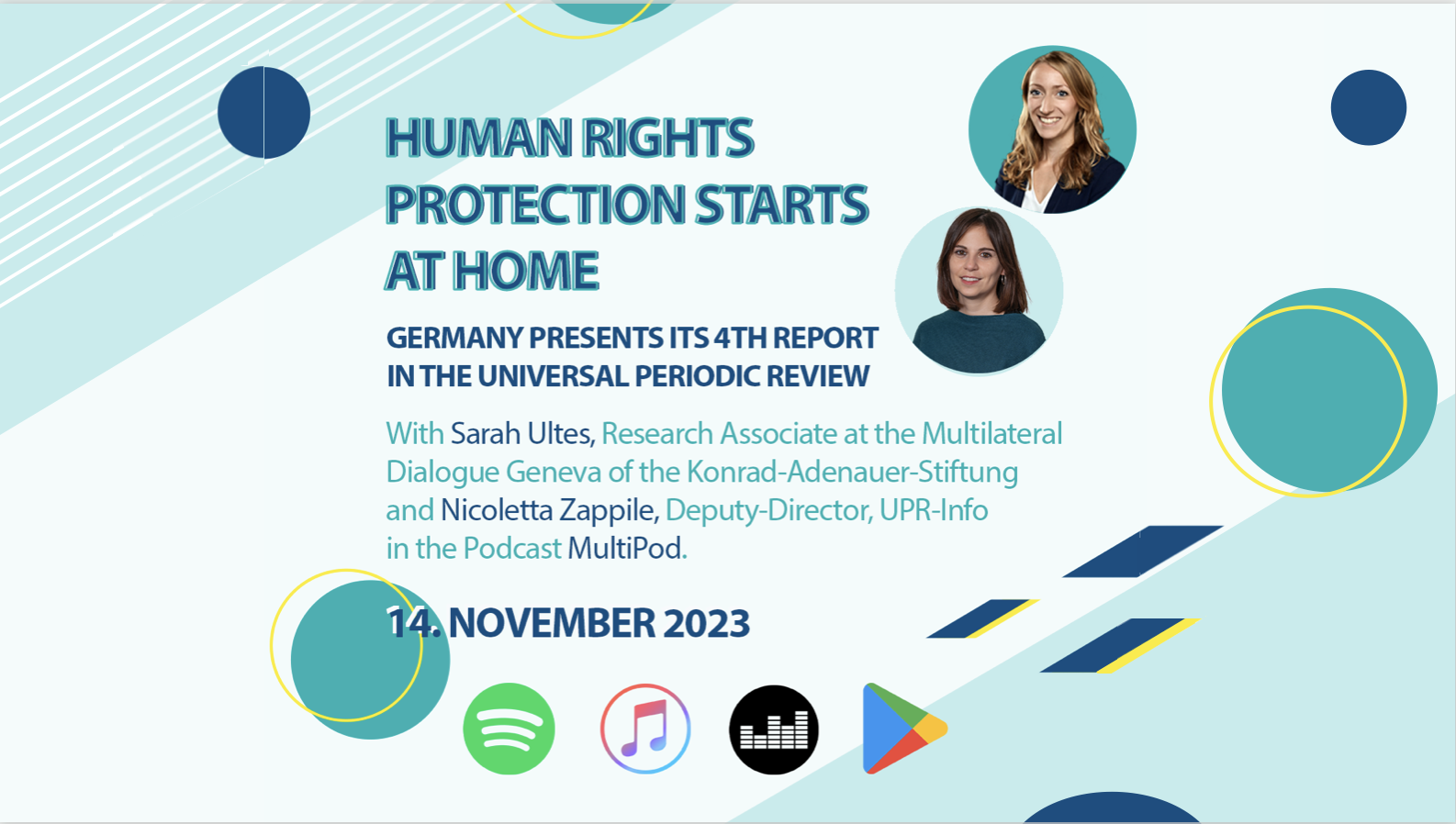
Multipod: Review of Germany in the UPR
Multipod: Human rights protection starts at home. Germany in the UPR
On 9th November 2023, the United Nation's Human Rights Council discussed the human rights situation in Germany
Or adjust your cookie settings under privacy policy.
Genfreise
Geneva Security Debate zum Krieg in der Ukraine
Prof. Dr. Lammert, Botschafter Dr. Heusgen und Botschafter Greminger zu den Auswirkungen des Krieges in der Ukraine auf den Multilateralismus und die Weltordnung
Delegationsreise
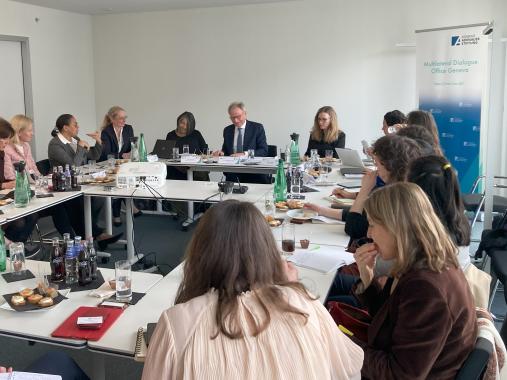
Dialogprogramm des Arbeitskreises Globale Gesundheit der Konrad-Adenauer-Stiftung in Genf
Erfahren Sie mehr über die Delegationsreise zu aktuellen Herausforderungen im Bereich Globale Gesundheit vom 7-9. Juni
Asset Publisher
Asset Publisher
Asset Publisher
Current publications
UN Women/Sayed Habib Bidell
75th anniversary of the 1951 Refugee Convention: Insights from the UNHCR Global Trends report
The "Geneva Telegram" explores events in Geneva-based multilateral organizations on a current topic. This time, the focus is on the 75th anniversary of the 1951 Refugee Convention, ...
Sarah Ultes
July 28, 2026
Geneva Telegram
U.S. Mission / Eric Bridiers / flickr / CC BY-ND 2.0
The global fight against HIV/AIDS amid financial pressures and an uncertain future for UNAIDS
The "Geneva Telegram" explores events in Geneva-based multilateral organizations on a current topic. This time, the focus is on HIV/AIDS.
Linde Buder
July 16, 2026
Geneva Telegram
Advancing Protection under Article I(2) of the 1969 OAU Refugee Convention
Interpretative clarity, operational support and pathways forward for African States Parties
Dr. Tamara Wood
June 26, 2026
Single title
EdvanKun
Analysis of the Swiss vote against capping the population at 10 million
Forced Displacement 2024 - Host countries, countries of origin and contributions to the UNHCR
Map of the Month 06/2025
Worldwide, 123.3 million people were displaced by the end of 2024, according to the new Global Trends Report 2025 published by the UN High Commissioner for Refugees (UNHCR). This constitutes an increase of 6% or 7 million people compared to the previous year and almost twice as many as a decade ago, which was mainly driven by escalating conflicts such as in Sudan, Myanmar, gang violence in Haiti, the war in Gaza and with Lebanon or escalating fighting in the DR-Congo, the Sahel region or Ukraine. With 14.3 million displaced people, Sudan is currently the largest displacement crisis in the world. Despite the rising needs, the UNHCR is facing chronic underfunding. By end-May 2025, only 22% of its budget (2,3 bn out of 10,6 bn. USD) has been covered, once again less than in the previous year. Due to the major funding shortfall and the financial uncertainty due to the U.S. foreign aid freeze in particularly, the UNHCR announced to cut global staffing costs by 30%. The UNHCR has been heavily reliant on US funding (traditionally covering around 40% of its budget). According to High Commissioner for Refugees, Filippo Grandi, it is not merely a funding shortfall, but a "crisis of responsibility". The cost of inaction will not least be measured by further instability.
Sarah Ultes
July 1, 2025
Map of the Month
Key votes during the 78th World Health Assembly
Map of the Month 05/2025
The 78th World Health Assembly (WHA78) took place against a backdrop of persistent geopolitical tensions and challenges—evident, for instance, in the conspicuous absence of the United States and the ongoing dispute over Taiwan’s status within the organisation. Despite unfavourable circumstances, key health policy initiatives with the potential to benefit future generations were adopted or reaffirmed. These include a multilateral pandemic agreement, the next steps in reforming the International Health Regulations (IHR), and—recognizing the signs of the times—a global climate action plan. Further, new health priorities were incorporated into the WHO agenda, signalling that while global cooperation remains arduous, it can, under pressure, yield essential results.
Sarah Ultes, Dr. Anja Maria Rittner
May 31, 2025
Map of the Month
Vote on resolution on negative impact of illicit financial flows during 58th UN Human Rights Council
Map of the Month 05/2025
During the 58th UN Human Rights Council, a resolution on the negative impact of illicit financial flows tabled by Ghana on behalf of the African Group was adopted following a vote. Among other things, the resolution refers to a report by the United Nations Conference on Trade and Development (UNCTAD), according to which an estimated USD 88.6 billion, or around 3.7% of Africa's GDP, leaves the continent each year as illicit capital flight. Accordingly, the resolution requests the UN High Commissioner for Human Rights and his Office (OHCHR) to organise various expert meetings and requests to prepare a substantive report on the issue. The states that voted against the text cited, among other things, possible duplication with the efforts of other entities and instruments, a weak operational link to the promotion of human rights or to the root causes of corruption. The topic is also becoming increasingly important in light of shrinking budgets for official development assistance (ODA) and ongoing debates on the future of financing for development like the upcoming 4th International Conference on Financing for Development (FdD4) in Sevilla (Spain) at the end of June 2025.
Sarah Ultes
May 12, 2025
Map of the Month
US Executive Order to Rectify Trade Practices (‘Reciprocal Tariffs‘)
Map of the Month 04/2025
As the Trump Administration seeks to rectify goods trade deficits of the US, US President Donald Trump signed the Executive Order ‘Regulating Imports with a Reciprocal Tariff to Rectify Trade Practices that Contribute to Large and Persistent Annual United States Goods Trade Deficits’ on April 2nd. The Executive Order is partly based on the ‘International Emergency Economic Powers Act (IEEPA)’ from 1977. IEEPA authorizes the president of the US to regulate international commerce in light of a national emergency and in response to extraordinary threats to the United States. The signing of the Executive Order had been advertised as “Liberation Day”. During the presentation President Trump presented ‘reciprocal tariffs’ for 185 countries and territories. The Executive Order lists 57 countries and territories which will be submitted to tariffs on imports into the US ranging from 11%-50% in addition to already existing tariffs (“additional ad valorem duty on all imports”). This provision will be valid from April 9th. All other countries and territories have been submitted to a baseline additional tariff of 10% since April 5th. Only a few countries and goods (i.e. steel, pharmaceuticals, semiconductors) are exempted from these import tariffs.
75th anniversary of the 1951 Refugee Convention: Insights from the UNHCR Global Trends report
On 28 July 2026, the Geneva Refugee Convention turned 75. Its enduring relevance is particularly evident in light of the record numbers of people forcibly displaced worldwide.