

Asset Publisher

Geneva Telegram

PABS Annex to the WHO Pandemic Agreement: IGWG7 brings competing System Models on the Table

Two concrete proposals are on the table for structuring access to pathogen materials and sequence information and the associated sharing of benefits.

Learn more
Geneva Telegram

75th anniversary of the 1951 Refugee Convention: Insights from the UNHCR Global Trends report

On 28 July 2026, the Geneva Refugee Convention turned 75. Its enduring relevance is particularly evident in light of the record numbers of people forcibly displaced worldwide.

Learn more
Geneva Telegram

The global fight against HIV/AIDS amid financial pressures and an uncertain future for UNAIDS

Although the global fight against HIV/AIDS has made remarkable epidemiological and medical progress, its political, financial, and institutional foundations are coming under increas...

Learn more
Einzeltitel

Advancing Protection under Article I(2) of the 1969 OAU Refugee Convention

Article I(2) of the 1969 OAU Refugee Convention is the ‘most influential conceptual standard of refugee status apart from the [1951] Convention definition itself’.

Learn more
Geneva Telegram

Analysis of the Swiss vote on the 10 Million Initiative on 14 June 2026

On Sunday, 14 June 2026, Swiss voters and cantons delivered a clear verdict on the Swiss People's Party's (SVP) initiative to cap Switzerland's resident population at 10 million.

Learn more
Geneva Telegram

Vote on the 10-million initiative on 14 June 2026

On 14 June, Switzerland will vote on the Swiss People’s Party’s (SVP) 10-million initiative. The SVP aims to strictly limit the population through this measure.

Learn more

Asset Publisher

Welcome

Freedom, justice and solidarity are the basic principles underlying the work of the Konrad-Adenauer-Stiftung (KAS). The KAS is a political foundation, closely associated with the Christian Democratic Union of Germany (CDU).
More about us

Asset Publisher

Media library

Neue Folge des Podcasts Multipod

Multipod: WHO macht Fortschritte bei internationalen Gesundheitsvorschriften

Die Covid-Pandemie hat auch auf internationaler Ebene Folgen. Erfahren Sie, wie die Weltgesundheitsorganisation (WHO) und ihre Mitgliedstaaten sich besser für die Zukunft wappnen.

Read now
Neue Folge des Podcasts Multipod

Multipod: Wie können Frauenrechte im Gesundheitssektor gestärkt werden?

Erfahren Sie mehr über die Herausforderungen von Frauen, Ihr Recht auf Gesundheit einzufordern.

Read now
Statement

Norbert Lammert on the 75th anniversary of the Universal Declaration of Human Rights

"Human rights are not laws of nature. [...], they must be protected & defended by people who take the claim to the inviolability of human dignity seriously".

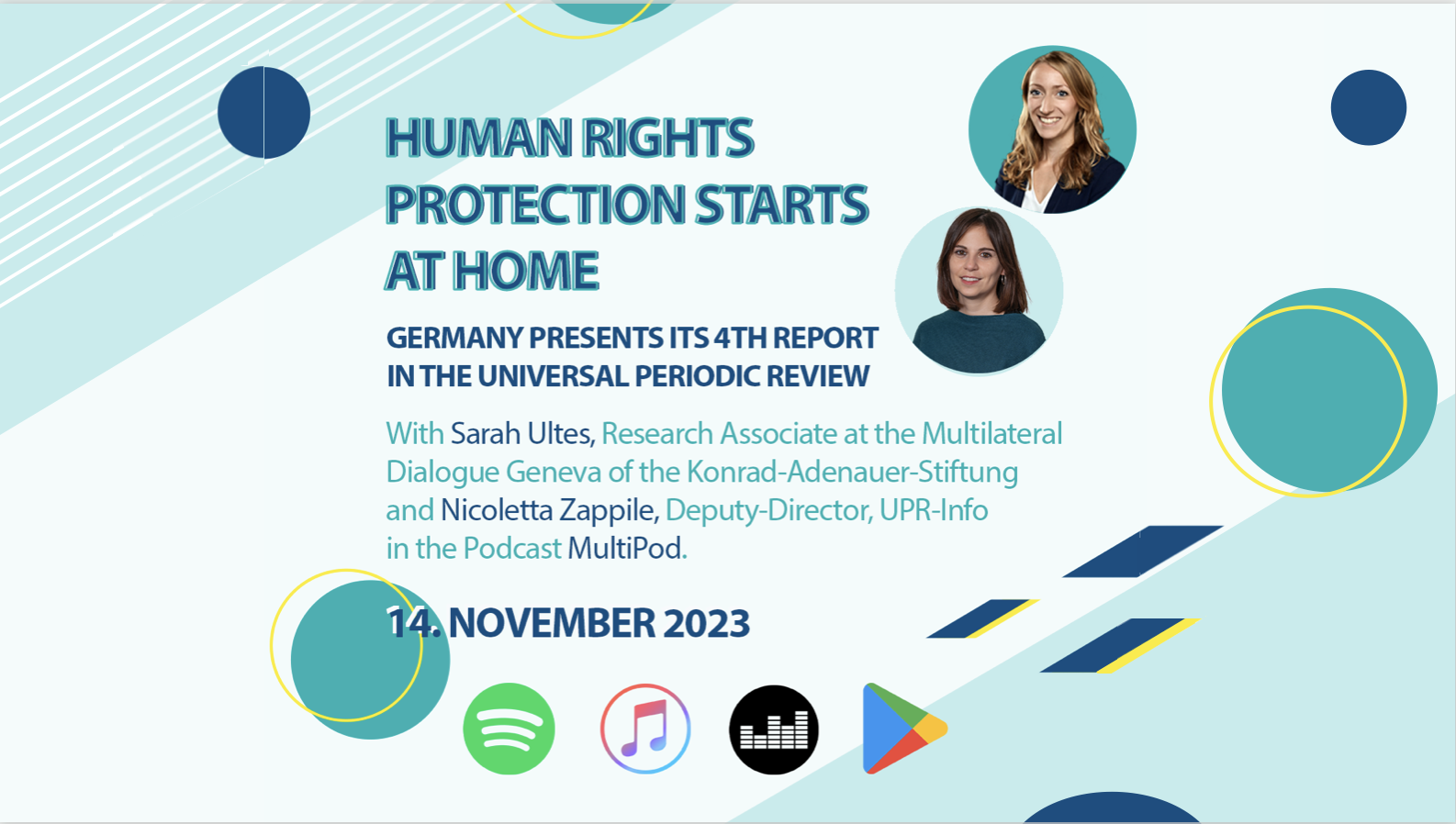
Multipod: Review of Germany in the UPR

Multipod: Human rights protection starts at home. Germany in the UPR

On 9th November 2023, the United Nation's Human Rights Council discussed the human rights situation in Germany

Read now
Genfreise

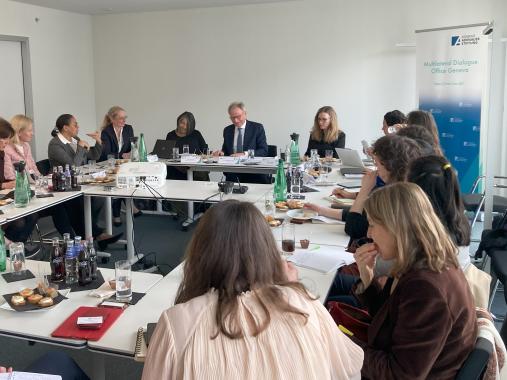
Geneva Security Debate zum Krieg in der Ukraine

Prof. Dr. Lammert, Botschafter Dr. Heusgen und Botschafter Greminger zu den Auswirkungen des Krieges in der Ukraine auf den Multilateralismus und die Weltordnung

Delegationsreise

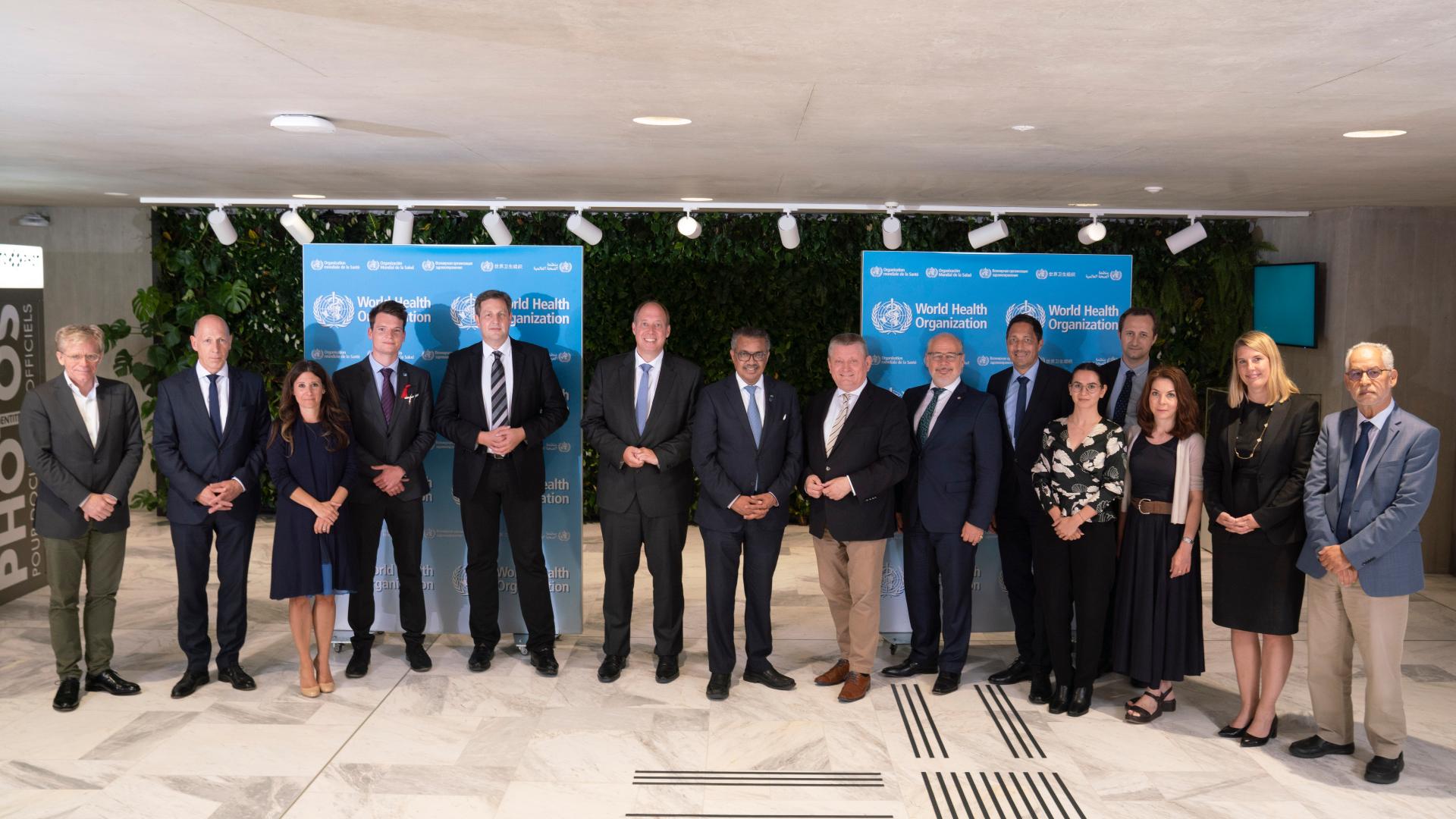
Dialogprogramm des Arbeitskreises Globale Gesundheit der Konrad-Adenauer-Stiftung in Genf

Erfahren Sie mehr über die Delegationsreise zu aktuellen Herausforderungen im Bereich Globale Gesundheit vom 7-9. Juni

Asset Publisher

Asset Publisher

Asset Publisher

Map of the Month

The KAS Map of the Month

Publications

Voting behaviour in line with Germany’s and China's positioning in the UN Human Rights Council 2024

Map of the Month 01/2025

The map of the month January illustrates the voting behaviour of the members of the Human Rights Council in line with Germany’s versus China's positioning in the Council in 2024. A total of 91 resolutions were adopted in the UN Human Rights Council last year, 25 of which were put to a vote due to a lack of consensus. In addition to the EU member states, the USA, Montenegro, Japan, Finland and Albania voted most frequently in line with Germany (over 80%); Algeria never did so and Bangladesh, Burundi, Cameroon, China, Eritrea and Sudan only once. Of the Central and South American Council members, Argentina, Paraguay, Costa Rica and Chile voted most frequently in line with Germany (just over 55%); of the African states, Malawi, Ghana and Gambia (just over 35%). By contrast, Eritrea, Cuba and Burundi voted in line with China most frequently, while Albania, Argentina, Bulgaria and the USA never voted with China, and Germany, Lithuania, the Netherlands and Romania hardly ever (4%). China and Germany only voted together once: they supported a text on the Palestinian people's right to self-determination, which the USA rejected.

Contributions of WHO member states to the first WHO Investment Round

Map of the Month 12/2024

The WHO Investment Round, initiated by the "Sustainable Finance Working Group", is a new pillar to secure sustainable, predictable and flexible funding for the WHO, complementing the gradual increase in assessed contributions. Between May and November 2024, the first-ever Investment Round raised 3.8 billion USD (53% of the 7.1 billion target) from 53 member states and 16 philantrophy, private sector, or multilateral entities. Only member states and the European Union are shown here. For 2025-2028, the WHO's General Program of Work (GPW) requires 11.1 billion USD in total funding, of which 4 billion USD will come from assessed contributions. This approach aims to address critical health needs while ensuring financial sustainability and accountability.

New composition of UN Human Rights Council as of 2025 and key votes at the 57th session of the Council

Map of the Month 10/2024

On 9 October, the UN General Assembly voted on the new composition of the UN Human Rights Council for the year 2025. Saudi Arabia once again failed to make it onto the Council in the Asia-Pacific Group, obtaining only 117 votes. The country's last failed attempt was in 2021 when it obtained only 90 votes. In the group of Western European and other states, the USA decided not to run for a second term. Trump had already decided to withdraw from the Council during his first term in June 2018, a decision that was reversed under Biden. Germany will be represented on the Council once again in 2025. Key votes during the 57th UN Human Rights Council included an extension of the mandate of the Special Rapporteur on the on the situation of human rights in the Russian Federation as well as for the Fact Finding Mission on Sudan. A resolution tabled by Georgia on technical assistance for its own country also had to be voted on. With regard to the right to development, another resolution was adopted, which focussed in particular on the UN High Commissioner for Human Rights for its promotion of the right at the regional level. The resolution was sharply criticised by the USA and the EU, among others. The USA also criticised a text entitled ‘From rhetoric to reality: a global call for concrete action against racism, racial discrimination, xenophobia and related intolerance’, which, among other things, described the slave trade as a ‘crime against humanity’ for which 'reparations proportionate to the harms committed' were expected. Criticism from the USA and Germany was primarily directed at anti-Semitism in connection with the associated Durban process and the singling out of a single region in the context of the wider problem of racism.

Vote by UN General Assembly on motion for no action on Russian amendment to the Pact for the Future

Map of the Month 09/2024

On 22 September 2024, the UN General Assembly adopted by consensus the Pact for the Future along with its annexes, the Global Digital Compact and the Declaration on Future Generations. Beforehand, however, the Russian Federation criticised the negotiations and the pact and put forward an amendment which stated „that the United Nations and its system shall not intervene in matters which are essentially within the domestic jurisdiction of any State (…)“. Congo on behalf of the African Group requested a motion for no action which was voted on and supported with 143 states in favour, 7 against (Russia, Iran, Syria, North Korea, Nicaragua, Belarus and Sudan) and 15 abstentions. 28 states did not participate. UN Secretary General Antonio Guterres called the Pact and its annexes „landmark agreements“ which were "step-change towards more effective, inclusive, networked multilateralism.“ The Pact includes 56 action steps in areas like sustainable development, peace and security, digital cooperation, youth and future generations or global governance.

Showing 33 to 36 of 112 entries.

Asset Publisher

Geneva Telegram

PABS Annex to the WHO Pandemic Agreement: IGWG7 brings competing System Models on the Table

Two concrete proposals are on the table for structuring access to pathogen materials and sequence information and the associated sharing of benefits.

View details

Asset Publisher