



Asset Publisher

Country Reports

Short political reports of the KAS offices abroad

Publications

Zwischen Kooperation und Kalkül

Länderbericht zu den außenpolitschen Beziehungen zwischen Ägypten und den USA

Als sich im Frühjahr 2025 Delegationen aus Washington, Kairo und mehreren regionalen Akteuren in Scharm el-Scheich zu einem hochrangigen Friedensgipfel trafen, wirkte das Treffen wie ein Moment relativer Normalität in einer zunehmend fragmentierten internationalen Ordnung. Ägypten präsentierte sich erneut als Vermittler im Gaza-Konflikt, die Vereinigten Staaten als unverzichtbarer Machtfaktor, der trotz wachsender globaler Spannungen handlungsfähig bleibt. Der erzielte diplomatische Fortschritt war begrenzt, doch seine symbolische Bedeutung war erheblich. Nur wenige Monate zuvor hatte ein Terroranschlag im US-Bundesstaat Colorado die Beziehungen zwischen beiden Staaten auf eine Probe gestellt. Der Täter, ein junger Mann ägyptischer Herkunft, löste eine innenpolitisch aufgeladene Debatte in den USA aus. Präsident Donald Trump reagierte mit einer erneuten Verschärfung des sogenannten Travel Ban. Auffällig war jedoch, dass Ägypten, anders als andere mehrheitlich muslimische Staaten, erneut von den restriktiven Maßnahmen ausgenommen blieb. Diese Entscheidung verweist auf eine tieferliegende Konstante amerikanischer Außenpolitik. Ägypten gilt in Washington seit Jahrzehnten als strategischer Sonderfall. Selbst in Phasen politischer Irritationen, öffentlicher Kontroversen oder wachsender geopolitischer Differenzen bleibt Kairo ein privilegierter Partner. Die gleichzeitige Fähigkeit beider Staaten, nach dem Anschlag wieder an einem Tisch Platz zu nehmen, verdeutlicht die strukturelle Belastbarkeit dieser Beziehung.

Regional and International Engagement in the Sudanese Conflict: Limits and Potential for Activation

Spotlight on Sudan No. 10

The Sudanese war has entered its third year. Leaving behind escalating humanitarian consequences, that have extended to many regions in the Sudanese state, and impacted countries in the region. While Western governments have increasingly condemned the massacres and violations resulting from military operations; especially those involving the Rapid Support Forces. Criticism of these governments is also growing, for failing to influence the warring parties and their regional backers. In light of this, this paper analyzes the limitations of the international role in the political and military conflict in Sudan. Arguing that the shortcomings of this role, stem not only from the rise of regional powers and their direct influence over the parties of the conflict, but also from the fragmented approaches adopted by international actors. These shortcomings include: the tendency sometimes to reduce the Sudanese war to an "ideological" conflict between the warring parties, or a rivalry between two generals, the inclination to delegate the management of the conflict to regional powers allied with Western governments, the tendency towards a single civilian bloc, the introduction of simplistic frameworks for complex issues such as military reform and civil-military relations reform, the delay of economic support for the transitional government, and the weak coordination between international and regional initiatives to resolve the conflict. In light of the opportunity presented by the Quartet initiative put forward by the Trump administration in partnership with regional actors. The paper proposes a number of ideas to address the shortcomings; including the threatening to review some agreements with the regional supporters of RSF, providing economic incentives to both sides of the war; while brandishing the threat of international trials for war violations, attempting to contain moderate Islamist forces to build a broad civilian consensus on the political settlement, postponing the discussion of civilian control over military institutions until a civilian government is elected, and supporting the post-war transitional government economically with clear mechanisms to monitor the implementation of this support.

IMAGO / ZUMA Press Wire

Egyptian perspectives on the BRICS conference in Brazil

Egypt sees itself as an active partner in the BRICS alliance, but the topic is only discussed to a limited extent in the public debate

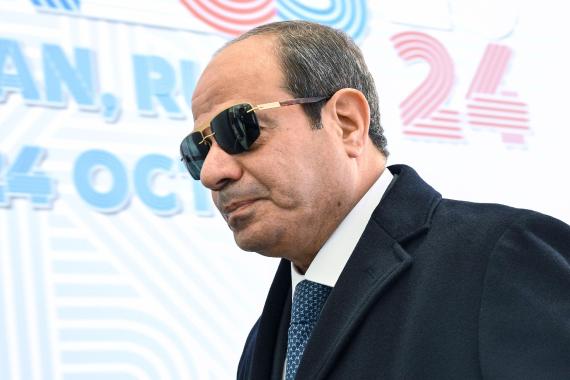
Since joining BRICS in January 2024, Egypt has positioned itself as an active partner focused on financial reform and cooperation with the Global South. President Al-Sisi criticized traditional institutions like the UN and emphasized BRICS' role in addressing global crises. Egypt advocates for fairer debt systems and stronger economic sovereignty within the alliance.

IMAGO / Xinhua

Two years of civil war in Sudan

The latest developments in the crisis region

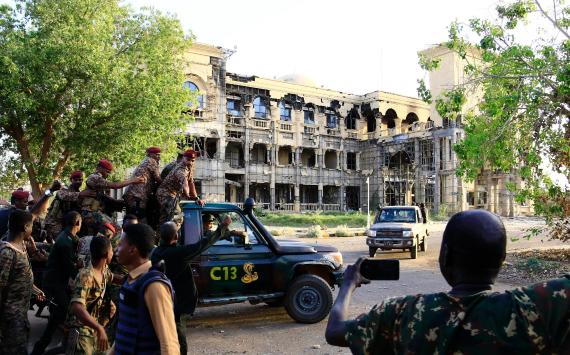
At the end of March, Sudanese media reported that the presidential palace in the Sudanese capital, Khartoum, had been retaken by the Sudanese Armed Forces (SAF). The palace, which also serves as the seat of government, had been occupied by the paramilitary Rapid Support Forces (RSF) since April 2023, along with other parts of the capital. The recapture marks a major milestone for the Sudanese army in the ongoing conflict. Several ministry buildings and much of the capital are also back under SAF military control. However, an end to the war is not yet in sight, as RSF rebels still control several strategic areas of the country and fighting continues in other regions. Fighting continues particularly in Western Darfur. An end to the war is a long way off, as various local and international political initiatives remain unsuccessful. In the meantime, the people of Sudan are suffering one of the worst humanitarian disasters in the world.

Asset Publisher

About this series

The Konrad-Adenauer-Stiftung is a political foundation. Our offices abroad are in charge of over 200 projects in more than 120 countries. The country reports offer current analyses, exclusive evaluations, background information and forecasts - provided by our international staff.

Order details

Editor

Konrad-Adenauer-Stiftung e.V.