






Asset Publisher

Publications

Asset Publisher

IMAGO

25th EU-China Summit in Beijing

A Sobering Anniversary

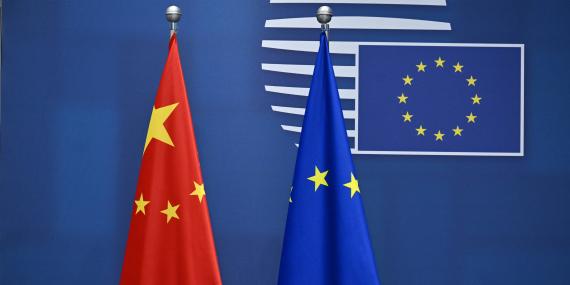
The 25th EU-China Summit on 24 July in Beijing took place under difficult circum-stances: although it marked the 50th anniversary of diplomatic relations between the EU and China, there was little sign of enthusiasm in the run-up to the event. The dif-ferences are too great – both in geopolitical terms and in economic and trade policy. As generally expected, no major breakthroughs were achieved on the numerous con-tentious issues. There were hardly any signs of a readjustment of relations, as desired by the EU. Nevertheless, both sides adopted a joint statement on climate issues and agreed to find a solution to the impact of Chinese export controls on rare earths.

IMAGO / Xinhua

China ahead of the BRICS summit in Rio

"Rien ne va plus" or "now more than ever"?

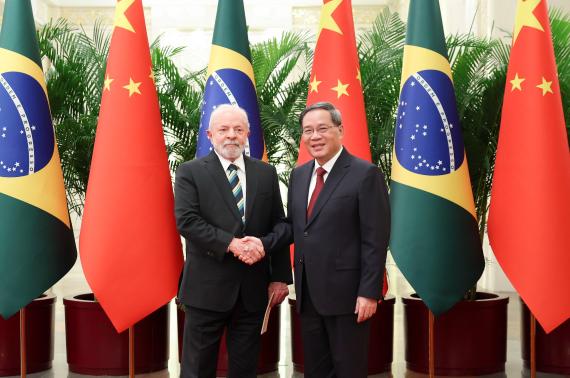
For the first time since assuming office in 2013, Chinese President and Communist Party leader Xi Jinping will not attend a BRICS summit in person. Instead, Premier Li Qiang will represent the People’s Republic of China at the gathering in Rio de Janeiro. From Beijing’s perspective, the ongoing conflicts — and the direct involvement of fellow BRICS members such as Russia and Iran — have significantly dampened expectations for the summit’s success. Against this backdrop, signs are mounting that China’s enthusiasm for the BRICS format is waning, giving way to growing disillusionment and lowered ambitions.

IMAGO / Björn Trotzki

China at the Munich Security Conference

More than just a short-term PR success for Beijing?

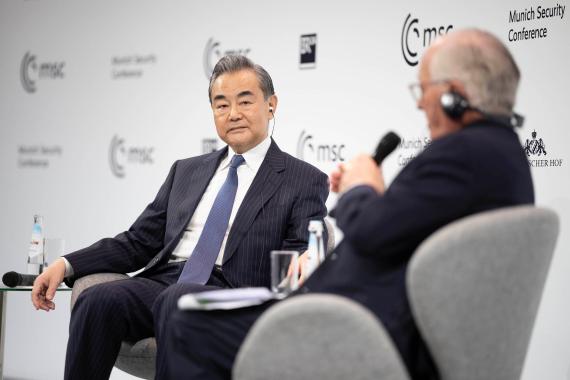
China was able to score diplomatic points at the 61st Munich Security Conference, according to observers – especially in contrast to the behavior of the USA. "Wang Yi appeared to be the only adult in the room," noted Table.Media, and Bayerischer Rundfunk reported on "China's charm offensive." But how is the appearance of the Chinese top diplomat discussed in China's media, and what conclusions are being drawn from the openly revealed differences between the USA and Europe in China's capital?

IMAGO / ZUMA Press Wire

The Turkestan Islamic Party Takes Aim at China

What’s behind the threats from Uighur Islamists in Damascus?

The escalating rhetoric of the Turkestan Islamic Party (TIP) highlights their ambition to expand their fight beyond Syria and target China directly. With increasing propaganda and connections to global terrorist networks, the TIP presents a growing challenge to Beijing’s security and its strategic interests, particularly in Xinjiang and along the Belt and Road Initiative.

IMAGO / ITAR-TASS

Peking's Reach for the Sea of Japan

China's Geopolitics and Russia's Concessions

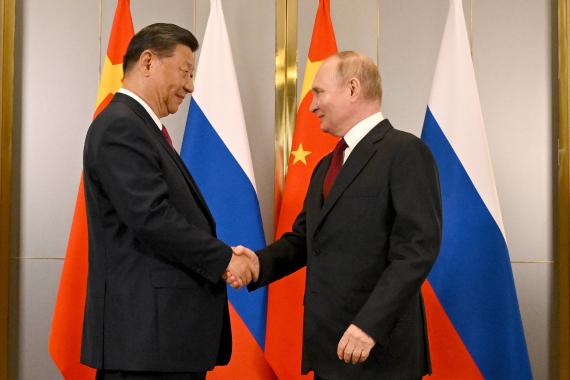
While Western media continues to speculate about China's role in Russia's war of aggression, Beijing is focused on maximizing its benefits. China aims to exploit Moscow's dependence on the People's Republic and expand cooperation on its own terms, not just economically. Geopolitically, this involves China's access to the Sea of Japan and extends to the Arctic. A seemingly insignificant passage in a joint statement by Presidents Xi and Putin could have far-reaching geopolitical implications, posing a serious security challenge for Japan and South Korea.

IMAGO / ZUMA Wire

China's powerlessness in the Red Sea

Houthi attacks pose a strategic dilemma for Beijing

Washington has asked Beijing for support to curb attacks by Yemen's Houthi rebels on merchant ships in the Red Sea, the Financial Times reported on Wednesday, citing US government circles. China's own interest in de-escalation and securing trade and supply chains appears to be obvious. However, why China is holding back in the conflict, even though it is economically heavily dependent on exports, raises questions.

IMAGO / Xinhua

Beijing Reactions to Germany's China Strategy

China's moderate response

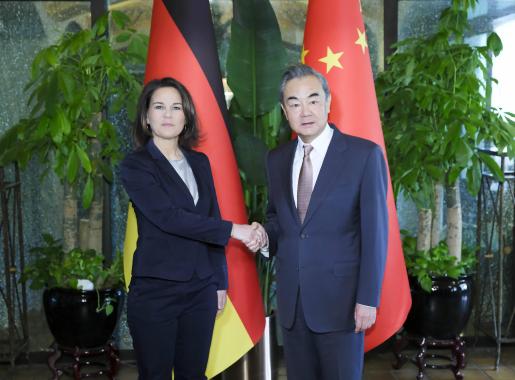
Chinese officials and the state media have reacted with deliberate calm to the German government's new China strategy, which Foreign Minister Annalena Baerbock presented last Thursday, July 13. Behind China's restraint is also the political calculation to calm things down so as not to endanger German investments in China.

IMAGO / NurPhoto

China: The new superpower in space?

A new arms race

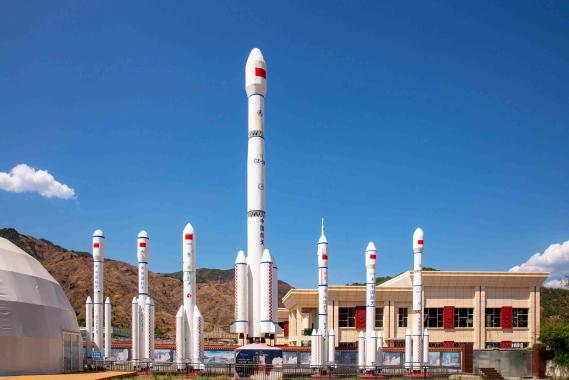
The United States sees itself in a "space race" with China. But from Beijing's perspective an arms race in low earth orbit between the U.S. and China has long since begun. In reaching for the stars, China and the U.S. are not only competing for national prestige and global technological leadership, but also for geopolitical influence and military power.

IMAGO / Zoonar

German Foreign Minister Baerbock travels to China

A Chance for European Diplomacy?

At the end of this week, Foreign Minister Annalena Baerbock (Alliance 90/The Greens) will travel to the People's Republic of China. In Beijing, she is to meet with her Chinese counterpart Qin Gang. In addition, talks are planned with the highest-ranking Chinese foreign policy official, Wang Yi, as well as Premier Li Qiang. Even if the program of talks is still fraught with uncertainties, it is already clear that the Foreign Minister's list of topics is long. Putin's war of aggression in Ukraine will play a role. This also applies to the German government's China strategy, which has been announced for some time, and the German-Chinese intergovernmental consultations scheduled for June.

Inklusion in China

Zwischen Anspruch und Wirklichkeit

Im Vorfeld der Paralympischen Winterspiele in Peking 2022 verkündeten die chinesischen Staatsmedien, dass die Volksrepublik "unermüdliche Anstrengungen bei der Gleichberechtigung und den Entwicklungsrechten von Behinderten" unternommen habe. Angesichts der Millionen Menschen mit Behinderungen wäre dies wünschenswert - doch kann die Realität mit den formulierten Ansprüchen mithalten? Unser Auslandsbüro in Peking hat sich die Zahlen genauer angeschaut und fasst die aktuelle Lage zusammen.