




Asset Publisher

Country Reports

Short political reports of the KAS offices abroad

Publications

IMAGO / UPI Photo

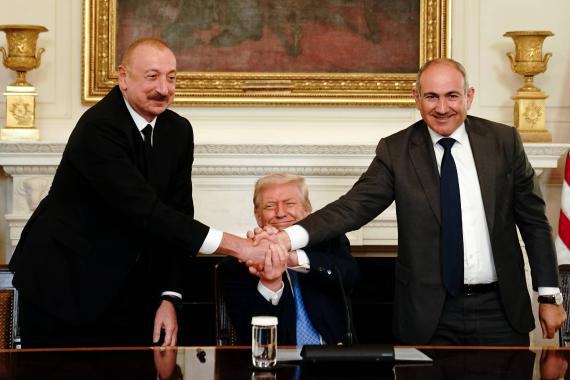
Historic Breakthrough for Peace in the South Caucasus?

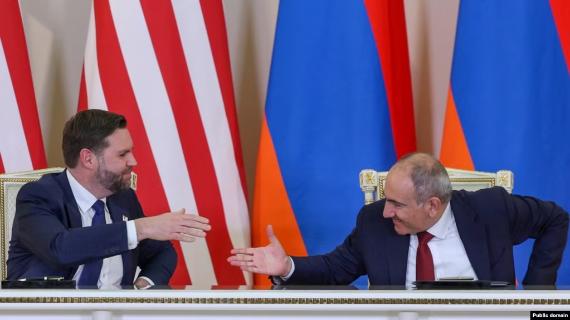
Pashinyan and Aliyev sign groundbreaking agreements with Trump on peace and infrastructure projects between Armenia and Azerbaijan

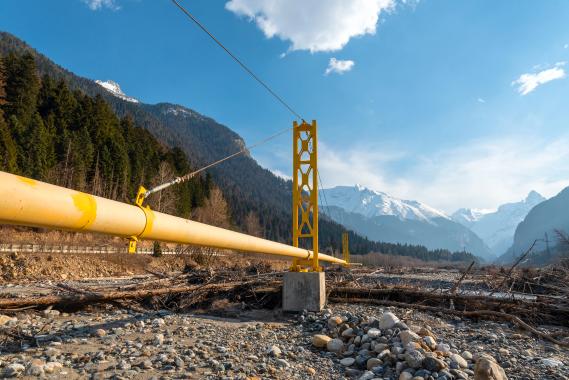
On August 8, Armenian Prime Minister Nikol Pashinyan and Azerbaijani President Ilham Aliyev met with U.S. President Donald Trump at the White House for a “historic peace summit.” Both countries declared a permanent renunciation of war, endorsed 17 negotiated provisions of a future peace treaty, and formally withdrew from the OSCE Minsk Group. At the heart of the agreement lies the “Trump Route for International Peace and Prosperity” (TRIPP), an infrastructure initiative in Armenia’s Syunik region encompassing railways, pipelines, and fiber-optic networks. In exchange, the United States receives exclusive development rights for 99 years, while Armenia retains formal sovereignty over the territory. The deal diminishes Russia’s regional influence, strengthens Turkey’s strategic position, and provokes discontent in Iran. For Armenia, the agreement opens up new trade opportunities but also entails risks due to the rupture with traditional partners and domestic political criticism. Azerbaijan gains a direct land corridor to Turkey, access to new markets, and enhanced international prestige. For the United States, the deal offers economic and security benefits as well as a boost in global political standing. The European Union sees potential for regional stabilization and new trade routes but must acknowledge its diminished role as a mediator compared to Washington. If successfully implemented, the agreements could mark a historic turning point for the South Caucasus.

IMAGO / ITAR-TASS

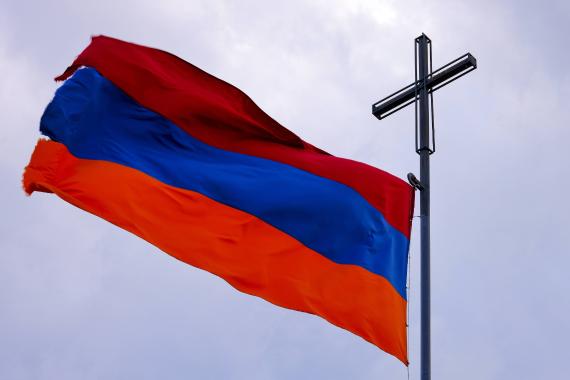
Foiled Coup in Armenia? Conflict with Church Leadership Escalates

Yerevan reports the thwarting of a violent coup with Moscow's fingerprints

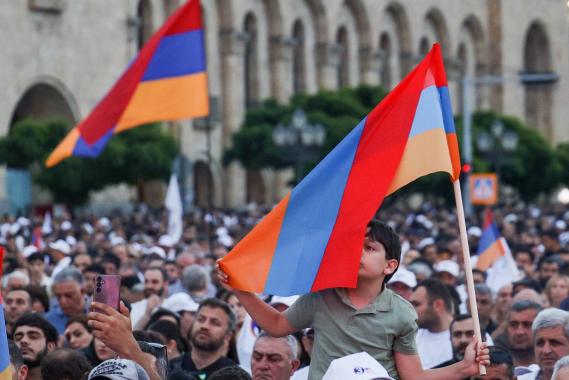
On the afternoon of June 27, 2025, dramatic scenes unfolded in Etchmiadzin, the seat of the head of the Armenian Apostolic Church, located 20 km west of Yerevan. Special police units moved in to detain Mikael Ajapahyan. The archbishop, along with other church leaders, had openly opposed the government, but hundreds of people—including clergy and ordinary citizens—blocked the path until the uniformed officers withdrew. When the wanted man voluntarily turned himself in to the authorities later that evening, asserting his innocence, he became just one of fifteen high-profile arrests within a matter of days. Nikol Pashinyan’s government claims to have thwarted a violent coup attempt. Critics, however, accuse it of launching a politically motivated campaign against the Armenian Church and the opposition, and of betraying the country to its archrivals, Azerbaijan and Turkey. Societal divisions appear more entrenched than they have been in decades. One year ahead of the pivotal parliamentary elections in the summer of 2026, the current escalation is unfolding against the backdrop of an increasingly polarized debate over the country’s direction, as Armenia stands at a historic crossroads in its foreign policy.

KAS

Special edition - Country reports with a difference

International comparison of accessibility

This publication provides research, compiled by some of our overseas offices, on the current situation of political participation for people with disabilities, in their respective countries. We hope that their reports will increase awareness of the sadly often persistent inequalities that remain and motivate all of us to pay greater heed to the issue of inclusion.

IMAGO / NurPhoto

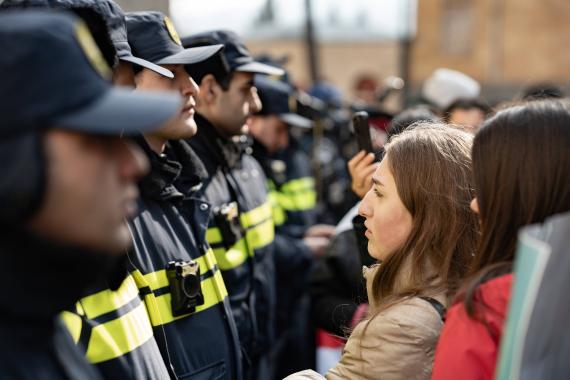
Georgian Knot: Local Repressions and International Isolation

For weeks, Georgia has been caught in a destructive cycle of protests and repression, isolating the country on the international stage.

Even after nearly 70 days of continuous protests, the de facto government of Georgia—controlled by oligarch Bidzina Ivanishvili—remains unyielding. However, instead of the brutal crackdowns seen at the start of the demonstrations, authorities are now resorting to targeted intimidation and repression against individuals. The cases of Msia Amaghlobeli and Giorgi Gacharia starkly illustrate how the rule of law in Georgia has collapsed in recent months. Internationally, the country is increasingly isolated. Recent diplomatic visits by the new government leadership to neighboring Azerbaijan and Armenia highlight that Georgia’s path to Europe remains blocked under the rule of the Georgian Dream party.

IMAGO / MAXPPP

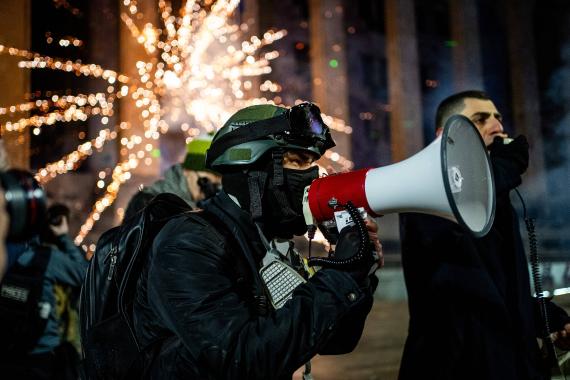
Georgia on the barricades

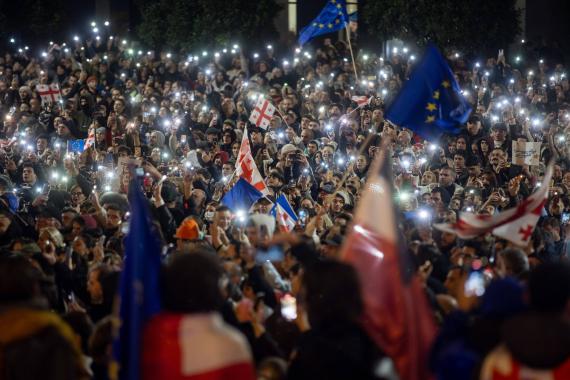
Since the government announced that Georgia would suspend its EU rapprochement, tens of thousands have been protesting across the country every evening.

Less than a month after the controversial parliamentary elections in Georgia, the old and new head of government Irakli Kobakhidze surprisingly declared that the government led by the Georgian Dream party had decided not to endeavour to enter into EU accession negotiations until 2028 and not to accept any further EU payments. This was preceded by a strong resolution by the European Parliament, in which the parliamentary elections of 26 October were described as not free and fair and the Georgian Dream was held responsible for massive democratic setbacks in Georgia. Since then, there have been massive protests every night in numerous cities. The police responds with brutal violence, the demonstrators respond with fireworks. Hundreds of people have been arrested. The fronts have hardened.

IMAGO / Scanpix

Special election operation in Georgia

A historic election in the South Caucasus is characterised by electoral fraud on a presumably historic scale

The Georgians are a creative nation, for better or for worse. The parliamentary elections on 26 October were an impressive illustration of this. At around 10 p.m., the Central Election Commission announced a result of 53% for the ruling Georgian Dream party, with the four opposition blocs accounting for a total of 38%. Exit polls had painted the opposite picture two hours earlier. Independent election observers, who documented and communicated numerous irregularities during the election day, are calling for the elections to be annulled. The president and the opposition declare that they will not accept the election results. The OSCE's preliminary statement is very critical of the general conditions but certifies that the elections were most widely conducted in a technically correct manner. 

IMAGO / Le Pictorium

Georgia votes: Calm before the storm?

Georgians will vote for a new parliament on 26 October. It is a directional election, Europe is in demand

For the first time since 2012, the opposition in Georgia appears to have a serious chance of replacing the government of pro-Russian oligarch Bidzina Ivanishvili. Many observers are talking about a mood for change in the country. Although the ruling Georgian Dream party is likely to become the strongest political force again, it will fall short of the necessary majority. There have been no widespread protests during the election campaign so far, but that could change. The current relative calm seems deceptive and a major confrontation could be imminent. Will the government try to manipulate the elections? How will Ivanishvili behave? How will the transfer of power proceed if the opposition wins? What role will the president play? It is an election with many unknowns.

IMAGO / Xinhua

Azerbaijan - Election without a choice

Aliyev has a new Azerbaijani parliament elected: The voter turnout of 37% speaks for itself

In the parliamentary elections in Azerbaijan, which were moved up due to the COP 29, President Ilham Aliyev's ‘New Azerbaijan’ party, which has been in power since 1995, won on paper. Although it only won 67 out of 125 seats, there will de facto be no independent representatives in the new Azerbaijani parliament.

adobe stock / Ramil

Parliamentary elections ahead of COP29

Despite many hurdles and a predictable outcome, independent candidates are challenging Aliyev's government.

Since 1995, the ruling party ‘New Azerbaijan’ has won every election with an overwhelming majority. The early parliamentary elections on 1 September are likely to be no exception. While the country has allowed Western election observation missions to take part in previous polls, this time only the OSCE has been invited. Chinese and Russian election observers are welcome. Despite major obstacles, independent candidates are also running. One of them is Shahriyar Majidzadeh, whose constituency of Tartar also includes parts of Nagorno-Karabakh. His slogan is: ‘Peace, climate protection, gender equality and education’.

KAS

Gateway to Armenia, key to peace?

The history of the South Caucasus could be rewritten from Meghri in southern Armenia - a political travel report

In October 2023, Armenian Prime Minister Nikol Pashinyan presented his government's ‘Crossroads of Peace’ initiative at a conference in Tbilisi. This envisages the opening of borders, the restoration of transport routes - road and rail - and the revitalisation of political and cultural connections in the South Caucasus. The initiative is a positive vision for a region that has been characterised by wars and conflicts for three decades. In Meghri, on Armenia's border with Iran, there are glimpses of what a peaceful South Caucasus could look like. But there is still a long way to go, and political will is needed above all. Europe could play a constructive role here.

Asset Publisher

About this series

The Konrad-Adenauer-Stiftung is a political foundation. Our offices abroad are in charge of over 200 projects in more than 120 countries. The country reports offer current analyses, exclusive evaluations, background information and forecasts - provided by our international staff.

Order details

Editor

Konrad-Adenauer-Stiftung e.V.