Details
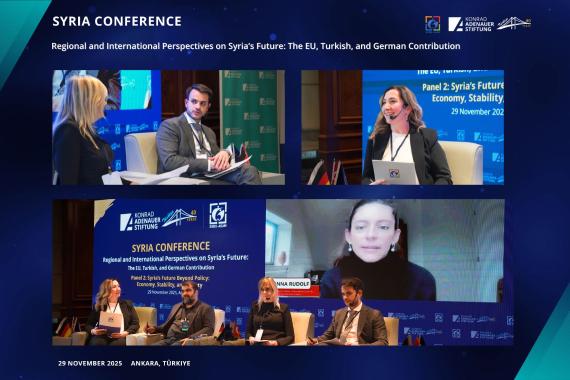
Syria Conference: Regional and International Perspectives on Syria’s Future – The EU, Turkish, and German Contribution
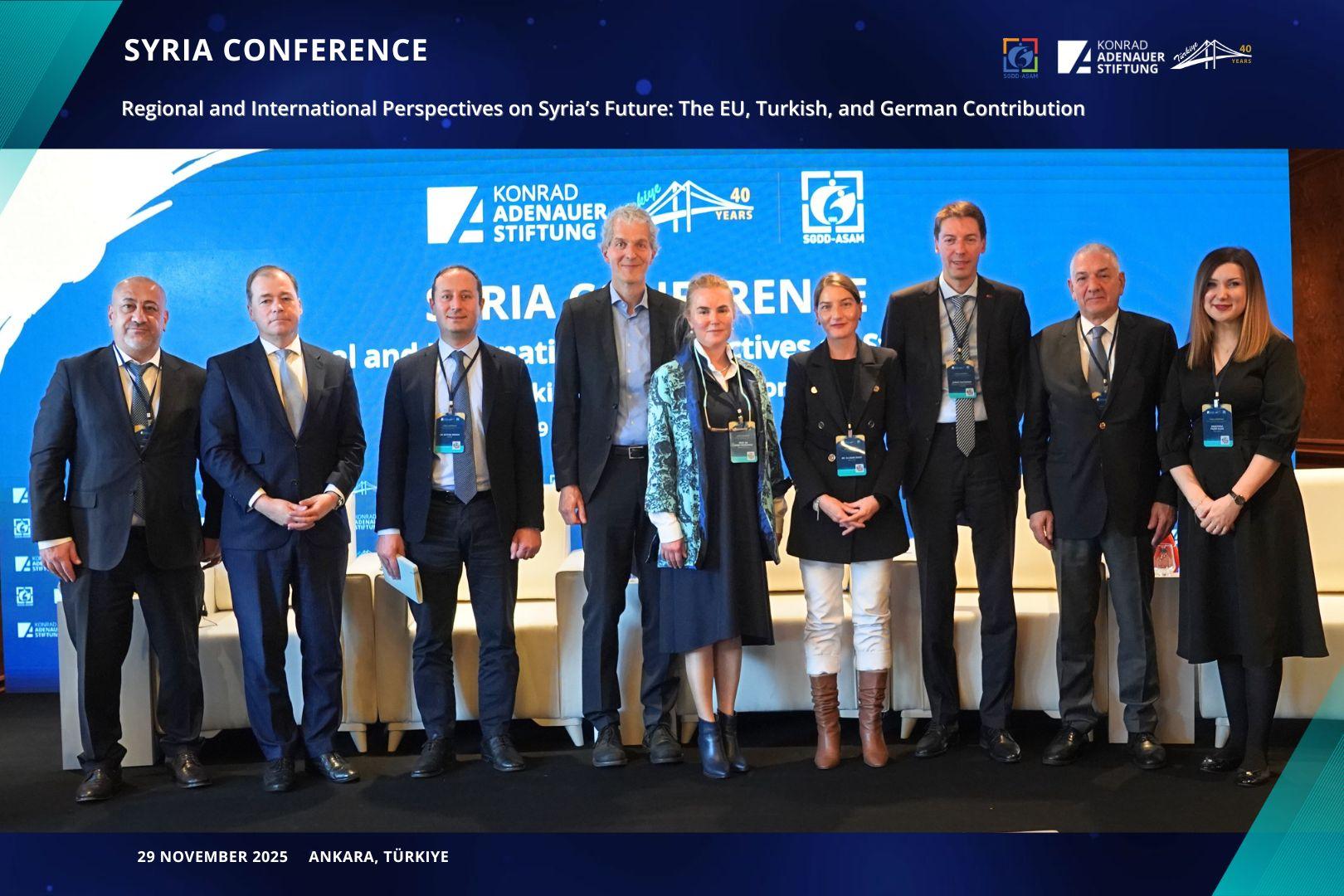
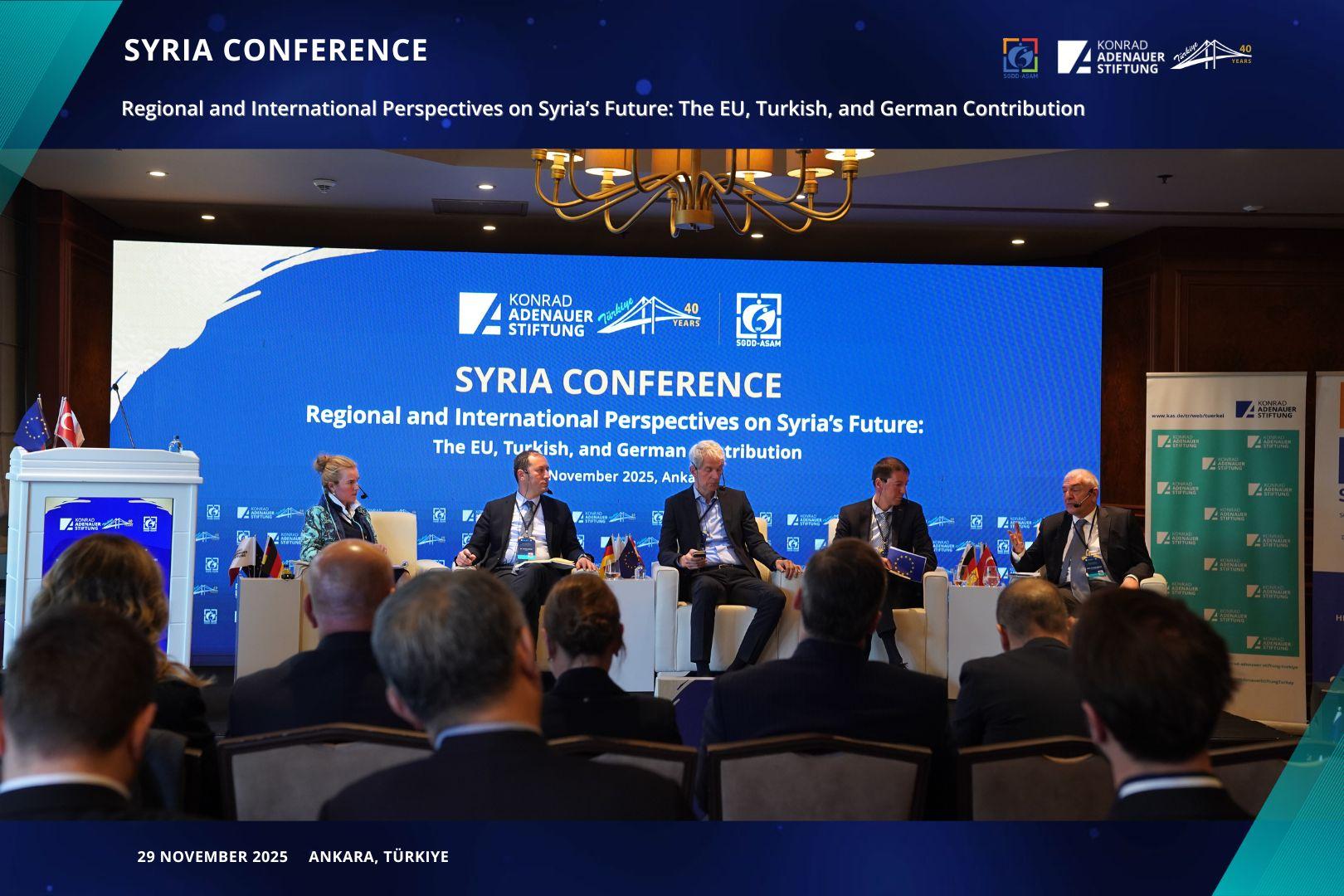
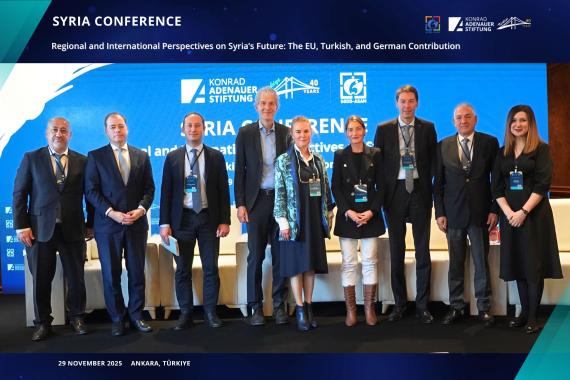
The Syria Conference titled “Regional and International Perspectives on Syria’s Future – The EU, Turkish, and German Contribution” was held on 29 November 2025 in Ankara, organized in cooperation between the Konrad-Adenauer-Stiftung (KAS) Türkiye and the Association for Social Development and Aid Mobilization (ASAM).
After 14 years of civil war and more than five decades under the rule of the al-Assad regime, Syria remains one of the central focal points of regional and international politics. Issues of stability, reconstruction, humanitarian assistance, and migration management continue to shape the agenda. Germany, Türkiye, and the European Union play key and complementary roles and face the shared challenge of aligning their political and practical approaches more closely.
Against this backdrop, KAS Türkiye and ASAM organized the conference “Regional and International Perspectives on Syria’s Future: The EU, Turkish, and German Contribution.” The aim was to place Syria’s political, economic, and social developments in a broader international context and to discuss perspectives for more coordinated cooperation.
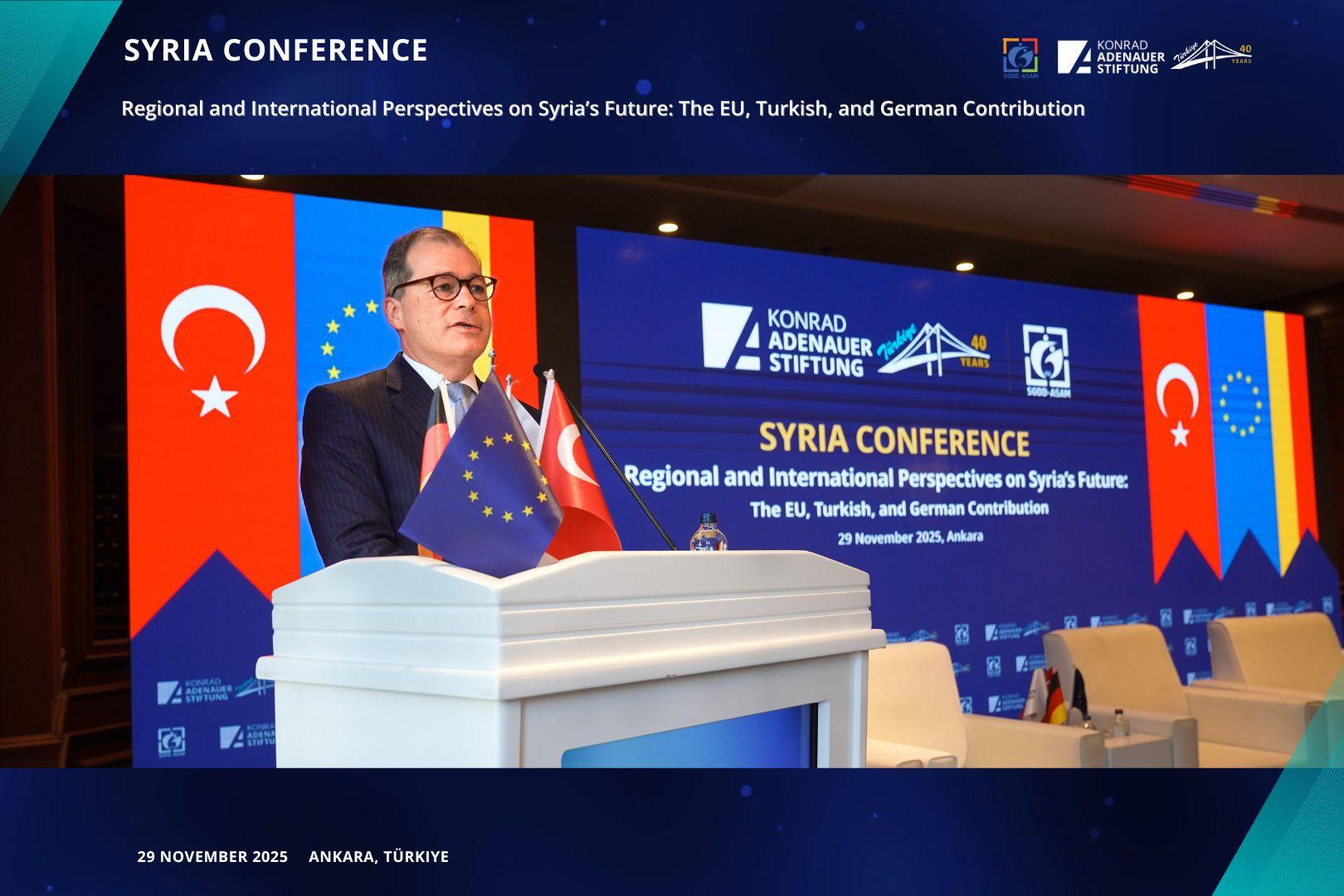
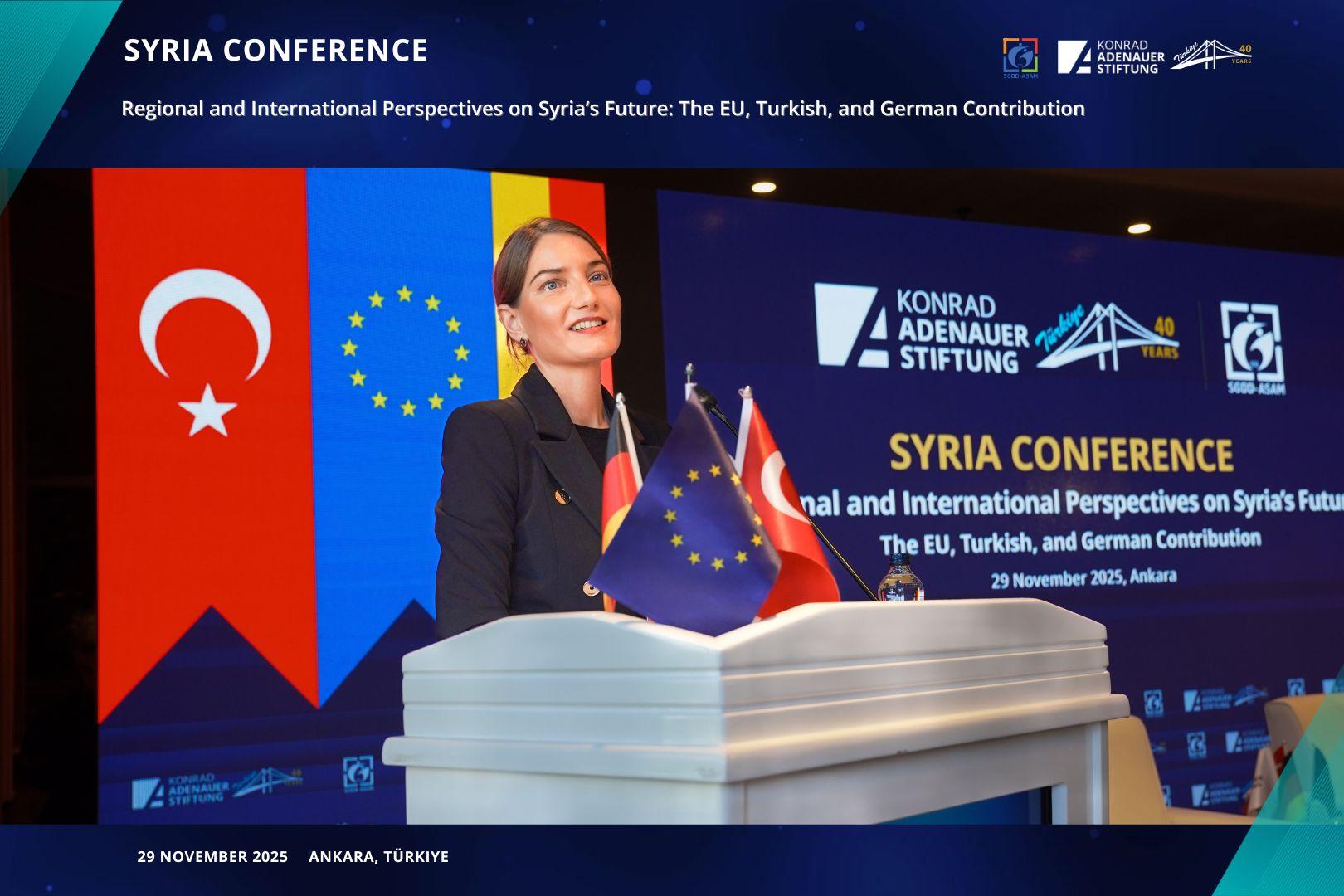
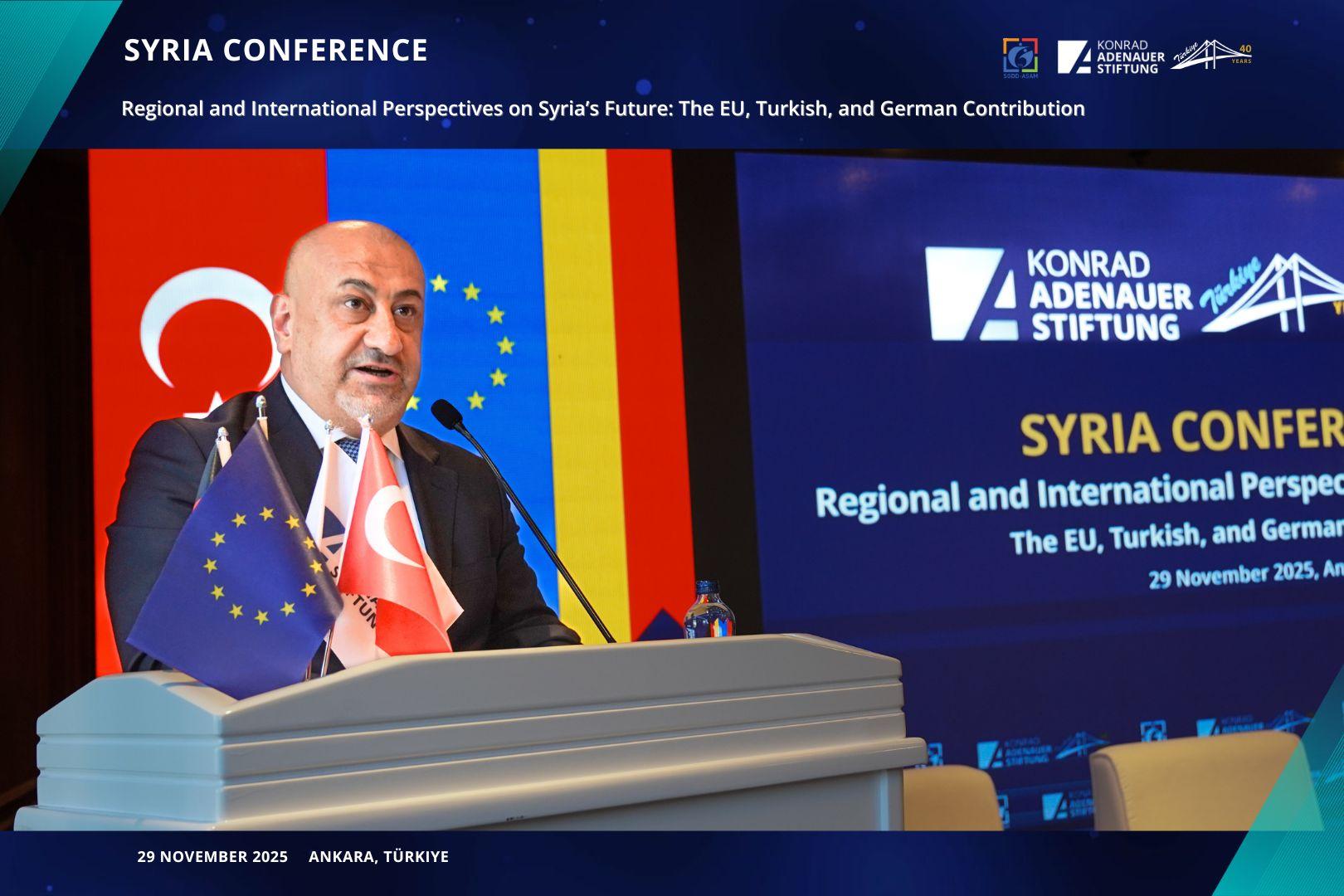
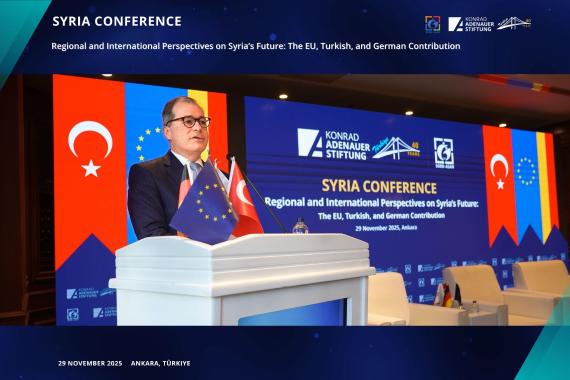
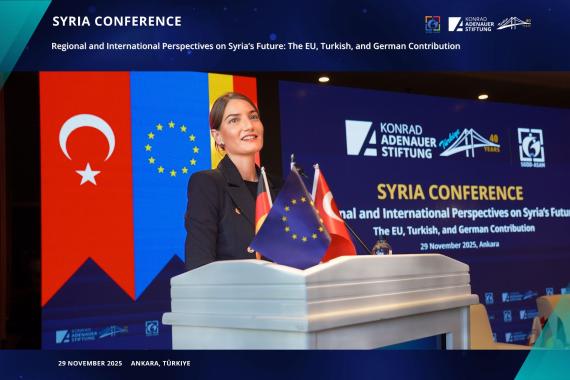
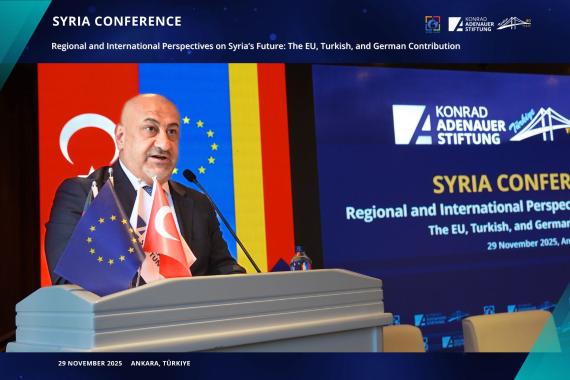
The conference was opened by Dr. Ellinor Zeino, Director of KAS Türkiye, Ibrahim Vurgun Kavlak, Executive Director of ASAM, and Dr. Mark Speich, Secretary General of KAS e. V.
Panel 1: EU, Turkish and German Approaches to Syria – Alignment, Challenges, and Prospects
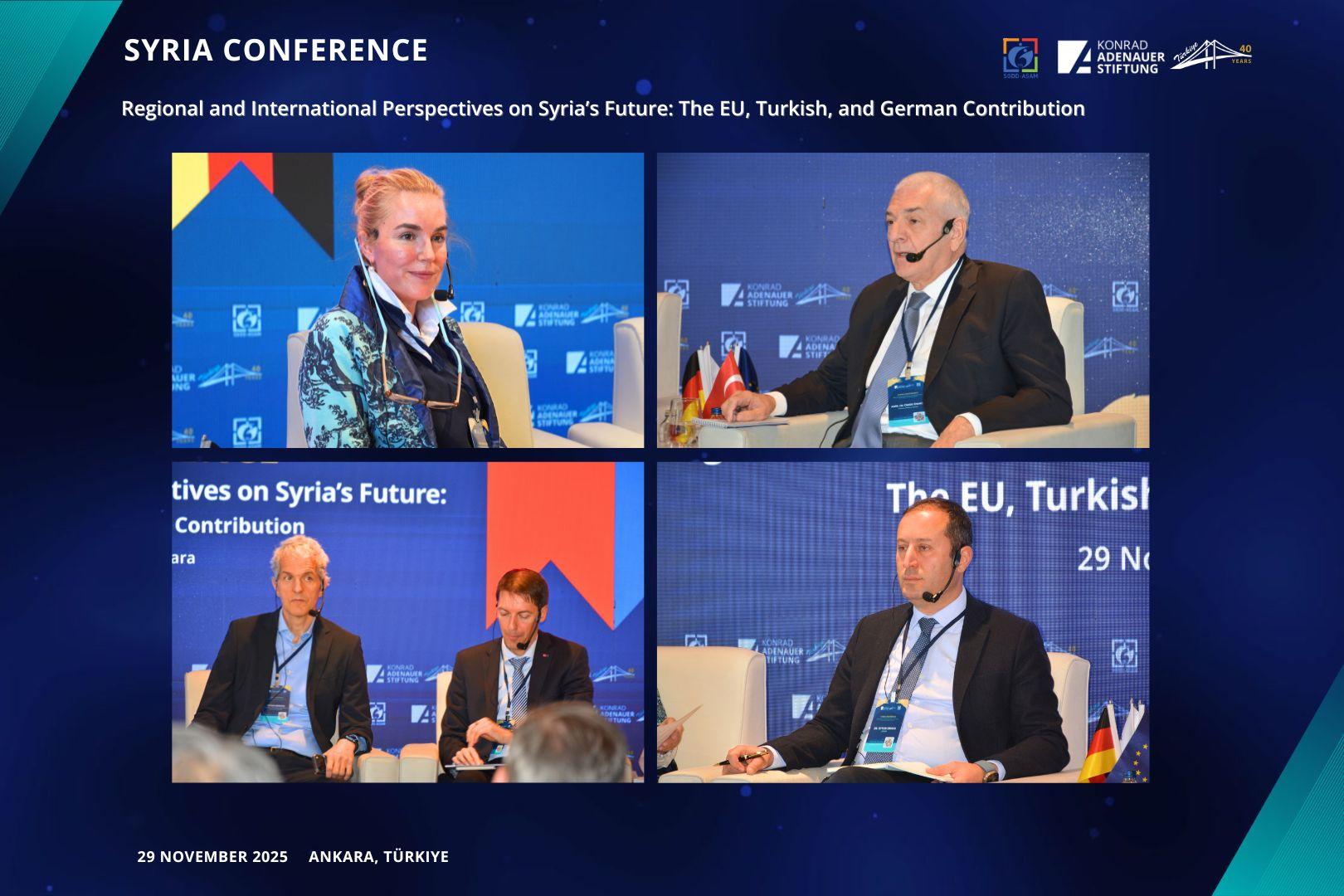
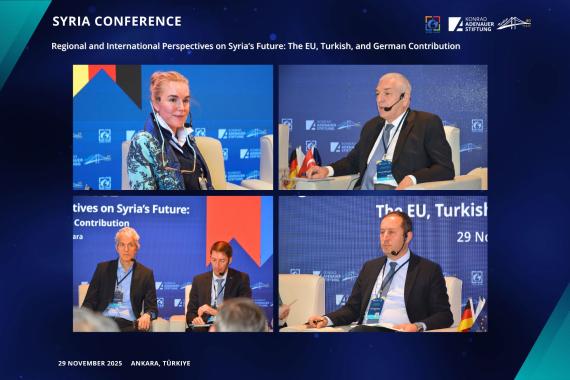
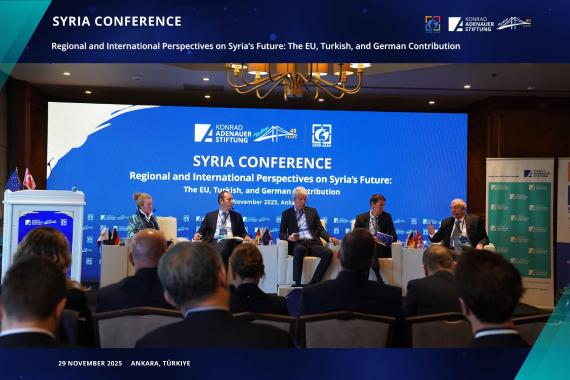
The first panel examined how European, Turkish, and German Syria policies are currently designed—where they overlap, where priorities differ, and which political and practical challenges hinder closer coordination. The participants discussed Syria’s strategic relevance, the role of international actors in diplomacy and humanitarian aid, and potential pathways toward greater policy coherence.
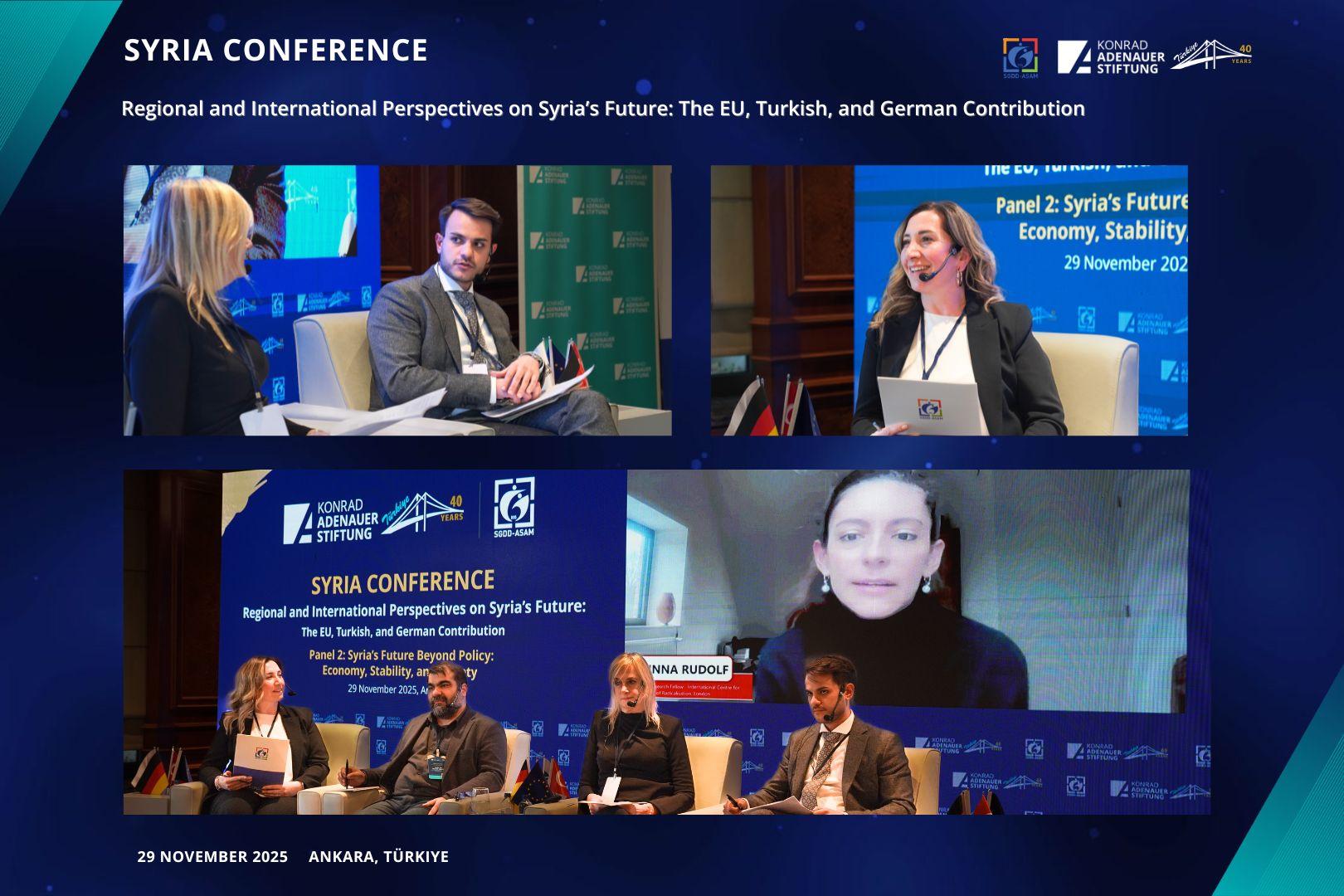
Panel 2: Syria’s Future Beyond Policy – Economy, Stability, and Society
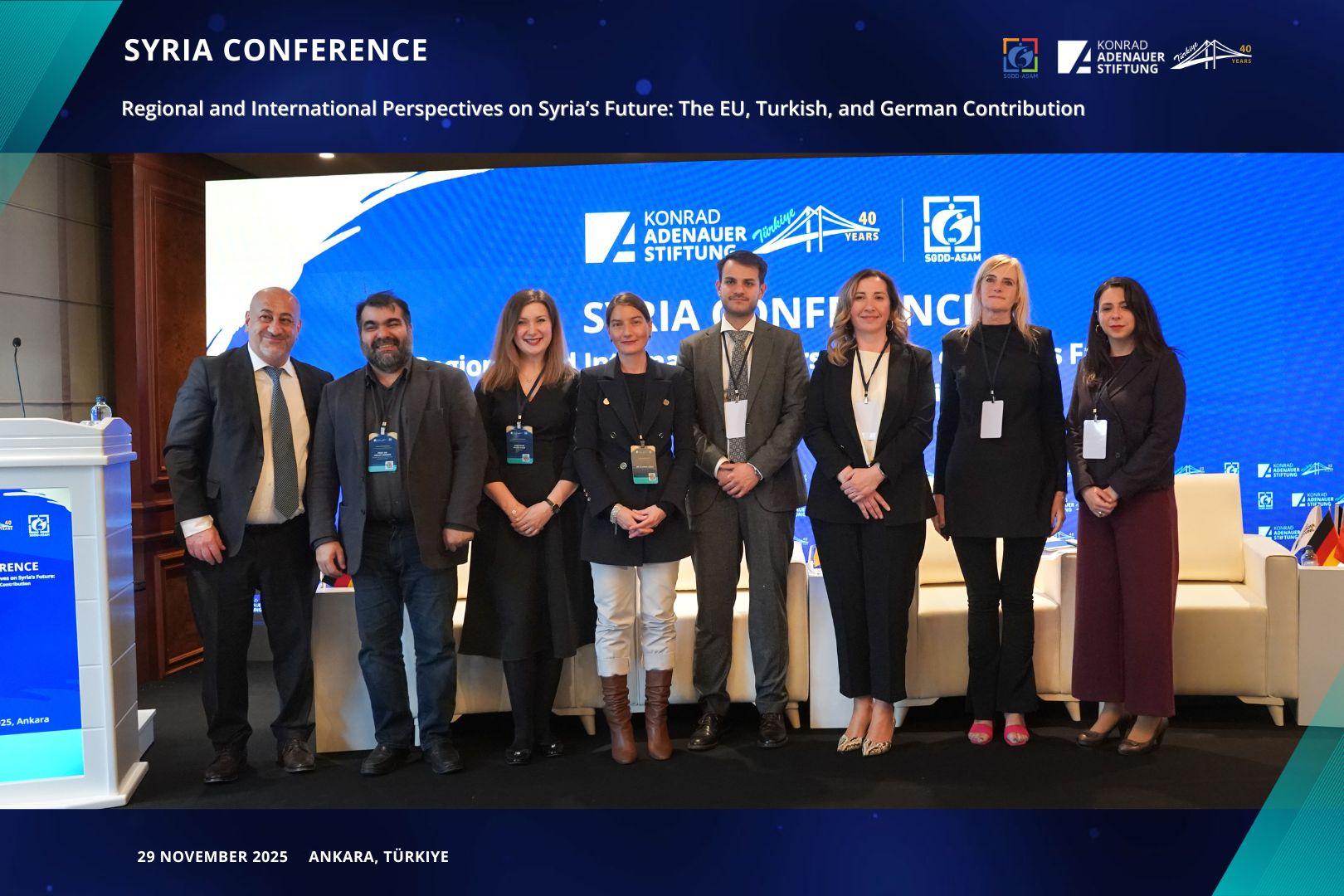
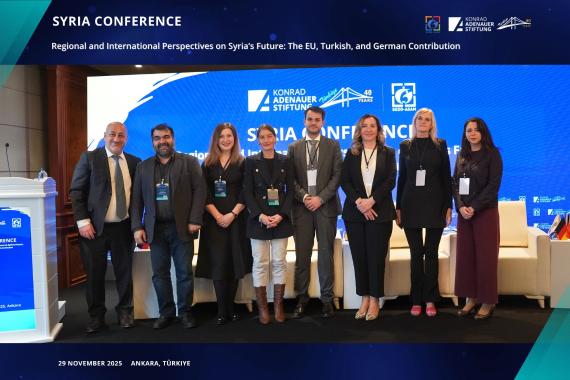
The second panel focused on economic, societal, and security-related perspectives on Syria. The experts highlighted the situation of local communities, economic transformation potentials, regional security risks, and the prerequisites for long-term stability. They emphasized that Syria’s future is shaped not only by political decisions, but also by social dynamics, economic developments, and regional interdependencies.
The conference provided an important platform for exchange among policymakers, academics, and civil society actors. It underscored the need for enhanced dialogue between the EU, Türkiye, and Germany in order to effectively address the challenges in and around Syria and to develop joint approaches for sustainable solutions.

Partners