





Asset Publisher

Publications

Asset Publisher

A COMMENTARY ON THE GEOPOLITICS OF THE TRANSITION TO CLEAN ENERGY & GLOBAL ECONOMIC DECARBONISATION

HIGHLIGHTS OF REGIONAL DEVELOPMENTS AND TRENDS IN THE SUB-SAHARAN AFRICA AND EUROPEAN UNION REGIONS

A report on ‘The Global, Regional and National Perspective of Geopolitical Impacts of Decarbonisation’ focusing on Sub-Saharan Africa and the EU was documented in March 2022. However, since its completion, major global, regional and to a lesser degree national events in the extractives and energy sectors have reshaped the geopolitics of trade in the sectors’ energy transition and impacted the quest to decarbonise global economies, as envisioned at COP15. The developments have impacted (1) policies to do with fossil fuels as the main contributor to carbon emissions and the global energy mix, (2) demand for and security of supply for minerals deemed critical minerals for decarbonisation, (3) regional and national policies or strategies for a transition to clean energy, (4) bilateral and regional partnership strategies for securing the supply of critical minerals and (5) global priorities, debates, and negotiations towards decarbonisation. Therefore, contained in this report are highlights of major developments and the impacts of the developments on policies and geopolitical developments in Sub-Saharan Africa and the European Union.

Barriers for the Uptake of Renewable Energy Capacity in Sub-Saharan Africa

Energy access and reliability remain major challenges in SSA, as only 47% of the population has access to electricity, well below the global average of 90%. Low energy access is largely due to insufficient grid coverage, particularly in rural areas, which leaves millions of people without basic energy access. Renewable energy shows a clear opportunity for SSA countries to better meet supply deficits while generating environmental benefits. Yet, there are several challenges that have slowed the growth in the uptake of renewable energy across SSA. These can be grouped into policy and regulatory, financial, and technical barriers. To further drive progress, ecosystem stakeholders must continue collaborating on policy, financial, and technical solutions to improve policies and increase investment across various consumer segments.

Geopolitics of the Transition to Clean Energy and Global Economic Decarbonization

Though it is widely accepted that, based on greenhouse gas emissions, fossil fuels are an environmental nightmare and that they are the main reason behind the planet’s rising temperature and other adverse impacts on climatic conditions, eliminating fossil fuels remains problematic. The main challenge is the integrated nature of fossil fuels with industry and modern lifestyles, especially in industrialised nations. Equally, challenging is the economic and industrial dependence on coal, oil, and gas for energy and revenue by several developing countries. These factors make plans to transition to cleaner sources of energy, as envisioned at the COPs and through NDCs, both costly and difficult to execute.

Investing in EVs: Global Trends and Opportunities for Growth in East Africa.

Policy Brief

Scaling Renewable Energy Generation & Access in SSA through Feed-in Tariffs

Kenya’s 2012 Feed-in Tariffs Policy on Wind, Biomass, Small-Hydro, Geothermal, Biogas and Solar Resource Generated Electricity

This policy brief examines Kenya's 2012 Feed-in Tariffs (FiTs) Policy on Wind, Biomass, Small-Hydro, Geothermal, Biogas, and Solar Resource Generated Electricity as a successful example of catalyzing renewable energy generation in Sub-Saharan Africa (SSA) through long-term and fixed-tariff Power Purchase Agreements (PPAs). The brief highlights key elements, successes, and shortcomings of the policy and provides recommendations, best practices for adoption, and a call to action for policymakers.

Scaling Renewable Energy Generation & Access in SSA through Financial and Tax Incentives

Nigeria’s 2015 National Renewable Energy and Energy Efficiency Policy (NREEEP)

This policy brief examines Nigeria’s National Renewable Energy and Energy Efficiency Policy (NREEEP) and explores its successes and significant challenges. The policy outlines attractive measures, such as tax credits, holidays, and exemptions, designed to stimulate the generation of renewable energy. However, the absence of a robust implementation strategy and a supporting legislative framework has hindered its effectiveness. This policy brief outlines the shortcomings of the policy’s implementation, as well as recommendations and best practices for how to adopt a similar policy more successfully in other SSA countries.

Scaling Renewable Energy Generation & Access in SSA through Local Production & Assembly of Products

South Africa’s 2023 Renewable Energy Independent Power Producer Programme (REIPPP)

This policy brief analyzes South Africa’s Renewable Energy Independent Power Producer Procurement Programme (REIPPPP), a policy created in 2023 to help enhance private sector involvement in renewable energy projects. A key feature of this policy is the “local content” requirement, aimed at stimulating domestic manufacturing and job creation within the renewable energy sector, particularly in solar and wind projects. The requirement has proven largely successful; however, adjustments have been necessary, particularly for solar panel requirements, to align with the capabilities and capacities of local manufacturers. This brief outlines the success factors and shortcomings of the policy, recommendations, best practices for adoption, and a call to action for policymakers.

Conference Report: Energy, Trade and Climate Dialogue III: Opportunities to Link Sustainable Development and Economic Growth

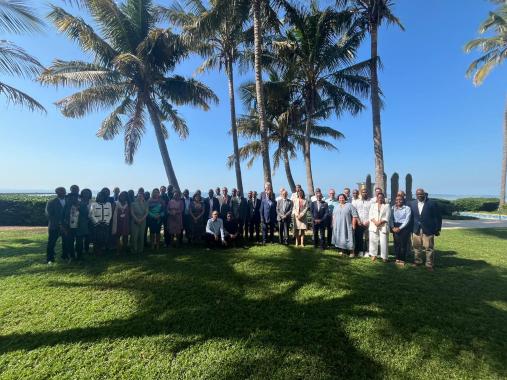
19 April 2024, Maputo, Mozambique

The Konrad Adenauer Stiftung hosted the “Energy, Trade and Climate Dialogue III: Opportunities to link sustainable development and economic growth” in Maputo, Mozambique.

Impacts of Existing Policies on Low Emissions Development on Energy Sector in Malawi

The Initiative for Climate Action and Development (ICAD)

The 2021 update to Malawi's Nationally Determined Contributions (NDCs) outlines priority climate actions until 2040, including strategies like the Nationally Appropriate Mitigation Actions (NAMA) and the National Climate Change Management Policy (NCCMP). Aligning with the United Nations Sustainable Energy for All (SE4ALL) initiative and Sustainable Development Goal (SDG) 7, Malawi's Growth and Development Strategy (MGDS III) emphasizes energy's critical role in economic development. Achieving these goals requires a dedicated Low Emissions Development Strategy, better coordination, capacity building, and enhanced financing, targeting 85% emissions reduction by 2040 for a sustainable and resilient future.

Advancing the Growing Global Prioritisation of Health in Climate Negotiations for Climate Resilient Health Systems in Africa

Climate Change in Africa: Impacts on Health and Food Security

Climate change poses significant health and food security risks in Africa due to its geographic location, reliance on climate-sensitive resources, and socio-economic vulnerabilities. Rising temperatures and rainfall patterns increase the prevalence of infectious diseases like malaria and diarrhoea, disproportionately affecting children and pregnant women. Without intervention, climate change could lead to an additional 250,000 deaths annually by 2030-2050, primarily in Africa."