







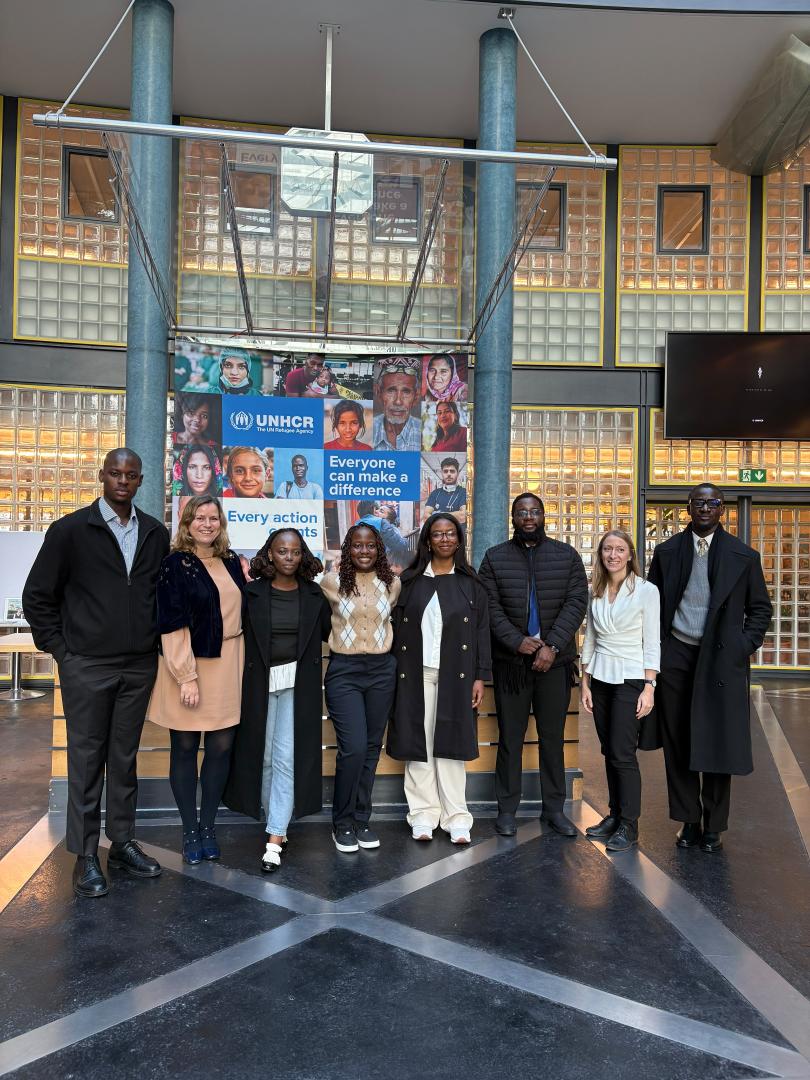
From 16 to 19 November 2026, six young African policy researchers, practitioners and development professionals took part in a programme on how multilateral institutions work from the inside. The Konrad-Adenauer-Stiftung (KAS) Regional Programme for Political Dialogue convened the programme with the KAS Multilateral Dialogue team in Geneva, in cooperation with the South African Institute of International Affairs (SAIIA). The programme set out to foster democracy, build networks and strengthen dialogue with and within Africa.
Africa's structural weight is considerable. The continent counts 1.4 billion people, substantial critical mineral resources, roughly a quarter of UN votes, and seats across the G20 and in African Union leadership. Yet the gap between that leverage and Africa's influence in multilateral spaces remains wide. The programme sought to understand this gap and how African actors understand, navigate and organise within these institutions, beyond resources or votes alone.
Geneva offered a natural space to explore this question and understand how African’s countries and institutions are navigating the current rupture within the international order. The city hosts 45 international organisations, 185 permanent missions and around 33,000 staff, and it organises some 4,250 conferences a year. The system is also under strain. Geneva authorities and Swiss federal officials have reported more than 3,000 jobs cut or relocated since 2025, and many organisations have scaled back projects.
The week opened with a welcome lunch and an introduction to multilateralism led by Ms. Linde Buder, Ms. Nicoline Lavanchy and Ms. Sarah Ultes, Programme Managers of the KAS Multilateral Dialogue team. Across four days, the programme moved from concepts to practice.
On the Tuesday, a session on AI and inclusive multilateralism explained, in simple steps, how AI systems turn words into numbers and back again. It also sorted AI risks into three groups: risks of extinction, risks of exclusion, and risks that already exist, such as job losses and misinformation. Participants were encouraged to see that reducing one risk can worsen another and exposed to how the technology is being deployed within International Geneva. With the aim to encourage them to reflect on how the technology can be used for good and productivity within their own context and work.
The programme was then followed by a presentation on health diplomacy, exploring the significant progress made in Africa such as life expectancy in Africa rising from 49.4 years in 1980 to 63.8 years in 2023, and the share of newborns dying before age five falling from 15% in 1990 to 5.9% in 2023. The same briefing warned that initial projections point to as many as 200,000 more child deaths in 2025 than in 2024, mostly in Africa, as health aid was cut.
On the Wednesday, the Pandemic Agreement briefing explained how the WHO Pandemic Agreement was negotiated from the 2021 mandate to its adoption by consensus in May 2025. It set out the four main points of disagreement: equity of access to vaccines and treatments; intellectual property and local production; pathogen sharing against benefit-sharing; and financing and sovereignty. It also explained that the Pathogen Access and Benefit-Sharing (PABS) annex must be adopted before the agreement can be signed. The briefing then led into a collective negotiation exercise, in which participants took on positions and worked through these divides. The delegates also visited The UNHCR and were briefed on displacement linked to climate change.
On the Thursday, the labour session on Kenya's digital economy highlighted that 1.9 million Kenyans already work in digital jobs, including 1.2 million gig workers, and that many lack social insurance and grievance mechanisms. It introduced three concepts: accountability displacement, where power over working conditions sits outside the institutions that govern them; governance readiness, meaning the capacity of institutions to detect risks and respond; and the power, people and prospects in the AI supply chain.
Participants came away with a clearer view of how decisions are shaped in Geneva, particularly in health and trade, and of how African actors might use these spaces more effectively. Several described a shift from scepticism to an understanding of why multilateralism remains necessary. Others valued the block negotiating approach, which looked different up closely, and recognised how much effort it takes to make progress. A shared lesson emerged: differences within Africa are sharper at home, yet they can unite in Geneva.
The guided tours of the Palais des Nations and Humanitarian Geneva placed the week in historical and institutional context, while dinners with Permanent Missions and UNCTAD gave participants informal and invaluable access to practitioners.
The programme showed that understanding multilateralism requires presence but is also more crucial than ever in the current global disruption. For participants, the week moved from observation to reflection on their own role, and shared agreement on the necessity of multilateral initiatives.
Thèmes
À propos de cette collection
La Fondation Konrad-Adenauer, ses instituts, centres de formation et bureaux à l'étranger proposent tous les ans uin grand nombre de manifestations dédiées à des thèmes différents. À l'adresse www.kas.de, nous vous présentons, de manière actuelle et exclusive, des conférences, événements et symposiums. Outre un résumé thématique, vous trouverez ici aussi du matériel supplémentaire tel que des photos, des manuscrits de discours, des vidéos ou des podcasts radio.
Kenias Ambitionen als globaler Akteur
Der Pakt für den Mittelmeerraum als Baustein europäischer Partnerschaftsdiversifizierung
Die Partnerschaftspolitik der EU im Wandel
Kontroverse erste Schritte des Kabinetts Radew
Tschechiens Verteidigungs- und Ukrainepolitik unter der neuen Regierung Babiš – ein erster Eindruck