



Asset-Herausgeber

Publikationen

Asset-Herausgeber

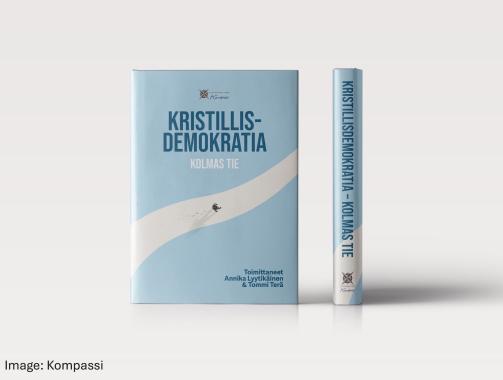
"Christian Democracy - The Third Way"

English Addendum to "Kristillisdemokratia – kolmas tie" (Eds. A. Lyytikäinen & T. Terä; 2025)

This addendum gives an overview and summary of the book Kristillisdemokratia – kolmas tie (2025). The book consists of an introductory chapter followed by three sections dealing with the history, principles, and role of Christian democracy in contemporary Europe, respectively.

Nordic Unity in Arctic Security

Navigating Tensions and Alliances

In recent decades, the Arctic region has increasingly attracted global interest due to its climatic, economic, and political transformations. The Arctic's strategic relevance has been particularly accentuated amidst rising tensions with Russia, especially post-2022 following its attack on Ukraine. This attention has, in turn, amplified the roles of Nordic countries in regional security dynamics. The accession of Finland and Sweden to NATO in 2023 and 2024, respectively, exemplifies the momentum towards deeper Nordic integration in security domains. This trajectory was further highlighted by U.S. President Trump's comments in January 2025 regarding the control of Greenland, drawing international scrutiny to Greenland’s strategic importance and the internal dynamics within the Kingdom of Denmark.

The European Union and the Emerging Arctic Security Landscape

The European Union’s (EU) ever-evolving role as a foreign and security actor is currently being reshaped by a rapidly shifting geopolitical landscape, marked most significantly by Russia’s 2022 full-scale invasion of Ukraine and the current disruptions of the transatlantic relationship. While long defined by its soft power tools, internal diversity, and preference for multilateralism, the EU has found itself increasingly confronted with demands to de-velop a more assertive security posture. This shift is occurring not only in its eastern and southern neighbourhood but increasingly also in its northern backyard – the Arctic, a region that is presently (re-)emerging as a space of geopolitical competition. While the region has traditionally been marginal in, it now intersects with broader concerns over hybrid threats, energy dependence, climate change, and critical infrastructure—all areas where both the EU and the North Atlantic Treaty Organization (NATO) maintain significant (partly overlapping or complementary) competencies.

Russia's Hybrid War: The Northern Front

Tracking Russia’s Hybrid Warfare

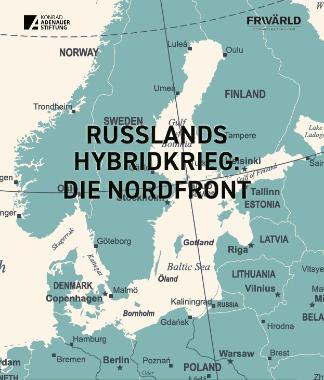
Northern Europe is not at peace. The battle is real and far more dangerous than the public has grasped. In this war, there are no frontlines. Attack vectors shift daily, probing weaknesses, exploiting vulnerabilities, and seizing opportunities. The weapon of choice is what we in the West call hybrid warfare, targeting our institutions, our infrastructure, our alliances, and our minds. Resilience is necessary, but not sufficient, to win this hybrid war. This book shows how countries on the northern flank are strengthening national capabilities and deepening crossborder cooperation to detect, disrupt, and respond to hybrid threats—offering a blueprint for hybrid deterrence.

IMAGO / NTB

Parlamentswahl in Norwegen

Stabilität, Energie und der Stoltenberg-Effekt

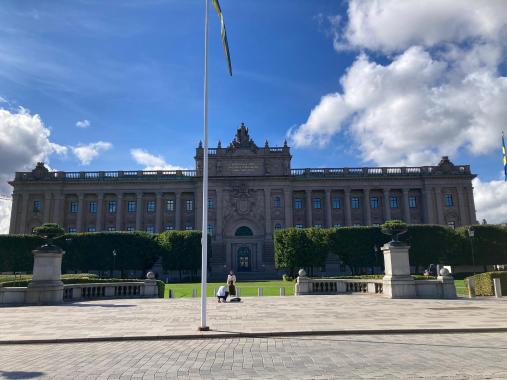
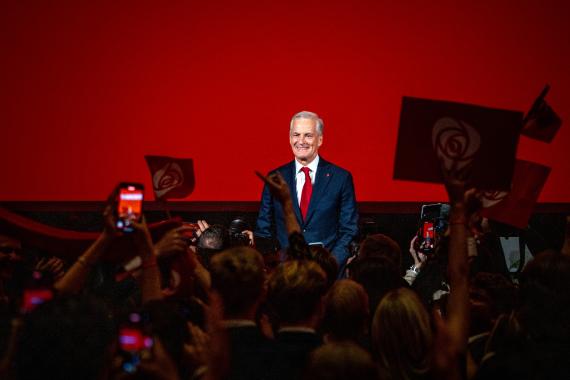
Am 8. September 2025 wählten die Norwegerinnen und Norweger ihr neues Parlament: Die regierende sozialdemokratische Arbeiterpartei (Ap) von Ministerpräsident Jonas Gahr Støre wurde als stärkste Kraft bestätigt und erzielte 28,2 Prozent der Stimmen. Die rechtspopulistische Fortschrittspartei (FrP) verzeichnete mit einem Plus von 12,3 Prozent den größten Zuwachs und wurde mit 23,9 Prozent zweitstärkste Kraft. Auf Platz drei folgt die Konservative Høyre der ehemaligen Ministerpräsidentin Erna Solberg mit 14,6 Prozent. Rund vier Millionen Norwegerinnen und Norweger waren zur Wahl aufgerufen. Nach Angaben der norwegischen Wahlbehörde vom späten Montagabend lag die Wahlbeteiligung bei 78,8 Prozent. Bei dieser Wahl ging es nicht nur um innenpolitische Fragen, denn das Land spielt eine Schlüsselrolle in Europas Energieversorgung und Sicherheitspolitik. Zwar ist Norwegen kein Mitglied der Europäischen Union, aber unverzichtbarer Partner – ob bei Gaslieferungen, der Regulierung des Strommarkts oder Sanktionen gegen Russland.

IMAGO / Bernhard Herrmann

Finnlands Reaktion auf hybride Bedrohungen in der Ostsee

Resilienz durch ganzheitliche Sicherheit?

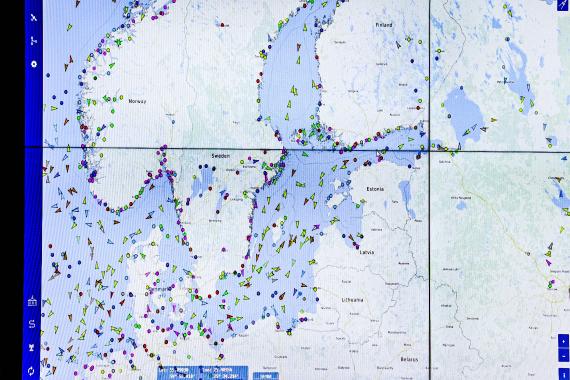
Als Reaktion auf die Invasion der Ukraine durch russische Truppen trat Finnland – nach Jahrzehnten der militärischen Neutralität – der NATO bei. Finnland, das sich eine mehr als 1300 km lange Landgrenze mit Russland teilt, ist hybrider Bedrohung besonders ausgesetzt. Die jüngste nationale Risikoeinschätzung der finnischen Regierung betont die Gefahr hybrider Angriffe, die Finnlands Sicherheitslage herausfordern könnten. Hybride Bedrohungen sind vielfältig und reichen von Cyberangriffen und Desinformation bis hin zu instrumentalisierter Migration oder Sabotageakten gegen kritische Infrastruktur, wie der Beschädigung von Unterseekabeln.

KAS

Sonderausgabe – Länderberichte mal anders

Barrierefreiheit im internationalen Vergleich

In dieser Publikation finden Sie Recherchen einiger unserer Auslandsbüros zum aktuellen Stand der Teilhabe von Menschen mit Behinderungen. Wir hoffen, durch die Berichte das Bewusstsein für die leider noch oft bestehenden Ungleichheiten zu erhöhen und uns alle dazu zu motivieren, ein stärkeres Augenmerk auf das Thema Inklusion zu werfen.

Julian Tucker (KAS Regionalprojekt Nordische Länder)

Wahlen in Grönland

Ein klares Signal Richtung Unabhängigkeit

Die Grönländer haben ein neues Parlament gewählt. Deutliche Wahlsiegerin ist die liberale Demokraatit-Partei (Demokraten) mit ihrem Vorsitzenden Jens-Frederik Nielsen. Die Demokraten setzten sich überraschend klar gegen die derzeitig amtierende linksgerichtete Koalitionsregierung von Siumut (Vorwärts) und Inuit Ataqatigiit (Gemeinschaft der Inuit) durch. Nielsens Partei verfolgt eine konservative Steuerpolitik, gilt als wirtschaftsliberal und möchte die Unabhängigkeit von Dänemark in einem langfristig angelegten und geordneten Prozess erreichen. Zweitstärkste Kraft im Parlament wurde die nationalistisch-populistische Protestpartei Naleraq (Orientierungspunkt). Als einzige Partei forderte sie im Wahlkampf einen raschen Austritt aus dem dänischen Königreich und eine Annäherung an die USA. Die anstehenden Koalitionsverhandlungen könnten sich angesichts der außenpolitischen Verwerfungen schwierig gestalten. Nielson, ehemaliger Minister für Industrie und Mineralien, kündigte an, mit allen Parteien sprechen zu wollen. Für eine stabile Regierung spräche ein breit angelegtes Bündnis aus Inuit Ataqatigiit, der Partei des bisherigen Ministerpräsidenten Múte B. Egede und eventuell mit der Siumut-Partei.

The Second Foreign and Security Policy Opinion Poll in Greenland

Nasiffik – Centre for Foreign & Security Policy at Ilisimatusarfik (University of Greenland) has conducted a public opinion poll amongst a representative sample of the Greenlandic population on foreign and security policy issues in spring 2024. It is the second survey of its kind after a similar survey report was published in 2021. The data-collection was done by EPINION in Denmark (cf. appendix about methods). The survey is funded by the Konrad- Adenauer-Stiftung in Stockholm, Sweden, Greenland Research Council, Nuuk, Greenland, and Nasiffik at Ilisimatusarfik, Nuuk, Greenland. Since we published a similar survey in 2021,1 Arctic governance has been severely challenged by the ongoing war in Ukraine. The world has witnessed a more turbulent time in relation to security issues; in consequence, international relations have come further to the fore. Some spillover effects from Russia’s (re-)invasion of Ukraine also have regional ramifications in the Arctic. The work in the Arctic Council came to a pause during the Russian chairship in March 2022 and has only very slowly been restored during the Norwegian chairship with online meetings in the working groups including some tentative Russian participation. Naalakkersuisut (the Government of Greenland) took an early decision in consensus with the ‘like-minded states’’ decision to condemn the Russian invasion of Ukraine and therefore the cooperation with Russia has been put on hold.2 The Kingdom of Denmark is taking over the chairship of the Arctic Council in spring 2025 and Greenland has been adamant in playing a key role, as the only country of the Kingdom located in the Arctic. In February 2024, Naalakkersuisut published a strategy on foreign, security, and defense policy, which demonstrates an orientation towards more cooperation towards especially the North American Arctic. The US is seen as a natural shelter country in relation to defense and security based on the long historical ties with the Pituffik Space Base (formerly the Thule Air Base) as the only operating American base in the country.

IMAGO / Panthermedia

Vorgezogene Neuwahlen in Island

Ein Wendepunkt für Islands politische Landschaft

Das Resultat der vorgezogenen Parlamentswahlen in Island stellt eine deutliche Rüge der scheidenden Koalition dar. Insbesondere die Links-Grüne Bewegung, welche zu Beginn der Koalition noch über 17 Prozent einholen konnte, bangt nun um ihre Existenz, nachdem sie alle ihre Sitze im Parlament verloren hat. Auch die konservative Unabhängigkeitspartei, welche seit Islands Unabhängigkeit im Jahr 1944 – mit Ausnahme von 2009 – die stärkste Partei im isländischen Parlament gewesen ist, hat ihr historisch schlechtestes Ergebnis erzielt. Die Koalitionsbildung liegt nun in der Hand der Sozialdemokraten, die womöglich zwei bis drei weitere Koalitionspartner finden müssen.