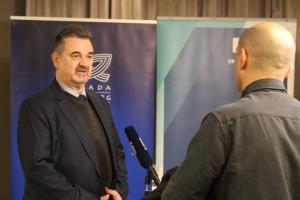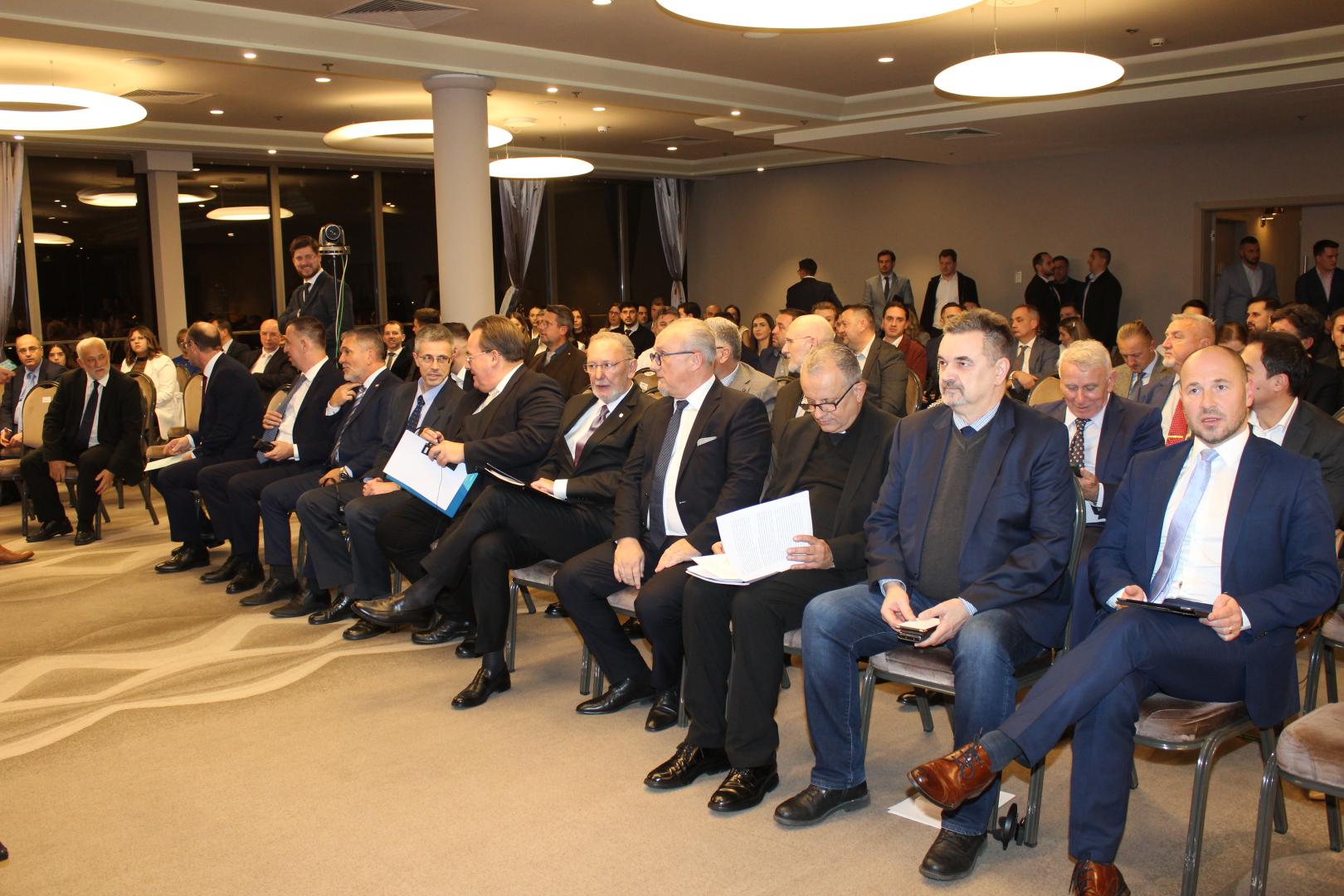
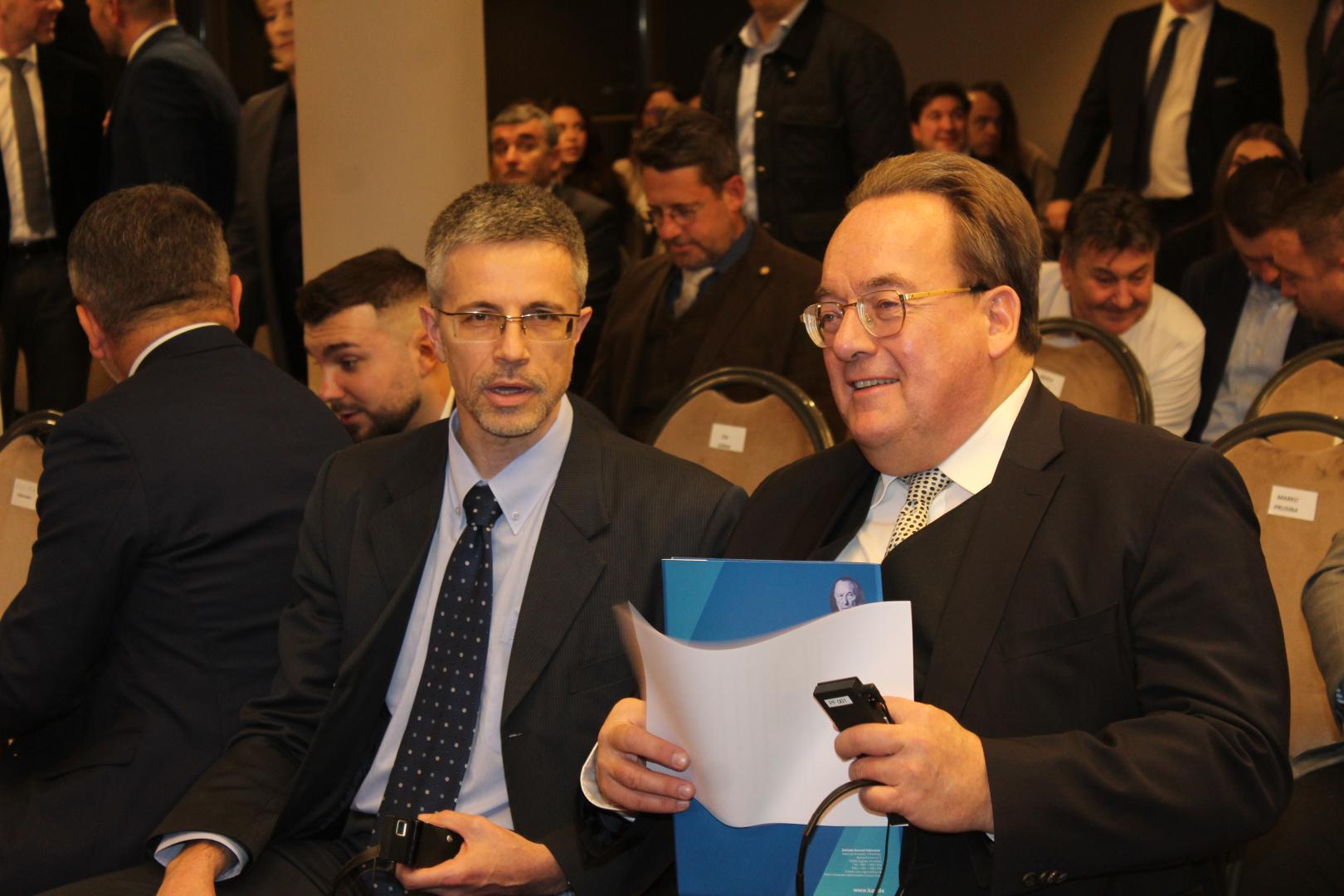
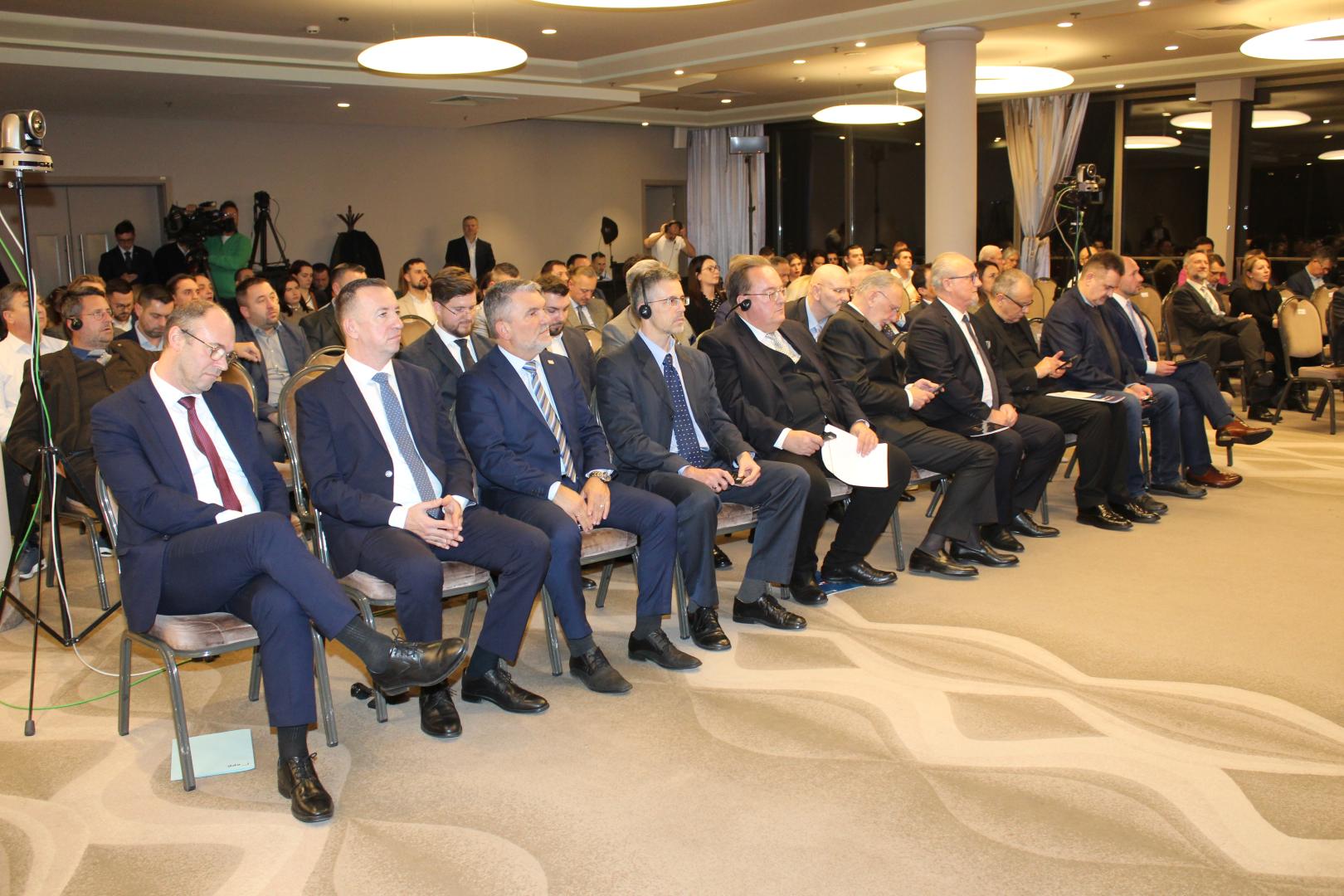
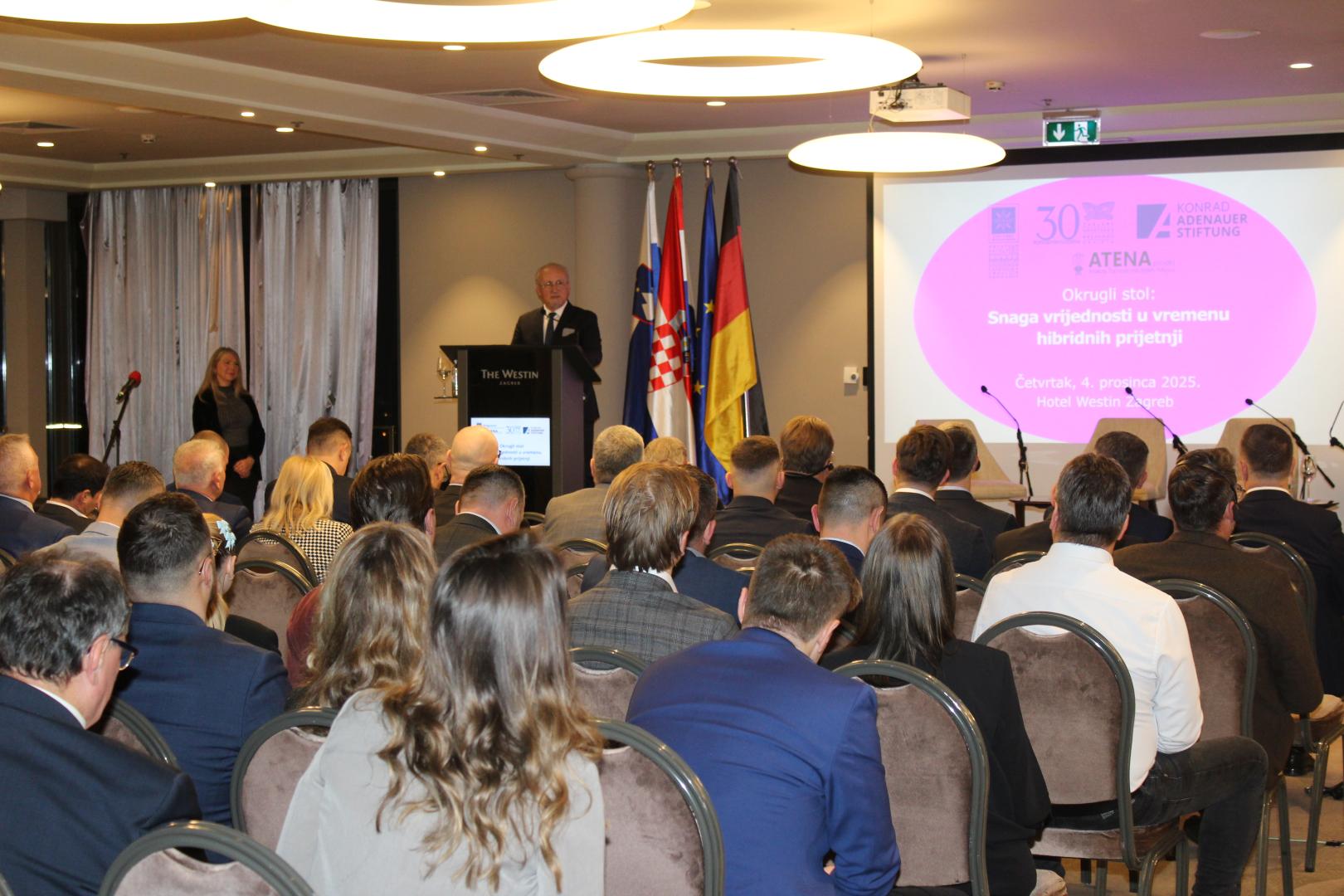
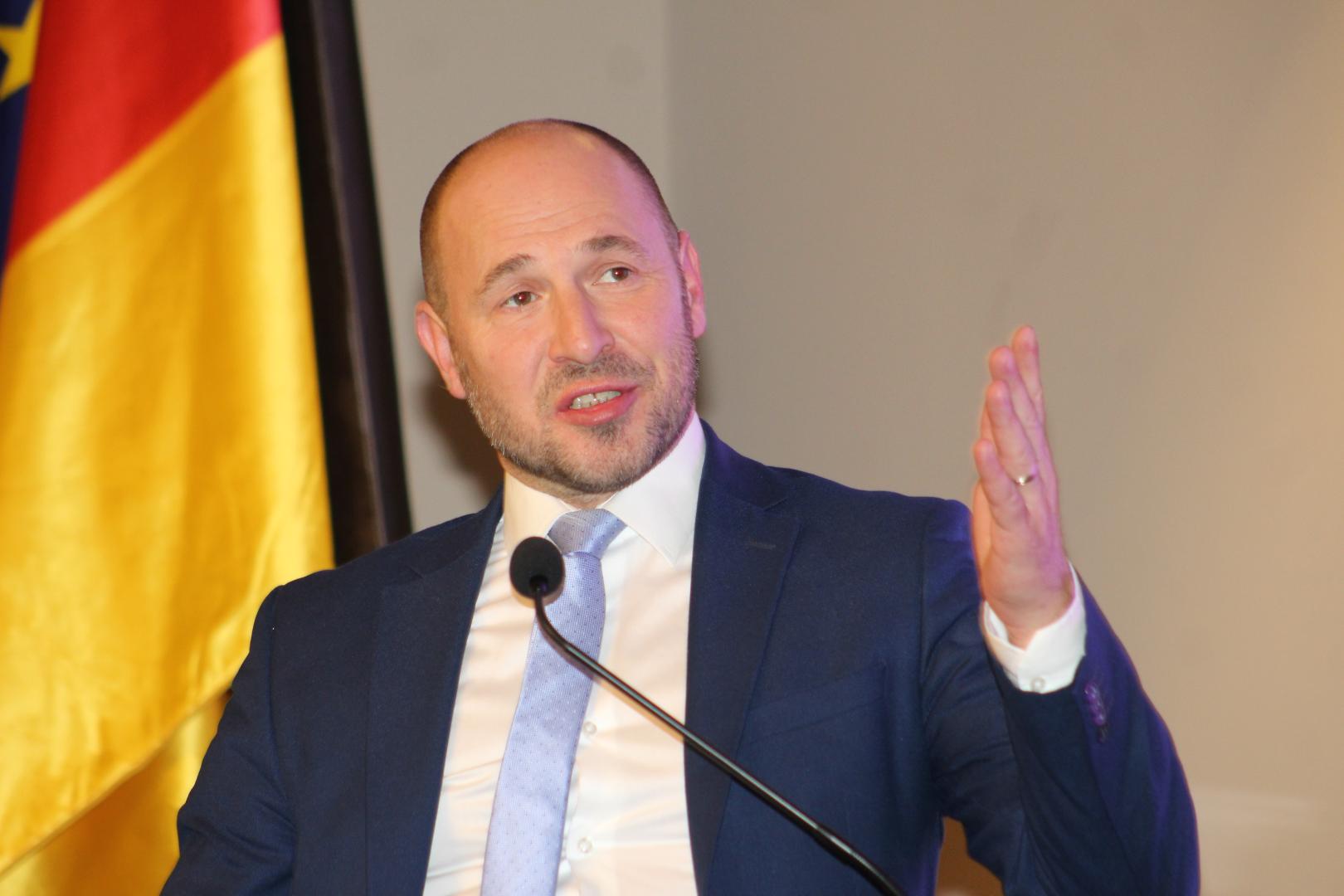
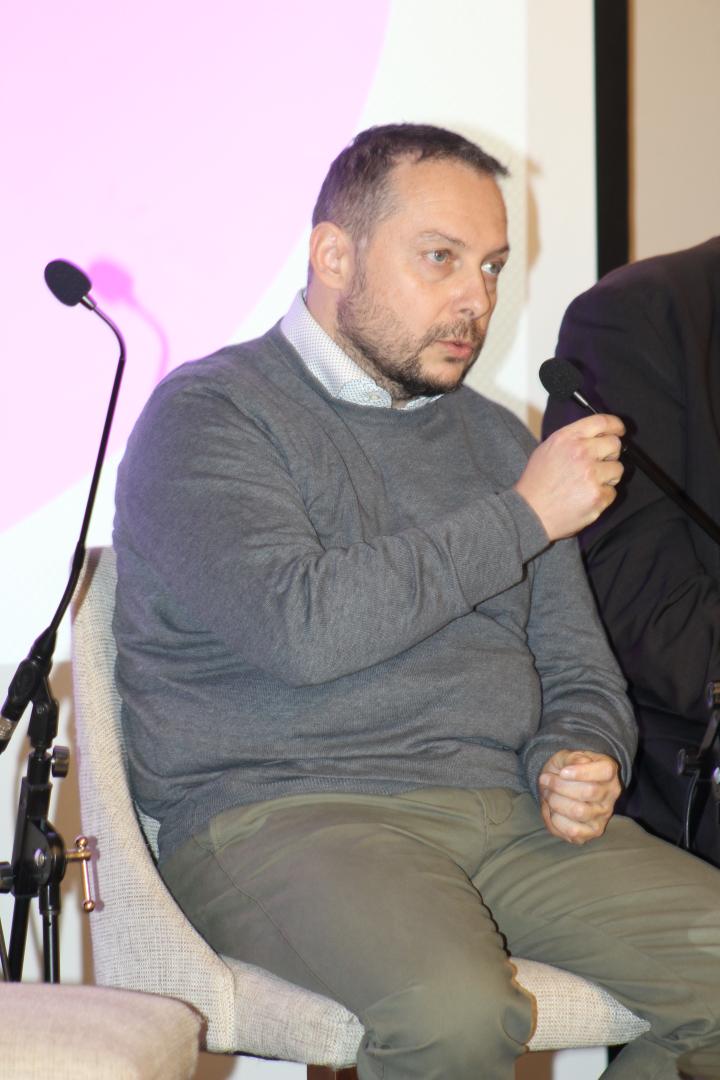
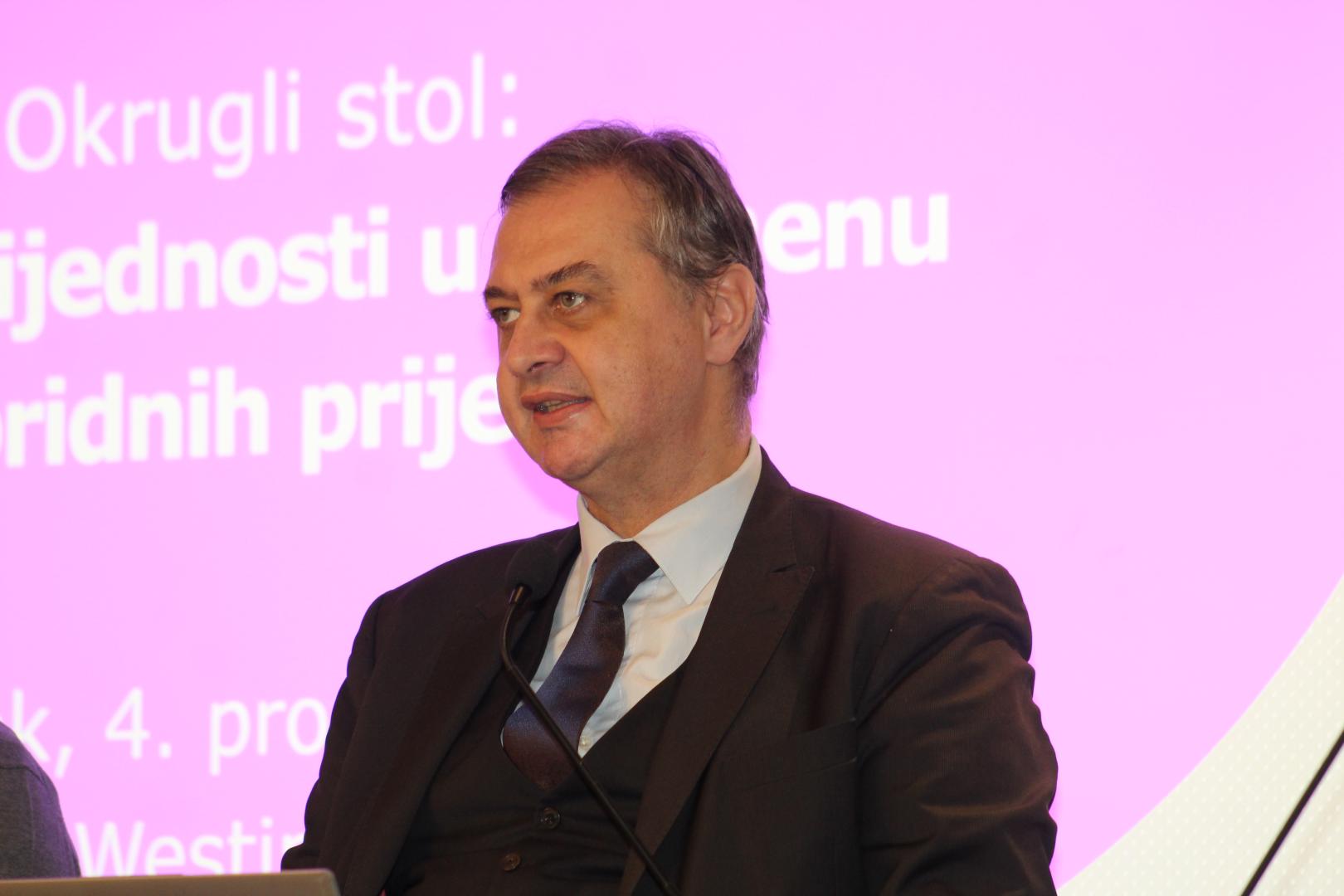
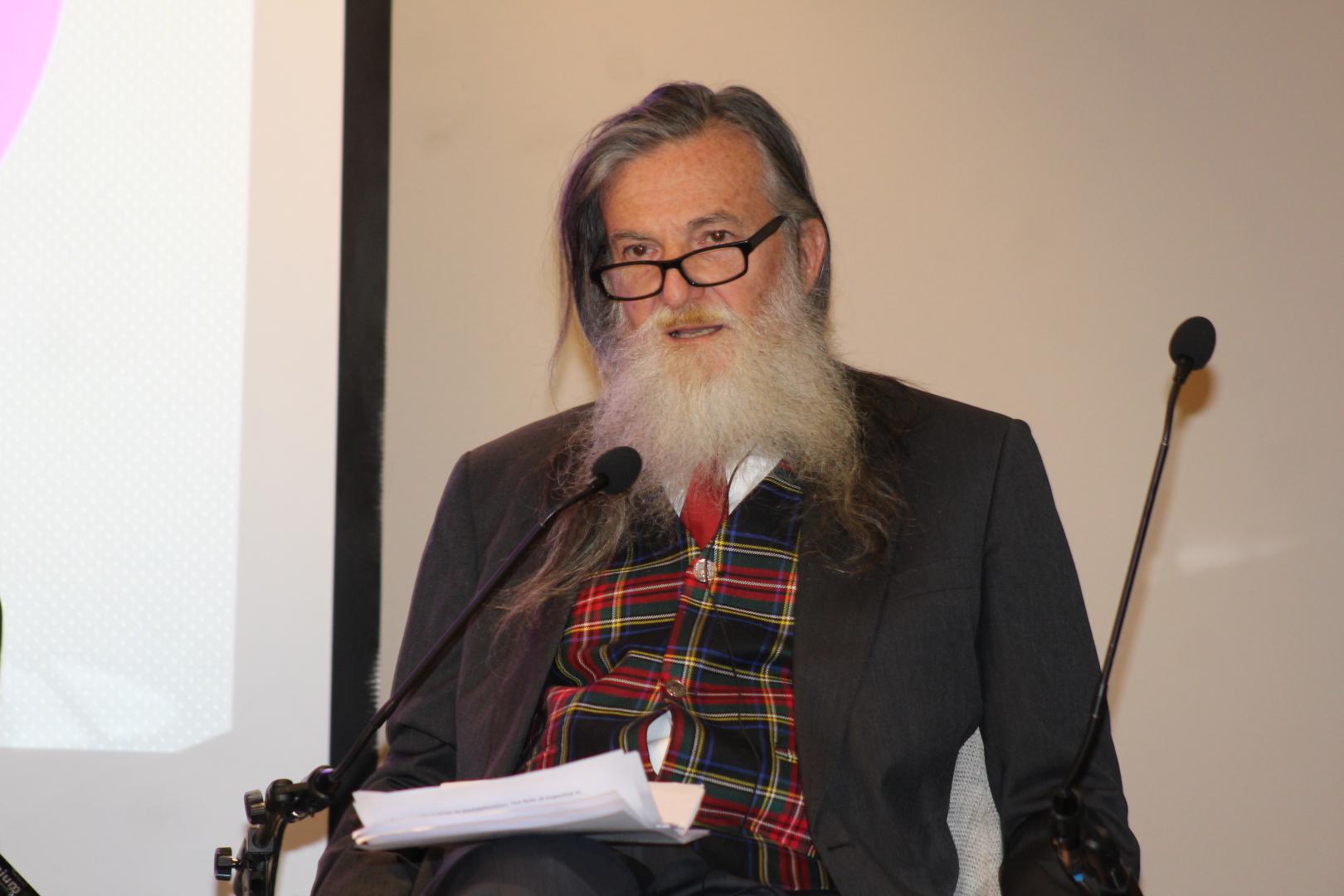
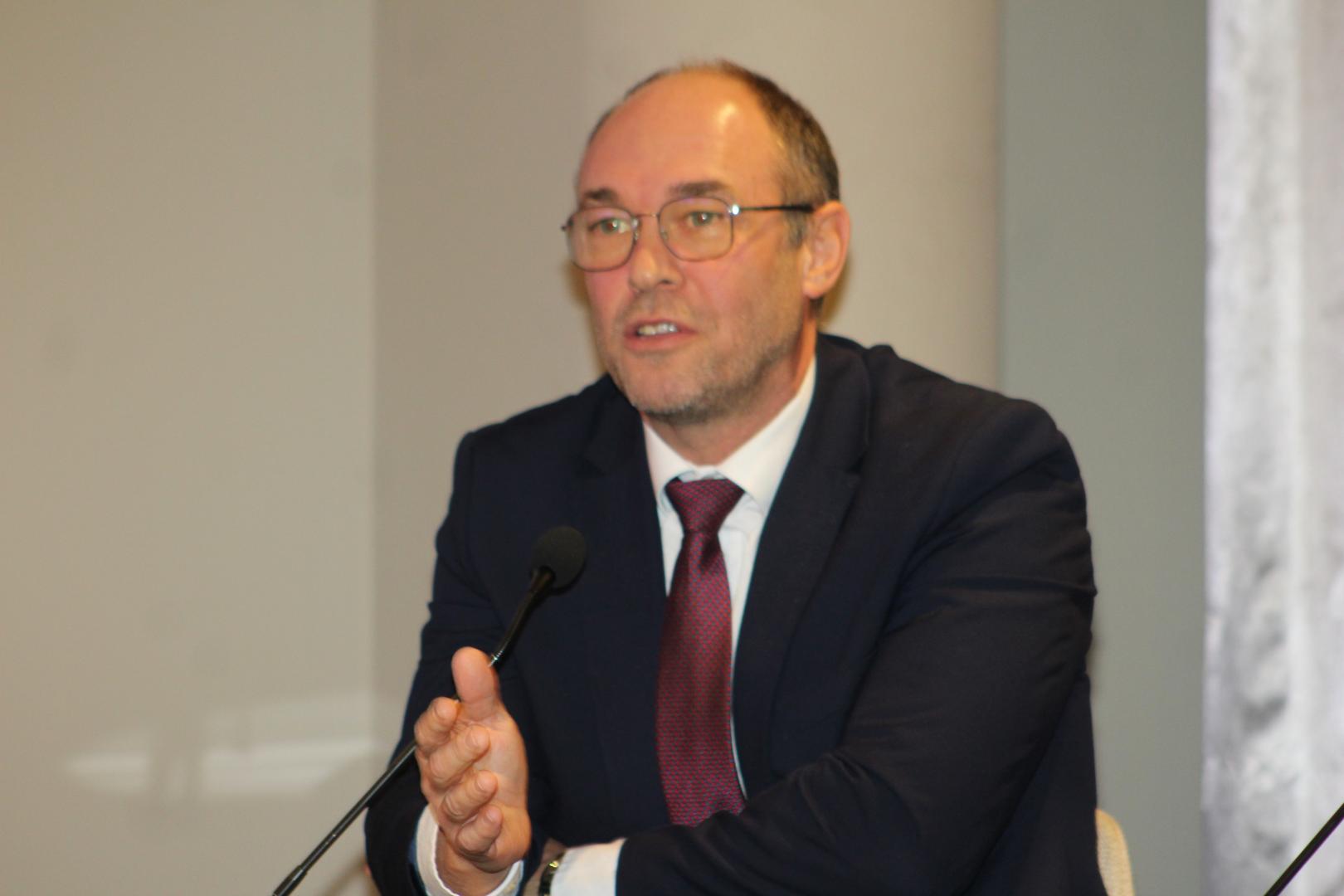
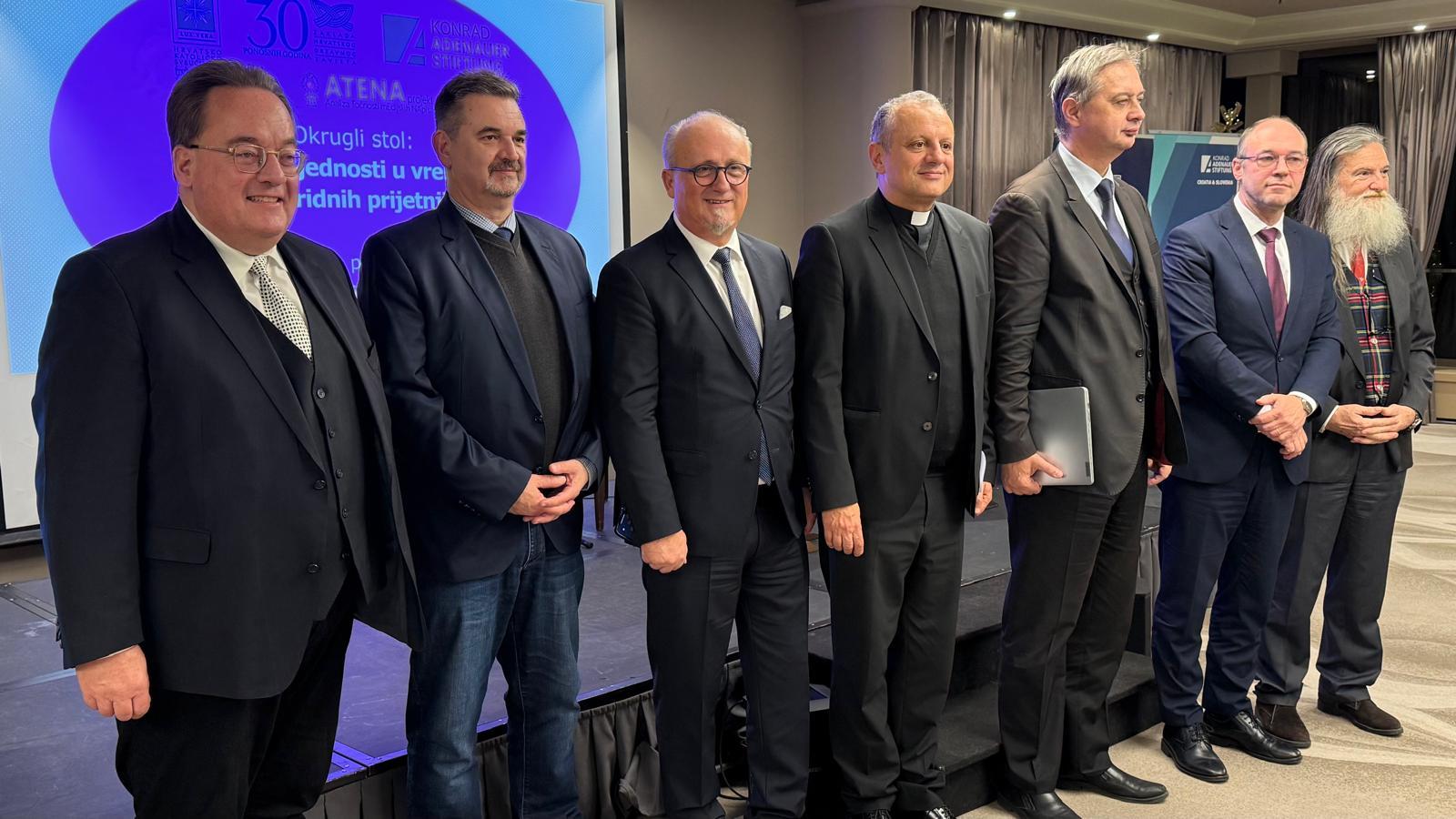
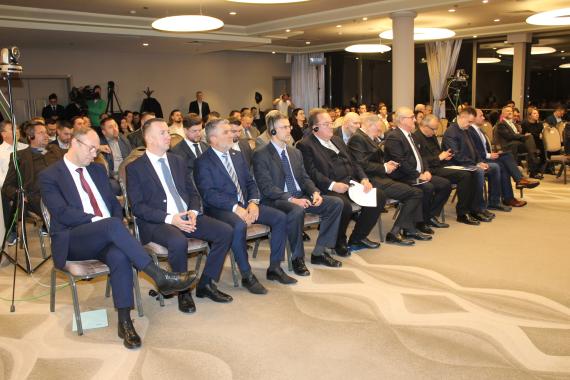
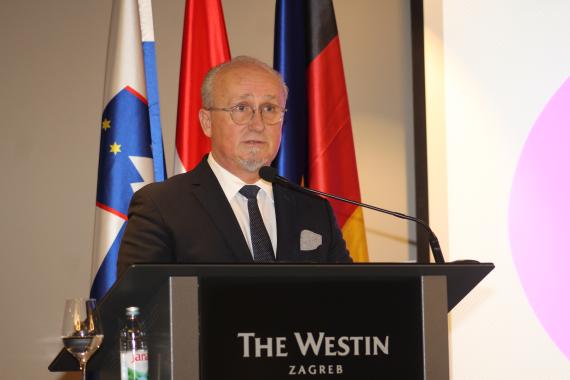
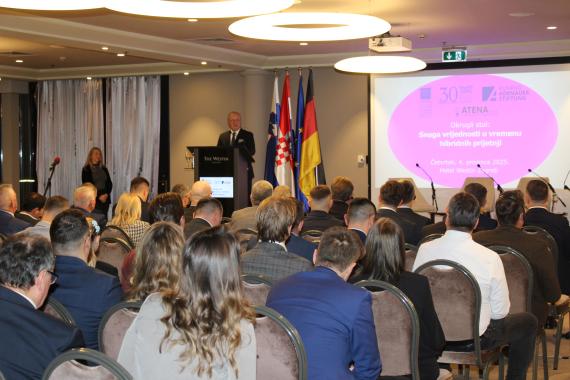
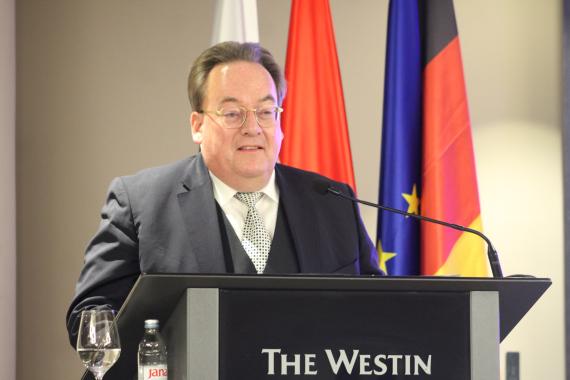
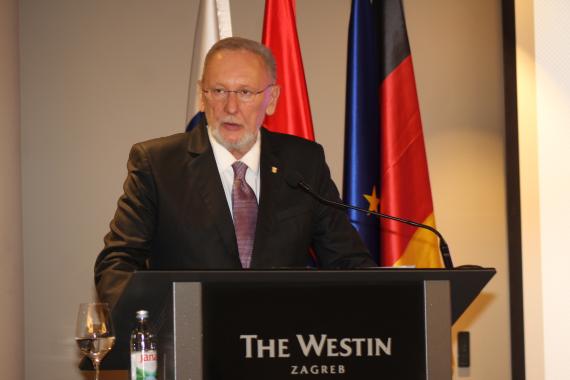
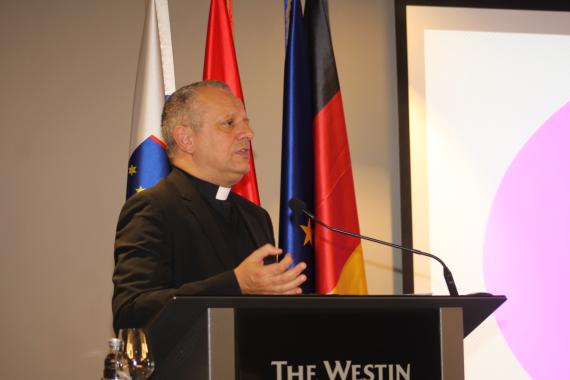
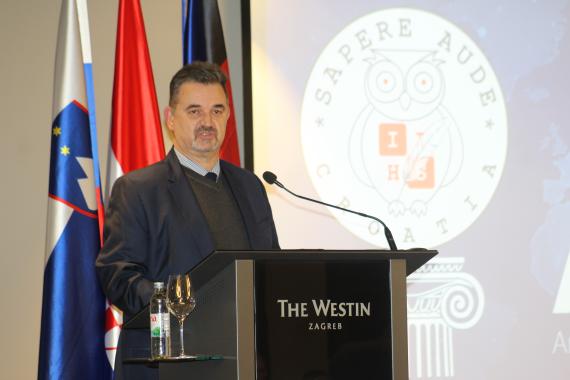
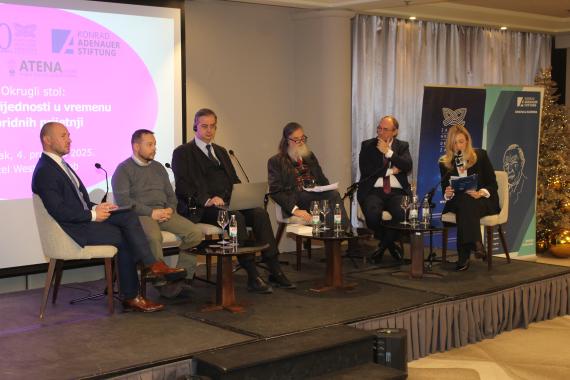
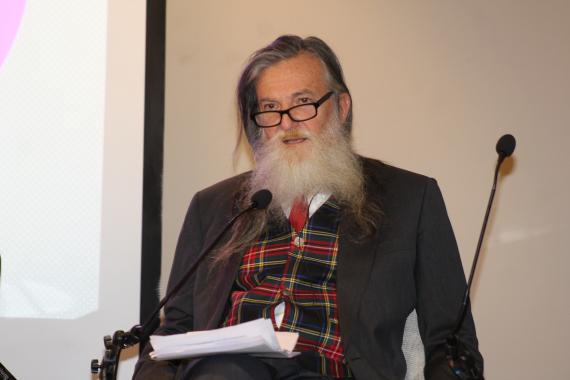
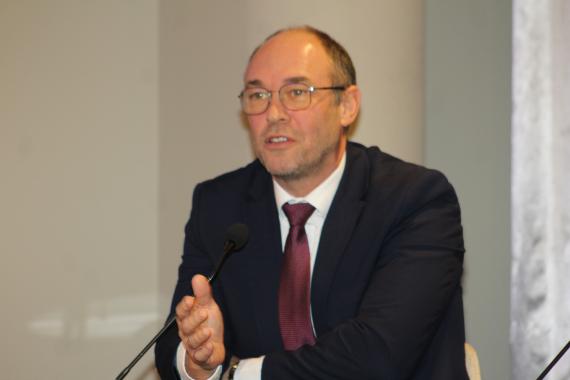
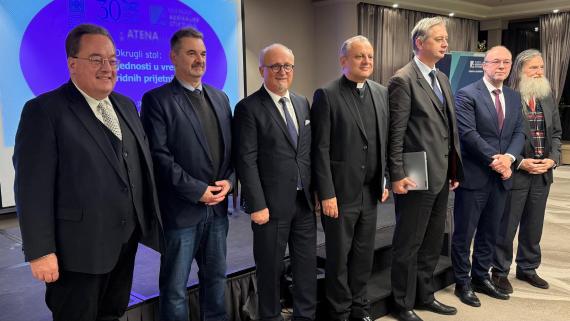
Against this backdrop, and with full awareness of the particular challenges of our time, the KAS Country Office for Croatia and Slovenia - recognizing the importance of this topic and in cooperation with the Croatian Statehood Foundation ZHDZ, the Catholic University of Croatia (UniCATH), and the Hybrid Warfare Research Institute (HWRI) through its Project Athena (Accuracy Analysis of Media Reporting) - organized a roundtable discussion titled “The Power of Values in Times of Hybrid Threats”.
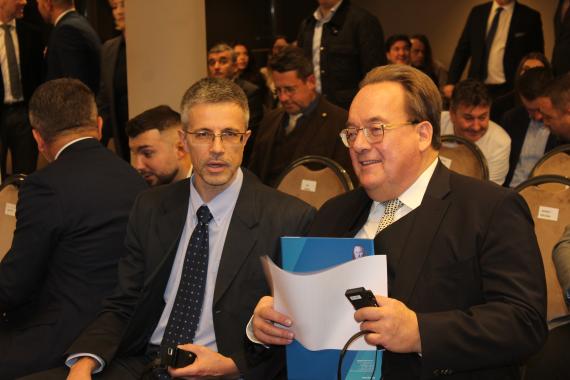
The event in Zagreb brought together high-ranking experts from Croatia and abroad, along with representatives of science, the diplomatic corps, the political and security sectors, as well as religious and other relevant institutions.
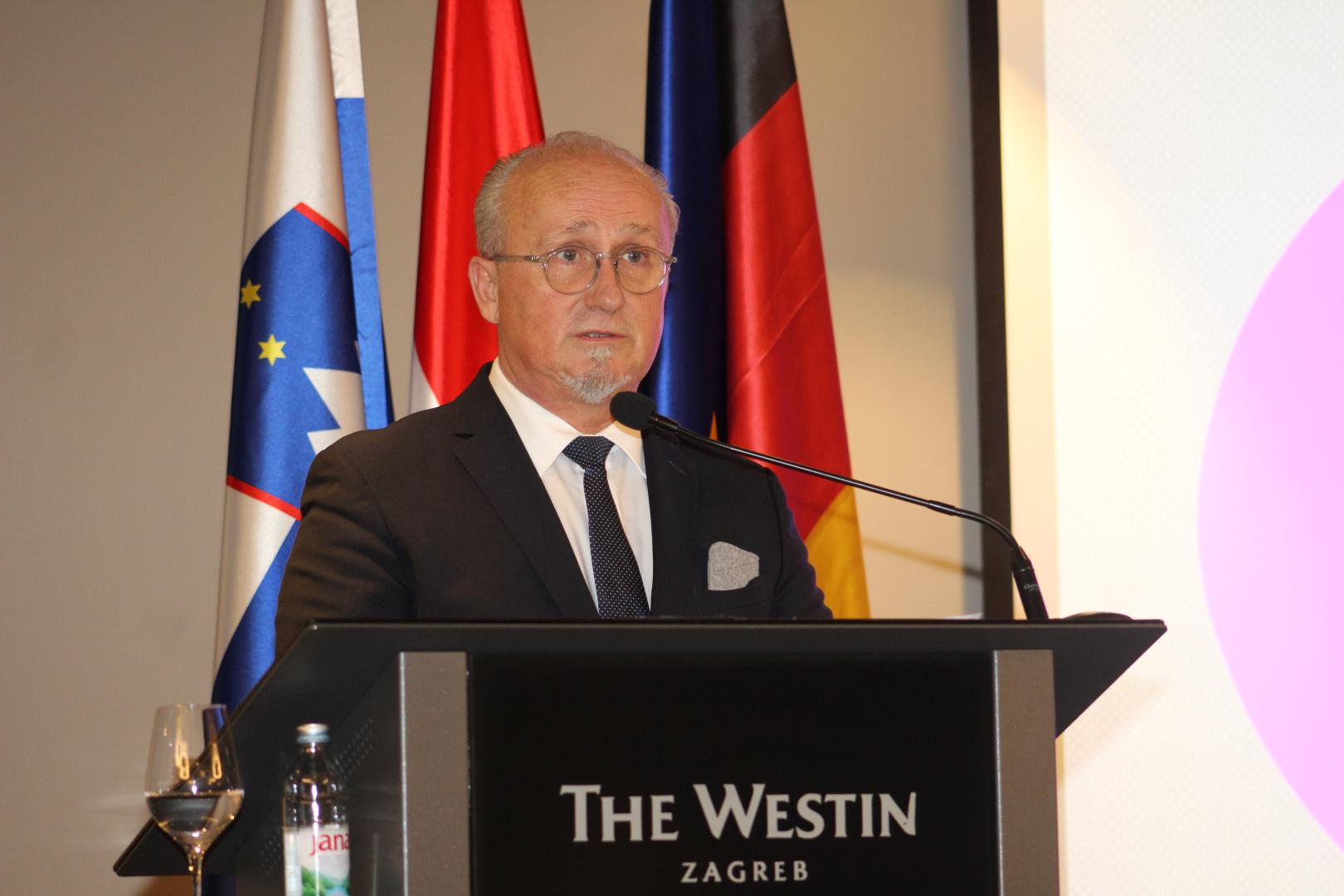
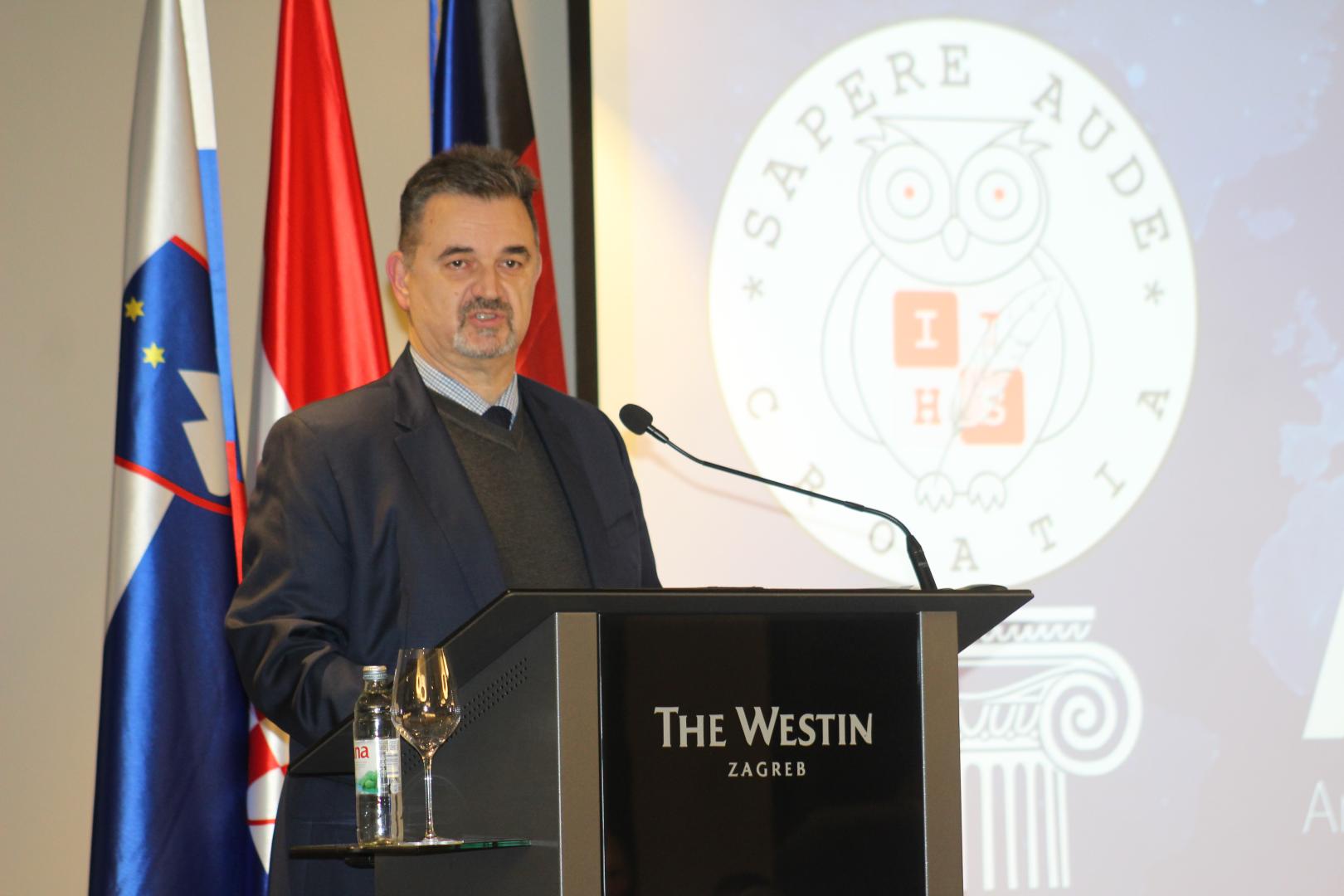
In his opening remarks, Srećko Prusina, Direktor of ZHDZ, emphasized that politics is not only about conveying political content, but above all about safeguarding values and preserving democracy. Through the joint educational programs of the ZHDZ and the KAS, young politically engaged individuals learn not only about politics, but also about the values they must uphold in order to serve truth and justice.
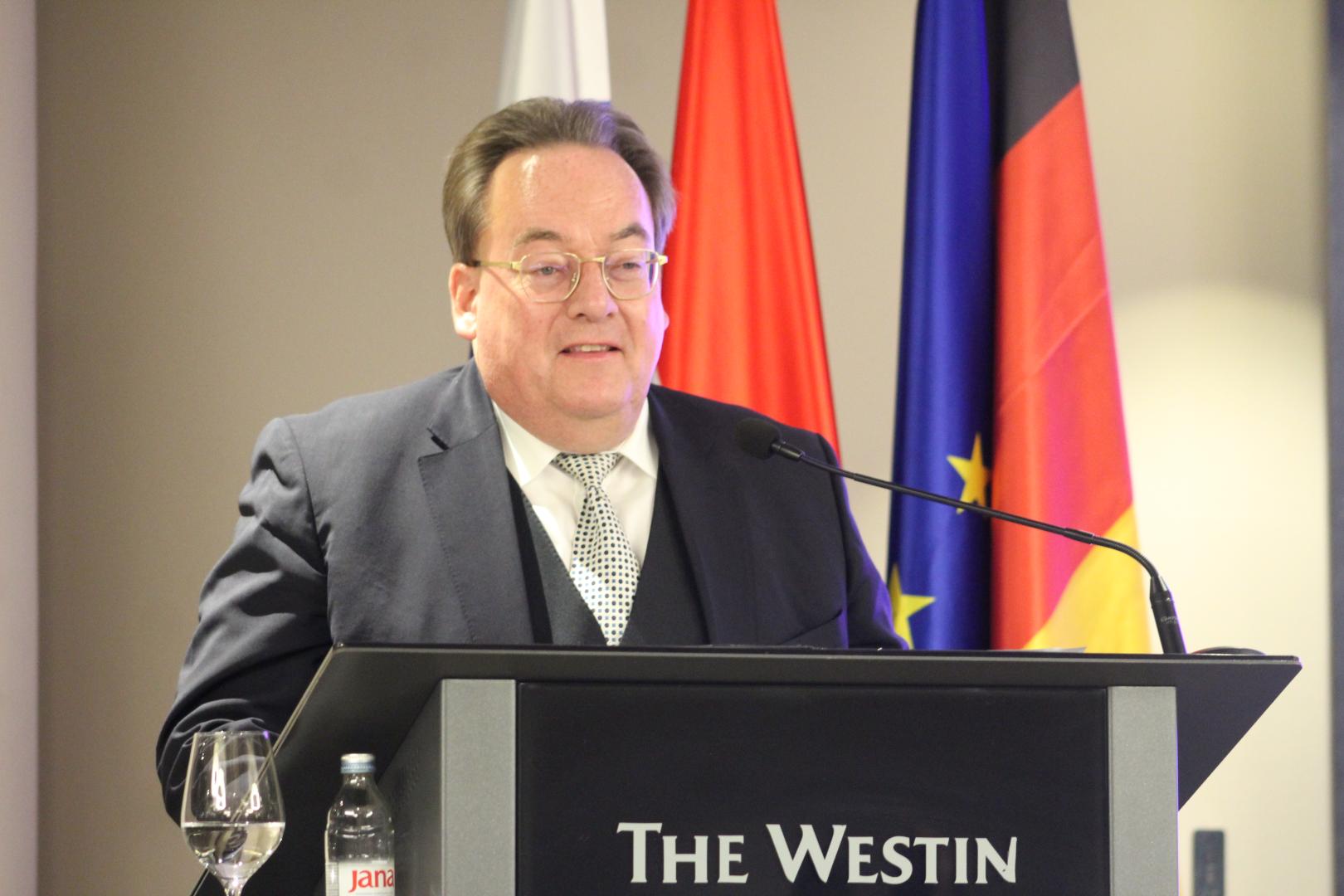
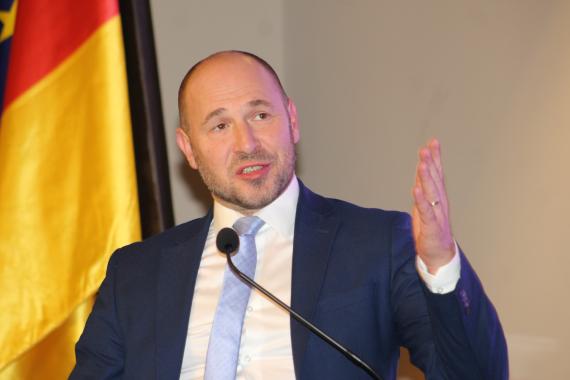
Dr. Norbert Eschborn, Director of the KAS Croatia-Slovenia Office, highlighted that we are living in a time of complex hybrid threats that undermine trust in institutions, facts, and society itself. Yet, he stressed, our shared values - freedom, democracy, human dignity, solidarity, and the rule of law - remain the most effective and timeless form of defense. He added that values foster unity, trust, and orientation by connecting us across borders, strengthening transparency and integrity, and ensuring that technological developments serve humanity. Dr. Eschborn pointed out that societies firmly grounded in their values are better equipped to withstand crises. For this reason, embedding these values into politics, partnerships, and education is essential. He concluded by stating that resilience today means investing not only in infrastructure, but above all in trust, dialogue, and cooperation, which enable us to detect and resist manipulation.
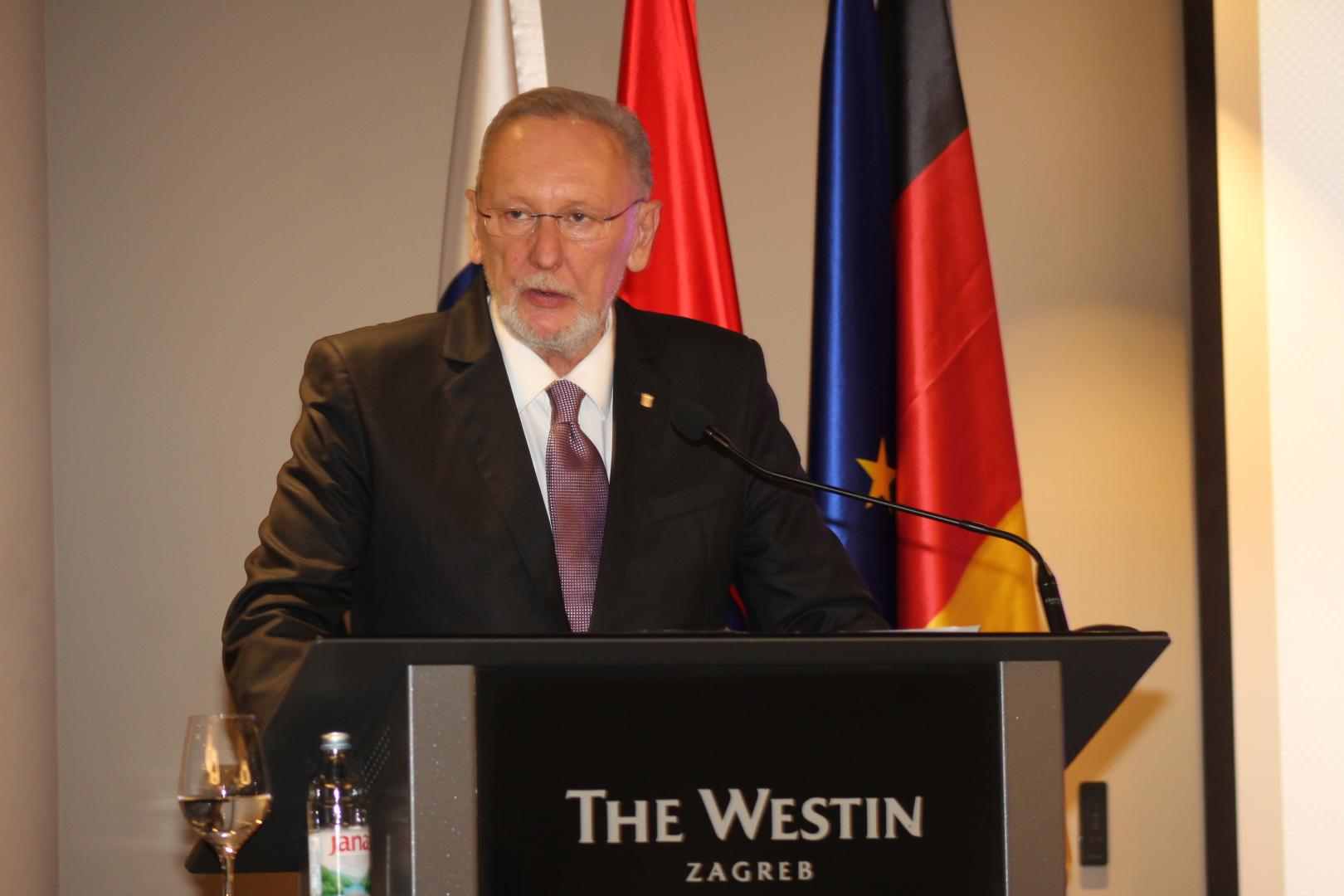
The Deputy Prime Minister and Minister of the Interior of the Republic of Croatia, Dr. Davor Božinović, stressed in his introductory address that in a time of rapid change it is crucial to build trust and reclaim the space for arguments, facts, and genuine dialogue. False narratives must not be allowed to divide society, for only a society that recognizes disinformation early can remain resilient and united. In an era of growing polarization, he noted, it is essential to communicate clear messages and provide reliable information. In this context, he highlighted the importance of mainstream media. Digital literacy, he added, is a key tool enabling citizens to distinguish truth from Fake news. He concluded by calling on those present to work together in building a more resilient society, firmly rooted in its values and ready to face contemporary challenges.
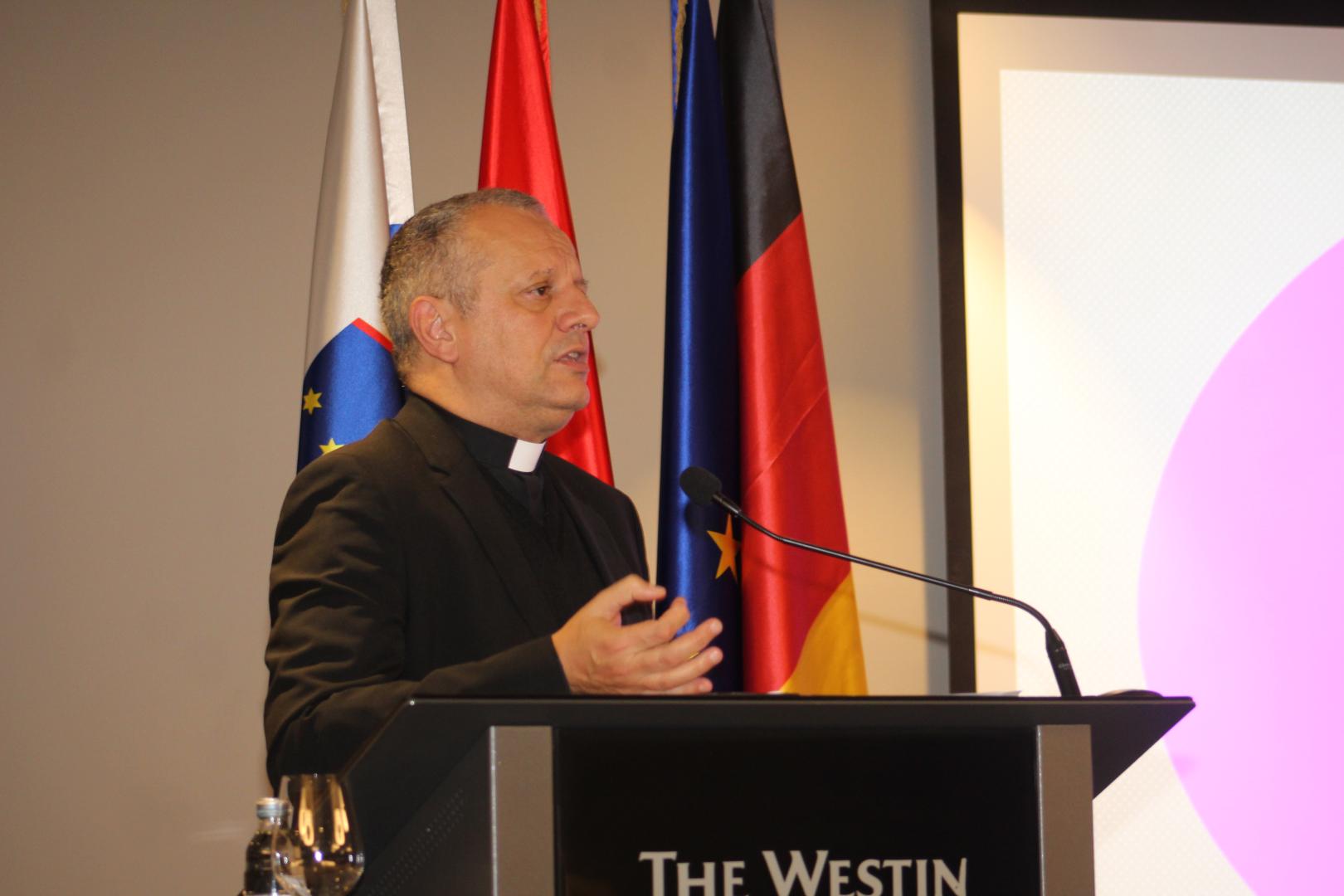
Prof. Dr. Željko Tanjić, Rector of the Catholic University of Croatia, spoke about the core values that sustain Europe’s democratic identity. He underlined the importance of family values as a foundation for preserving universal principles, as they foster respect, responsibility, and solidarity- qualities critical for the stability of political and social structures. He noted that today people often forget to listen to one another, even though this is particularly important in times of hybrid threats in order to understand different perspectives and develop shared solutions. Only through dialogue and cooperation, he concluded, can society remain resilient, united, and capable of effectively addressing contemporary challenges.
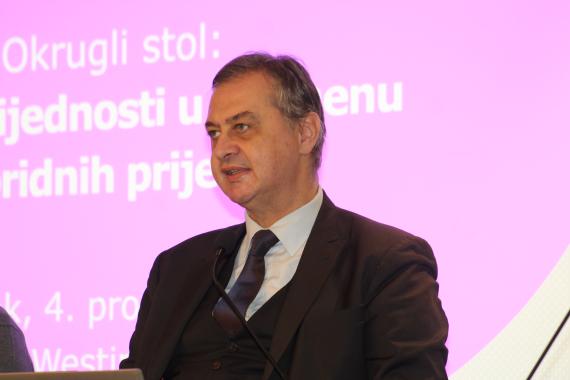
Dr. Gordan Akrap of the "Dr. Franjo Tudjman" Defense and Security University emphasized that disinformation undermines social cohesion and can fuel violence and deepen divisions. He explained how disinformation narratives infiltrate society and influence citizens’ behavior. He particularly highlighted the importance of educating citizens and using tools that help them distinguish truth from manipulation. He also pointed out that artificial intelligence - when used responsibly - can be a powerful instrument for detecting false content.
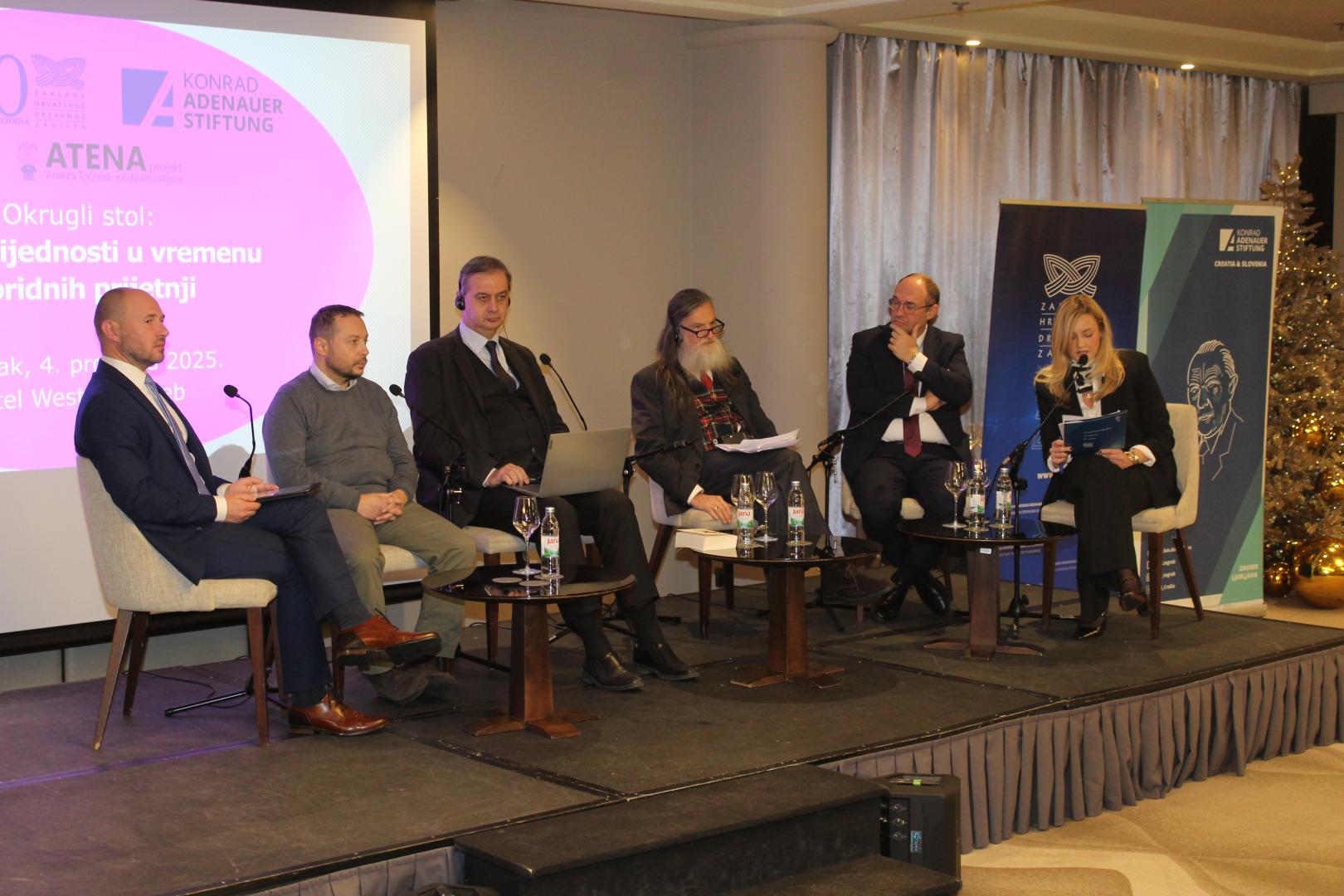
At the conclusion of the event, the final panel discussion, featuring domestic and international university representatives, including MEP Davor Ivo Stier (HDZ/EPP) and Jernej Vrtovec, President of New Slovenia (NSi – The Christian Democrats), focused on how disinformation, as a strategic instrument, undermines trust, polarizes societies, and weakens the ethical foundations of democracy. The panelists shared concrete examples from their respective countries illustrating how hybrid threats and disinformation can be effectively countered and overcome. They emphasized the central role of experts and political actors who, through ethical leadership, transparent communication, and value-based decision-making, can confront these challenges. The discussion underlined that critical thinking is the strongest tool against hybrid threats and that protecting democracy today also requires safeguarding the cognitive dimension of public life.