





Asset Publisher

Publications

Asset Publisher

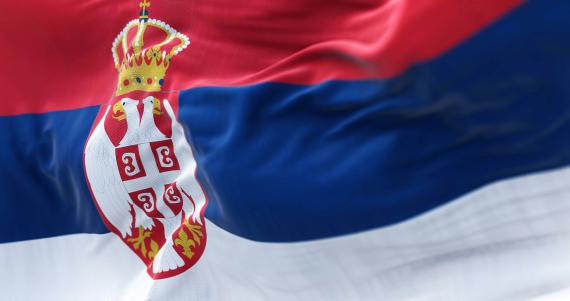
Aufruf zum Gewaltverzicht und Deeskalation in Serbien

Die Konrad-Adenauer-Stiftung ruft alle staatlichen und nicht-staatlichen Akteure in Serbien zu Gewaltverzicht auf.

Die gewalttätigen Ausschreitungen in Serbien verfolgen wir aufmerksam und mit zunehmender Besorgnis. Wir verurteilen jede Form von Gewalt und rufen zur Deeskalation jeglicher Spannungen auf. Wir rufen alle staatlichen und nicht-staatlichen Akteure zu Gewaltverzicht auf. Das Recht auf friedliche Versammlung und freie Meinungsäußerung muss respektiert werden. Die zuständigen Behörden sind verpflichtet, die Teilnehmenden von Demonstrationen vor Übergriffen und Gewalt zu schützen. Gleichzeitig verfolgen wir auch mit Sorgen eine zunehmende Radikalisierung der Demonstranten, die nicht mit demokratischen Werten vereinbar ist. Die politischen Spannungen in Serbien müssen ohne Gewalt und unter Wahrung der Rechtsstaatlichkeit gelöst werden.

IMAGO / Zoonar

Preliminary report on the elections in Serbia

Possible changes due to early parliamentary elections

On December 17 Serbia will hold early Parliamentary Elections, Local Elections for 65 municipalities and Regional Elections for the Autonomous Province of Vojvodina. The elections are a result of societal and political tensions, which were sharpened following two mass shootings in Belgrade and Mladenovac in May 2023 and the intensified tensions with Kosovo. The short and intensive election campaign is marked by increasing polarization. Regardless of the results, Serbia will face great internal and external political challenges in the coming year.

The public domain of the Government of Montenegro

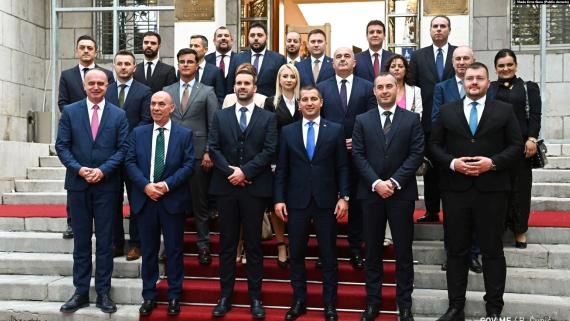
Montenegro’s 44th government sworn in

Comprehensive reform agenda in difficult times

After several months of negotiations, Milojko Spajić, Chairman of the Europe Now movement, was elected as the new Prime Minister of Montenegro. A total of 46 parliamentarians voted in favour of the 36-year-old shooting star - more than ever before in an election of a prime minister in Montenegro. With his 19 ministers, Prime Minister Spajić must now tackle many challenges quickly.

KAS BG

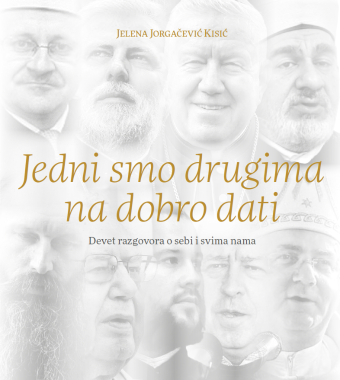
"Jedni smo drugima na dobro dati"

Jelena Jorgačević-Kisić: Devet razgovora o sebi i svima nama

Put ka boljem svetu...

Montenegro's New President

Second chance for Montenegro?

Its new President is facing major challenges both in domestic and foreign policies.

Montenegro: Political and Social Impact One Year After the Start of Russia's War of Aggression against Ukraine

One Year of the War in Ukraine in Montenegro – Political Tensions and Polarization

Montenegrin society, like the party system, is characterized by polarization and duality in its assessment of the Russian war in Ukraine. Little can be found in the political debate between pro-Ukrainian positions, which are linked to a commitment to NATO membership and EU perspectives, and pro-Russian attitudes.

Serbia: Political and Social Impact One Year After the Start of Russia's War of Aggression against Ukraine

One Year of Ukraine War in Serbia – “Zeitenwende” in Serbian?

In much of the commentary dealing with Serbia's handling of Russia's war of aggression against Ukraine over the past 12 months, many Western observers saw the simple continuation of pro-Russian policies. This analysis is too simplistic and does not do justice to the complex situation in Serbia.

Flickr / Marco Verch Professional Photographer

Politisches Erdbeben in Montenegro

Wahlniederlage der Demokratischen Partei der Sozialisten Montenegros in 11 von 14 Städten und die Neuorientierung der politischen Szene

Am 23. Oktober 2022 fanden in Montenegro in 14 von 25 Städten und Gemeinden Kommunalwahlen statt. Mit insgesamt gut 350.000 Bürgern hatten mehr als die Hälfte des 621.000 Einwohner großen Landes die Möglichkeit an die Wahlurnen zu gehen. Vor diesem Hintergrund ist die Wahl als ein bedeutender politischer Stimmungstest zu sehen, der ein Schlaglicht auf die nächsten Parlaments- und Präsidentschaftswahlen wirft.

Wikipedia / Matija

Serbiens lang erwartete Regierung

Die neue Regierung von Premierministerin Ana Brnabić muss zu den großen außenpolitischen Herausforderungen auch dringende Reformen anpacken

206 Tage nach den Parlamentswahlen wurde am 26.10.2022 die neue Regierung unter Alt-Premierministerin Ana Brnabić mit 157 von 250 Stimmen im serbischen Parlament gewählt. In einer großen Koalition mit dem Sozialistenführer Ivica Dačić sollen die großen außenpolitischen Herausforderungen, wie die Lösung der Kosovo- und der Sanktionen-Frage gegen Russland, gelöst werden. Auch wirtschafts- und finanzpolitisch muss das Land wichtige Weichen stellen.

pixabay / apakom

Serbian Foreign Policy in the Wake of the War in Ukraine

The Four Pillars of Foreign Policy, the Kosovo Issue, and the War in Ukraine

The War in Ukraine has placed Serbia’s “Four Pillars of Foreign Policy” strategy to the test. The strategy was devised in 2009 and has presented the EU as the key pillar, with Russia, China, and the US as the other three. The EU was and is by far the most influential partner in terms of trade and investments, as well as politically since Serbia is committed to EU accession and is a candidate state. Russia is the primary source of gas, oil, and fertilizer and a key ally of Serbia in the UNSC, and supports Serbia’s interests in Kosovo and BiH. China is important for its strategic investments in a few companies and investments in key infrastructure projects. The US has the lowest level of trade with Serbia, compared to the other three, however, it is an important investor, particularly in the IT sector. In terms of political ties, tensions exist because of disagreements regarding Kosovo and public perception of the US is generally negative. The War in Ukraine and rising tension between the EU and US on one side and Russia on the other, placed pressure on Serbia to reevaluate its foreign policy strategy. Serbia did join the EU and NATO in condemning Russia and supporting Ukraine on numerous occasions, but it did not impose sanctions on Russia. Internally, the left-ecological and liberal opposition advocates for sanctions, while the right-wing opposition in Serbia is against sanctions. The governing parties are as of yet against imposing sanctions on Russia, but they constantly stress that they are under a lot of pressure to join the sanctions and that they are paying a heavy price for their position. These pressures, real or perceived, coupled with tensions in Kosovo, have resulted in a drop of support for the EU in the general public. Concurrently, over 80% of the population does not support imposing sanctions on Russia.