






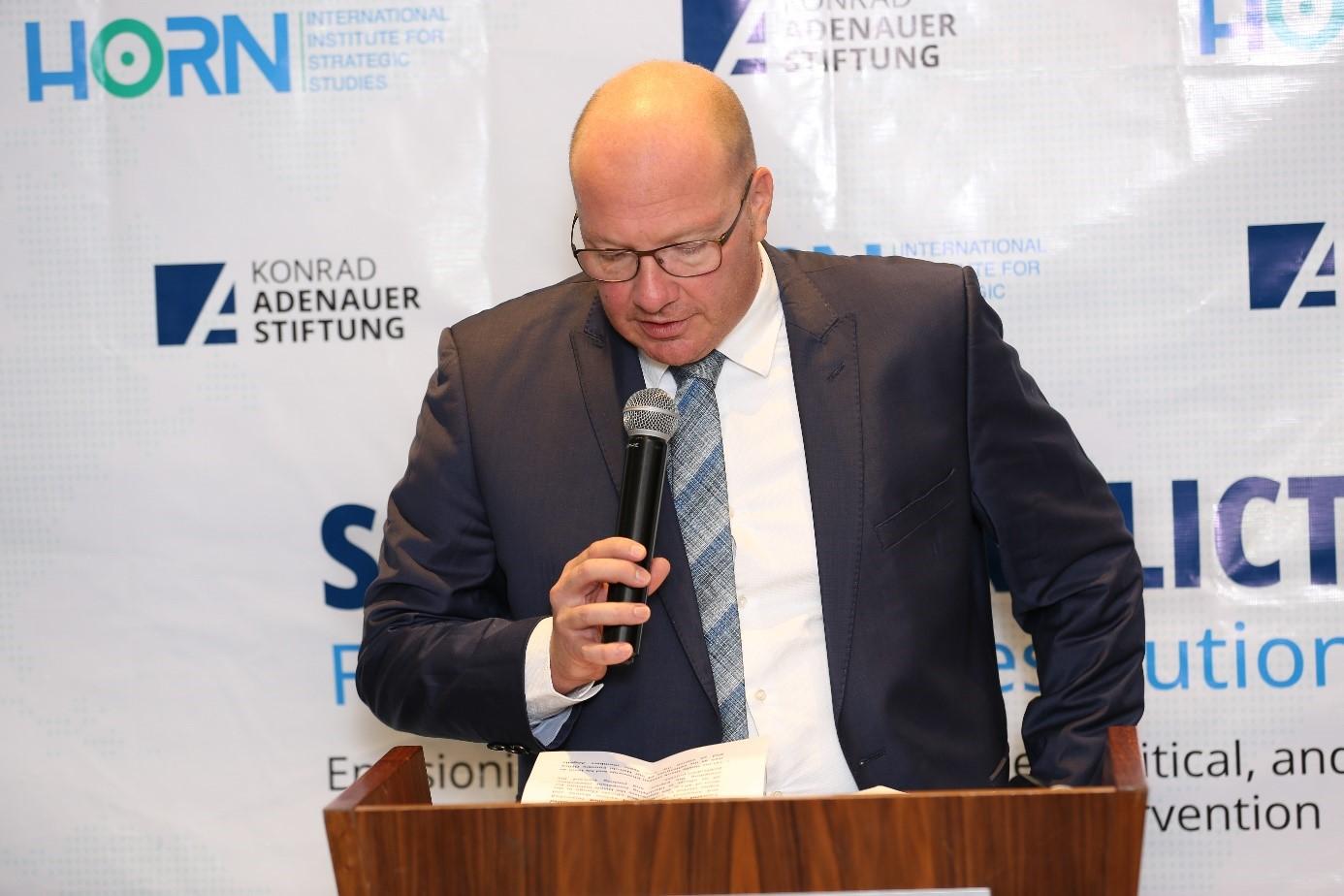
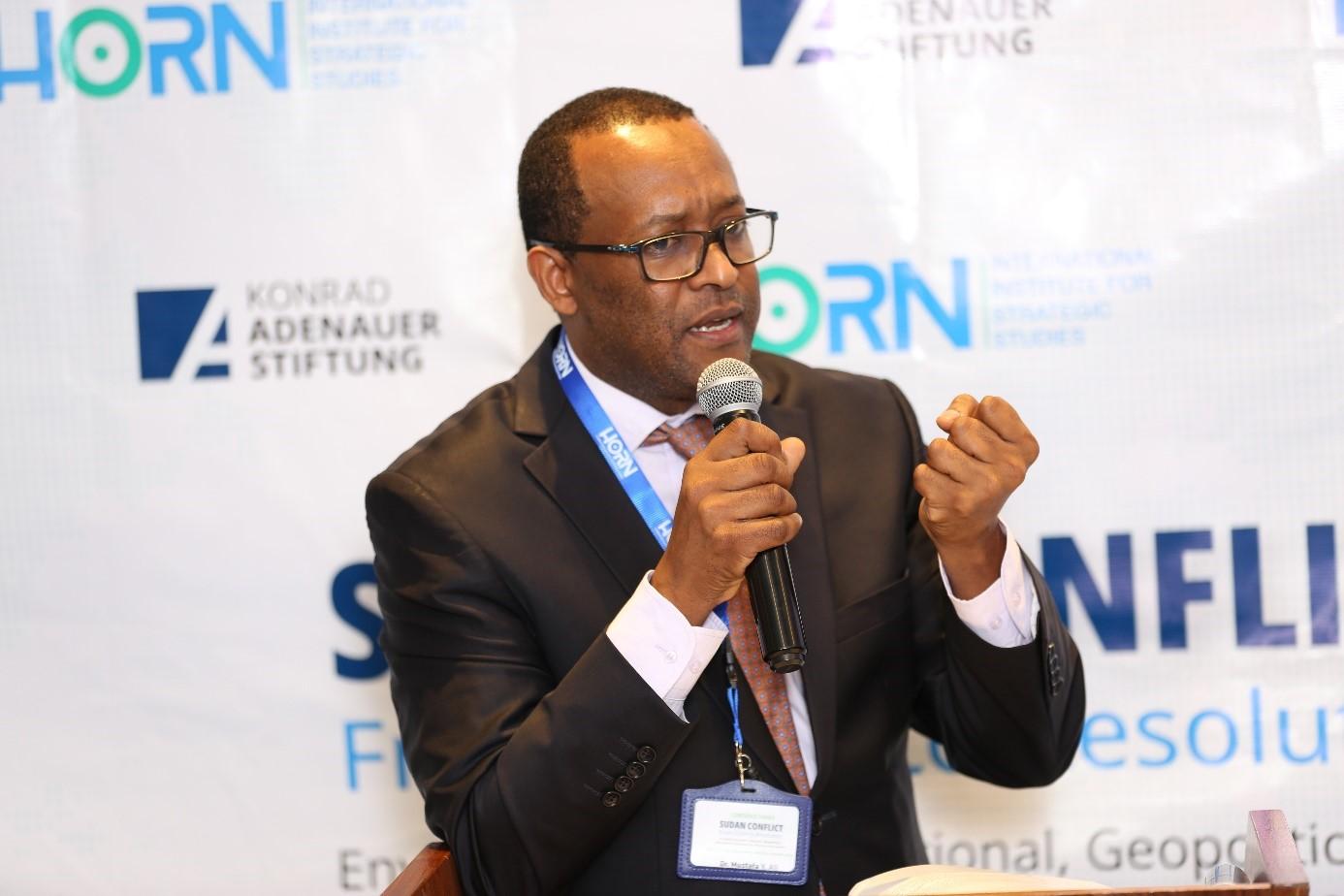
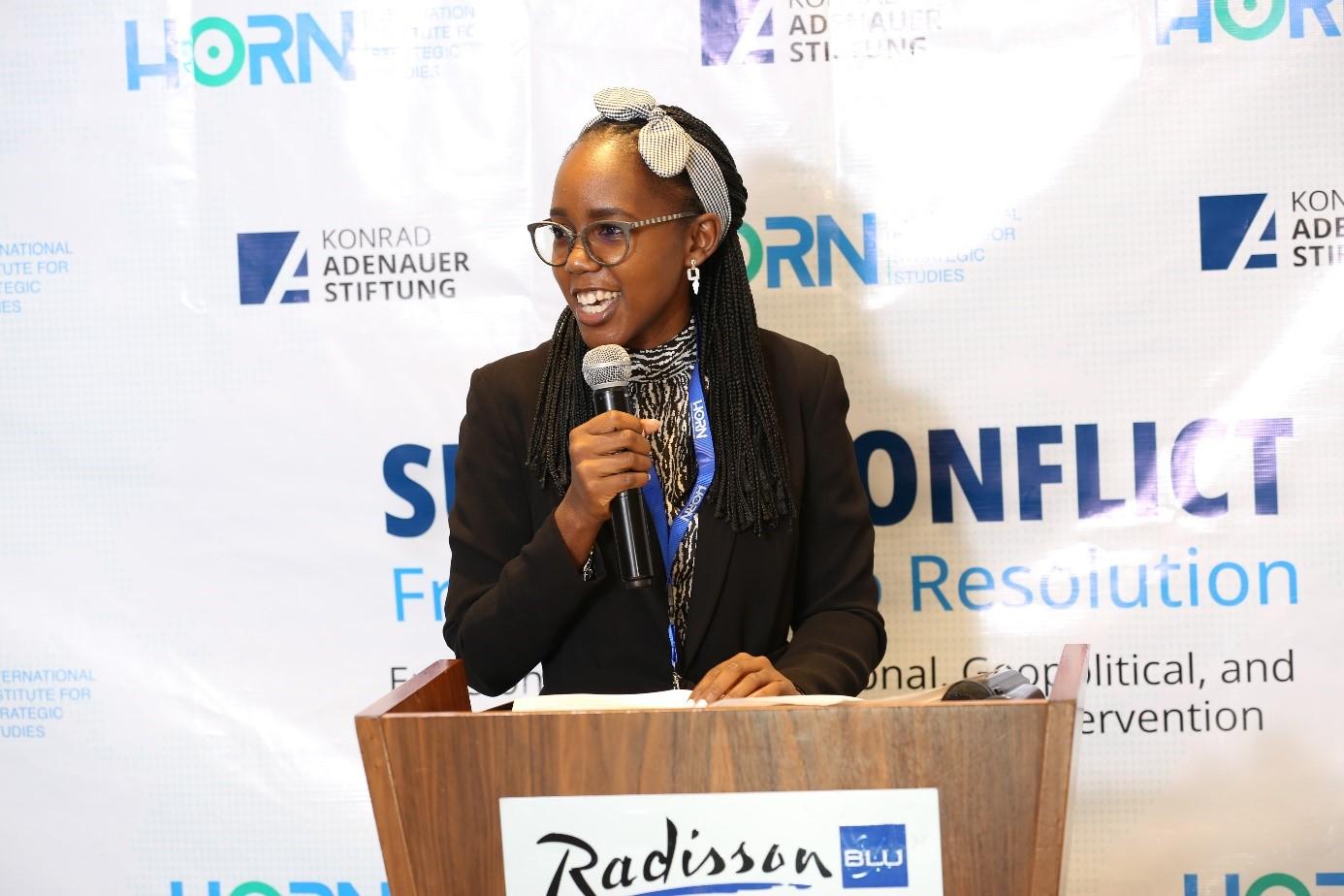
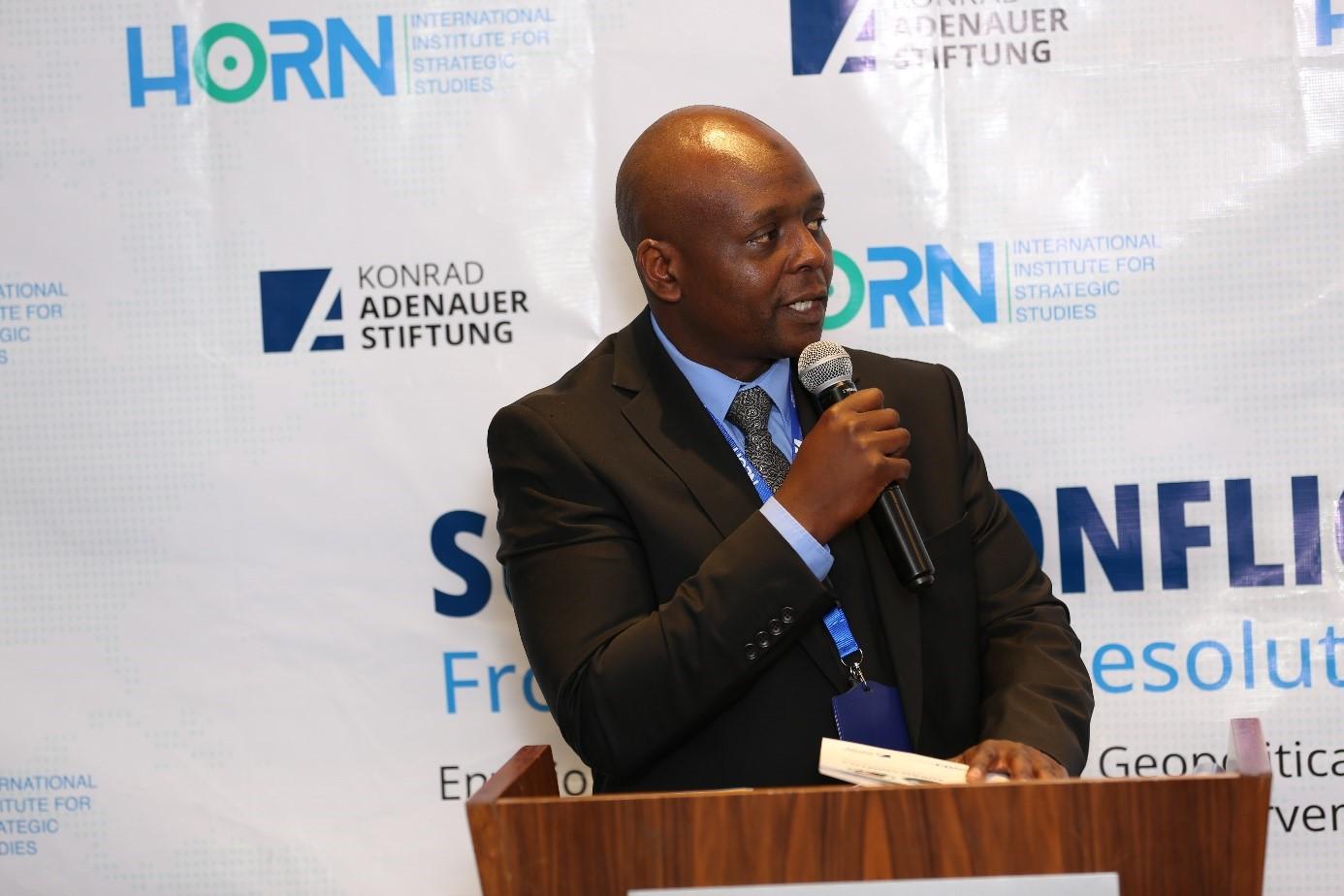
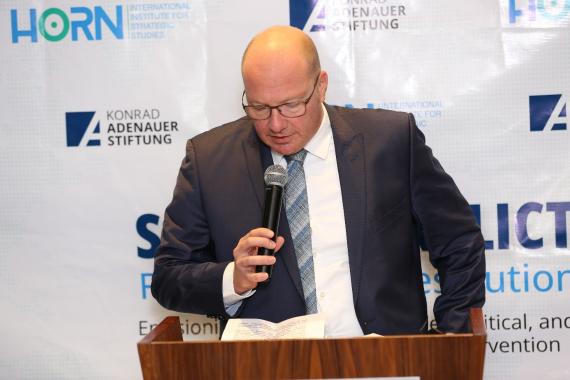
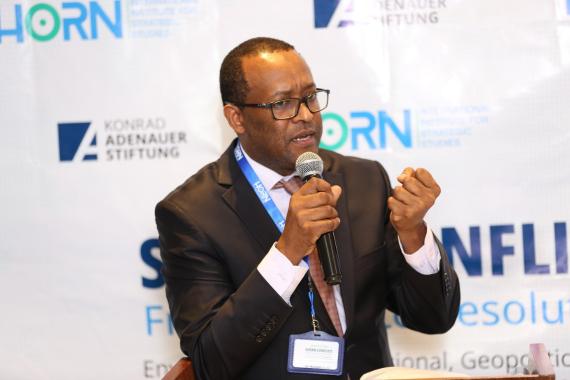
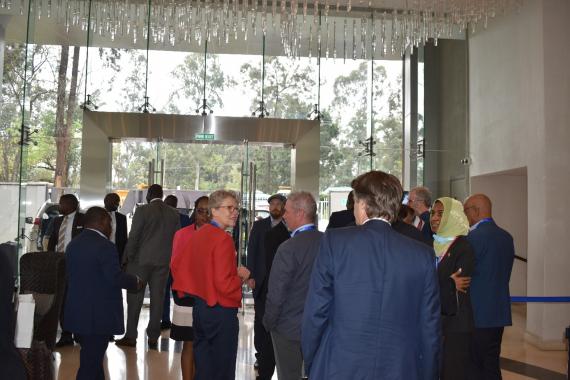
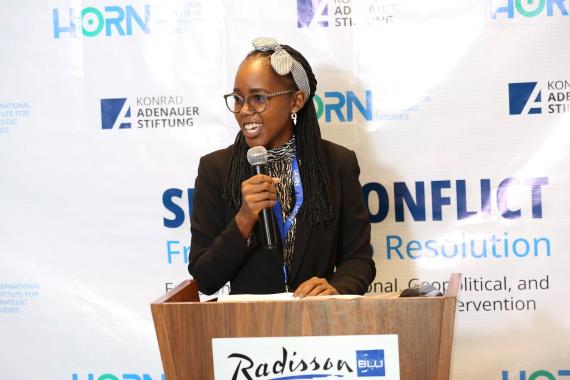
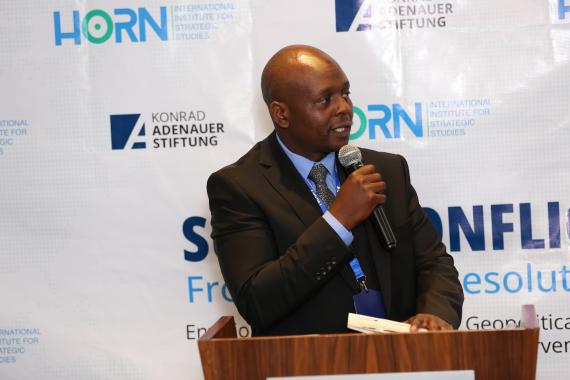
In their opening remarks Dr Hassan Khannenje, Director of the HORN Institute, Dr Mustafa Y. Ali, Chairman and Co-Founder of the HORN Institute, Nils Wörmer, Director of the KAS Regional Programme Security Dialogue for East Africa, and Dr Abraham Korir SingOei, Principal Secretary for Foreign and Diaspora Affairs of the Republic of Kenya, stressed the urgency of addressing the Sudan crisis. Dr Khannenje pointed out the significance of the Sudan crisis and expressed hope for a more positive outcome compared to past regional conflicts. Dr Mustafa Ali highlighted the importance of addressing the crisis in Sudan and urged a better understanding of the interests of neighbouring countries. HORN chairman Dr Ali also emphasised the broader implications for security dynamics in the Horn of Africa, particularly its potential to deepen consequences in the Sahel and its connection to Europe. He called for Germany to take a leadership role in addressing African conflicts and highlighted the importance of constructive development from East to West for peace in Africa. Nils Wörmer recognised the far-reaching consequences of the Sudan crisis, impacting regional stability, and trade, and perpetuating ongoing crises. He expressed hope for finding common ground and a path to peace. Dr Abraham Korir explained Kenya's vested interest in Sudan's search for peace, citing Kenya's involvement in various peacekeeping missions in the region. He focused on the importance of Sudan and the potential for terrorism to thrive in the absence of a resolution. Dr Korir underscored that the path to peace lies regionally, drawing attention to the need for a democratic government.
In the first panel discussion, several critical points were raised regarding the Horn of Africa. These included insights into the region's unique historical context, the military's control over resources, and the importance of unity in diverse nations like Sudan. However, the overarching theme that emerged was the challenge posed by differing interests among various stakeholders. To effectively address the region's complex issues, it was pointed out that a unified mediation process is essential, bringing together all parties to find comprehensive solutions that benefit the entire region.
In panel two, the discussion revolved around the humanitarian and geopolitical aspects of the Sudan crisis. The speakers highlighted the severe humanitarian challenges, including population displacement, collapsing health systems, and disease outbreaks. They also emphasised the ripple effects of migration on neighbouring countries and the complexities of the conflict. The discussion strongly focused on the role of military forces and the broader geopolitical context in Sudan's crisis. The second panel ended with the strong rhetorical question „Are we going to throw it all at the European Union, or are we as Africans going to clean up our own house?“
Panel three addressed strategies for achieving sustainable peace in Sudan, stressing on the importance of collaboration among national, regional, and international stakeholders. The roles of key organisations were discussed, along with recommendations for future actions. The panels raised critical questions about leadership and leverage in resolving the Sudan crisis, insisting on the need for concrete approaches to mediate the conflict.
On day two, on the fourth panel of the conference, discussions centred on the Sudan crisis and its repercussions. Participants highlighted the crucial role of civil society in addressing the crisis by providing humanitarian aid and understanding the Sudanese people's needs. The panel emphasised the necessity of involving civil society actors in the mediation process to gain a better grasp of the context and challenges. Additionally, the consequences of the crisis, including spillover effects and migration, were addressed. Collaboration and transparency among international stakeholders, as well as the funding gap and the cost of inaction, were also key points of discussion in the panel.
In the fifth panel, discussions revolved around key recommendations for addressing the Sudan crisis. Participants emphasised designating a lead country to guide mediation efforts, cautioning against letting those who contributed to the problem solely control solutions. They suggested creating a mediation process that authentically represents Sudan's complexity. In this context, the question arose, whether the focus should be on settling the conflict or achieving full resolution. Additionally, recommendations included providing sustained support beyond negotiations and prioritising Sudan's food security, livelihoods, and access to natural resources. Given Sudan's size and history of conflict, improving security and sustainable resource management were also stressed to meet the needs of its growing population while managing dwindling resources. These recommendations underscored the multifaceted nature of the Sudan crisis and the crucial role of regional and international actors in finding lasting solutions.
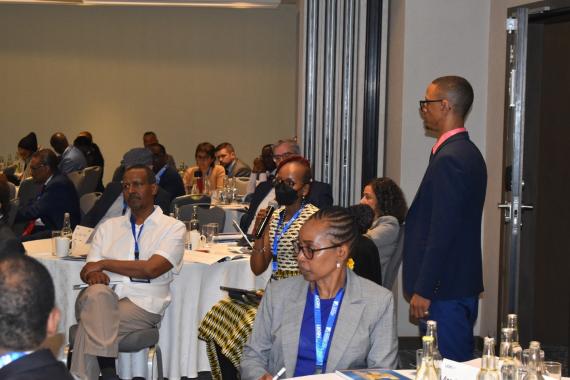
The conference concluded with a vibrant plenary session during which numerous participants shared their own thoughts and aspirations for the future of the conflict and its resolution. In general, there was a broad consensus on the imperative and the collective commitment to support Sudan on its path towards achieving peace.
About this series
The Konrad-Adenauer-Stiftung, its educational institutions, centres and foreign offices, offer several thousand events on various subjects each year. We provide up to date and exclusive reports on selected conferences, events and symposia at www.kas.de. In addition to a summary of the contents, you can also find additional material such as pictures, speeches, videos or audio clips.