








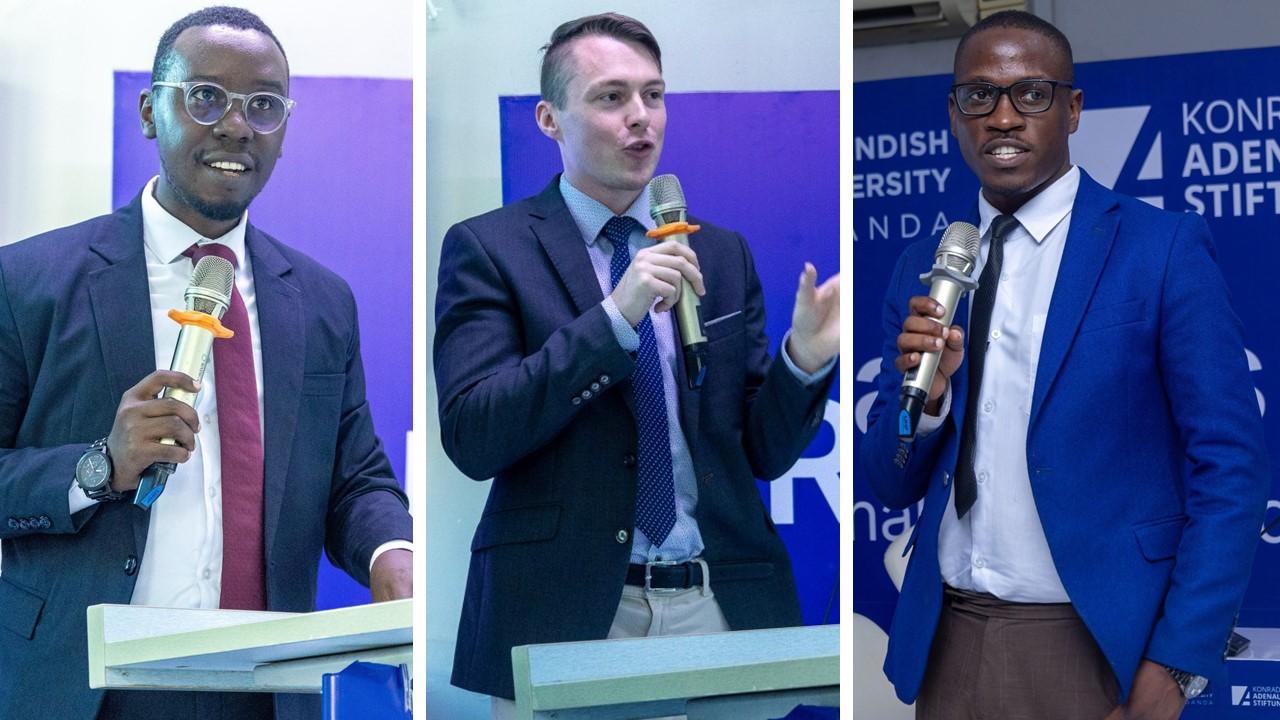
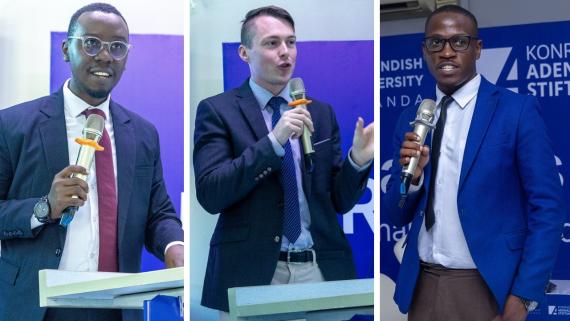
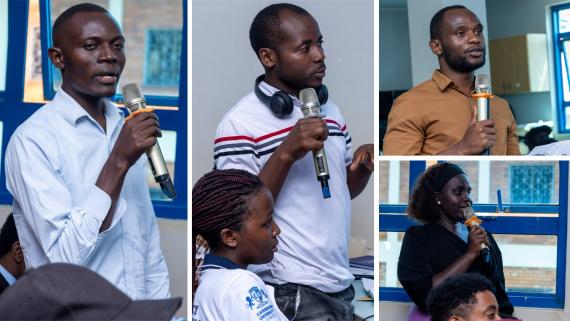
The dialogue was officially opened by Dr Busuulwa Huthaifah, Dean, Faculty of Socio-economic Sciences at Cavendish University. He welcomed the participants and thanked the Konrad-Adenauer-Stiftung for their partnership and support towards the dialogue. He noted that the discussion was timely given the challenges most refugees go through trying to enrol into higher education. In his opening remarks, Jan-Ole Voss, Director, KAS RP SIPODI East Africa, gave an opening brief overview of KAS and its mission thanked Cavendish for hosting the dialogue and the participants for attending.
Dr Herman Tuhairwe, Post Doctoral Scholar, Refugee Rights Unit, University of Cape Town delivered a keynote address. He appreciated the structure in which the dialogue was set up in, highlighting that it allowed the students to freely speak on their challenges as refugees living in Uganda. In his address, he emphasised that displacement does not distinguish potential, urging for the continued and robust protection of refugee rights. He urged for the continued protection of refugee rights which include the right to a refugee identity card, social protection, mental health assistance and assured future. He implored policymakers to ensure that Uganda’s refugee structures and policy directions are purposefully designed to support and uplift their determination.
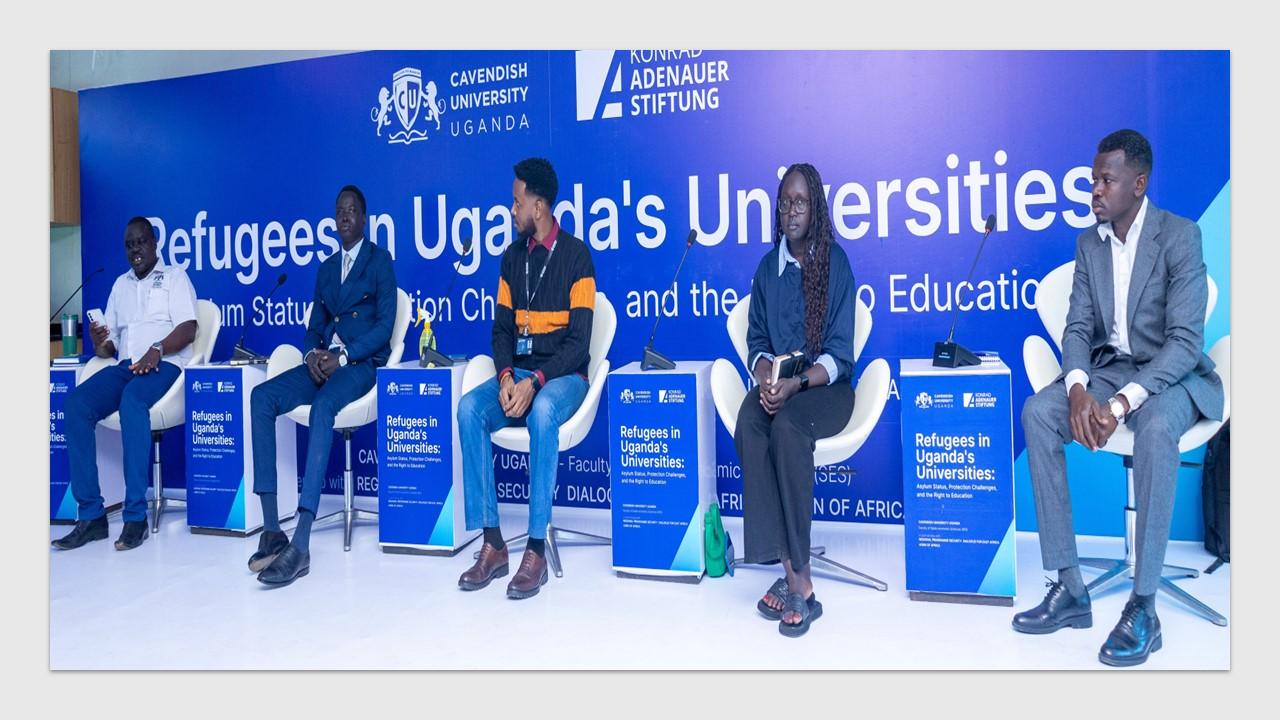
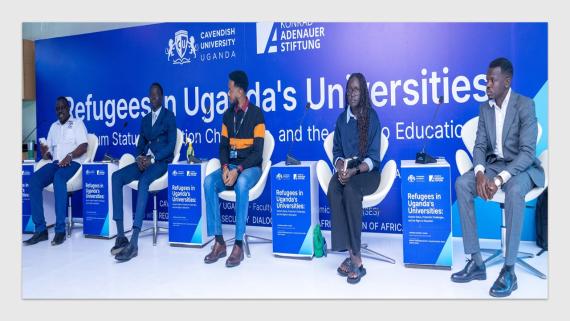
The first panel, moderated by Mr. Bernard Ochan, the Dean of Students at Cavendish University, focused on the lived experiences and challenges of refugees in Uganda. The panel featured a diverse group of student perspectives, and comprised of Ibrahim Musa Hussin, a Sudanese student at Cavendish University; Rose Modat, a South Sudanese student at Makerere University; Hussein Ismael, a Somali student at the Islamic University in Uganda and Magong Andrew, a South Sudanese student at Makerere University. The panelists detailed the systemic obstacles they faced from initial entry to long-term settlement in Uganda, citing major hurdles such as language barriers, prolonged waiting periods at border points to secure documentation, and poorly equipped schools within refugee settlements. Furthermore, they highlighted financial and administrative barriers, including being denied the opportunity to open formal bank accounts and facing expensive, highly bureaucratic processes to have their foreign academic certificates equated to the Ugandan education system. Despite these challenges, the panellists recognised and praised Uganda’s commitment to its open-door policy, which has enabled them to pursue higher education and, for some, rebuild their professional careers. To address these issues, the panel recommended establishing dedicated university refugee desks staffed by personnel educated on the plight and rights of refugees, as well as deploying multilingual personnel at entry points to reduce miscommunication and frustration.
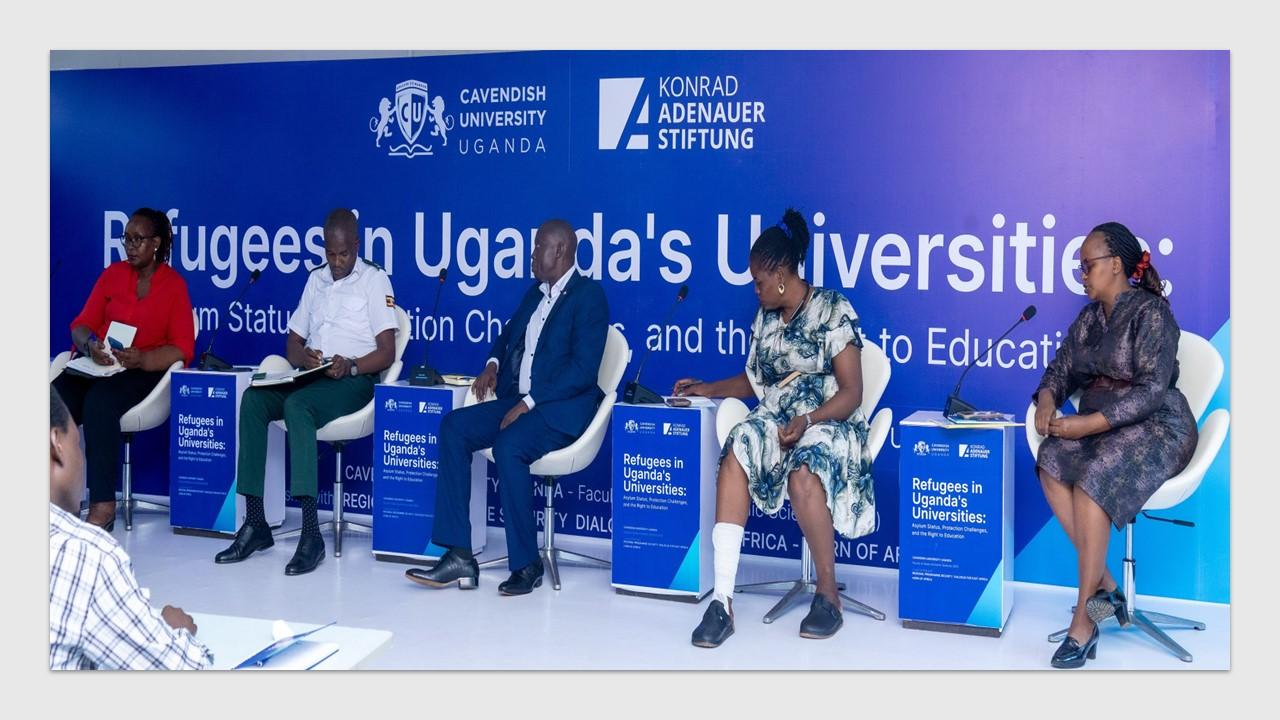
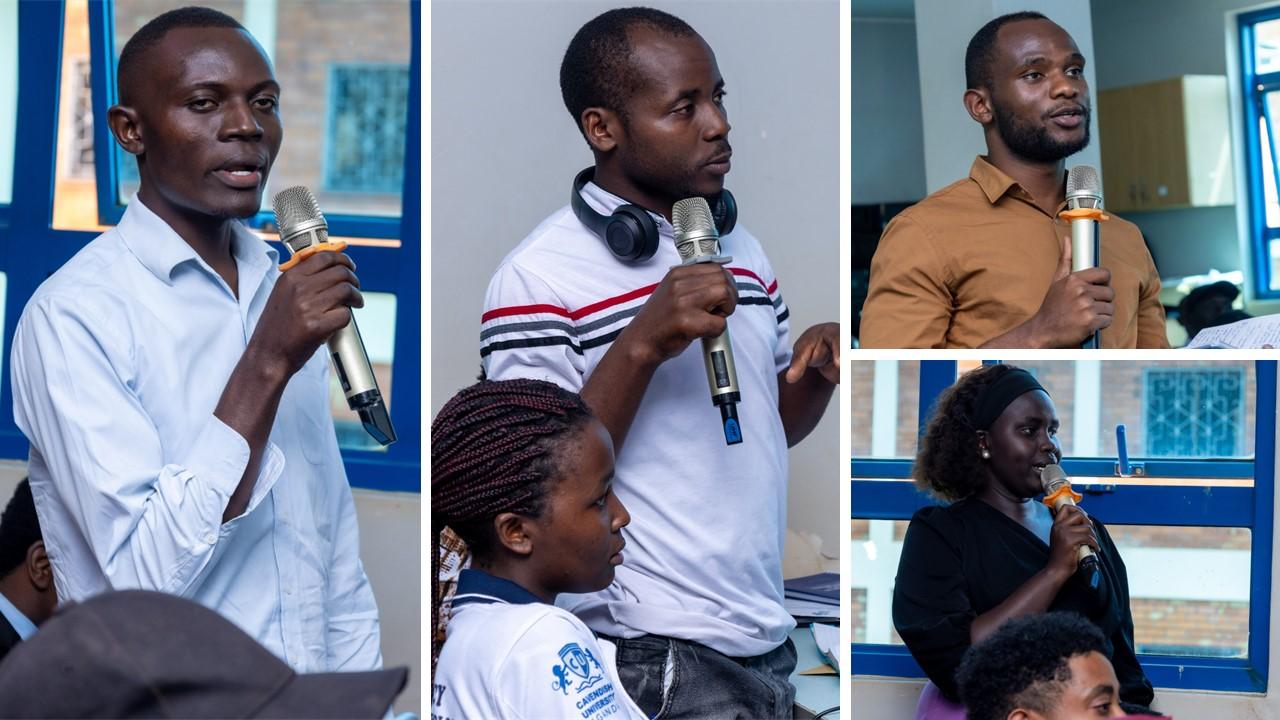
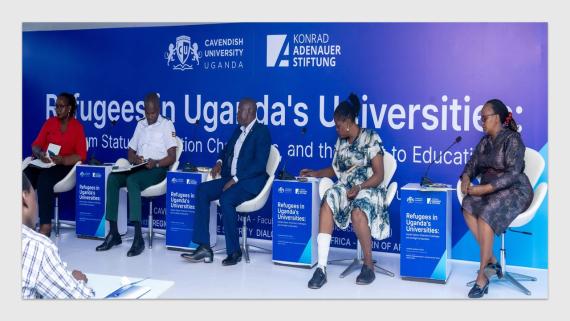
The second panel moderated by Winfred Nandawula Kaggwa, Programme Manager at Graca Machel Trust, discussed Refugee Protection, Institutional Roles and Government responses. The panel brought together key institutional representatives, including Darlson Kusasira from the Department of Refugees in the Office of the Prime Minister, Dickson Kajuga, Immigration Assistant at National Citizenship and Immigration Control, Dennis Wamimbi, Complementary Pathways Officer Finchurch Aid, Julian Ateme, Assistant Protection Officer UNHCR, and Daphne Tukahebwa, Student Enrolment Manager at Cavendish University Uganda. The panel noted that the challenges facing refugees were mostly exacerbated by a lack of information. They urged the students to attend meetings held by the office of the prime minister to get information and seek information through formal channels. The panellists responded to participants questions, most of which ranged from how to access the Conventional Travel Document and work permits. The panellists responded by offering regulatory guidance on the exact processes required to acquire said documentation.
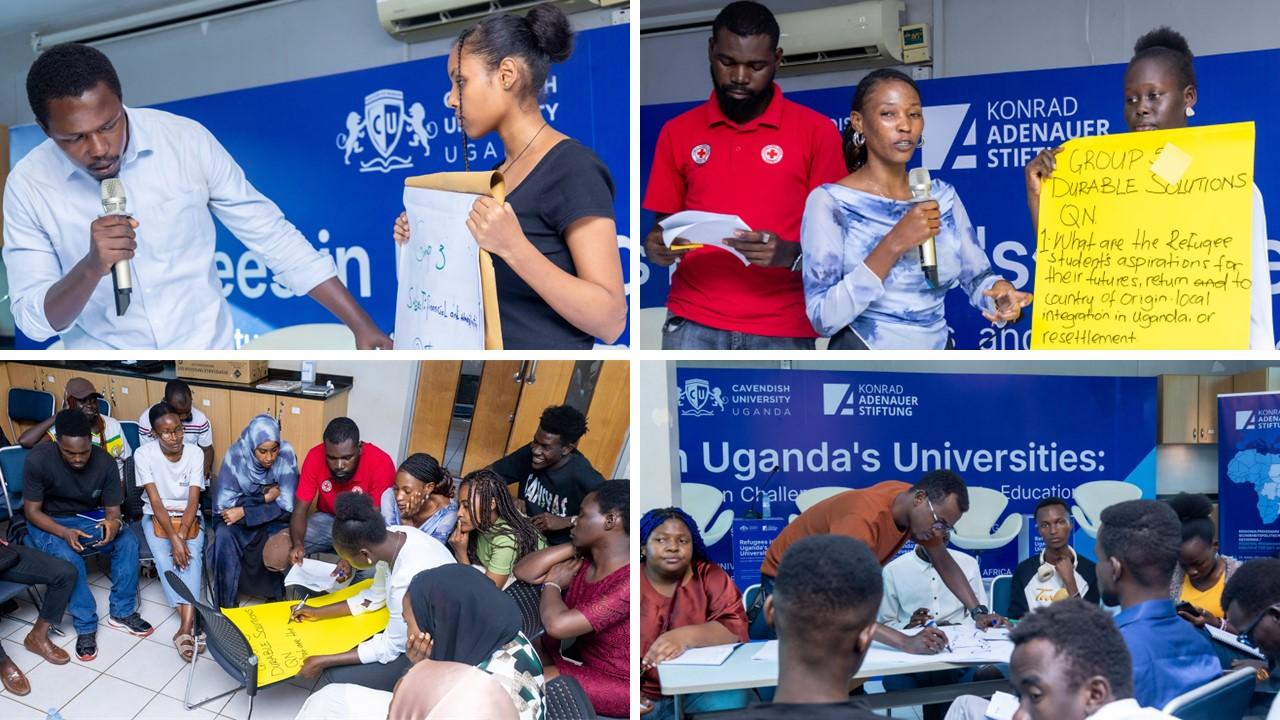
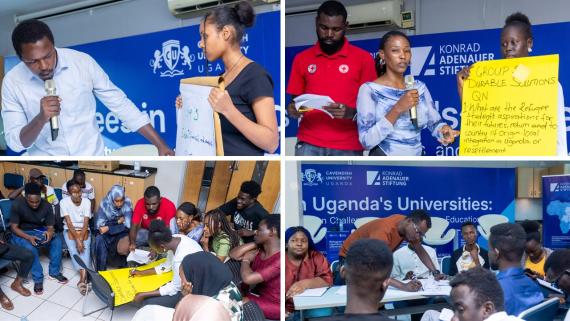
The dialogue concluded with participant-led group discussions and presentations. Attendees were divided into specific thematic groups to deliberate on sector-specific issues, successfully mapping out the various challenges they face across different areas of daily and academic life. Following these deliberations, the event rapporteur presented a comprehensive summary of all the core points and recommendations raised throughout the day. The event formally adjourned after Dr. Busuulwa Huthaifah delivered the final closing remarks, once again thanking KAS and the participants.
About this series
The Konrad-Adenauer-Stiftung, its educational institutions, centres and foreign offices, offer several thousand events on various subjects each year. We provide up to date and exclusive reports on selected conferences, events and symposia at www.kas.de. In addition to a summary of the contents, you can also find additional material such as pictures, speeches, videos or audio clips.