






 KAS
KAS
 KAS
KAS
 KAS
KAS
 KAS
KAS
 KAS
KAS
KAS
KAS
KAS
KAS
KAS
KAS
KAS
KAS
KAS
KAS
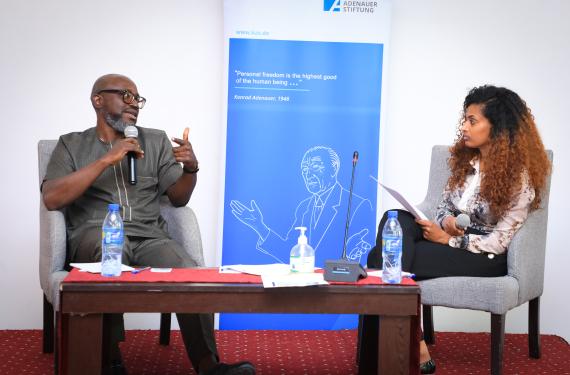
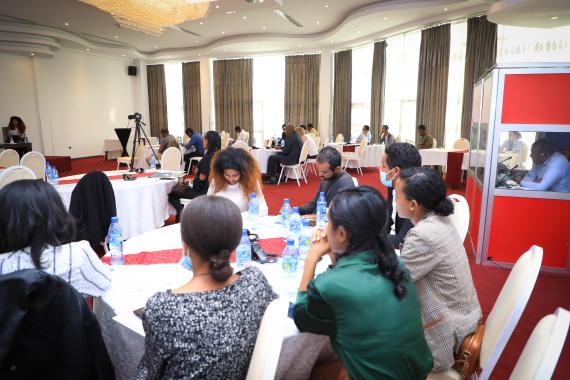
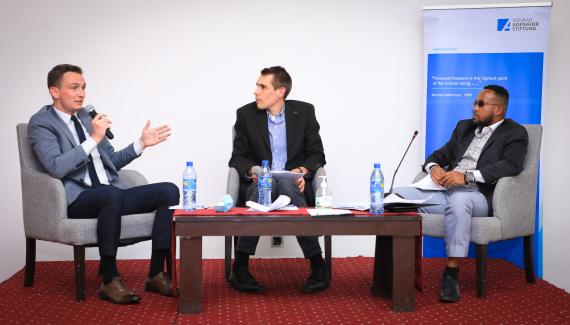
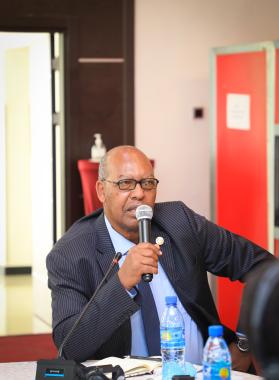
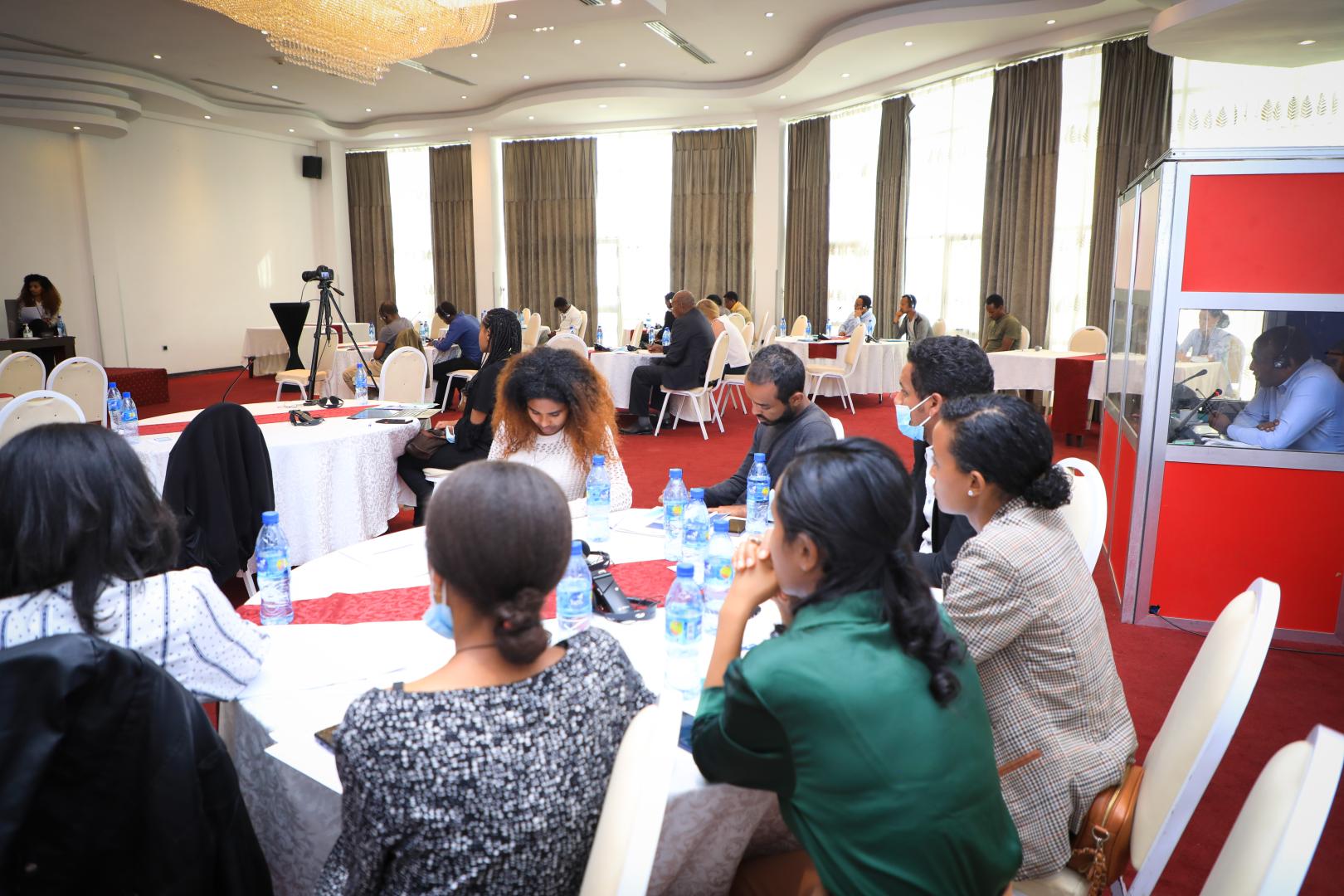
On March 29, 2022, the KAS Office Ethiopia/African Union organized a panel discussion on the topic „Youth in Politics. Empowering Africa’s Young Generation”. The hybrid event in Addis Ababa took place in the presence of several youth initiatives from Ethiopia, stakeholders of the FDRE Government, the African Union Commission, the Regional Economic Commissions, and the representatives of European embassies.
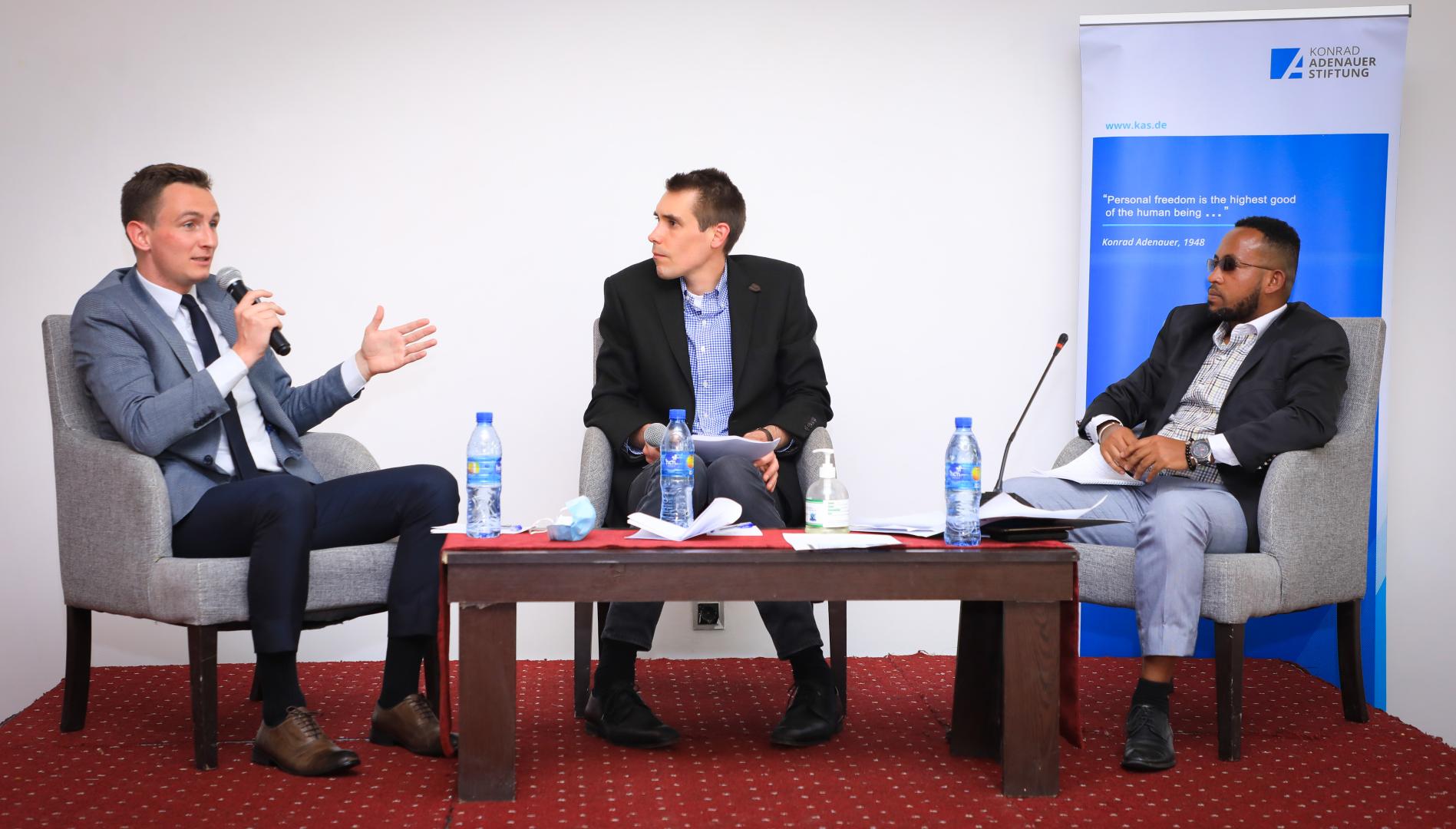
The first panel, which focused on practical examples of youth inclusion from selected countries, brought together Mr. Abiy Hailemelekot, Youth Advocacy Senior Expert at the FDRE Ministry of Women and Social Affairs, and Mr. Jakob Kerstan, KAS Country Representative in the DR Congo who heads the EU co-funded youth project ‘Great Lakes Youth Network for Dialogue and Peace’ in the Great Lakes region in Central Africa.
Mr. Abiy underlined the need to support youth further in Ethiopia and the efforts of the FDRE Ministry of Women and Social Affairs to improve youth empowerment through better coordination and more capacity training from the federal to the local level. At the moment, the Ministry is conducting a study about past work in the sector and the needs of youth. He also pointed out to the need to review current Ethiopia’s National Youth Policy from 2004.
Mr. Abiy stressed:
“It is obvious youths are left behind to engage in politics. As a first thing, to empower youth in Africa starts by dialogues as KAS Ethiopia/AU has been doing. It is also necessary to engage all stakeholders to sit and discuss empowerment. One also needs to strenghten the voice of youth organizations in order to catalyze the youth empowering issues particularly and support their political participation.
Also to empower youth in political participation and decision making, we need to emphasize the meaningful youth participation in peace and security. It is an agenda of development. It is a question of the entire people not only of the youth. We need to start including youth at the institutional level, the policy level and in decision-making. This should be treated by an intersectional approach.
Youth also need to have a stake in peacebuilding, dialogue and negotiation particularly in the UNSCR 2250 resolution framework like participation, protection, prevention, partnership and disengagement."
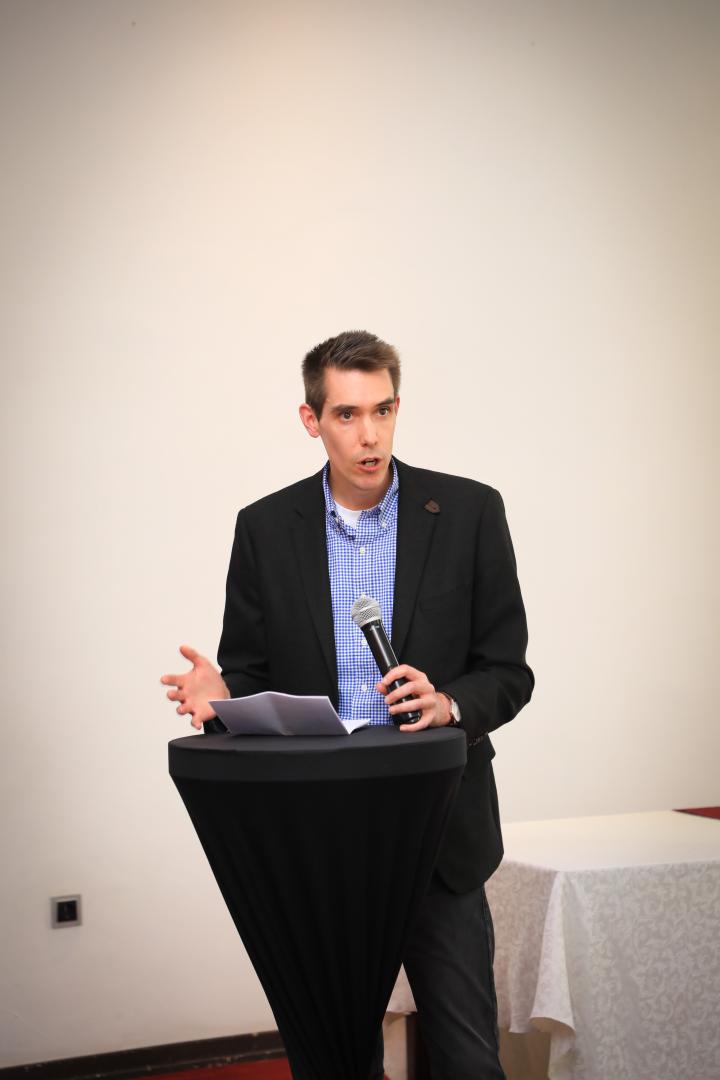
Mr. Kerstan presented the ‘Great Lakes Youth Network for Dialogue and Peace’, an EU co-funded project over three years which brings together 120 youth initiatives from the DRC, Rwanda, Uganda, and Tanzania which engage in peace building activities. Through capacity training, cross-border exchanges and dialogue with national and international stakeholders of politics, business, academia, development, civil society, and the media, the project is to establish a platform to support the positive role that youth can play in peacebuilding and decision-making processes.
Mr. Kerstan said:
“I believe that the young generation can serve as a channel to achieve what political decision makers have not achieved in decades. It is amazing to see how these initiatives from four neighboring countries – most of them who have never met their peers from the surrounding countries in the Great Lakes region – interact, discuss, engage with and learn from each other. The Young Generation, many of them born into the conflict, are tired of violence, war and mistrust; willing to overcome historically established conflicts. This project can serve as a major milestone in order to establish sustainable peace in the region.”
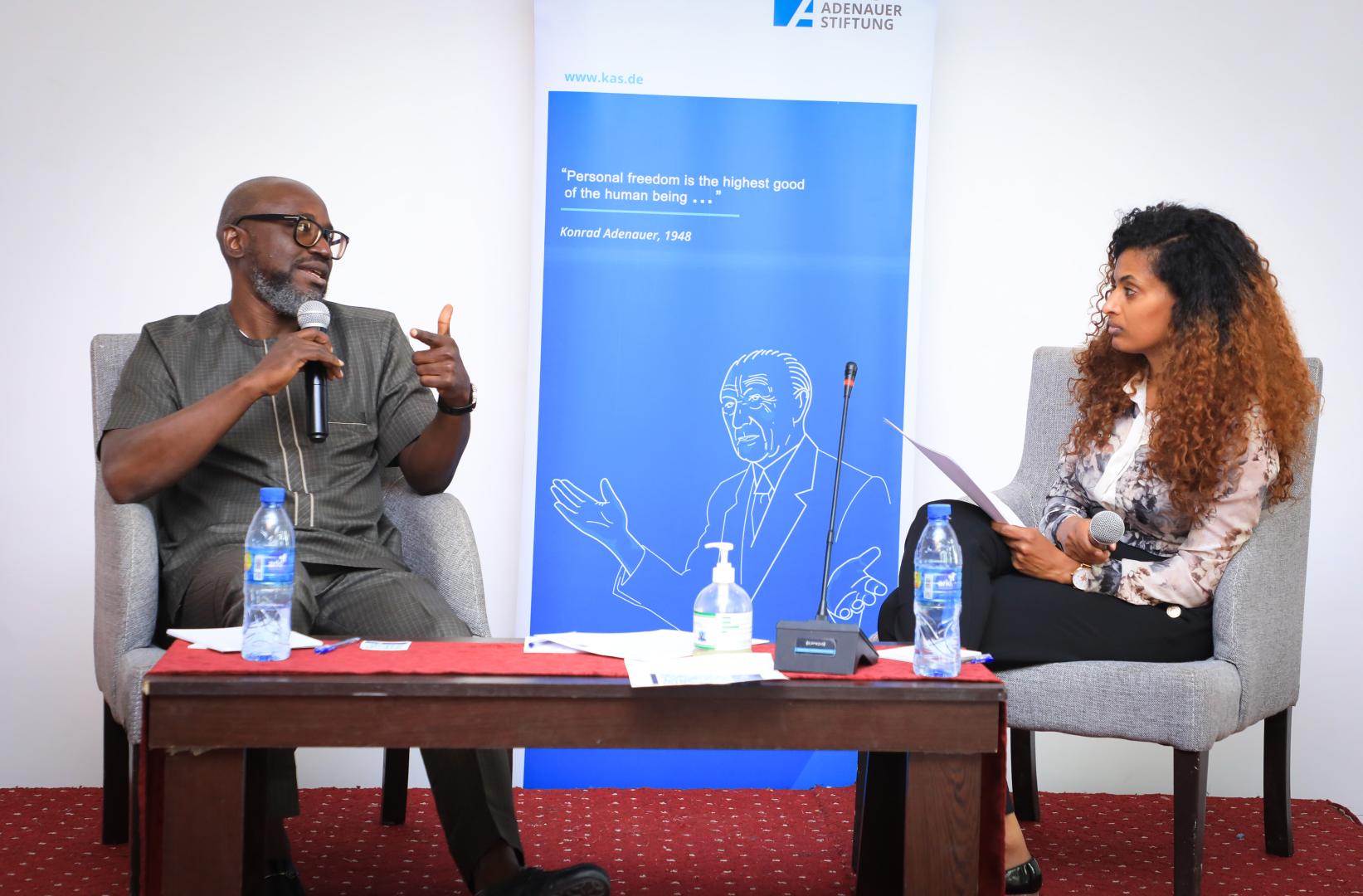
The second panel, which presented continental perspectives of youth inclusion, brought together Dr. Rhuks Ako, Coordinator of the AU Youth for Peace (Y4P) Africa Programme in the AU Department of Political Affairs, Peace and Security, and Ms. Simotwo Zainabu of the AU Youth Division of the African Union Commission.
Dr. Rhuks described the different realities and perceptions of youth across Africa. In this regard, he mentioned the findings of a 2020 study by the AU Commission on ‘The Roles and Contributions of the Youth to Peace and Security in Africa’. The study had captured youth experiences across the continent, their initiatives towards peace and security, and their challenges. Dr. Rhuks emphasized the important role of robust capacity building as a precondition for youth to engage in politics and to make informed decisions.
Dr. Rhuks highlighted:
“The over-emphasis on the demographic strength of African youth derogates from the qualities inherent in them including their resilience, innovation and familiarity with new technologies amongst others.
It is a misconception to claim that young people rejoice in the occurrence of military coups. In fact they have defended democracy in some climes. The reality is that the celebration is off the back of a glimmer of hope that comes with a change of government that robbed them of their inclusion/participation in society rather than the mere occurrence of a coup d’etat.
The Youth for Peace Africa Program derives its priorities from conversations with youth and delivers on them through progarimming.
An example of result-oriented inter-generational dialogue is the participation of African Youth Ambassadors for Peace (AYAPs) in the AU Peace and Security Council sessions and their views and recommendations reflected in the resulting Communiqué.”
Ms. Zainabu gave a tour d’horizon of the activities of the AU Youth Division which is responsible for leading, guiding, defending, coordinating and promoting the AU's efforts on the youth development agenda. A key project of the AU Youth Division is the ‘1 Million Initiative by 2021’ which seeks to inspire investment in African youth and create one million new opportunities for young Africans in education, employment, entrepreneurship, and engagement across the continent and in the diaspora. Ms. Zainabu said, while there always remains room for improvement in view of the achievements of the AU Youth Charter until today, much progress has been made by the AU Commission and member states when it comes to youth inclusion since 2006.
Ms. Zainabu said:
“To reach 300 million young people in Africa by 2030, we need to adopt an intergenerational co-leadership and co-creation approach across our various institutions. Similarly, young people need to be willing and be prepared to take up and occupy seats at the table. If you are a young person, there are 4 As that are very important as you approach these decision-making tables. Attitude, Aptitude, Awareness and Action. As a young person, you want to make sure that you have the right attitude, you are skilled in terms of aptitude, you are self-aware and aware of the environment around you and that you are able to launch into action.”