




Asset Publisher

Country Reports

Short political reports of the KAS offices abroad

Publications

IMAGO / Scanpix

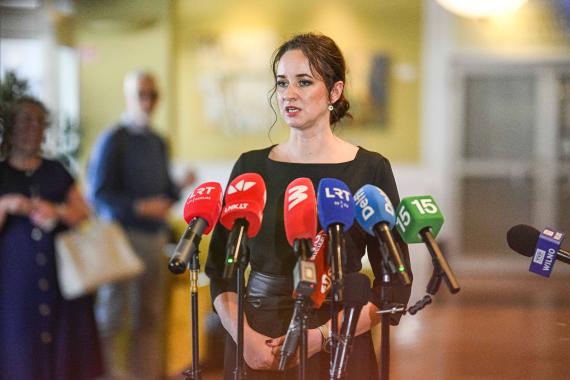
Local elections in Estonia

Setback for the ruling parties – tailwind for the opposition

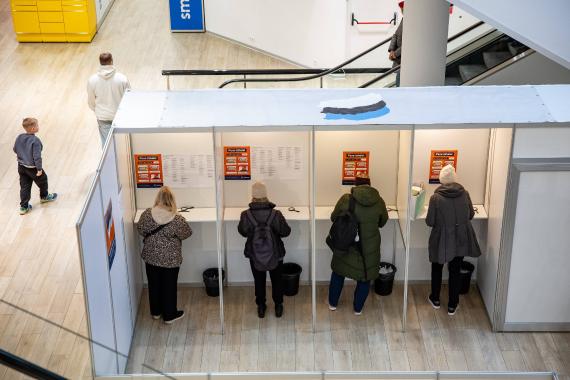
Estonia elected its local representatives on October 19, 2025, following a week of early voting with nationwide e-voting. A total of 1,003,673 people were eligible to vote, of whom 593,818 (59.2 percent; as of October 20, 2025) took part in the election. In addition to numerous local alliances, the most important nationwide parties also ran in the election. The election was marked by a tense domestic political climate and noticeable economic pressures. The conservative Isamaa party was the clear winner. In Tallinn, the Center Party remained strong in predominantly Russian-speaking districts, while new and smaller forces fragmented the field. Nationwide, Isamaa benefited from significant momentum, while the Reform Party and EKRE lost considerable support.

IMAGO / Xinhua

Government formation in Lithuania

New power alliance with fragile foundations

Following the resignation of Prime Minister Gintaras Paluckas, there has been a change of coalition in Lithuania: The Democrats (“Vardan Lietuvos”) have left the government and have been replaced by the parliamentary group “Faction of Lithuanian Farmers, Greens and Christian Families Union.” The party “Nemuno Aušra” (Dawn of Nemunas) remains controversial, as it remains part of the coalition despite massive protests. The new prime minister is Inga Ruginienė, a trade unionist and political newcomer who is considered by many to be a weak choice. The central strategic goals—defense and European policy—will continue despite the change of government. However, it is questionable whether the coalition will survive the entire legislative period.

KI-generiert mit Adobe Firefly, Konrad-Adenauer-Stiftung e. V.

Latvian local elections in June 2025

Voices of the centre, shadows of the fringes – Latvia's political fork in the road?

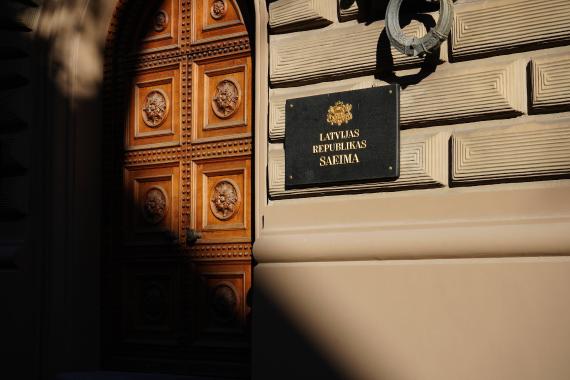
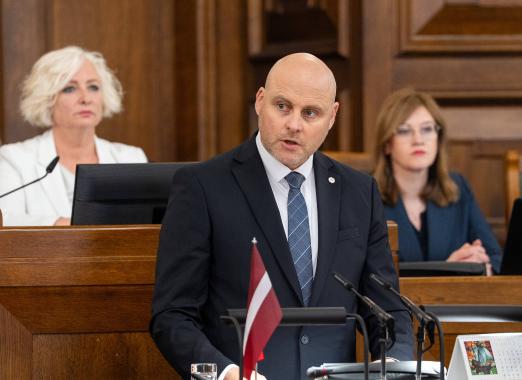
On 7 June 2025, Latvia held nationwide local elections for new local councils – a date that would normally attract limited international attention. This year's local elections in Latvia's capital Riga became a barometer of sentiment for the entire country: while populist actors such as Ainārs Šlesers made gains, the forces of the democratic centre were able to maintain their position – for the time being. Despite a slight increase in voter turnout, more than half of eligible voters stayed away from the polls – a result that underlines the deeper social tensions in the country. The east of Latvia remains a problem child in terms of security policy – with a view to Moscow. The mayor of Riga, Vilnis Ķirsis, and his pro-European party "New Unity" prevailed despite the difficult starting position and consolidated their role as a stabilizing force in the Latvian capital.

IMAGO / ZUMA Press Wire

The security situation in Lithuania in spring 2025: threat and response on NATO's eastern flank

Lithuania relies on deterrence, armament and close partnerships

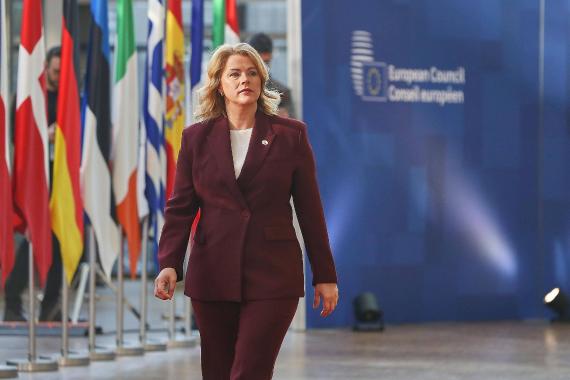
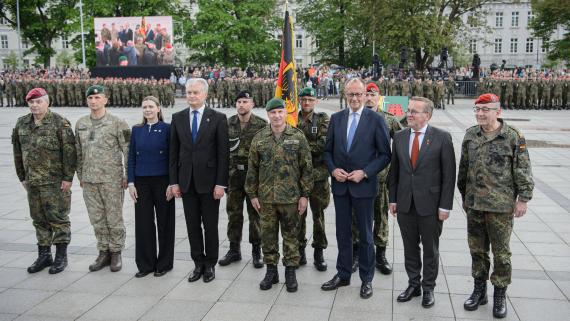
Lithuania is at the center of European security debates in spring 2025: in the face of the ongoing threat from Russia, the country is relying on deterrence, armament and close partnerships. With the Bundeswehr brigade officially inaugurated on May 22, Germany is sending a strong signal of solidarity and leadership responsibility. The geopolitical tensions between Russia and the USA, Donald Trump's return to the White House and Lithuania's ambitious defense plans are shaping the new security policy reality. Today, Europe's security is also being defended on Lithuania's eastern flank.

KAS

Special edition - Country reports with a difference

International comparison of accessibility

This publication provides research, compiled by some of our overseas offices, on the current situation of political participation for people with disabilities, in their respective countries. We hope that their reports will increase awareness of the sadly often persistent inequalities that remain and motivate all of us to pay greater heed to the issue of inclusion.

IMAGO / Scanpix

Broken alliance in Estonia

The collapse of the coalition government

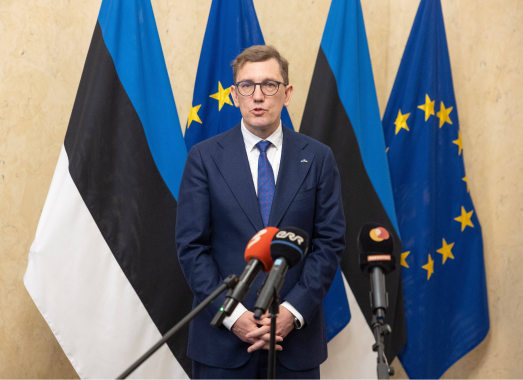
On 10 March 2025, Estonian Prime Minister Kristen Michal announced the reshuffle of the Estonian coalition by dismissing the Social Democratic Party (SDE) from the coalition government. After this decision, the "Reform Party" and "Estonia200" have only a narrow majority with 52 out of 101 seats in the Riigikogu (parliament).

IMAGO / NurPhoto

Government Formation in Lithuania

New Leadership Under Challenging Circumstances

After the parliamentary elections in Lithuania on October 13, forming a stable governing coalition turned out to be challenging. The Social Democratic Party of Lithuania (LSDP) broke two of its campaign promises immediately after the elections, drawing significant criticism both domestically and internationally. The process of forming the cabinet was also fraught with difficulties. President Nausėda, through his increased involvement, has notably expanded his influence.

IMAGO / Xinhua

Parliamentary elections in Lithuania

Loss of power and leadership crisis of the Christian Democrats

After the second round of parliamentary elections in Lithuania, the picture is looking bleak for the Christian Democrats. Not only have they lost their seat in government, but they have also lost their party leader, Gabrielius Landsbergis, in addition to major cities such as Vilnius and Kaunas. After losing his constituency, he resigned from the party and is taking a break. The Social Democrats must now find a third coalition partner with the center-left party “Democrats for Lithuania”. This will not be easy for various reasons.

IMAGO / Scanpix

Michal for Kallas

A win-win for Kallas and Estonia

In the wake of the 2024 European elections, the Estonian government is not only still facing ongoing discussions about its budget, but is also changing its leadership.

Konrad-Adenauer-Stiftung e. V.

European elections 2024

Barrier-free?

The lack of equality for people with disabilities is still omnipresent in the European Union. For the 2019 European elections, a report by the European Economic and Social Committee showed that around 800,000 EU citizens from 16 member states were excluded from the right to vote in European elections due to national regulations because of their disabilities or mental illness. The European elections in June 2024 brought the issue back to the fore, as it is also about a lack of political participation. Here you will find a brief assessment by our KAS colleagues who have looked at the current conditions in their countries of assignment.

Asset Publisher

About this series

The Konrad-Adenauer-Stiftung is a political foundation. Our offices abroad are in charge of over 200 projects in more than 120 countries. The country reports offer current analyses, exclusive evaluations, background information and forecasts - provided by our international staff.

Order details

Editor

Konrad-Adenauer-Stiftung e.V.