Bitte lesen Sie die neue Politikreihe „Atlantic Spotlight“, die Unabhängigkeit der Ukraine prägt unsere gemeinsame Zukunft.
Read articles of the 2025/2026 period, and we invite you all to read publications, and write any feedback/opinions you might have!
September 4, 2026
Country reports
Atlantic Spotlight Series III
Entdecken Sie weitere Beiträge in unserer neuen Politikreihe „Atlantic Spotlight“, Tschornobyl und Saporischschja – es reicht!
Read articles of the 2025/2026 period, and we invite you all to read publications, and write any feedback/opinions you might have!
May 22, 2026
Country reports
Atlantic Spotlight Series II
Bitte lesen Sie die neue Politikreihe „Atlantic Spotlight“, Russlands Krieg gegen die Ukraine gilt als Versuch Vladimir Putin's, russischen Einfluss wiederherzustellen.
Read articles of the 2025/2026 period, and we invite you all to read publications, and write any feedback/opinions you might have!
May 7, 2026
Country reports
KAS/Althusmann
Is a ‘world order in upheaval’ leading Canada into a new leadershiprole?
Why geopolitical upheavals will redefine Canada's role in the international world order and in the transatlantic alliance
The ongoing trade war with the United States remains one of the country’s greatest challenges. Canada therefore intends to further expand its partnerships with Europe and the Indo‑Pacific region. As early as November 2025, Carney spoke of an epochal rupture and a shift toward a new world order that may be shaped by serious conflicts and a closer alignment among middle powers. The anticipated withdrawal of the United States could herald profound changes to the “old NATO” and necessitate a new security architecture. Canada will now have to demonstrate its readiness to assume greater responsibility and leadership as a middle power.
However, the challenges facing the incumbent Carney government remain enormous—particularly on the domestic front. High unemployment, especially among younger generations, a shortage of affordable housing, and substantial defence spending require clear answers and a decisive political course. Prime Minister Carney and his minority government must deliver.
Dr. Bernd Althusmann, Marie Yamada
February 5, 2026
Country reports
Canada’s Arctic in the geopolitical spotlight: USA vs. China
Read how Canadian Arctic is becoming a geopolitical hotspot where the USA and China are seeking to gain influence using different strategies, written by Ms. Pauline Springer.
The Canadian Arctic is becoming a geopolitical hotspot where the USA and China are seeking to gain influence using different strategies. For Canada, this means growing dependence in terms of security policy and the danger of creeping influence—with direct consequences for sovereignty and indigenous communities in the north.
December 2, 2025
Country reports
Enduring Partnership or Ambitious Agenda?
Read the article by Dr. Lilit Klein, Insights into International Order from Canada and the EU’s Security and Defence Partnership.
Take a look at what drives this unprecedented security cooperation between two prominent middle powers, and what insights does it offer into an evolving international order shaped by changing strategic commitments?
December 2, 2025
Country reports
Atlantic Spotlight Series I
Please read the new “Atlantic Spotlight” policy series, the Canada-Germany Critical Minerals Partnership.
Read articles of the 2025/2026 period, and we invite you all to read publications, and write any feedback/opinions you might have!
November 19, 2025
Country reports
IMAGO / NurPhoto
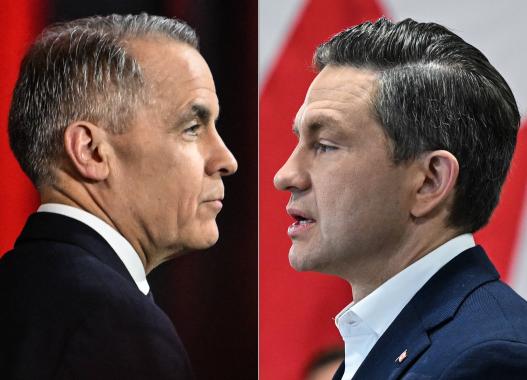
Canada has voted
A new course is being set
In the midst of a serious crisis with the USA, Canada is once again governed by a Liberal minority government following early elections. Despite good results, the Conservatives miss out on what they thought was a certain election victory. Canada appears to be on the way to a two-party system.
Dr. Bernd Althusmann
May 6, 2025
Country reports
IMAGO / Middle East Images
Canada faces the threat of a trade war with the U.S. in this election year!
The EU and Canada should respond more strongly together.
The punitive tariffs threatened by U.S. President Trump against Canada and Mexico have only been postponed, not canceled. There will be losers on both sides – not just in the U.S. and Canada, but also in Europe. Canada and the EU are already preparing effective countermeasures. As in 2018, the EU is once again focusing on trade with the U.S. The CETA agreement could serve as a suitable and joint protective shield for both partners. The ongoing election campaign in Canada is unexpectedly being pushed in a new direction as a result.
Dr. Bernd Althusmann
February 18, 2025
Country reports
IMAGO / ZUMA Press
The U.S. Elections and the End of Comfort for the Canadian Government
Just a few weeks before taking over the G7 presidency, the election campaign in Canada is already well underway
The presidential elections in the U.S. have triggered an unexpectedly hectic activity in Canadian government policy. For Justin Trudeau's minority government, which was almost written off, new opportunities have emerged—at least in the short term—to demonstrate its ability to act in challenging times. Just a few weeks before taking over the G7 presidency, the election campaign in Canada is already well underway. The Conservatives, led by Pierre Poilievre, continue to lead decisively in all polls.