



Asset Publisher

Country Reports

Short political reports of the KAS offices abroad

Publications

IMAGO / Anadolu

Presidential election in Ireland continues political tradition

Clear election victory for Catherine Connolly

 Left-wing politician Catherine Connolly becomes the tenth president of the Republic of Ireland. In the 2025 Presidential Election, the independent Member of Parliament, whose candidacy was supported by a broad coalition of left-wing parties and movements, won a clear victory with 63.4 percent of the vote against Heather Humphreys, former minister and candidate of the liberal-conservative Fine Gael (FG/EPP) party. She received only 29.5 percent of the vote on a disappointing election day. Jim Gavin, candidate of the right-wing liberal party Fianna Fáil (FF/ALDE), who had already dropped out of the race as the third candidate several weeks before the election, received 7.2 percent of the vote. The high number of invalid votes was striking, having increased tenfold compared to the last Presidential Election, and can be seen as an expression of dissatisfaction with the electoral system and the two remaining candidates. 

IMAGO / Bestimage

Keir Starmer's first year

First-year political record and German-British friendship treaty

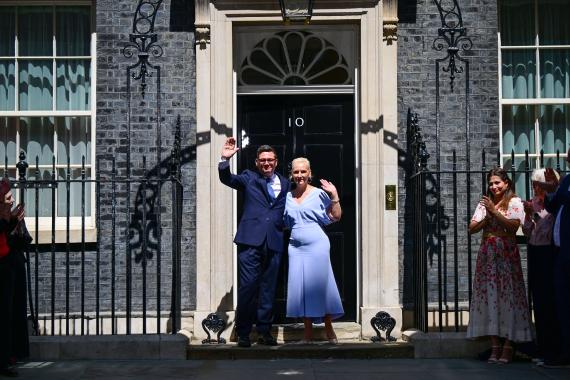
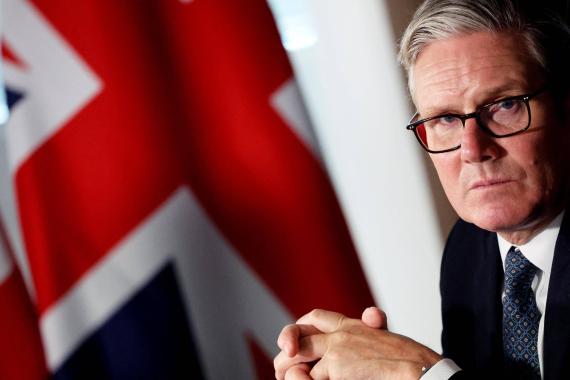
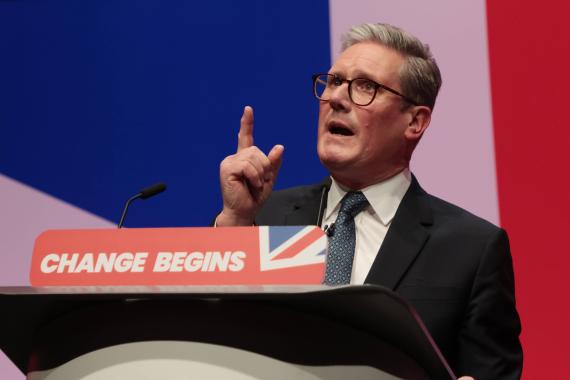
One year after taking office, Prime Minister Keir Starmer surprises with a foreign policy record that even sceptics acknowledge. He has succeeded in repositioning the UK as a global and European player - with initiatives to support Ukraine, to build and expand European defense capabilities and through international trade agreements. One of his most important successes is undoubtedly the rapprochement with Europe. At the beginning of his term of office, Starmer announced a “Brexit reset” in order to advance cooperation with European partners. Relations with Germany in particular are a high priority. During the first official visit by Federal Chancellor Friedrich Merz on July 17, a comprehensive bilateral agreement will be signed with Germany - the most far-reaching agreement that the UK has ever concluded with a single European country. Starmer himself speaks of a “generational treaty”. Domestically, however, the balance sheet is mixed. The Prime Minister is under pressure - from his own party, from an increasingly dissatisfied electorate, and from the opposition. The right-wing populists from Reform UK are a particular concern. His government policy sometimes seems contradictory: pragmatic in its implementation but often lacking a discernible guiding principle. Since taking office, Starmer has shown considerable ideological flexibility - a course that is causing friction within the party. Even before the election, he had already led Labour towards the political center; in many areas, his government is now following the agenda of its Conservative predecessors. This change of course is particularly evident in migration policy, but is also reflected in other areas: deregulation of environmental protection in some areas, cuts to the welfare state and a significantly increased defense budget at the expense of international development cooperation. On the occasion of the first anniversary of the Starmer government, one might provocatively ask whether Labor are the better conservatives.

IMAGO / Avalon.red

The Art of the Deal: The Brexit Reset is taking shape

A new chapter in the Euro-British partnership

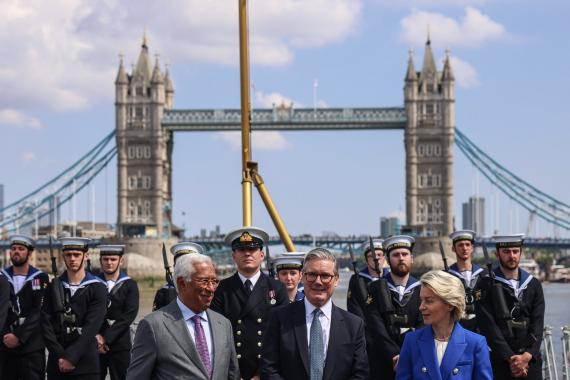
Almost ten years ago, Prime Minister David Cameron called for the Brexit referendum. In June 2016, a narrow majority (51.9%) of the British population voted in favor of exiting the EU. Cameron's resignation was followed by five prime ministers who had to deal with the consequences of this historic vote. On Monday 19 May 2025, Prime Minister Keir Starmer, together with Commission President Ursula von der Leyen and Council President Antonio Costa, finally hosted the first official EU-UK summit after Brexit to announce a new strategic partnership between the UK and the EU.

Country Report

Can Great Britain Save the West?

British Prime Minister Keir Starmer is pursuing a dual strategy: he aims to take a leadership role in Europe's security and defence repositioning while also convincing the Trump administration to remain militarily engaged in Europe. The United Kingdom is to act as a bridge between an increasingly unpredictable White House and a Europe unsettled by Trump's rapprochement with Russia. This was the context of his visit to Washington at the end of February, as well as the summit he convened in London with leading heads of state and government under the title "Securing our Future."

IMAGO / Xinhua

Familiar Faces, New Priorities

Government Formation and Priority Setting in Ireland after the 2024 Parliamentary Elections

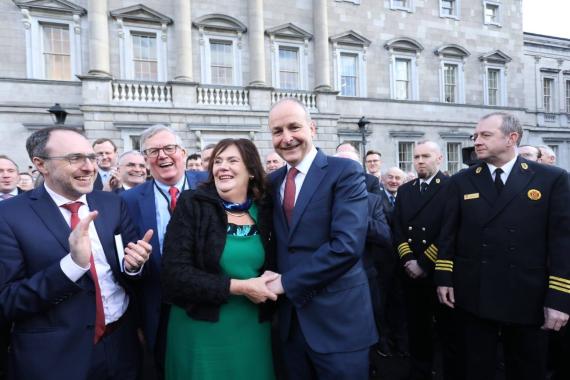
The fastest coalition negotiations in recent Irish history have concluded. A process that previously took nearly six months was completed in just six weeks. Fianna Fáil, Fine Gael, and independent TDs have formed a center-right coalition that secures a majority in Dáil Éireann, the lower house of parliament. Micheál Martin (Fianna Fáil) will initially serve as Taoiseach (Prime Minister) and alternate with Simon Harris (Fine Gael). While governing parties in many European countries have faced significant losses, Ireland's political landscape has remained stable. The government program, "Securing Ireland's Future," focuses on economic stability, infrastructure investment, and cautious reforms. However, social inequality and rising rents remain two of the many unresolved issues. Whether Ireland’s economic success will reach the broader population is the central challenge for the new coalition.

IMAGO / UPI Photo

The Political Landscape in the United Kingdom

A Review Six Months After the Change of Government

Europe is shifting politically to the right. Across the continent, right-wing populist parties are gaining influence or are already part of governing coalitions. At first glance, the United Kingdom seems to be an exception. Six months ago, Keir Starmer led the Labour Party to power with a supermajority. However, a closer look at public opinion and current polling reveals that the British public has not shifted to the left—quite the opposite. It is steadily moving to the right—on various issues and at different speeds, but increasingly away from Labour. Over the past six months, the proportion of voters supporting the right-wing political bloc has risen from 38 per cent to nearly 50 per cent. The political landscape of Britain is undergoing significant change.

IMAGO / Cover-Images

The start of a Labour era?

Dramatic defeat of the Tories in parliamentary elections in the United Kingdom

The Conservative Party under the previous Prime Minister Rishi Sunak was the big loser of the election. They lost 251 parliamentary seats, and with a vote share of 24.7%, they will only be represented by 121 seats in the British House of Commons in the future. On the winning side, a clear picture emerged: the Labour Party gained 211 seats and, with a vote share of 33.7%, will form the government with a total of 412 seats. Other winners included the Liberal Democrats, who, with 72 seats and 12.2%, achieved their best result in over 100 years. The right-wing populist Reform UK also made a statement with 14.3% of the vote, although they received only five mandates due to the British first-past-the-post system. The new government under Prime Minister Keir Starmer faces enormous challenges in domestic and foreign policy. The British Conservatives must first deal with a personnel and strategic party reboot in the opposition.

IMAGO / SOPA Images

Local Elections with National Impact

The beginning of damage control for the British Conservatives?

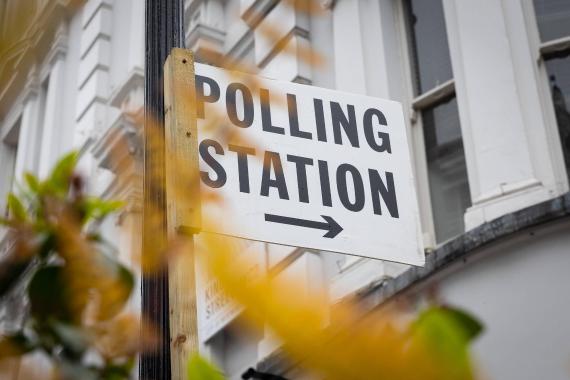
The recent local elections have unsurprisingly not provided the Conservative Party with a promising foundation for the upcoming parliamentary elections. They suffered significant losses in large parts of England. In only one of eleven major city regions will a Tory mayor operate in the future. In nationwide polls, the opposition Labour Party ranks a whopping 20 percentage points ahead of Prime Minister Rishi Sunak's party. Is there still hope for the British Conservatives, or is it now just about damage control?

IMAGO / NurPhoto

Facing difficult dilemmas

Rishi Sunak and the Tories ahead of the 2024 elections

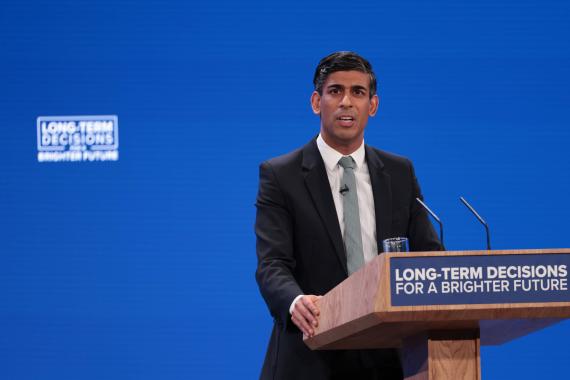
In the polls, the opposition Labour Party is far ahead of the ruling Conservatives. With the appointment of David Cameron as Foreign Secretary, Prime Minister Rishi Sunak, who is under immense pressure, has certainly pulled off a coup. This risky move hints at the outlines of the strategy the British Conservatives will take into the 2024 election year.

Unsplash / Rodrigo Santos

The Integrated Review Refresh 2023

The Integrated Review Refresh is intended to update the 2021 Integrated Review, a key document of British foreign policy, in light of a shifting world situation.

Germany is still working on a national security strategy and the governing coalition has not been able to agree on the establishment of a National Security Council. In contrast, the British government last month delivered: The Integrated Review Refresh 2023 (IRR23) builds on the Integrated Review (IR) of two years prior and is a key geostrategic document. In around 60 pages, it sets out the goals of British foreign policy and outlines strategies for achieving them. The added value of the IR is that it does not get bogged down in details, but strives to integrate the priorities of the United Kingdom (UK) in different policy areas and for different regions of the world into an overall picture that is as coherent as possible. The overall picture, which can be gleaned from the current IRR23 is similar to that of the 2021 IR but exhibits some differences that are particularly significant for Germany and Europe. The latter suggest that the post-Brexit UK has now overcome the bombast and hubris of the Johnson years and found a healthier balance between strategic ambition and pragmatism.

Asset Publisher

About this series

The Konrad-Adenauer-Stiftung is a political foundation. Our offices abroad are in charge of over 200 projects in more than 120 countries. The country reports offer current analyses, exclusive evaluations, background information and forecasts - provided by our international staff.

Order details

Editor

Konrad-Adenauer-Stiftung e.V.