








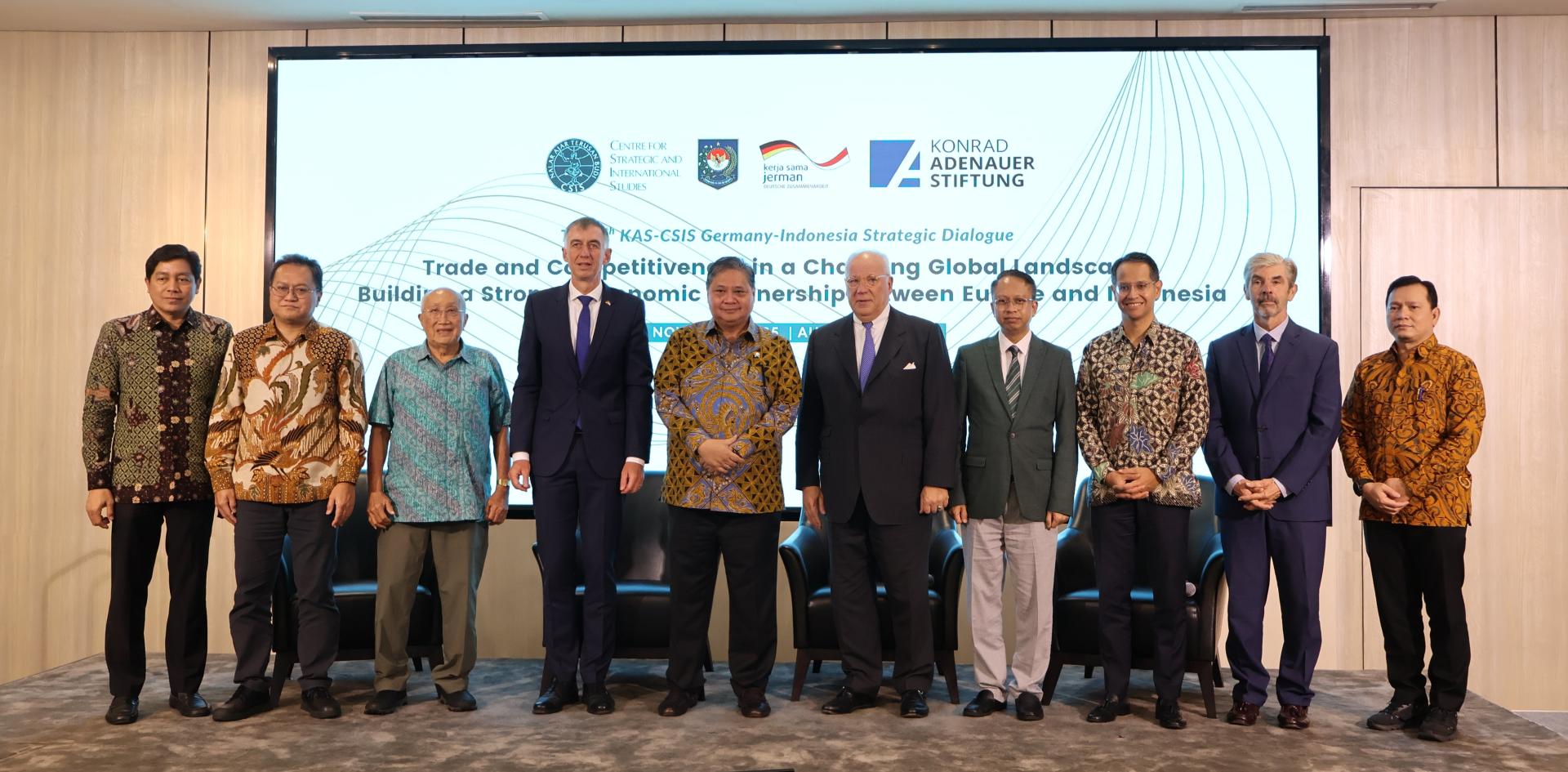
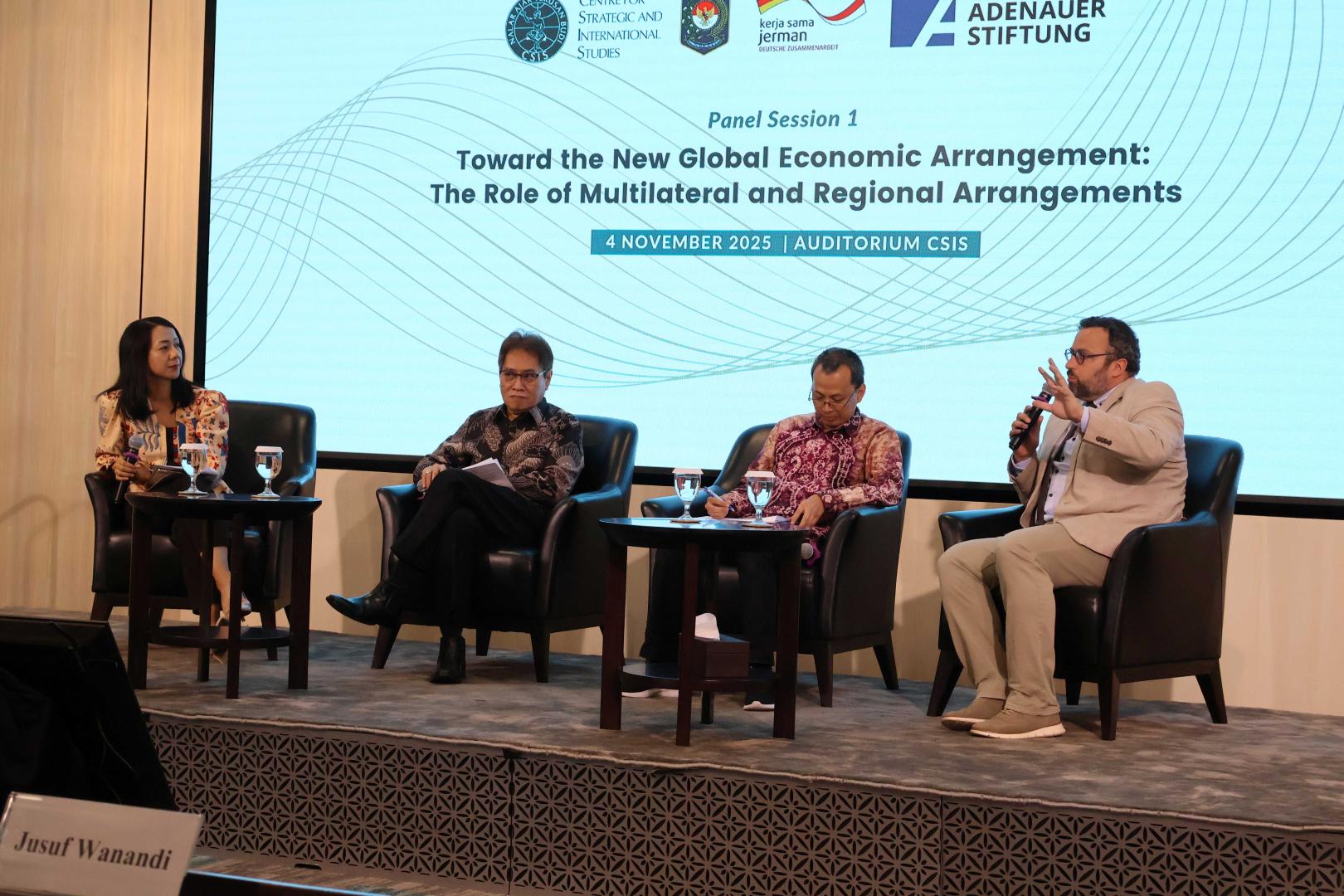
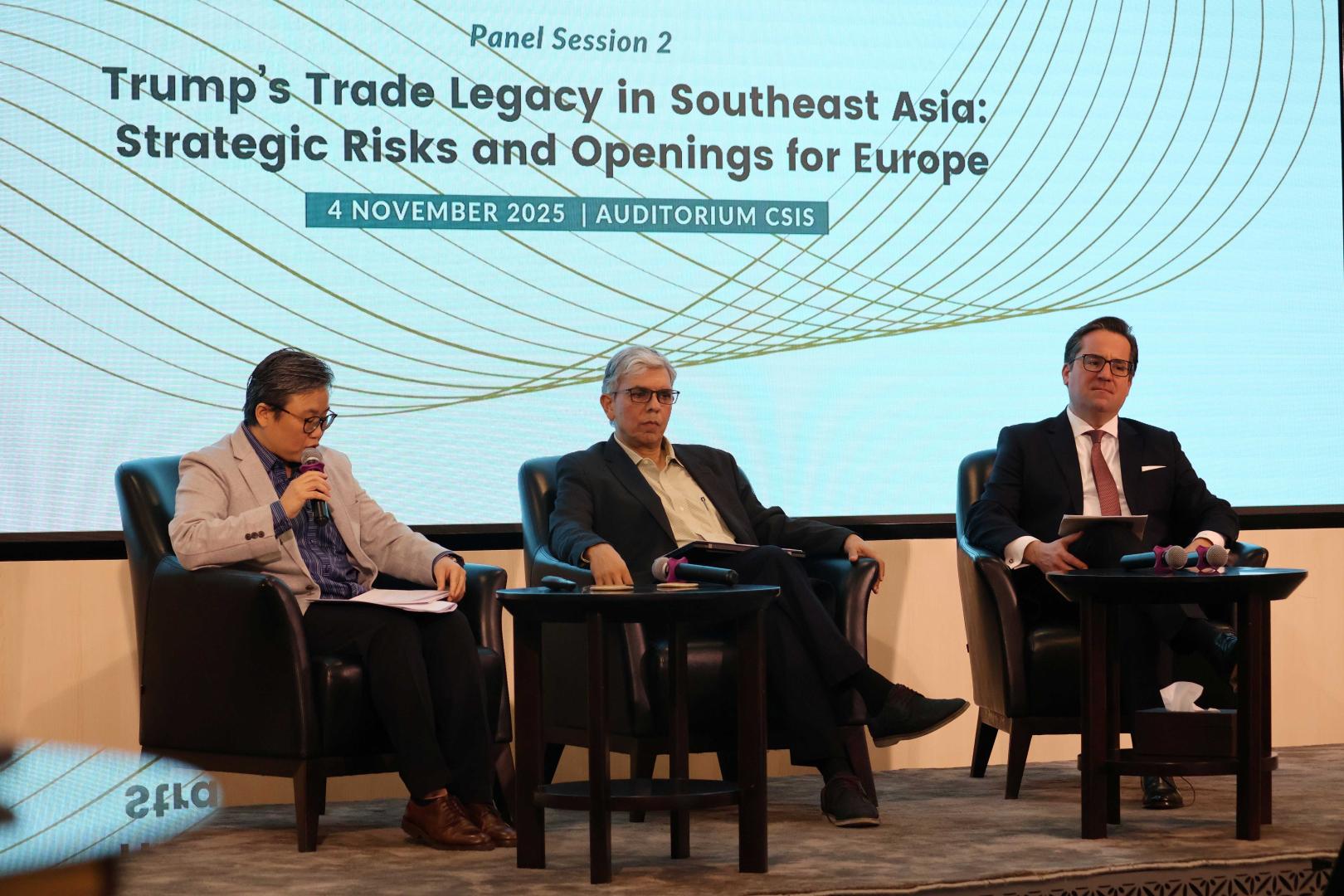
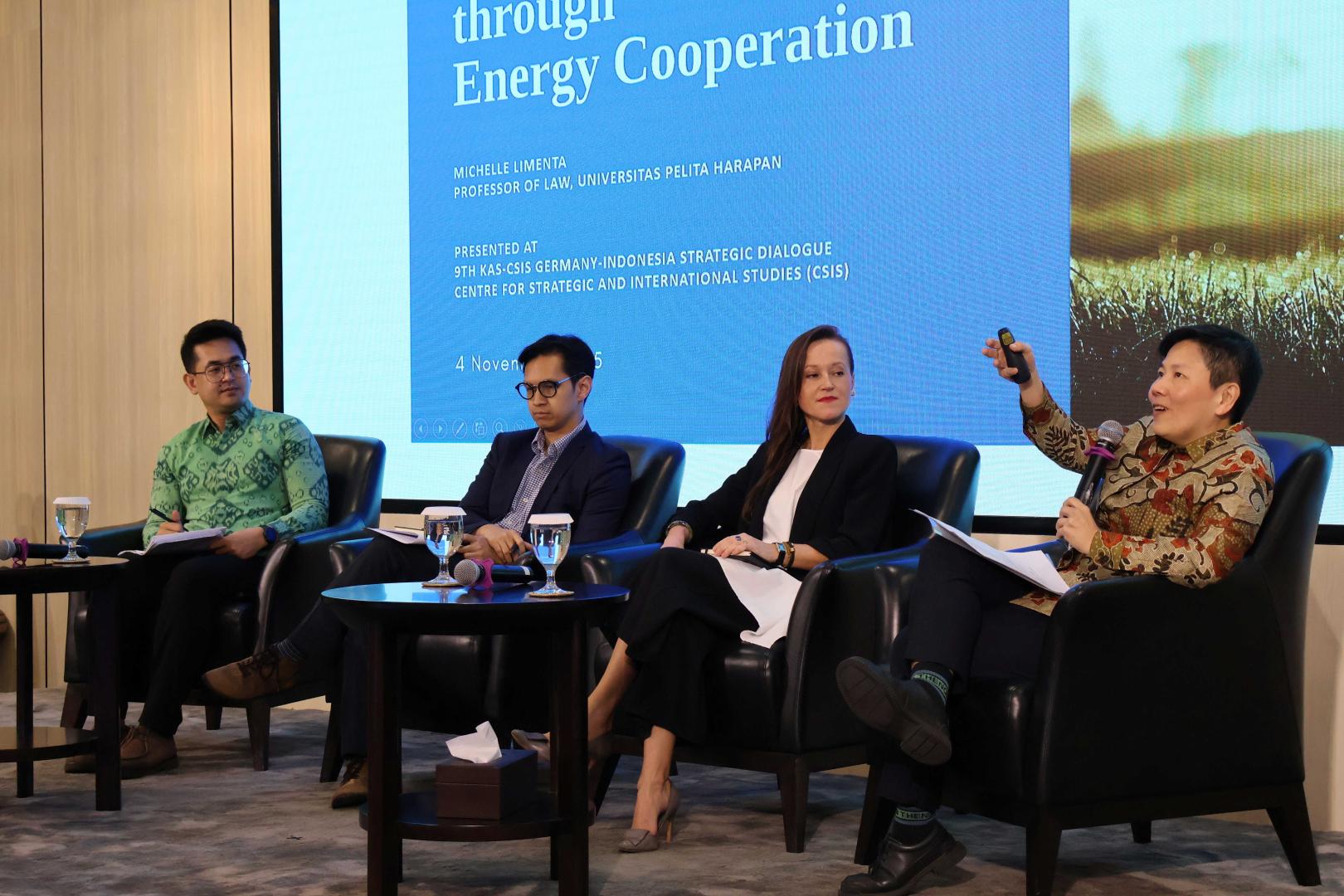
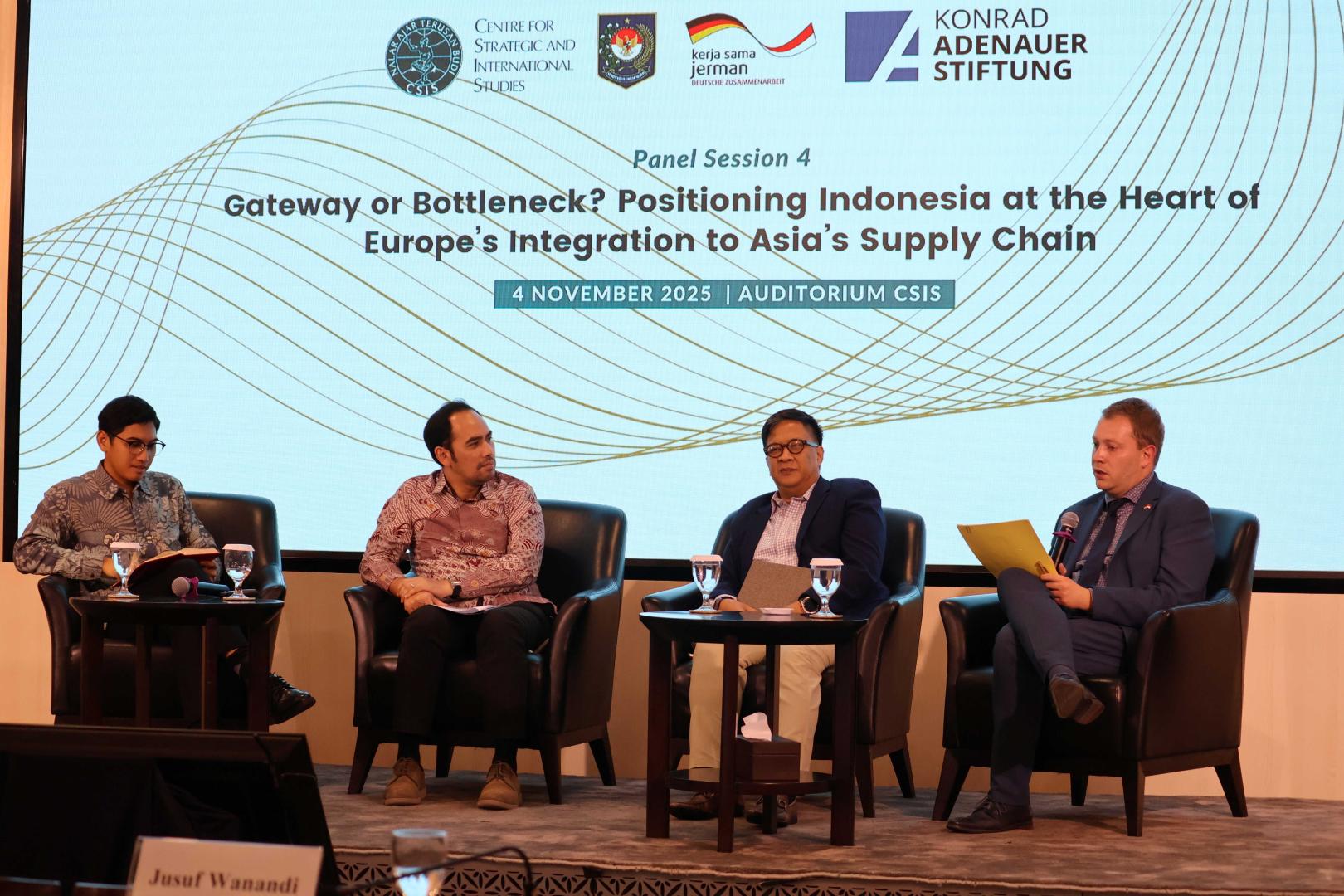
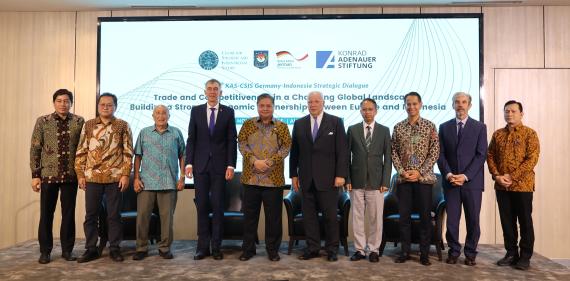
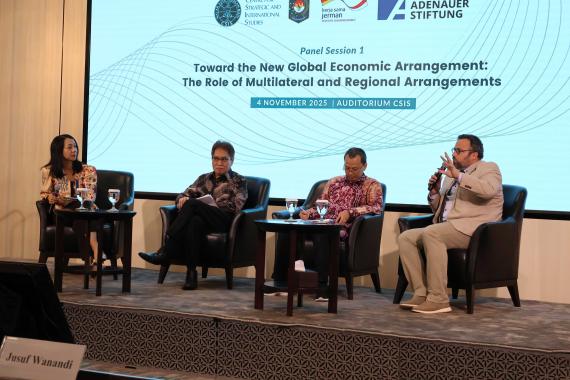
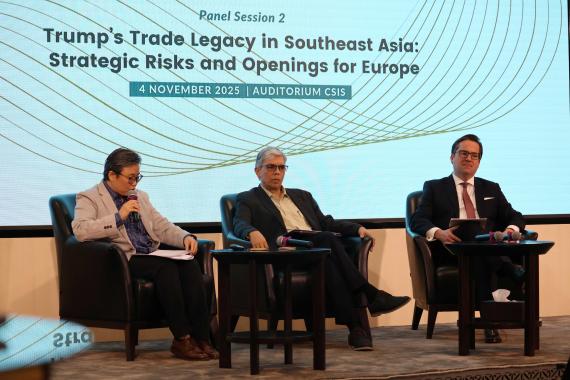
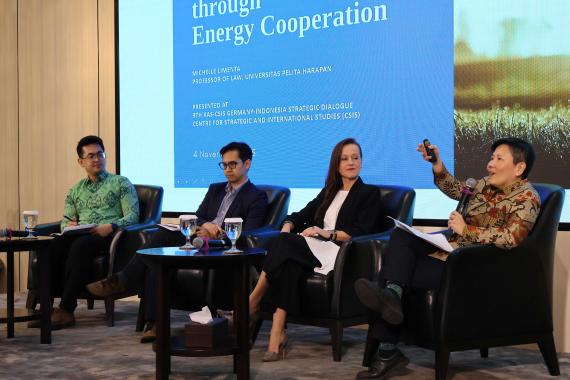
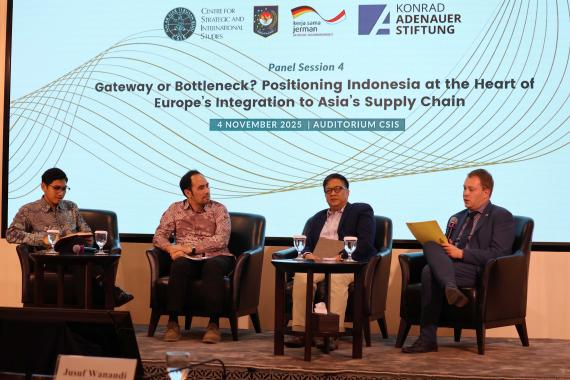
Under the theme “Trade and Competitiveness in a Changing Global Landscape: Building a Stronger Economic Partnership Between Europe and Indonesia”, the 9th KAS–CSIS German–Indonesian Strategic Dialogue was held in Jakarta on 4 November 2025. This annually convened dialogue serves as a central forum for strategic exchange between Germany, Europe, and Indonesia on geopolitical and geoeconomic developments. The focus of this year’s discussions was how the economic partnership could be further deepened in the face of profound global disruptions in trade and international supply chains.
The event gained particular relevance through the conclusion of negotiations on the Indonesia–EU Comprehensive Economic Partnership Agreement (I–EU CEPA), following nearly ten years of arduous talks.
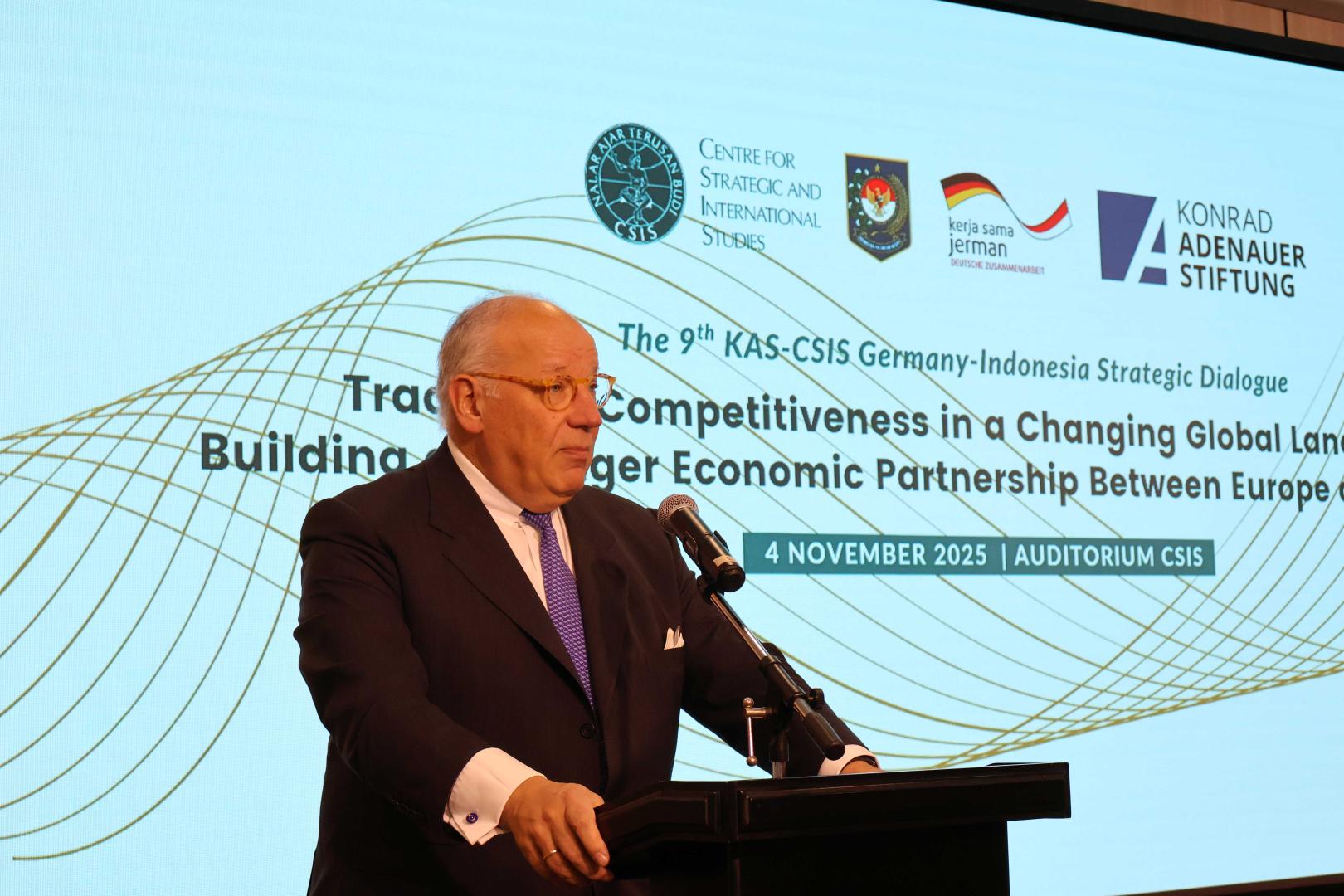
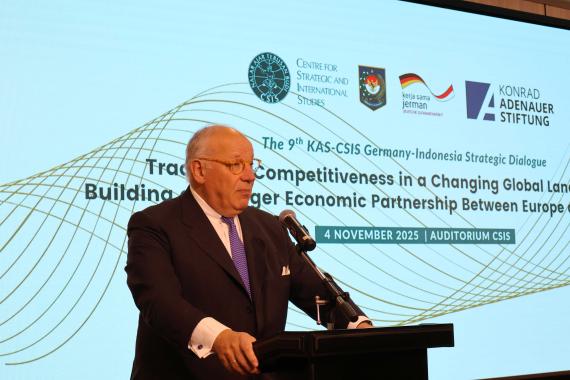
The dialogue was opened by German Ambassador Ralf Beste, Dr. Yose Rizal Damuri, Executive Director of CSIS Indonesia, and Dr. Christoph Brand, Member of the Board and Treasurer of the Konrad-Adenauer-Stiftung. In his welcome remarks, Dr. Brand emphasized the growing strategic importance of relations between Europe and Indonesia against the backdrop of far-reaching geopolitical and geoeconomic shifts. He stressed that the CEPA agreement should not be seen as an endpoint, but rather as a starting point for a long-term and deeper economic partnership—one that requires courage, political will, and sustained commitment on both sides.
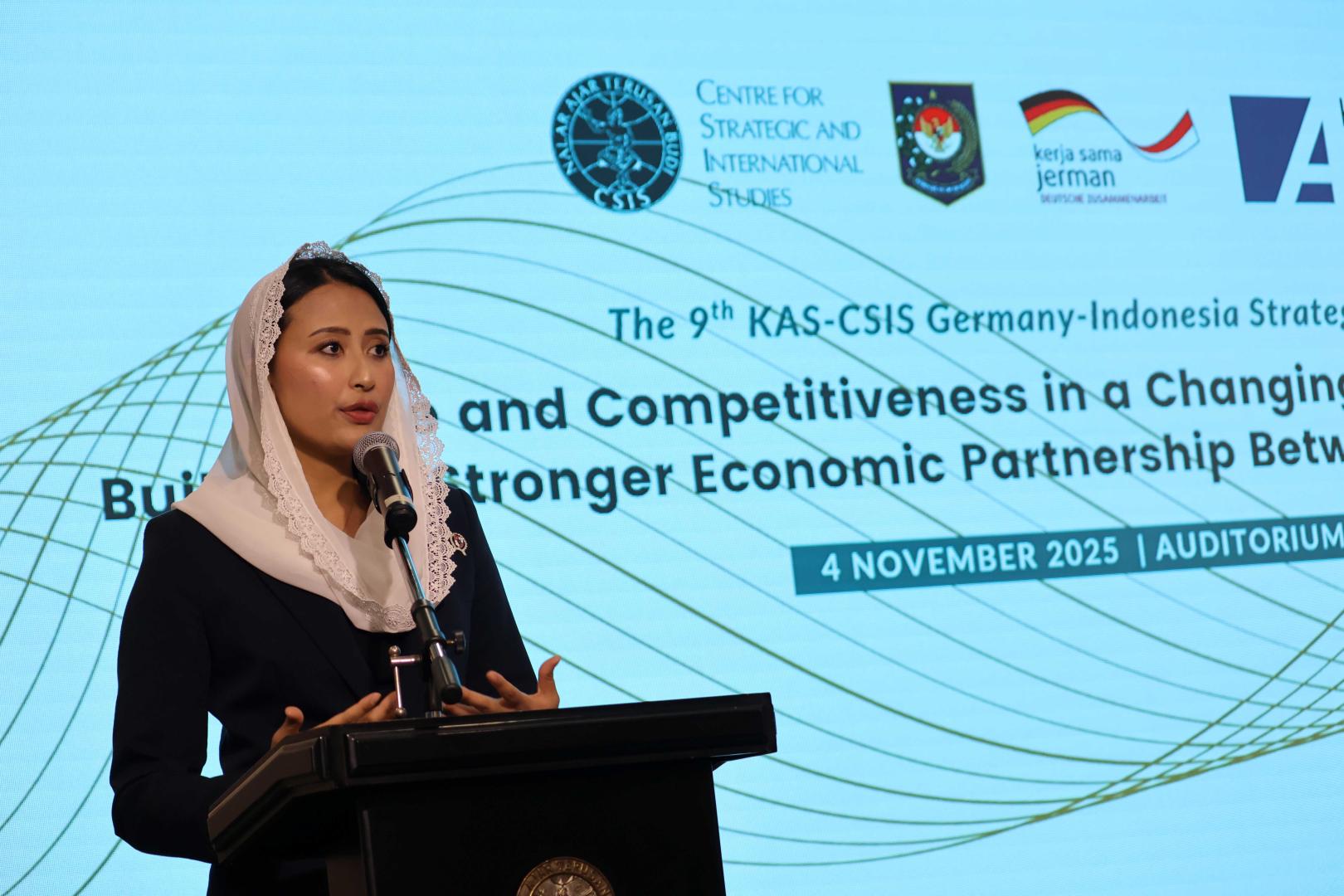
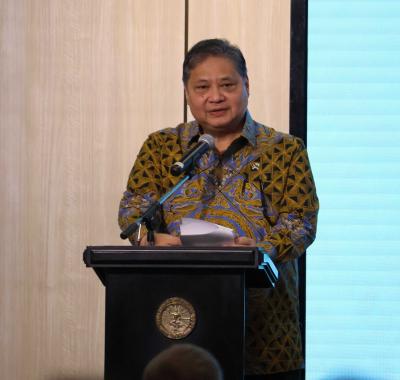
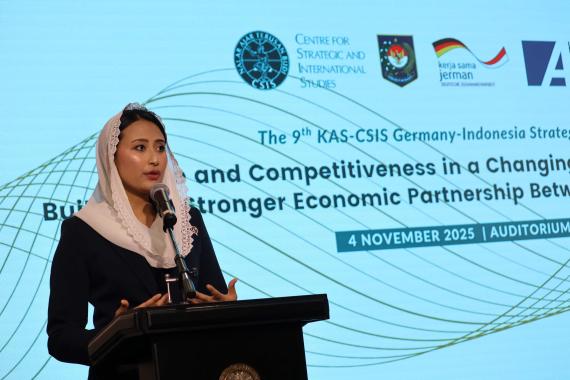
The high significance of the conclusion of the I–EU CEPA for the Indonesian side was reflected in the high-level keynote speakers, including Coordinating Minister for Economic Affairs Airlangga Hartarto and Vice Minister of Trade Diyah Roro Dwi Andayani. The European Union was represented by Antoine Ripoll, Minister-Counsellor for Parliamentary Affairs at the EU-Delegation to ASEAN.
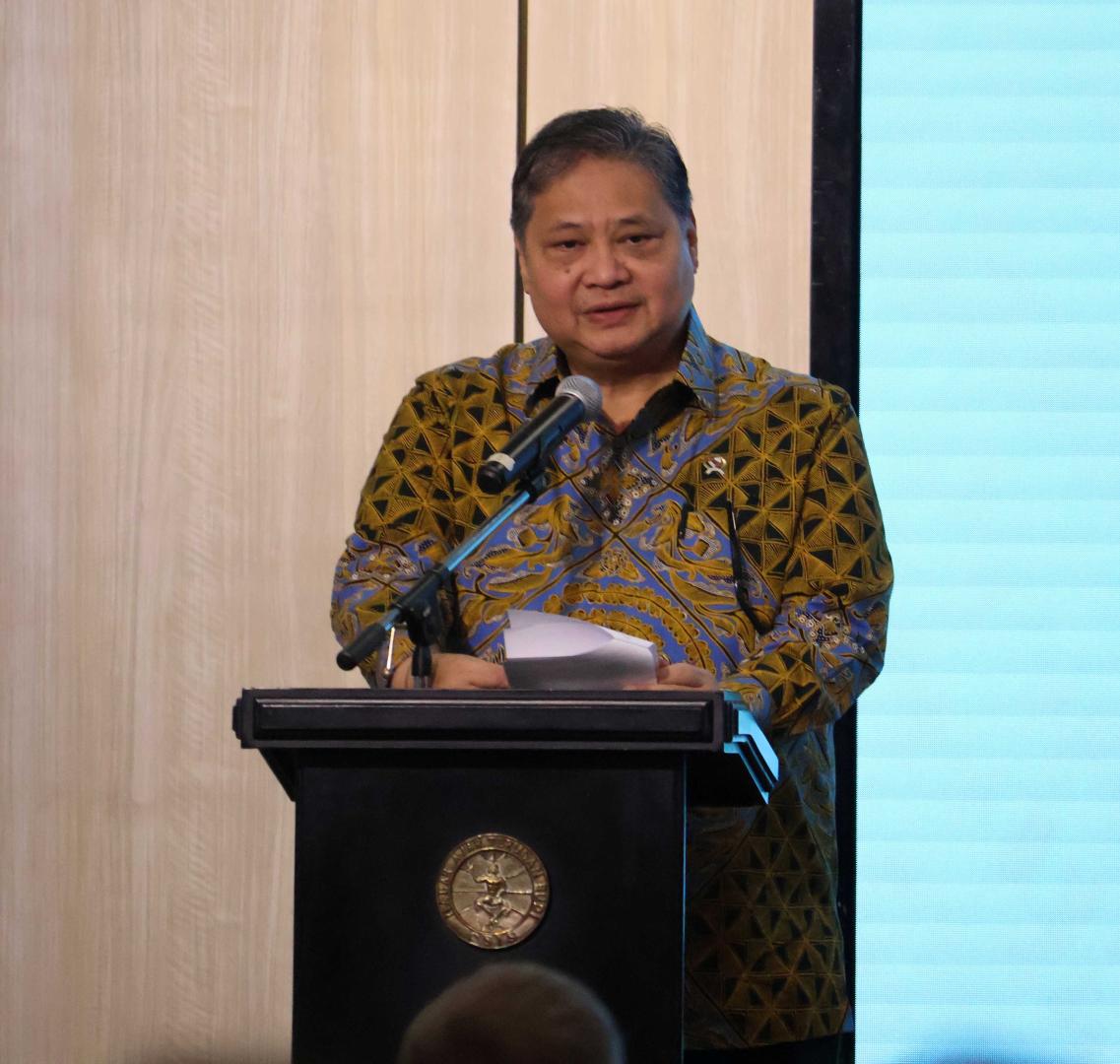
In his keynote address, Coordinating Minister for Economic Affairs Airlangga Hartarto underscored the growing strategic importance of relations between Indonesia and the European Union. He welcomed the conclusion of the CEPA negotiations and highlighted the agreement’s role in fostering investment, sustainable industrial development, and Indonesia’s green transformation. He emphasized that CEPA should now be implemented swiftly in order to deliver tangible economic benefits for the Indonesian people.
Overall, the 9th KAS–CSIS Germany–Indonesia Strategic Dialogue reaffirmed the high strategic relevance of EU–Indonesia relations. The discussions highlighted that CEPA represents a key instrument for a deeper economic partnership, whose success, however, will depend on consistent implementation, regulatory reliability, and close cooperation between politics, business, and civil society.
