



Asset Publisher

Country Reports

Short political reports of the KAS offices abroad

Publications

IMAGO / AFLO

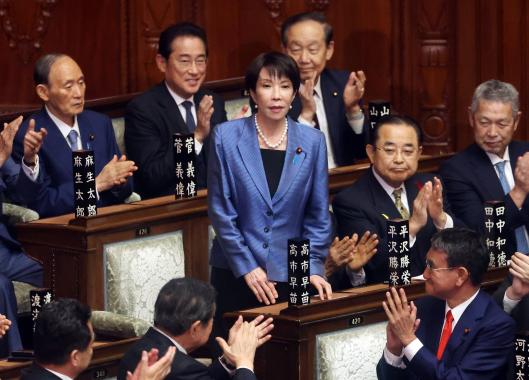
Double Turning Point

Japan’s Lower House Elects Sanae Takaichi as Prime Minister

For the first time in Japanese history, a woman is leading the government of the island nation. Takaichi is considered a conservative hardliner who, only in early October, was elected LDP party leader on her third attempt. Expectations within the party for her are as high as they are numerous. In addition, she must align the LDP after 26 years with a new coalition partner, the Innovation Party.

IMAGO / Anadolu Agency

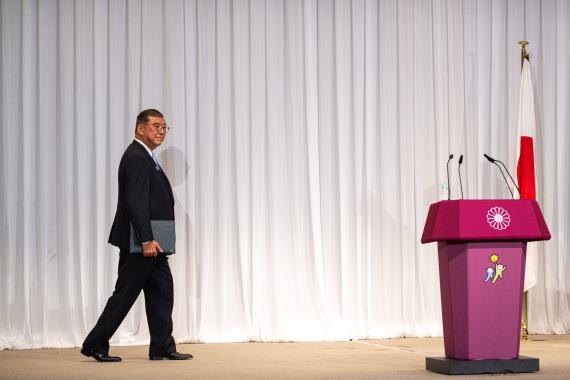
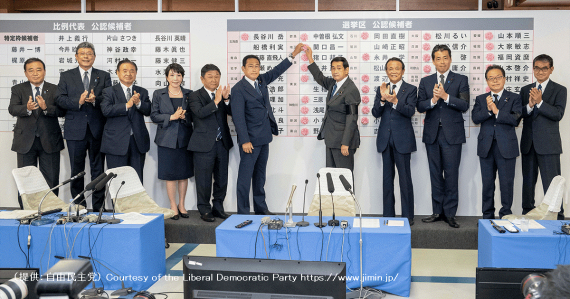
Japan: A resounding defeat for the government

For the first time in twelve years, the ruling coalition of LDP and Kōmeitō has lost its majority in Japan's Upper House

Japan is entering a phase of political uncertainty: following a clear defeat in the 2024 Lower House elections, the ruling coalition of the Liberal Democratic Party (LDP) and Kōmeitō has now also lost its majority in the Upper House. Rising living costs, an escalating trade conflict with the United States, and an increasingly polarized debate over immigration shaped the election campaign.

IMAGO / ZUMA Press Wire

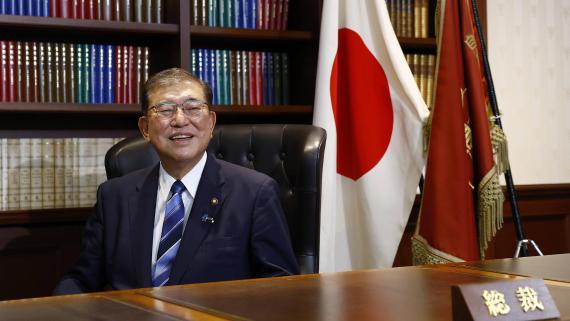
Shigeru Ishiba – The LDP Reformer?

A Portrait of Japan’s New Prime Minister

Shigeru Ishiba will become Japan's next Prime Minister. In a dramatic final round of the Liberal Democratic Party (LDP) leadership election, Shigeru Ishiba emerged victorious over Sanae Takaichi. With this win, it is now certain: Ishiba will become Japan's next Prime Minister.

IMAGO / ZUMA Press Wire

Where does Japan stand at the end of the Kishida government?

A security and economic policy assessment after three years in office

Alongside the U.S., Japan will soon also be led by a new head of government. The two economic heavyweights are more closely intertwined than ever in terms of economic and security policy. The challenges facing the island nation therefore not only affect Japanese domestic policy.

IMAGO / ZUMA Wire

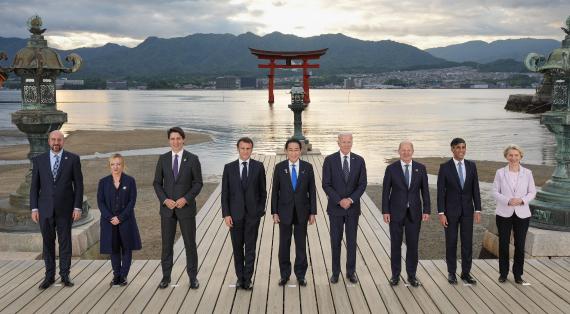
G7 in Hiroshima

A critical Juncture

In light of Russia’s war in Ukraine and an increasingly tense international environment, Japan and its fellow G7 nations hope to characterize this year’s summit in the name of peace. Hiroshima, Prime Minister Kishida’s constituency, being the target of the first offensive nuclear weapon on August 6, 1945, in history, serves to remind all G7 nations of their commitment to peace and unity in times of international uncertainties. This year’s meeting is characterized by a more inclusive approach by inviting seven non-member countries as observers in addition to shifting the G7’s gaze toward the Global South to formulate a more comprehensive political and economic approach that includes developing and middle-income nations in future policy drafts. Despite the united stance of G7 member states, each nation brings forward a specific focus of interest to the discussion. For Japan, topics of nuclear disarmament and nonproliferation as well as energy security and strengthening the Indo-Pacific are of primary importance, whereas Germany’s emphasis lies on the global impact of the Russo-Ukrainian war and the continuous support of the global community for Ukraine.

Upper House Election 2022

Results and Implications

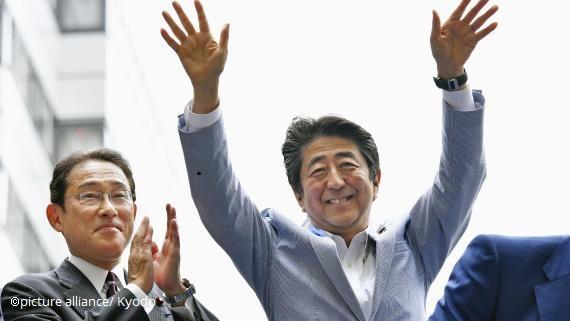
The Upper House election, held July 10, ended in a landslide victory for the ruling Liberal Democratic Party (LDP). The election took place in a sombre mood of national mourning following the tragic death of former Prime Minister Shinzo Abe, shot while campaigning just two days before polling. This paper describes the implications of this election for the major political parties.

Japan - Wahlen im Schatten des Attentats

Die liberaldemokratische Regierungspartei LDP gewinnt die Oberhauswahlen mit erwartungsgemäß großer Mehrheit

Der 8. Juli wird sich in Japans Geschichte einbrennen. Es ist der „Kennedy Moment“ des Landes, als um die Mittagszeit Shinzo Abe während eines Wahlkampfauftritts erschossen wird. Wenig später erliegt er seinen Verletzungen und reißt ein tiefes Loch in seine Familie, in seine Partei und in die Politik Japans. Zwei Tage nach dem tödlichen Anschlag auf den ehemaligen Ministerpräsidenten Shinzo Abe erzielt die konservative LDP-Komeito-Koalition eine komfortable Mehrheit im Oberhaus. Zum Feiern ist dennoch niemandem zu Mute. Zu tief sitzt der Schock über den Verlust desjenigen, der bis zum Schluss die Agenda der LDP entscheidend mitbestimmt hat. Die nächsten Wahlen werden voraussichtlich erst im Oktober 2025 stattfinden, wenn das Unterhaus neu zu besetzen ist. Damit hat Premierminister Fumio Kishida nach neun Monaten im Amt freie Hand, um die politische Agenda seiner Regierung voranzutreiben. Der Premier steht nun vor der Frage, wohin er sein politisches Kapital lenken wird: Verfassungsreform und Verteidigungspolitik; Bekämpfung der Inflation und der Energieknappheit; oder sein eigenes politisches Flaggschiff, dem "Neuen Kapitalismus". Kishida hat bereits eine Kabinettsumbildung angekündigt, Anfang September wird er die neue Regierung berufen haben. Im August stehen die Trauerzeremonien für Shinzo Abe an.

In der Sache richtig, aber ohne viel Substanz

Bundeskanzler Olaf Scholz besucht Japan

Während in Berlin der Bundestag an der verteidigungspolitischen Zeitenwende arbeitet und das Sondervermögen der Bundeswehr diskutiert, reiste Bundeskanzler Scholz nach Japan. Dass die Wahl auf Japan fiel, macht das Zögern des damaligen Koalitionspartners bei der Entsendung der Fregatte Bayern in den Indo-Pazifik wieder wett. Dass die erste Asienreise nicht nach China führte, ist ein starkes Zeichen der neuen deutschen Außenpolitik – die jedoch maßgeblich vom grünen Koalitionspartner bestimmt wird.

Abe’s Long Shadow—Japan Struggles Toward a Political Awakening

Fumio Kishida was confirmed in office as prime minister at the constituent session of the new parliament on 10 November. In her sixteen years in office, outgoing German Chancellor Angela Merkel has seen a total of ten Japanese prime ministers come and go. Fumio Kishida, the 101st prime minister, is unlikely to meet her in person again, yet the numbers speak volumes with regard to Japan’s rotating government. The concern that Japan will once again fall into a long period of changing prime ministers is justified, as the Abe era weighs heavily on the party and the government.

Abes langer Schatten – Japan müht sich in den politischen Aufbruch

Fumio Kishida wurde am 11. November auf der konstituierenden Sitzung des neuen Parlaments als Premierminister im Amt bestätigt. In ihrer sechzehnjährigen Amtszeit hat die scheidende Bundeskanzlerin Angela Merkel insgesamt zehn Premierminister erlebt. Fumio Kishida, den Hundertsten, wird sie vermutlich nicht mehr persönlich treffen, dennoch sprechen die Zahlen Bände im Hinblick auf die rotierenden Regierungen Japans. Die Sorge ist berechtigt, dass Japan erneut in eine lange Phase wechselnder Premierminister verfällt, denn die Abe-Ära lastet schwer auf Partei und Regierung.

Asset Publisher

About this series

The Konrad-Adenauer-Stiftung is a political foundation. Our offices abroad are in charge of over 200 projects in more than 120 countries. The country reports offer current analyses, exclusive evaluations, background information and forecasts - provided by our international staff.

Order details

Editor

Konrad-Adenauer-Stiftung e.V.