Asset Publisher

Events

Asset Publisher

Asset Publisher

There are currently no events planned.

Asset Publisher

Seminar

Economic Security

Online Frauds, Deepfakes & Financial Safety

Rapid advances in artificial intelligence - especially generative AI - are transforming the digital ecosystem, while simultaneously amplifying risks such as impersonation, fraud, deepfakes, and the erosion of digital trust. Across the Asia-Pacific region, AI-enabled scams are increasingly impacting individuals, financial systems, digital platforms, and public services. Japan’s highly digitalized, trust-based society - combined with an ageing population and advanced financial infrastructure - faces particularly acute vulnerabilities. This multi-day dialogue convened experts from technology, finance, cybersecurity, academia, civil society, and public policy to assess emerging risks, exchange concrete mitigation strategies, and advance cross-sector collaboration through closed-door discussions and a public-facing dialogue.

Seminar

Polarization, personalization, and popularity

How political parties respond to social trends

Across the world, the typical way of politics is undergoing dramatic changes. Traditionally dominant centrist parties are struggling to remain in power amidst challenges from novel populist parties on the far right and far left, fuelled by a social landscape where economic, demographic, and technological challenges are polarising electorates and creating deep divisions that threaten to destabilise liberal democracies. This programme brought together foreign and Japanese academics and political experts to explore this new landscape across regional contexts, discussing in individual sessions the various social factors that parties are responding to.

Event

Future of Global Trade in an Era of Shifting U.S. Engagement, Emerging Powers and Digital Innovation

KAS SOPAS Seminar & Public Event

Seminar

Follow-Up: The Experience and Extent of Adopting AI among SMEs in Asia

KAS SOPAS Seminar in Manila

This follow-up seminar built on the outcomes of the July 2025 event in Tokyo and focused on practical implementation and cross-regional collaboration to advance AI adoption among small and medium-sized enterprises (SMEs). The discussions explored how national AI strategies can be translated into real-world transformation at the SME level, and how partnerships across Asia and Europe can scale innovation, inclusion, and competitiveness.
Seminar

Decoding Europe’s China Strategy: Prospects for Japan–EU Partnership in Economic Security

KAS-NPI Joint Seminar

Seminar

Security Policy Frameworks in the Asia Pacific

Implications for Germany and Europe

Study and information programme

New Government, Shaky Majorities

What Direction Will Japan’s Economic and Security Policy Take in Relation to China, the US, and Europe?

Visiting Program in Tokyo with Dr. Gerhard Wahlers

Seminar

Nexus Between Development Aid, Trade and Economy

KAS SOPAS Seminar on the current state of development aid, its significance, and its future prospects in Asian countries

Seminar

The Experiences and Extent of Adopting AI among SMEs in Asia

Exploring how small businesses in Asia are navigating the evolving landscape of AI integration.

Symposium

NATO in a World of Strategic Uncertainty

Roles, Partners, and Challenges

Against the backdrop of the 2025 NATO Summit, this symposium brought together experts to discuss NATO's current situation, its role, and future cooperation between NATO and Japan and other partners.

Asset Publisher

Great Power Rivalries in the Global South

Navigating Financial and Economic Security Issues in a Multi-Polar World

During March 22-24, 2024, the Financial Services Volunteer Corps (FSVC) organized an international symposium in Istanbul, Turkey, funded by Carnegie Corporation of New York and Konrad-AdenauerStiftung (KAS). The symposium brought together 29 leading experts and practitioners in international finance and foreign policy from Africa, Asia, Europe, and North America to exchange ideas, break silos and forge connections.

NPI-KAS Seminar on Economic Security

On February 20, the Japan Office of the Konrad Adenauer Foundation and Nakasone Peace Institute (NPI) jointly organized a seminar on “Economic Security: A German Perspective”. The seminar was held following the MoU signed last December between NPI and KAS to strengthen cooperation in the field of economic security and was attended by Japanese Diet members and government and ministry officials.

Visit of a Delegation of CDU/CSU Members of the Bundestag

From February 7 to 9, the Japan Office of the Konrad Adenauer Foundation had the honor of welcoming a delegation of members of the German Bundestag, led by Dr. Johann Wadephul, Deputy Chairman of the Christian Democratic/ Social Union (CDU/CSU) parliamentary group, to Japan and provided them an opportunity to exchange views with Japanese members of parliament and experts.

MoU Signing Ceremony with Nakasone Peace Institute

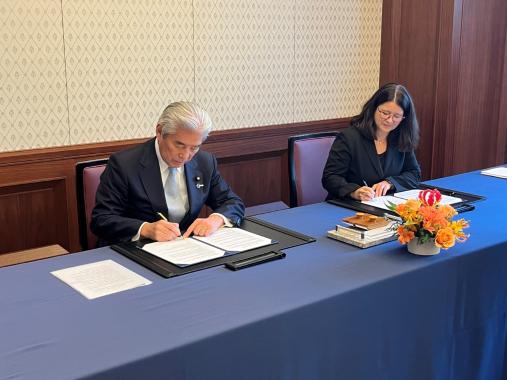
On December 6, the Japan office of the Konrad Adenauer Foundation (KAS) signed a Memorandum of Understanding (MoU) with the Nakasone Peace Institute (NPI) confirming their cooperation in the field of economic security.

Shaping an Equiverse: Pathways to Parity

The International Leadership Conference “Shaping an Equiverse: Pathways to Parity”, jointly organised by TalentNomics India and KAS SOPAS in New Delhi, India, was held in person on November 24th, 2023.

The War in Ukraine: Europe's response and implications for the Indo-Pacific

On October 26, Konrad Adenauer Stiftung (KAS) Japan Office held an experts’ roundtable on “The War in Ukraine: Europe's response and implications for the Indo-Pacific” at the organisation’s Tokyo office. Rabea Brauer, Country Representative, KAS Japan, welcomed the participation of experts from the Centre for Security, Diplomacy and Strategy (CSDS) at the Brussels School of Governance and various Japanese organisations. Key points made by the CSDS speakers concerned the following: • Impact of the Russian aggression against Ukraine from both a Euro-Atlantic and Indo-Pacific perspective and the conflict’s indirect link to both regions through the U.S. military presence; • Evaluation of Japan and Taiwan as partners sharing common values with Europe. Shift by Eastern European states from pro to anti-China following China’s show of support for Russia; • EU’s endeavour to seek tighter and more robust defense cooperation as a part of an effort to secure the strategic autonomy of the bloc; development of stronger defense cooperation between the EU and NATO. The subsequent discussions centered around topics such as future Japan-NATO cooperation in new domains, the prospect of a Taiwan contingency, solidarity amongst like-minded countries, and weapon systems. The whole session was moderated by Michito Tsuruoka, Associate Professor of Keio University.

kas

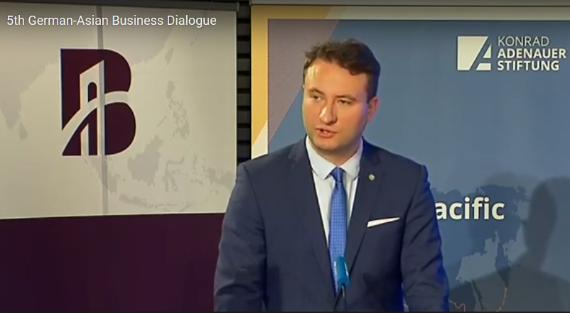
5th German-Asian Business Dialogue

The Future Of The International Order Is Decided In Asia

German-Asian cooperation possesses abundant potential for maintaining the rules-based international order and keeping global trade routes open – requirements for both regions’ prosperity. Which challenges are governments and businesses in the Indo-Pacific and Germany facing under Covid-19? What lessons have been learned?

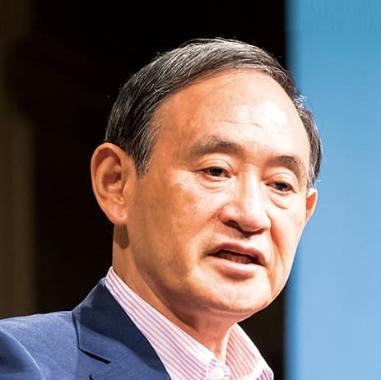
Yoshihide Suga wins the LDP leadership Election.

Succeeding PM Shinzo Abe

Yesterday (September 14), Chief Cabinet Secretary Yoshihide Suga enjoyed a land sliding victory, winning 70% of the overall eligible votes for the LDP leadership election. Key messages are: 1. His victory was obvious even before the election as the major factions had expressed their support to him. 2. Fumio Kishida managed to stay in the race for the next year’s full-fledged leadership election. He could only obtain support from a small portion of regional votes. 3. Shigeru Ishiba came last. His popularity among the public is his strong point. However, he lost 16 percentage points from the regional chapters compared to 2018. He could not garner a big support from Diet members outside his faction.

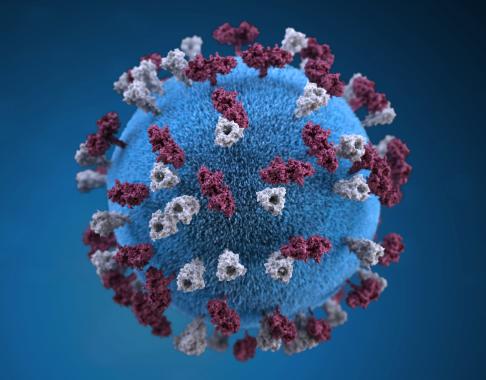
KAS Japan Weekly COVID-19 Updates

4 August

Unemployment rate in June stood at 2.8%. It’s 0.1 percentage point down from May. Is it any good sign? Key messages include: 1. Those who lost their jobs have turned themselves into freelancers, however there’s no assurance that it will last. 2. The ratio of involuntary unemployment is rising. In Japan almost 40% of the workers are non-regular employment. 3. Non-regular workers could be targeted with termination of contracts. The unemployment rate may then become much higher. Watch the video to learn more!

KAS Japan Weekly COVID-19 Updates

21 July

Thirty-five percent of medical institutions would pay less or cut bonus as hospital management is deteriorating due to Covid-19 as people refrain from going to hospitals. Key messages include: A survey by Japan Hospitals Association in May found the profits of about 1,200 hospitals went negative in April. Covid-19 treatment hospitals were more severely hit. Their revenues plummeted. The Government of Japan must support the hospitals to avoid their services going out, which is widely shared across the political spectrum.