



Asset Publisher

Country Reports

Short political reports of the KAS offices abroad

Publications

IMAGO / YAY Images

Resolution 2797

A historic step in the Sahara conflict

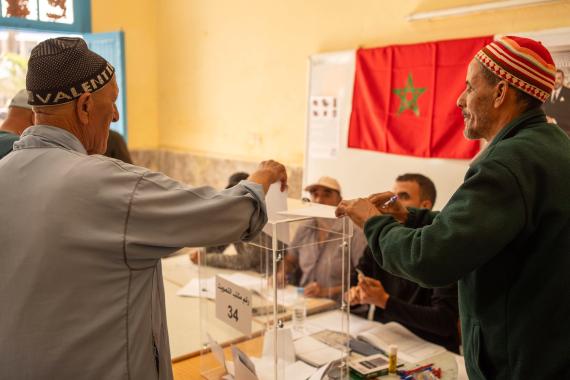
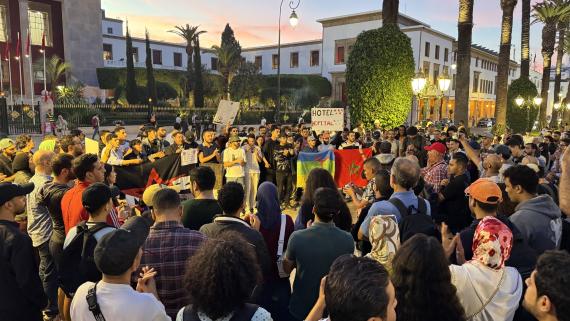
On 31 October 2025, the UN Security Council adopted Resolution 2797 on the Western Sahara conflict. In Morocco, thousands of people celebrated on the streets, as the resolution represents a historic change of course. For the first time, Morocco's autonomy plan is explicitly supported as a fundamental solution to the conflict. The neutrality of the United Nations is thus shifting in favor of the Moroccan position. In Morocco, this step was celebrated as a diplomatic success; King Mohammed VI spoke of a "new and victorious chapter" on the way to a final solution to the Sahara question.

Unlocking the Sahel: Morocco’s Advance as Bridge- Builder and Agenda-Setter

Check out now our third report from Morocco Radar!

Morocco’s Defense Modernization: Strategic Investments in Security

Check out now our second report from Morocco Radar!

Morocco Through Donald Trump’s First 100 Days in the White House

Navigating the Trump Administration’s Second Term

Donald Trump’s return to the White House for a second term has sparked strong reactions worldwide, with some hailing him as a hero destined to reshape the world, while others fear he will lead it to ruin. Regardless of where one stands, one thing is certain: Trump is a polarizing figure who always defies expectations. From surviving an assassination attempt to defying predictions of imprisonment and reclaiming the presidency after a failed re-election bid, his first term proved to be a whirlwind of surprises. As he begins his second term, the world watches closely, particularly Morocco, which faces both opportunities and challenges in navigating the unpredictable path Trump’s administration may take, especially with his “America First” doctrine shaping global relations and foreign policy.

IMAGO / Panthermedia

Between the Atlantic and the Mediterranean: Morocco's maritime security strategy

Complex transnational challenges for the country's maritime security

The geopolitical developments in the Red Sea and Morocco's geostrategic position as an interface between Africa, Europe and the Americas pose complex transnational challenges for the country's maritime security. While Morocco benefits economically from the emerging importance of its ports, Morocco's sea areas are threatened by illegal migration, terrorist activities and international drug trafficking. Through a strategy of regional cooperation, Morocco seeks to use its Atlantic and Mediterranean identity to lower trade barriers while protecting itself from dangers. However, measures taken by the Moroccan navy make it clear that cooperation with both European and African states is indispensable for an effective security strategy.

IMAGO / ITAR-TASS

Presidential Elections 2024 in Mauritania

A pillar of hope in the Sahel region

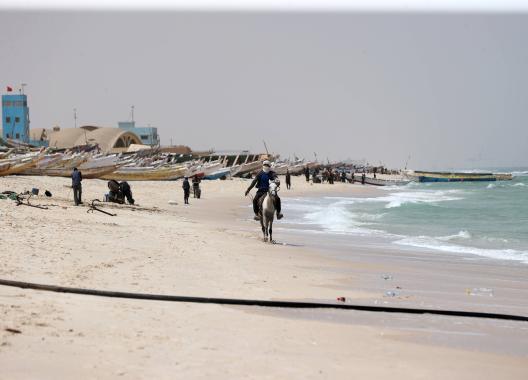
Presidential elections are due to be held in Mauritania on June 29, 2024. Despite general expecta-tions that the incumbent President Mohamed Ould Ghazouani will be re-elected, political tension remains, including for partners in Europe. This is because Mauritania has gained in importance for the EU in recent years in the Sahel region, which is experiencing coups. The European Union has concluded security and migration cooperation agreements with the only democratically elected government in the Sahel region. The desert state therefore plays an important role as a connecting country between the countries of the Maghreb and sub-Saharan Africa.

Nahrungsmittelsicherheit im Nahen Osten und Nordafrika

Zwischen Notstand und Pragmatismus: Der Fall Marokko

Unmittelbar nach dem russischen Angriffskrieg in der Ukraine rückte der Nahe Osten und Nordafrika erneut ins Zentrum der Aufmerksamkeit. Abermals befürchtete man umwälzende Krisen in der Region, nicht wegen innerer Spannungen und Konflikte, sondern wegen der großen regionalen Abhängigkeit von Nahrungsmittelimporten der Kriegsparteien Russland und Ukraine.

Die Gleichberechtigung der Frau in Marokko

Stagnation oder Fortschritt?

Nach Jahren der Verzögerung verabschiedete das marokkanische Parlament am 14. Februar 2018 ein neues Gesetz, durch das Gewalt gegen Frauen härter bestraft werden soll. Diese Reform ist die neueste auf dem langen, holprigen Weg Marokkos zu mehr Gleichberechtigung und Schutz von Frauen. Die Voraussetzung für wirkungsvolle Reformen ist jedoch eine drastische Veränderung in der Mentalität der marokkanischen Gesellschaft.

Erneut Reformen von oben?

Eine Thronrede als Impuls für den sozialen Rechtsstaat

Seit der Thronübernahme durch Mohammed VI. am 30. Juli 1999 wurde dieser Tag jährlich und somit in diesem Jahr zum 18. Mal gefeiert. Allerdings waren die Erwartungen an seine Thronrede noch nie so hoch wie diesmal. Die öffentlichen Proteste, sozialen Spannungen und Inhaftierungen, die nach dem Tod des Fischhändlers Mouhcine Fikri Ende Oktober 2016 in Al Hoceima immer weiter zunahmen und schließlich bis nach Rabat reichten, verlangten immer lauter nach einer umfassenden Lösung vieler sozialer Probleme nicht nur in der Rif-Region, sondern in Marokko insgesamt.

La gestion de l’eau au Maroc

Le Maroc se situe géographiquement au Nord-Ouest de l’Afrique et dispose d’un climat mé-diterranéen au Nord, semi-aride au Centre ainsi qu’à l’Est et aride voire très aride au Sud. Ce qui lui confère une moyenne de 140 milliards de m3 de pluviométrie annuelle. Il faut noter également que les quantités de chutes de pluie annuelles diffèrent très largement en fonction des années de sècheresse, dont souffre particulièrement le Maroc.

Asset Publisher

About this series

The Konrad-Adenauer-Stiftung is a political foundation. Our offices abroad are in charge of over 200 projects in more than 120 countries. The country reports offer current analyses, exclusive evaluations, background information and forecasts - provided by our international staff.

Order details

Editor

Konrad-Adenauer-Stiftung e.V.