








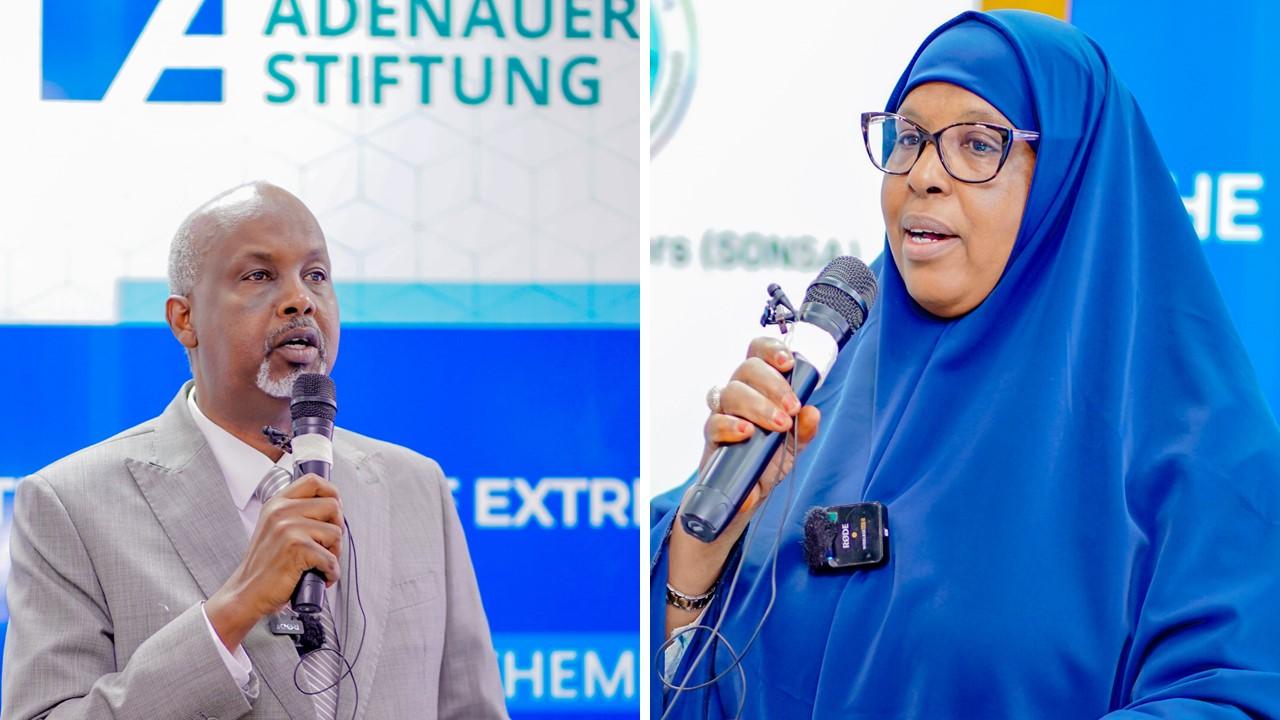
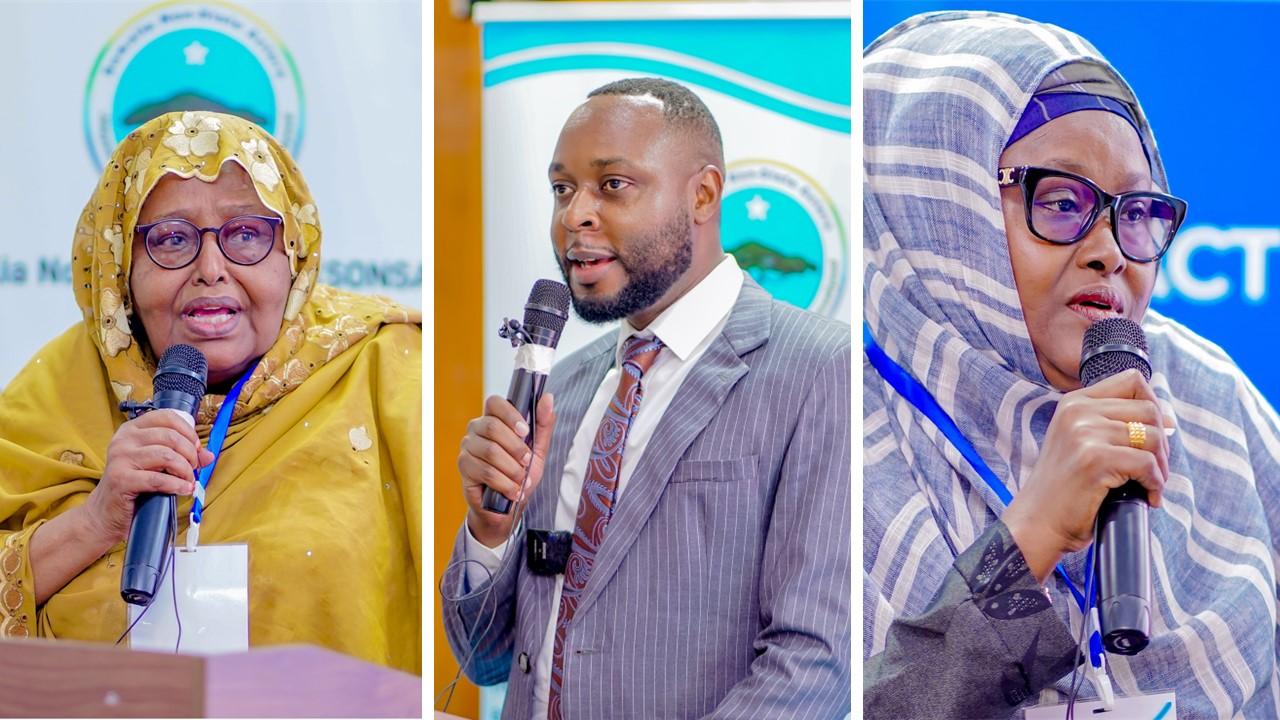
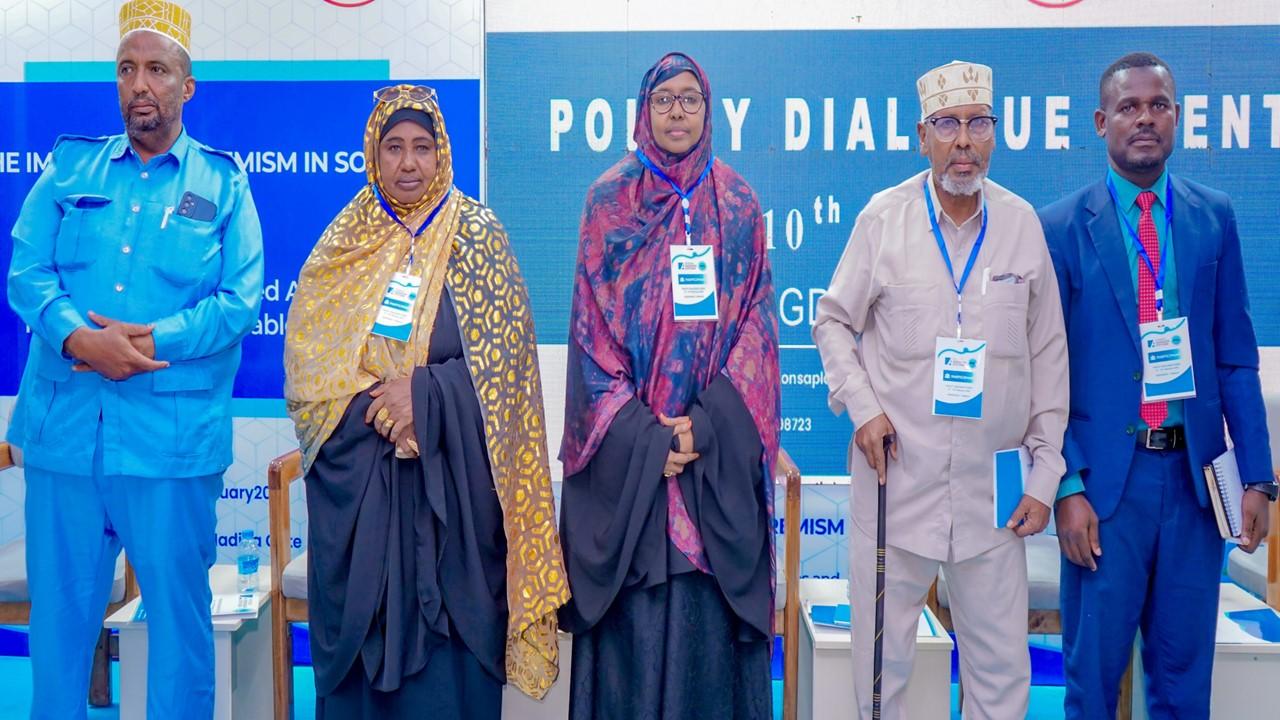
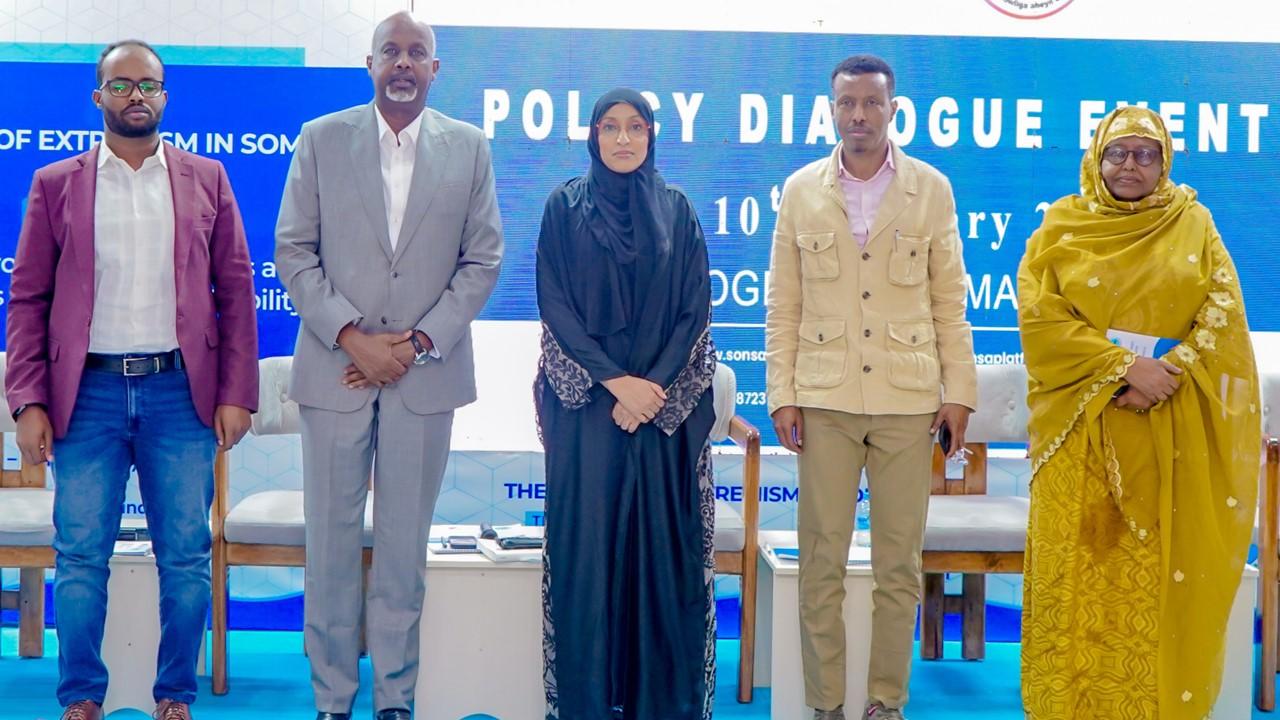
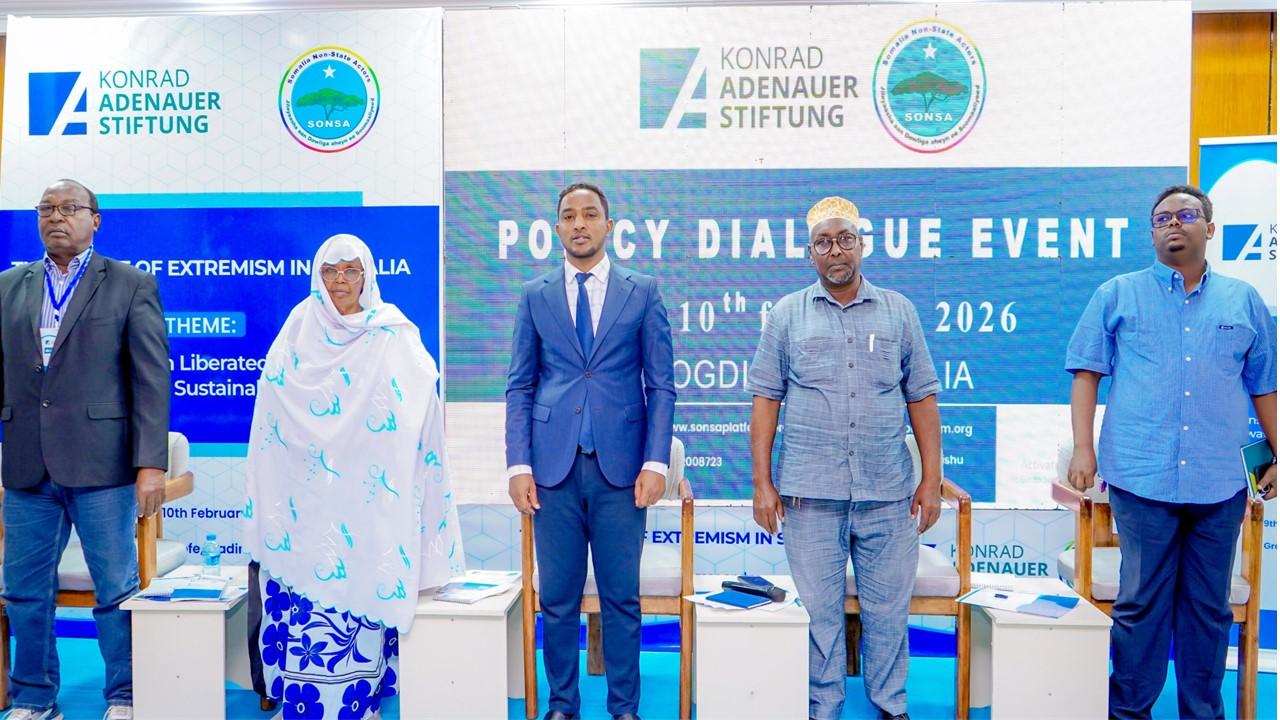
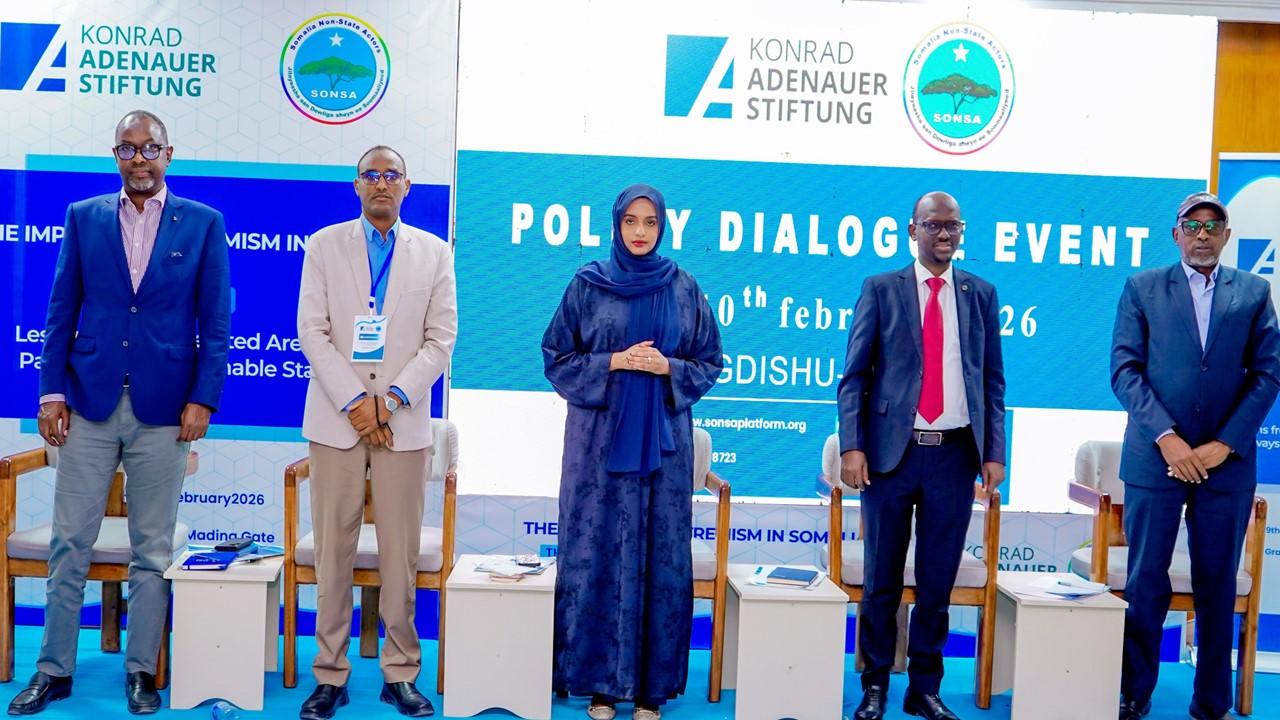
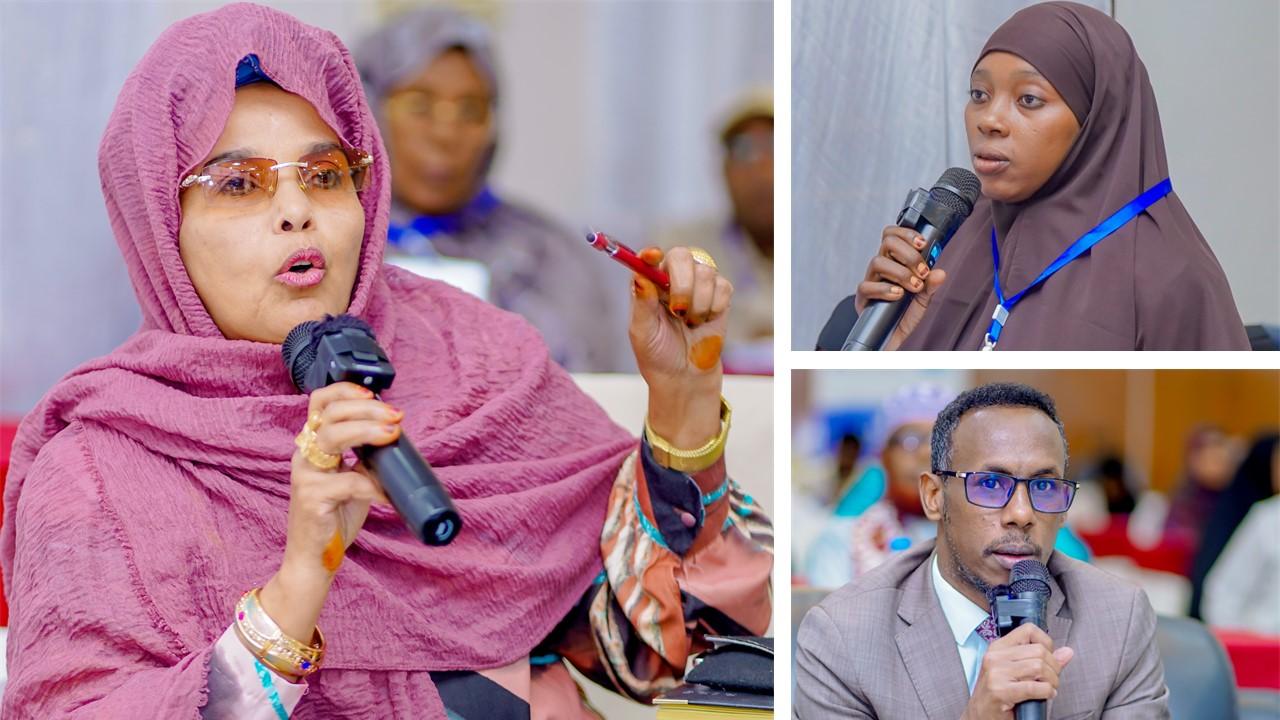
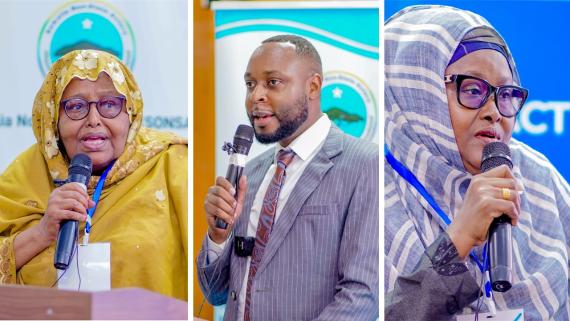
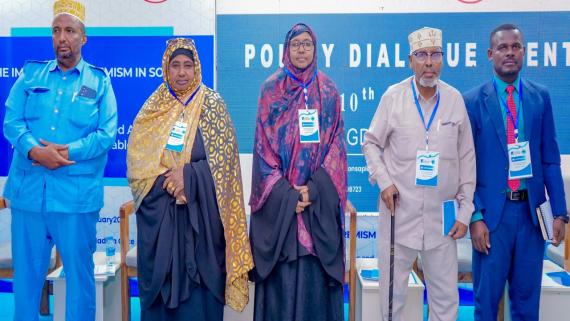
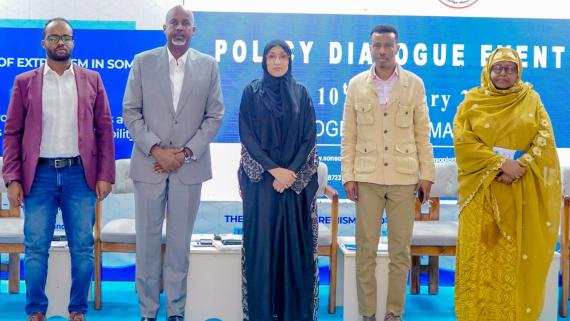
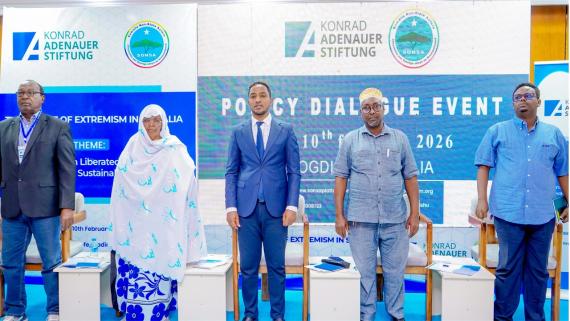
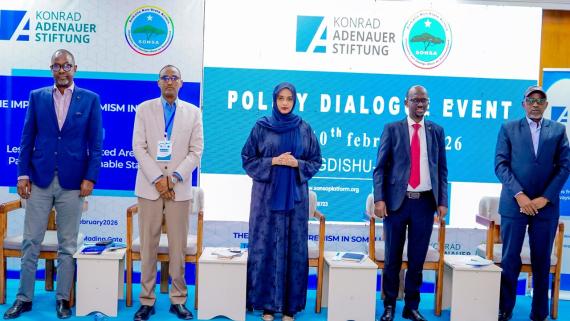
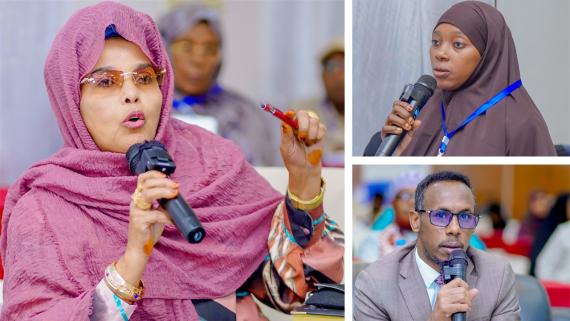
The forum brought together government officials, Federal Members of Parliament, security experts, traditional and civil society leaders, women groups, and media representatives. The dialogue aimed to examine the lessons learned from areas that have been recently liberated from extremist control and to identify practical pathways toward sustainable peace.
The event was officially opened by Senator Seynab Ismail Mohamed, Chairperson, Senate Committee on Natural Resources, Infrastructure, Economy and Transport. In her remarks, she hailed the eleventh Parliament of Somalia for passing key legislations aimed at ensuring stabilisation in liberated areas. She also noted that there was improved coordination between government and non-government actors in regard to countering extremist narratives.
Osman Moallim, Chairperson of the SONSA in his welcoming remarks highlighted the critical role that the civil society plays in complimenting government efforts in countering extremists and in social stability. In his remarks, Edgar Mwine, Project Manager, Konrad Adenauer Stiftung (KAS) thanked the Somali Non-State Actors for convening the dialogue and reaffirmed KAS’s commitment to supporting such initiatives.
Hon Adar Ali Mohamed, MP, Galmudug State, and Ms Amino Ahmed Samater, Gender Focal Point from the Prime Minister’s Office, also made brief remarks highlighting the indispensable role of women in peacebuilding and stabilisation.
The dialogue comprised of four panels. The first panel focused on trust-building, local priorities, and the risk of marginalisation in post-liberation settings. The panellists stressed that sustainable stability depends on reconciliation, service restoration, and inclusive governance.
The second panel discussed military gains vis-à-vis governance and stabilisation gaps. It focused on transition from security operations to civil administration. This panel examined lessons from recent offensives and the institutional preparedness required for post-liberation governance.
The third panel explored service delivery, social rehabilitation, and institutional coordination examining prior stabilisation initiatives and identified recurring gaps. The panellists stressed that stabilisation requires synchronised action across federal institutions, local authorities, and community structures.
The final panel analysed how international partners, diaspora actors, and national institutions can better align stabilisation efforts. The panel concluded that stabilisation financing must be flexible, rapid, and aligned with government-led district recovery plans.
The dialogue was concluded with closing remarks from Osman Moallim. He expressed profound gratitude to all participants, panellists, moderators, and the KAS team. The event was formally closed by Senator Adar Ali Mohamed, Member of the House of the People of the Federal Parliament of Somalia. She called on civil society to be builders and partners in development, not just observers and watchdogs.
About this series
The Konrad-Adenauer-Stiftung, its educational institutions, centres and foreign offices, offer several thousand events on various subjects each year. We provide up to date and exclusive reports on selected conferences, events and symposia at www.kas.de. In addition to a summary of the contents, you can also find additional material such as pictures, speeches, videos or audio clips.