








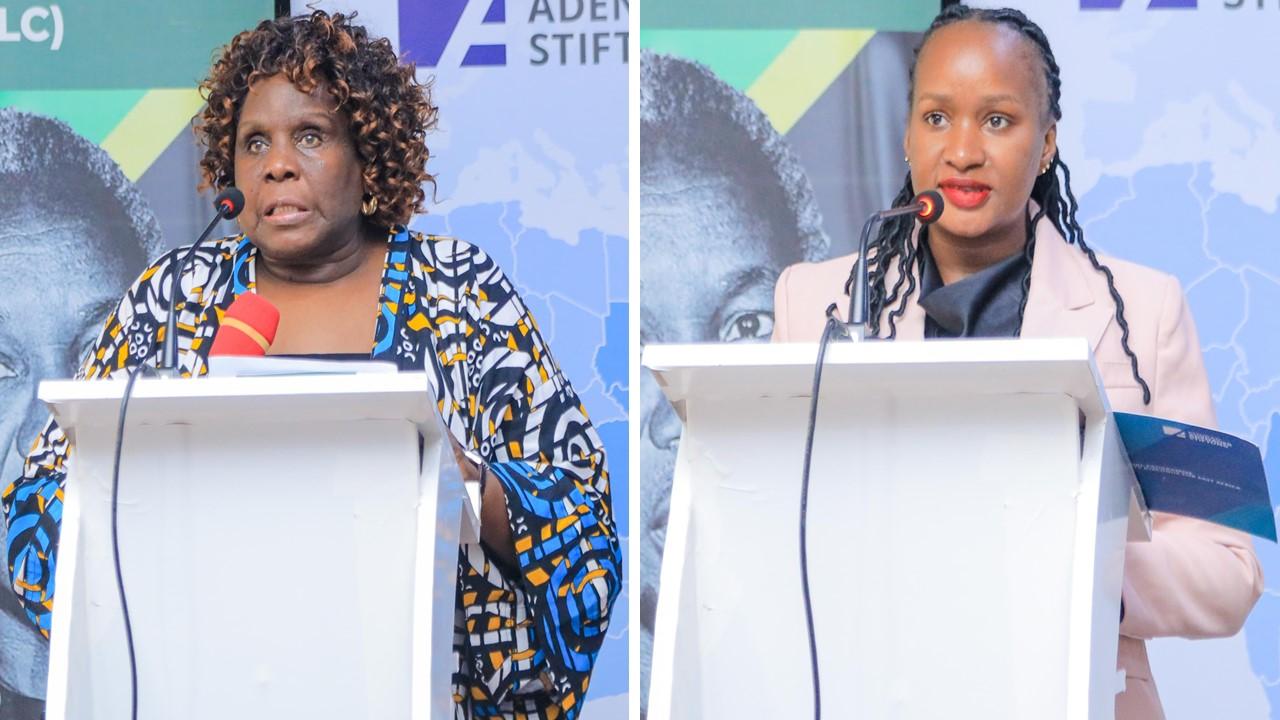


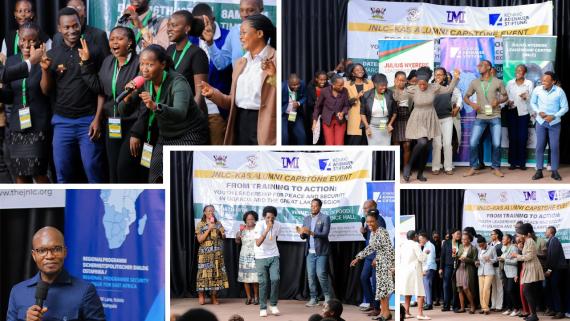

The event was officially opened by Dr Muwanga Nansozi, Executive Director, Julius Nyerere Leadership Centre (JNLC). She praised the alumni for their ongoing efforts following previous cohorts, noting that many have gone on to establish or join organisations inspired by the training. Dr Nansozi expressed gratitude for the three-year partnership with KAS RP-SIPODI-EA and highlighted that fifteen alumni had recently contested for public office, demonstrating the program’s increasing impact on emerging leaders. She underscored that the capstone event aimed to promote sustainability through continued engagement, consolidate the achievements of the training, and shift the focus from learning to action by identifying practical strategies to advance peace and security initiatives.
Welcoming remarks were delivered by Susan Natumanya, Project Manager KAS RP SIPODI-EA, who emphasised the significance of the capstone event in consolidating leadership and governance training among young regional leaders. She highlighted the importance of fostering communities that practice democratic ideals and engage meaningfully in peace and security issues and underscored youth as vital drivers of stability and development in the Great Lakes region, urging open dialogue and collaboration. Finally, she expressed gratitude to partners, JNLC and encouraged participants to approach discussions with curiosity, aiming for impactful, sustainable regional progress.
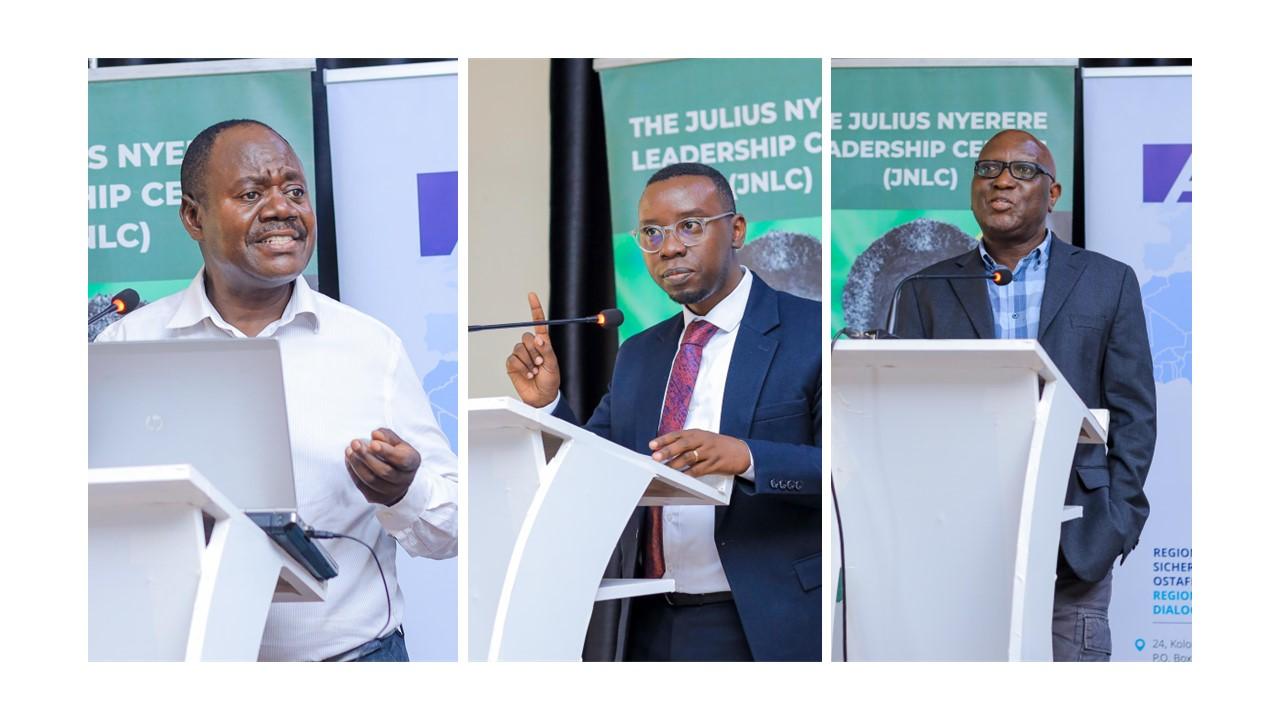
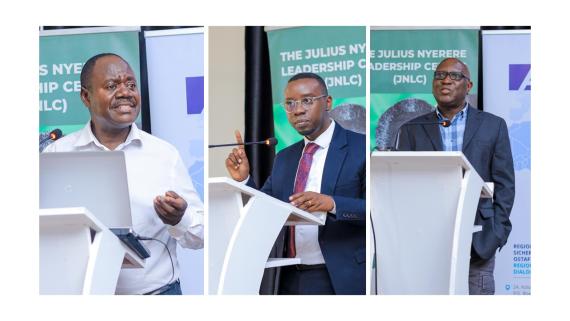
The first session was led by Prof Julius Kiiza, Professor of Political Economy and Development, Department of Political Science and Public Administration, Makerere University. His presentation focused on the importance of unity and acceptance across tribal and political divides. He examined how differences have historically been weaponised to fuel conflict and emphasised that dissent is a natural and necessary part of society. He encouraged participants to approach differing opinions with greater openness and respect. Prof Kiiza also introduced the concept of comprehensive security, urging young leaders to advocate beyond state and regime security toward more inclusive and people-centered approaches.
The keynote speaker, Dr Herman Tuhairwe, lecturer, law studies, Uganda Christian University, emphasised the importance of understanding historical fault lines in East Africa and the Great Lakes to address ongoing peace and security challenges, urging regional cooperation and youth leadership. He highlighted that peace is rooted in dignity, justice, and inclusive governance, not just the absence of violence, and called for ethical leadership and civic engagement. Dr Tuhairwe stressed that sustainable peace requires patience, modest efforts and the active participation of youth as agents of change, advocating for regional perspectives and constructive dialogue. Ultimately, he urged young leaders to transform historical divisions into foundations for shared futures through strategic, responsible action.
Prof Phillip Kasaija, associate professor, Department of Political Science and Public Administration, Makerere University, delivered his speech, challenging participants to move beyond defining peace merely as the absence of violence. Drawing on earlier discussions, he reinforced the need for comprehensive security frameworks in the Great Lakes region and encouraged young people to assert their influence within youth, peace, and security agendas.
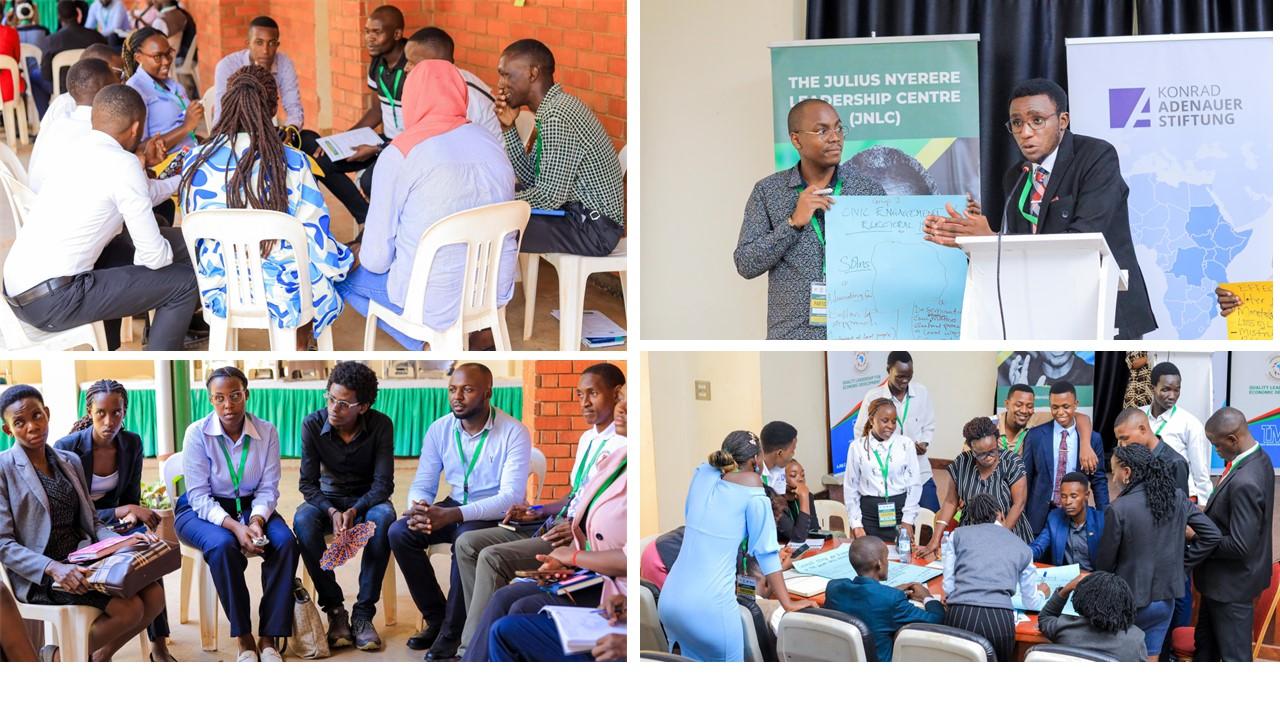
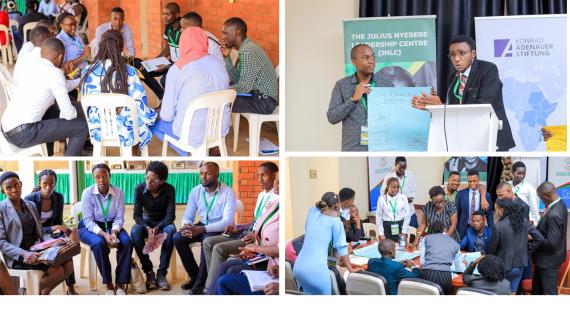
In the afternoon, participants were divided into seven groups, each assigned a key thematic area: Civic Engagement and Electoral Integrity; Community Peacebuilding; Conflict Prevention; Economic Justice (and its absence); Digital Peacebuilding; Rule of Law; and Gendered Peace and Security in the Great Lakes region.
Day two began with a recap of the previous day, followed by a presentation by Dr Butiime Herman, lecturer, Makerere University on “Identifying and Understanding Institutional Entry Points for Peace and Security in Africa.” He emphasised that human beings must remain at the center of conflict resolution efforts, as they are the most affected by insecurity. His presentation examined regional blocs such as the African Union (AU), East African Community (EAC), and IGAD, assessing the opportunities they provide for youth engagement. He noted that youth are often limited to tactical roles and highlighted that the AU currently offers the most significant strategic entry points. He also questioned the effectiveness of institutions such as the AU Panel of the Wise, suggesting the need for greater youth inclusion.
The day also featured a presentation by the former Chairman of the National Youth Council, Jacob Eyeru. He encouraged young people to broaden their understanding of issues affecting them beyond traditional peace and security frameworks. He emphasised that dedication determines the level of influence one can achieve and urged participants to organise and engage strategically.
A substantial portion of the morning was dedicated to a Q&A session, during which participants raised key concerns around meaningful inclusion, access to funding, mentorship, and sustained engagement. In response, Jacob Eyeru pledged to support a few alumni in peacekeeping initiatives within the Great Lakes region, in his capacity at the Council of the Great Lakes Region (CGLR).
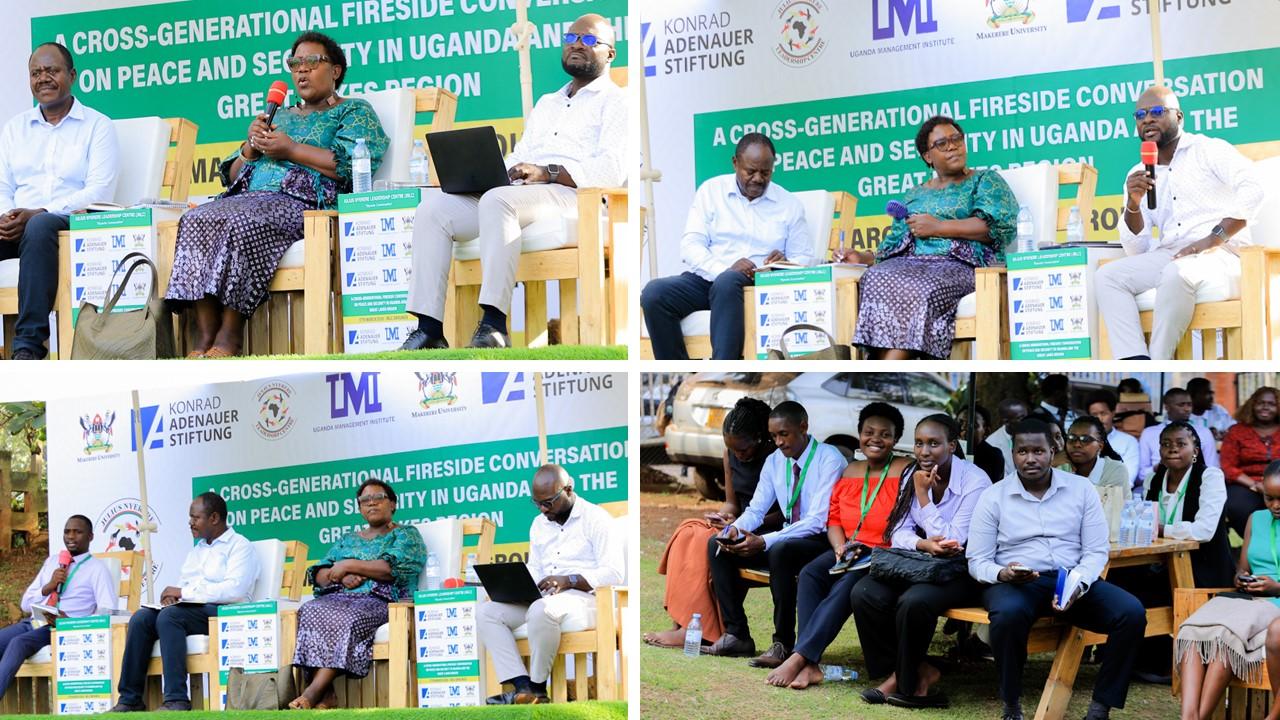
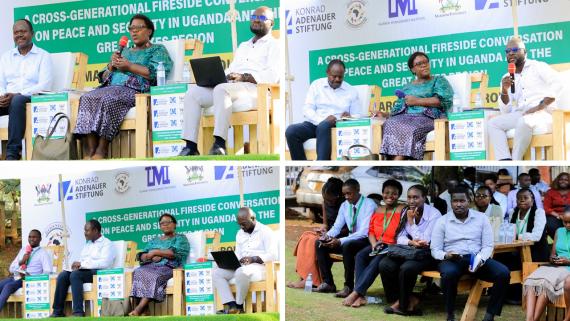
The afternoon session featured an interactive fireside chat moderated by Prof Kiiza, centered on “Inspirational Leadership Lessons and Practical Strategies for Navigating Complex Political Environments.” The discussion, led by Dr Tshimba David, Associate Professor, School of Arts and Social Sciences - Uganda Martyrs University and Prof Josephine Ahikire, Associate Professor, School of Women and Gender Studies, Makerere University encouraged participants to critically assess complex conflict environments and champion community-led solutions. Following the fireside chat, participants reconvened in their thematic groups to present and discuss their findings from the previous day.
Day three began with a recap and a synthesis of leadership insights facilitated by David Emolot, Chairperson- African Continental Free Trade Area (AfCFTA ) Youth Advisory Council, this was followed by a presentation from Dr Tshimba David on “Ways to Strengthen Early Warning and Preventive Action in Uganda and Border Communities.”
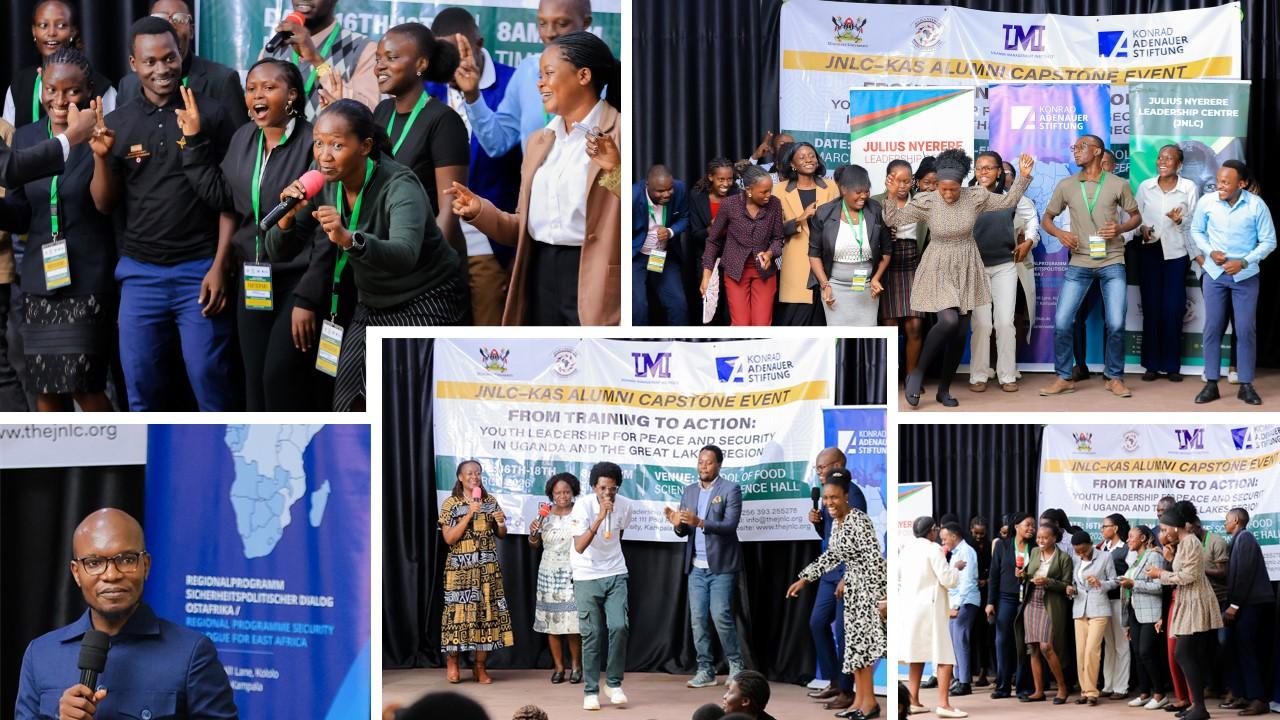
In the mid-morning session, participants once again broke into groups to develop regional peace and security songs — an exercise aimed at promoting creative engagement and community-centered messaging.
The afternoon featured lively performances of the peace songs, followed by a comprehensive recap of the three-day event. Participants engaged in a structured reflection, drawing on alumni experiences from past training and field engagement. Facilitators and alumni groups assessed what had worked, what had not, and identified strategies to bridge gaps in translating training into tangible action.
The event culminated in the presentation of certificates to participants, honoring their successful completion of the training and their dedication to promoting peace and security within their universities, communities, country and the greater region.
About this series
The Konrad-Adenauer-Stiftung, its educational institutions, centres and foreign offices, offer several thousand events on various subjects each year. We provide up to date and exclusive reports on selected conferences, events and symposia at www.kas.de. In addition to a summary of the contents, you can also find additional material such as pictures, speeches, videos or audio clips.