






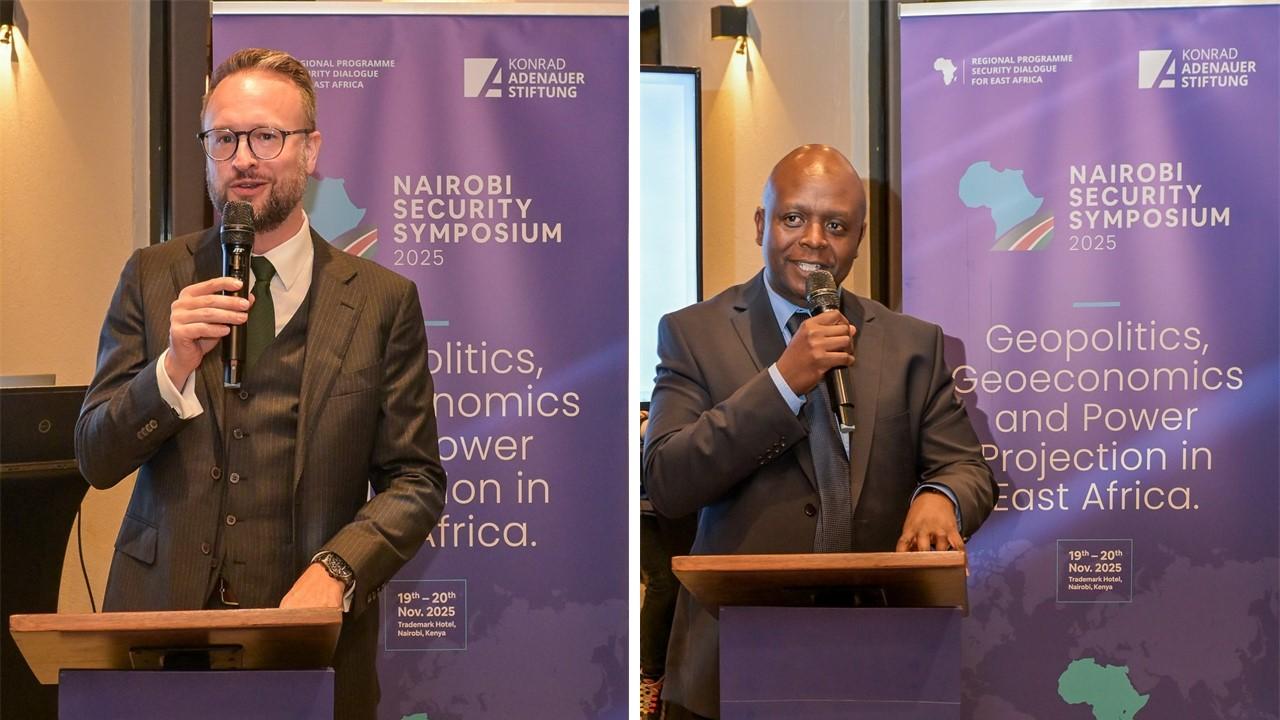
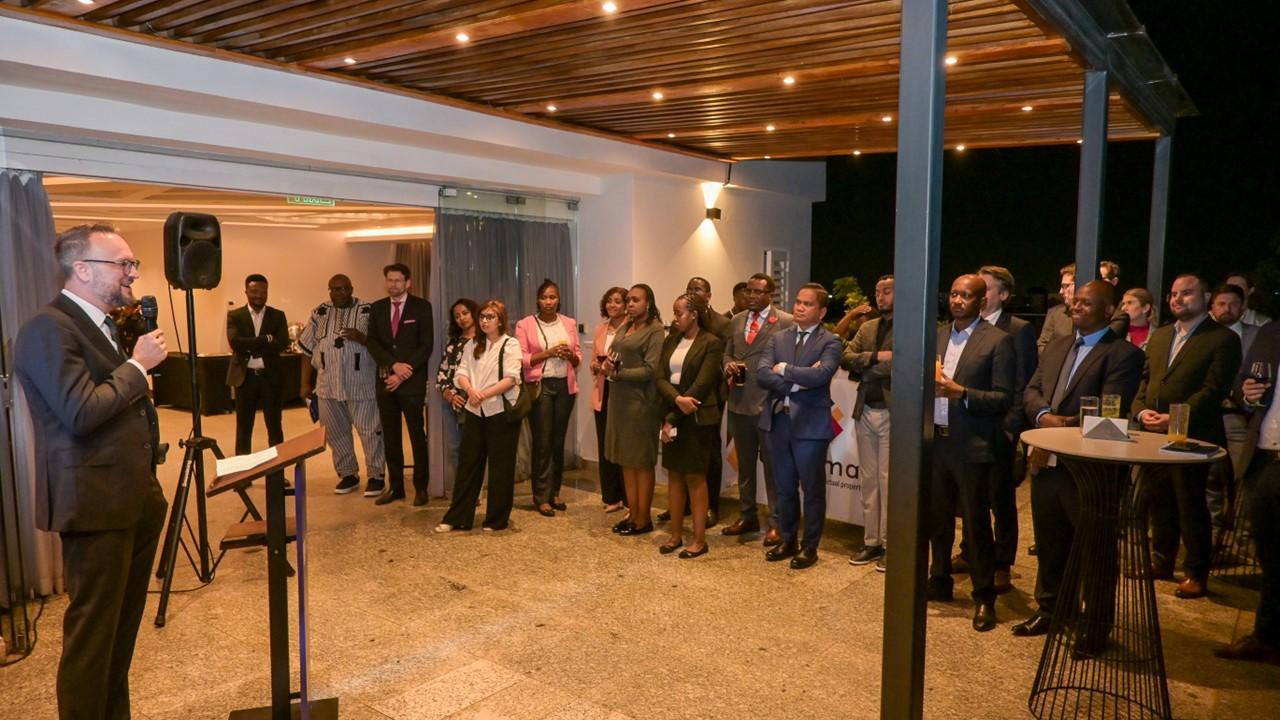
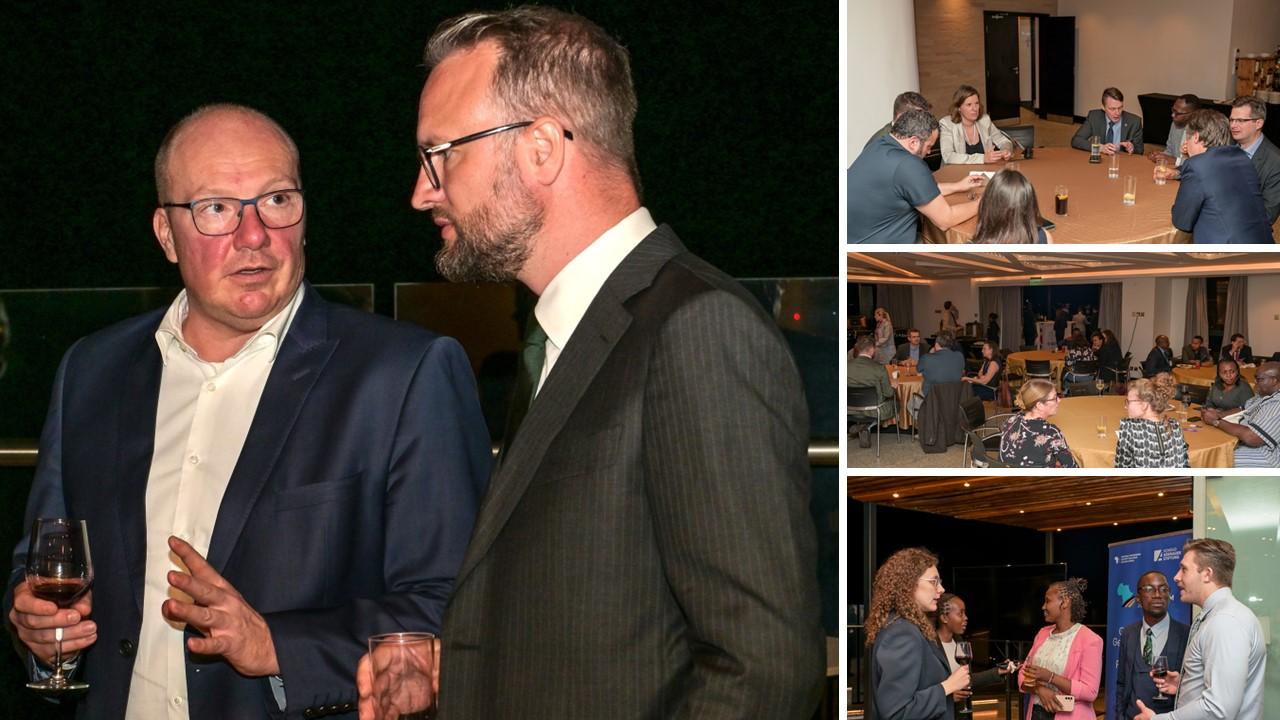
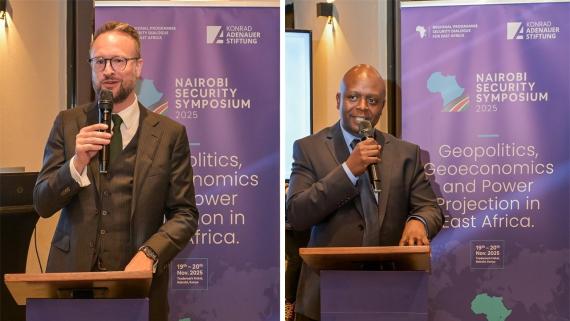
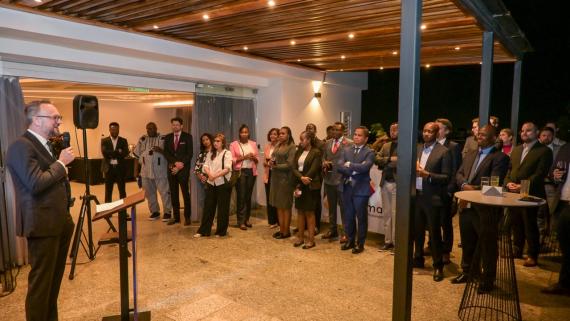
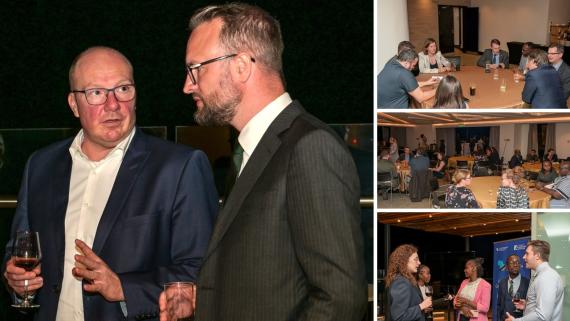
Mathias Kamp, Director of the KAS Kenya Foundation Office, opened the discussion highlighting the strong Kenya-Germany partnership rooted in shared democratic values and recognized Kenya's rising influence as a credible voice on the African continent, capable of shaping a reformed international order. He emphasized Germany's ongoing support for Kenya’s regional leadership and stability, despite occasional policy differences, underscoring their common goals in peace and development. Mathias also acknowledged the attendance and participation of five German parliamentary policy advisors and security experts from Europe, Asia, and Africa, and expressed appreciation to the partners and the attendees of the evening reception.
During his opening remarks, Dr. Hassan Khannenje, Director, Horn Institute, accentuated that although Kenya is recognized as a significant regional and continental player, it remains underrepresented in discussions shaping the emerging global order. He pointed out that changing migration patterns threaten the stability of both African and European nations and emphasized that achieving major development goals is impossible amid instability. Dr Khannenje urged Africans to actively participate in these conversations and influence the discourse, asserting that the region’s future should be determined and shaped by its own people. He concluded by noting that Africans should not be passive spectators but should take an active role in defining their political, governance and economic destinies.
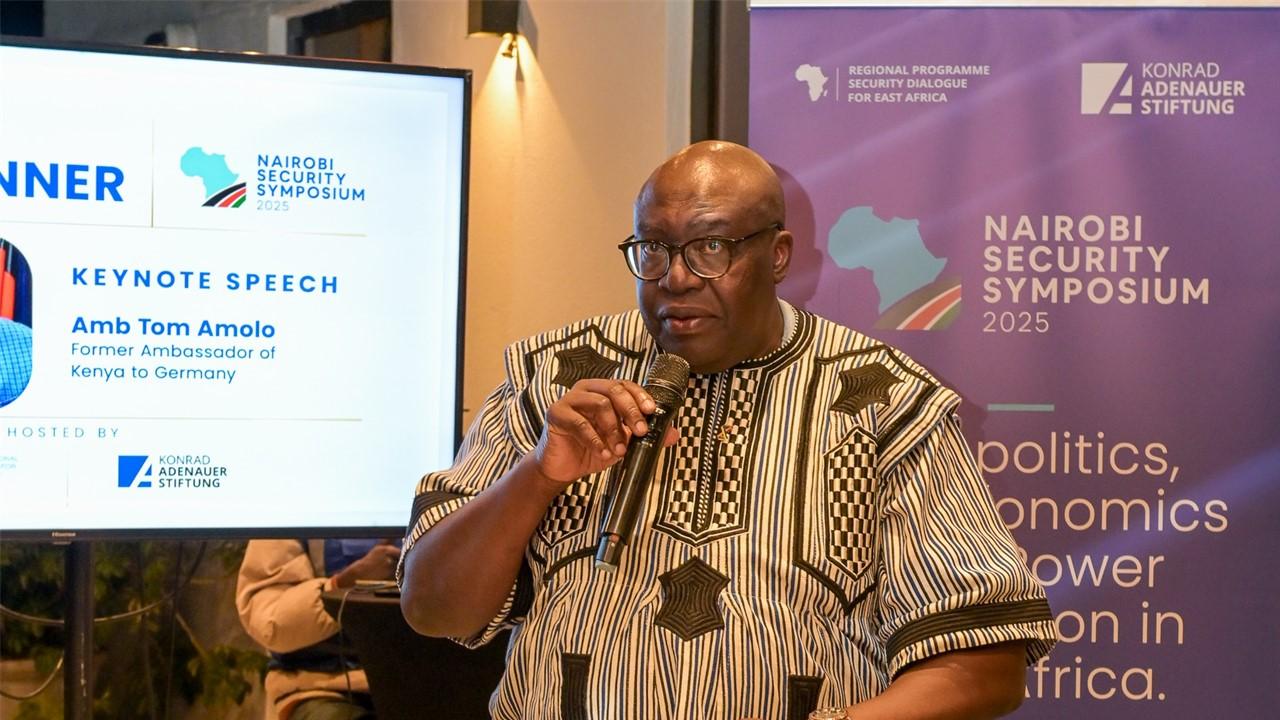
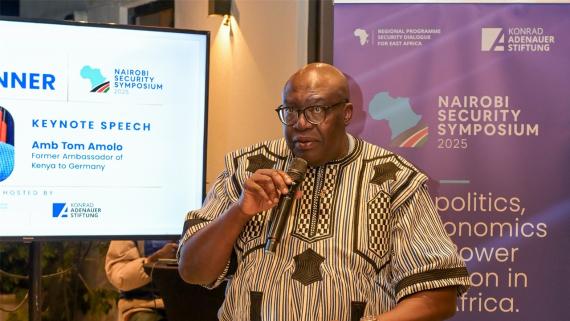
Amb Thomas Amolo, Former ambassador of Kenya to Germany, delivered the keynote speech, expressing gratitude to the KAS and the Horn Institute, and lauding the earlier discussions at the Nairobi Security Symposium. In his speech, he called on East Africans to critically evaluate the region’s trajectory, reflecting on Kenya’s generally stable environment besides the unrest in 2024 and the on and off Gen Z protests. Emphasizing Kenya’s role as a continental leader, he urged the nation to collaborate with its neighbours to promote shared regional interests, asserting, “We are only better together, and we shall not leave anyone behind.” He addressed significant governance and security issues, citing recent incidents during Tanzania’s elections where democratic standards were compromised and human rights were violated and advocated for an African doctrine on democratic governance to enhance accountability. Criticising nepotism and the neglect of diplomatic norms, he highlighted the need for stronger multilateralism, pointing out weaknesses within the AU Peace and Security Council and calling for Africa to reinforce its principles to increase its global influence, including securing permanent UN Security Council representation. He also highlighted ongoing conflicts, particularly around maritime and port access, as well as tensions in Sudan, Somalia, and South Sudan, which are frequently fuelled by external resource interests. In his conclusion, Amb Amolo stressed the need to involve the youth in policy and decision making to prevent future instability.

About this series
The Konrad-Adenauer-Stiftung, its educational institutions, centres and foreign offices, offer several thousand events on various subjects each year. We provide up to date and exclusive reports on selected conferences, events and symposia at www.kas.de. In addition to a summary of the contents, you can also find additional material such as pictures, speeches, videos or audio clips.