









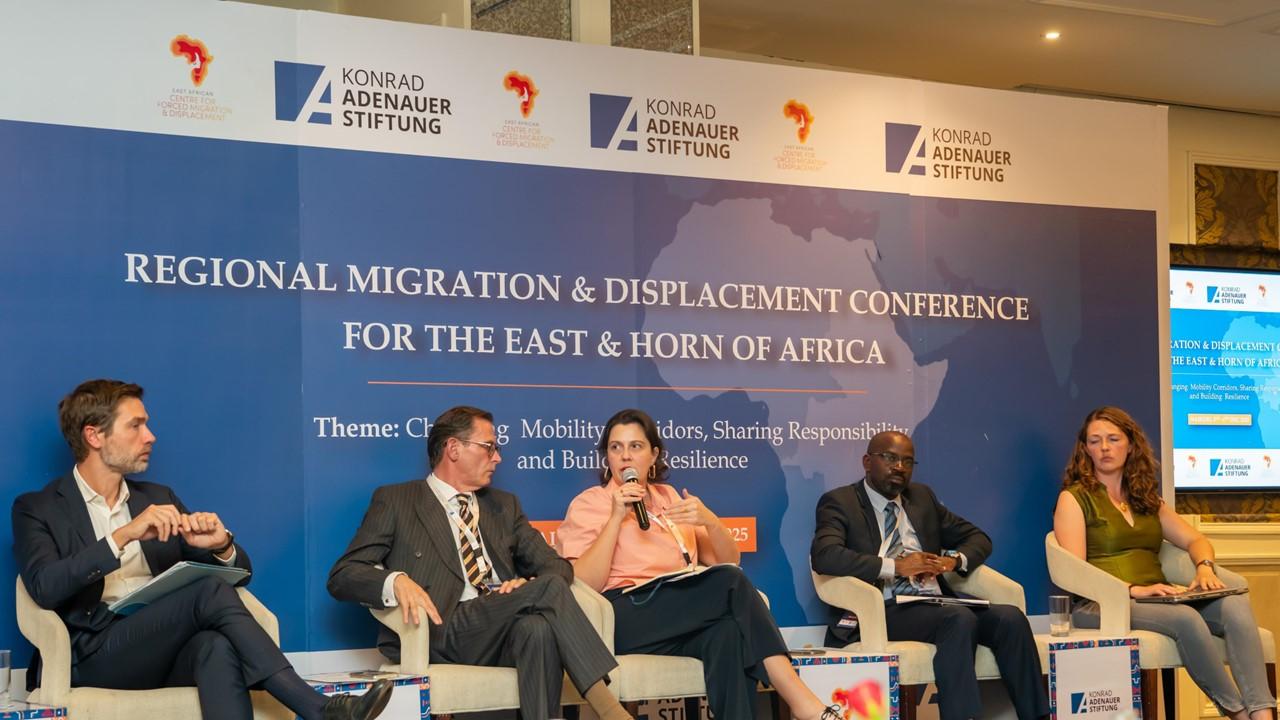
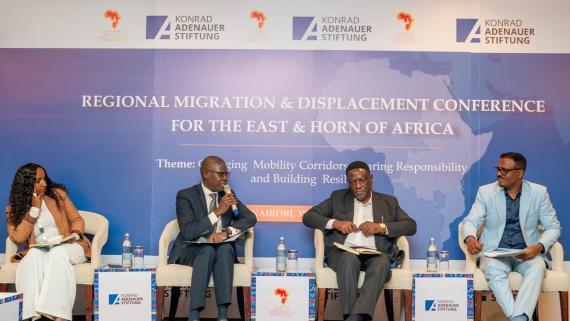
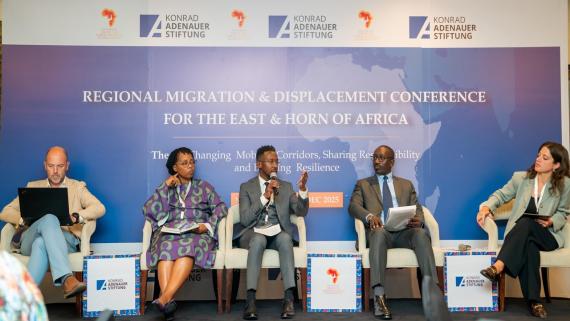
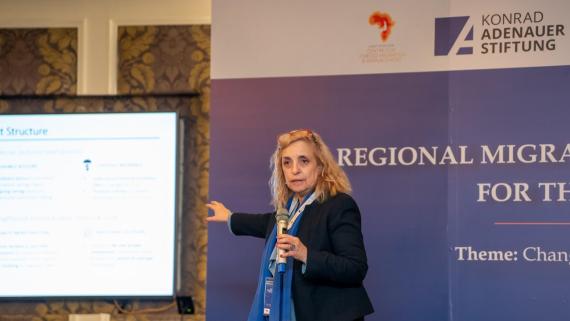
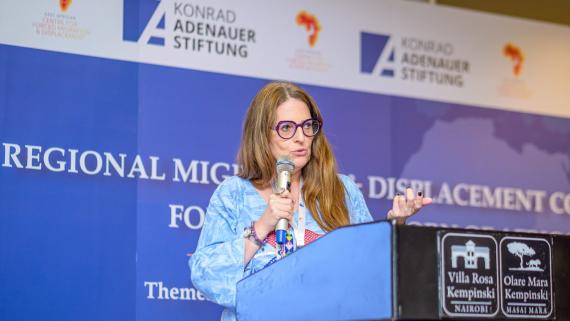
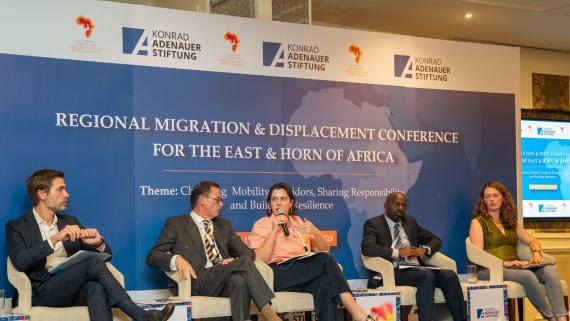
This event brought together policymakers, migration experts, humanitarian practitioners, researchers, and representatives from international organisations like IGAD, UNHCR and the World Bank. Through plenary sessions and deep-dive sessions over the two days, conference participants explored critical themes including regional refugee management policies, climate-induced mobility, financial inclusion and labour mobility, the regional implications of the Sudan's crisis, migrant smuggling and trafficking along the eastern and northern routes, and innovative financing mechanisms for migration governance.
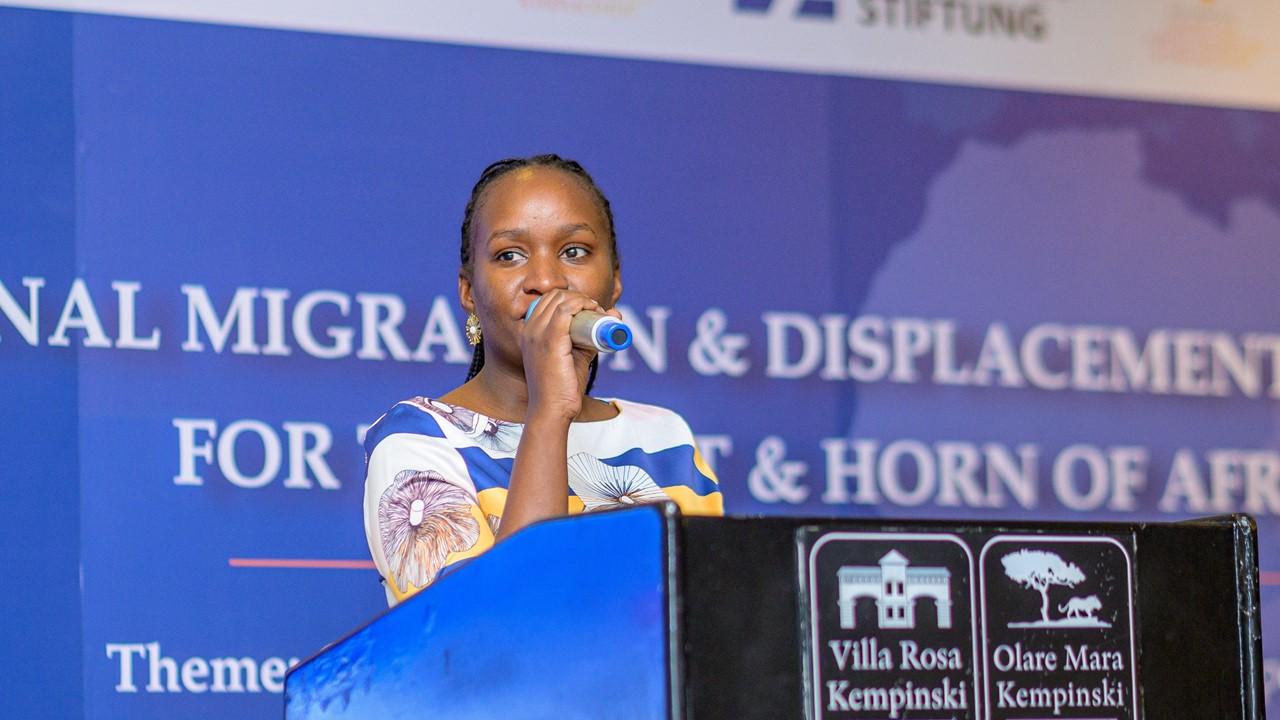
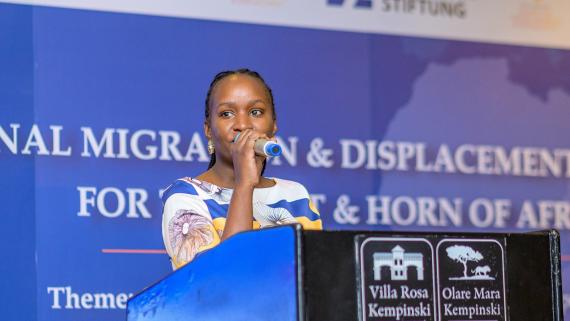
Susan Natumanya, Project Manager, KAS RP SIPODI East Africa, opened the conference by stressing the importance of shifting the narrative from viewing migration solely as a crisis to exploring innovative strategies that transform migration into a source of resilience, economic inclusion, and shared responsibility, even amid limited resources. Kizitos Okisai, Senior Legal Officer at the UNHCR Regional Bureau for Eastern and Southern Africa, presented sobering statistics that underscored the substantial challenges faced by host countries like Kenya, Uganda and Ethiopia. Rodgers Mutende, Deputy Director of the National Coordination Mechanism on Migration in Kenya, offered the national perspective, reaffirming Kenya’s commitment to hosting displaced persons and emphasizing the core principles of equality and freedom from discrimination.
Selma Sassi, Special Rapporteur on Refugees, Asylum Seekers, Internally Displaced Persons and Migrants in Africa for the African Commission on Human and Peoples’ Rights, delivered the keynote, emphasizing that migration must be governed by law, cooperation, solidarity, and shared responsibility, not fear. She framed forced mobility as a last-resort survival strategy when states fail to provide protection and called for global responses rooted in legal principles and human dignity rather than exclusion or pushbacks.
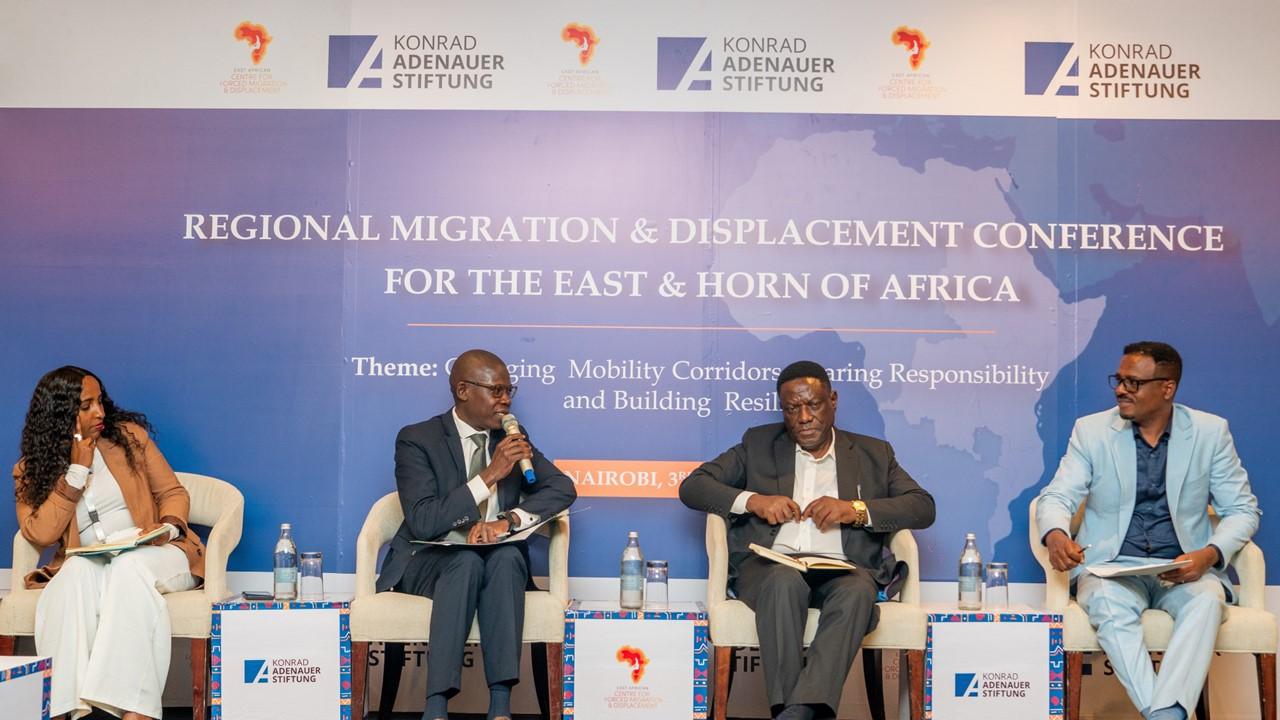
The first panel, moderated by Enguday Meskele, Country Officer, Independent Diplomat Ethiopia, included Kizitos Okisai, Senior Legal Officer at UNHCR Regional Bureau for East and Southern Africa, Daba Lamessa, Director of Protection at RRS Ethiopia and Professor Bonaventure Rutinwa, Deputy Vice Chancellor for Academic Affairs at the University of Dar es Salaam. The panellists underscored the importance of solidarity as a strategic response, highlighted the region’s resource limitations despite hosting the largest refugee populations, and examined legal frameworks such as IGAD-Djibouti Declaration, Kampala Declaration, and the East African Refugee Policy Draft. They differentiated between fiscal and physical burden sharing, commended Ethiopia’s inclusive refugee policies, and cautioned that declining global support threatens the sustainability of regional efforts.
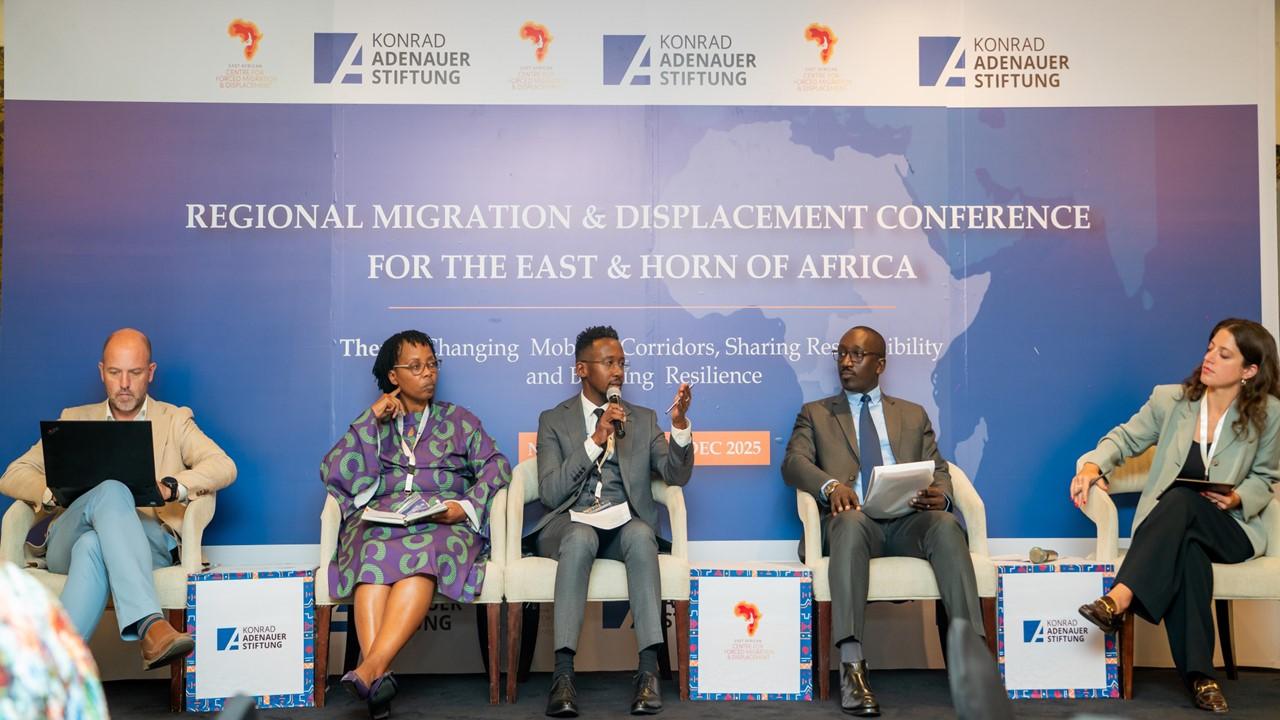
Panel two consisted of Nikki Stouman, Program Coordinator, Knowledge & Policy, Global Centre for Climate Mobility as the moderator, Andrew Harper, Special Advisor on Climate Action to the UNHCR, Dr. Hannes Einsporn, Senior Expert Migration, Robert Bosch Stiftung, Dr. Joyce Takaindisa, Migration and Climate Security Specialist and Regional Lead for East Africa at the Alliance for Bioversity International, James Dalamiah, Migration Officer, Canadian High Commission, Nairobi and Innocent Ndahiriwe, National Coordinator of Migration and Displacement at IGAD. They Uganda examined how climate change is driving human mobility in the East and Horn of Africa. The discussion reframed movement as a resilience strategy rather than a failure to adapt, highlighting rising internal and cross-border displacement, family separation, rural-urban migration, and overlapping climate, conflict, and economic pressures. Speakers noted risks such as gender-based violence, irregular migration, and legal protection gaps, stressing the need for inclusive approaches.
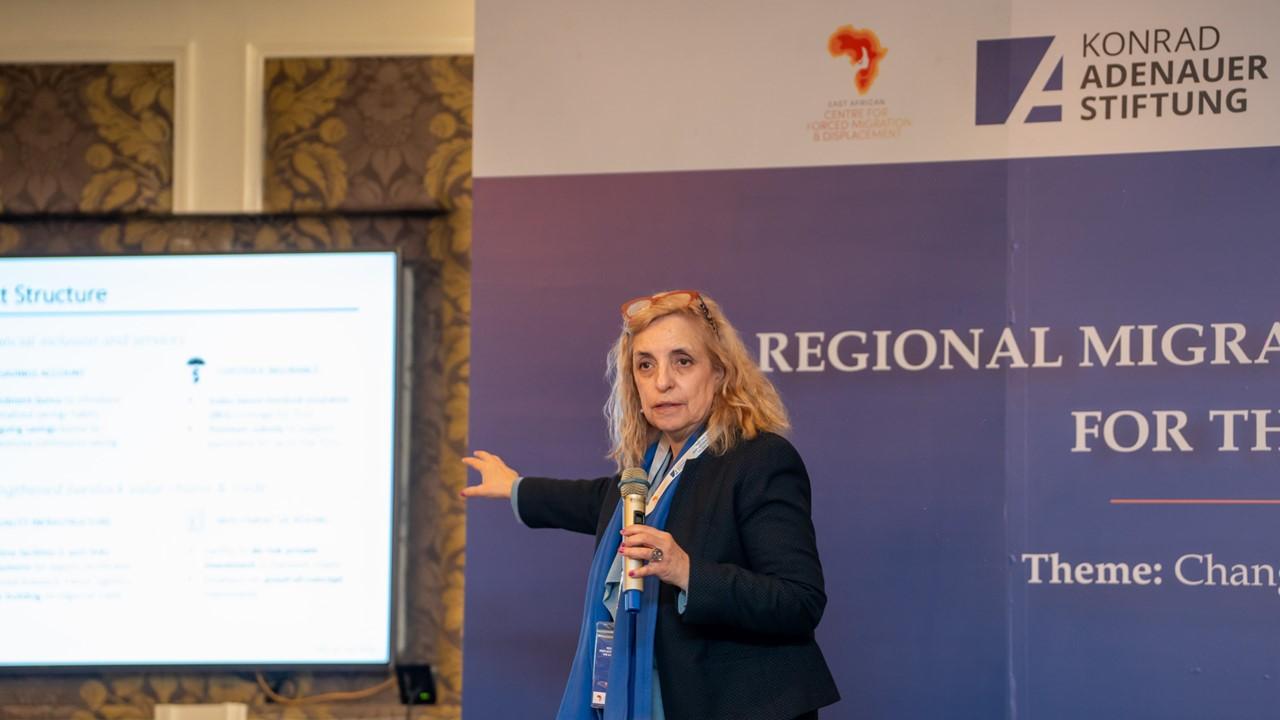
Dr. Sonia Plaza, Senior Economist at the World Bank, highlighted the role of financial inclusion, labour mobility, and remittances in supporting refugees, pastoralists, and host communities in the East and Horn of Africa. She showcased the De-risking, Inclusion, and Value Enhancement of Pastoral Economies in the Horn of Africa (DRIVE) project, which enhances pastoralist resilience through livestock insurance, savings, and value-chain investments, and discussed Uganda pilots addressing financial inclusion for refugees and hosts. Dr. Plaza emphasized that micro-insurance, gender-inclusive design, and improved regulatory frameworks can reduce vulnerability and help communities transition from aid dependency to sustainable livelihoods.
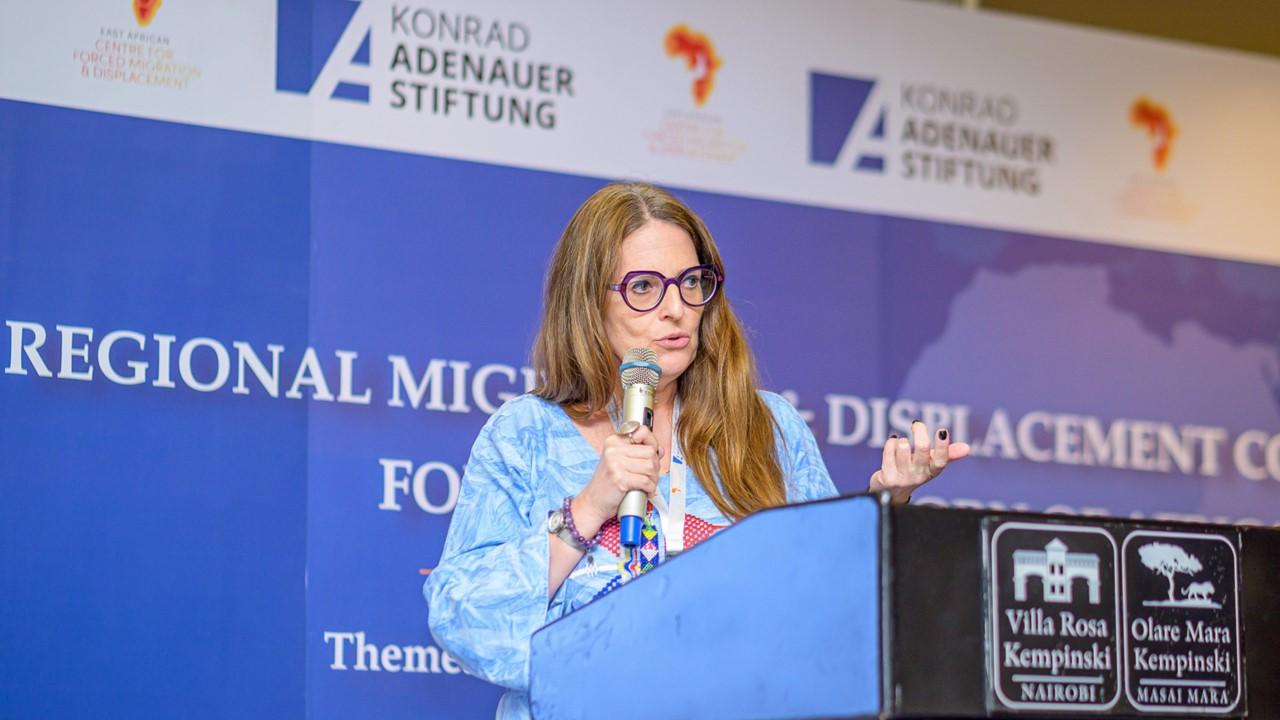
Grazia Paoleri, Senior Technical Advisor for the EU’s support to the Refugee Response in Uganda and a consultant with WEglobal Uganda, underscored that the crises in Sudan and South Sudan have led to enormous displacement, placing significant pressure on the East and Horn of Africa regions amid persistent funding shortages. She pointed out that these challenges have exacerbated social tensions, insecurity, environmental degradation, and increased risk of smuggling, while noting that government responses continue to be largely reactive. Framing migration as a long-term structural reality, she called for treating migration and displacement as a development issue, enhancing regional cooperation, leveraging innovative financing, and integrating humanitarian and peace efforts for sustainable solutions.
The last panel consisting of Barbara Salcher, Dialogue Coordinator, ICMPD/ Khartoum Process, Sandro Donati, Crime Prevention & Criminal Justice Officer, UNODC, Hervé Jamet, Director, Regional Operational Centre Khartoum, Rogers Mutende, Dep. Director, National Coordination Mechanism on Migration, Kenya and Johanna Bögel, Regional Coordinator, GIZ Kenya discussed rising migrant smuggling and trafficking along Eastern and Northern routes, driven by organized criminal networks and vulnerable populations. They highlighted gaps in law enforcement and high re-trafficking rates due to weak reintegration and financial pressures. The panel recommended stronger legal frameworks, enhanced cross-border cooperation, and comprehensive reintegration including financial support to prevent exploitation and break trafficking cycles.
On day two, Dr. Margaret Monyani, Executive Director, OLAM Africa launched the OLAM policy brief titled “Who Moves, who stays and who decides?” examining the profound reconfiguration of human mobility in the East and Horn of Africa.
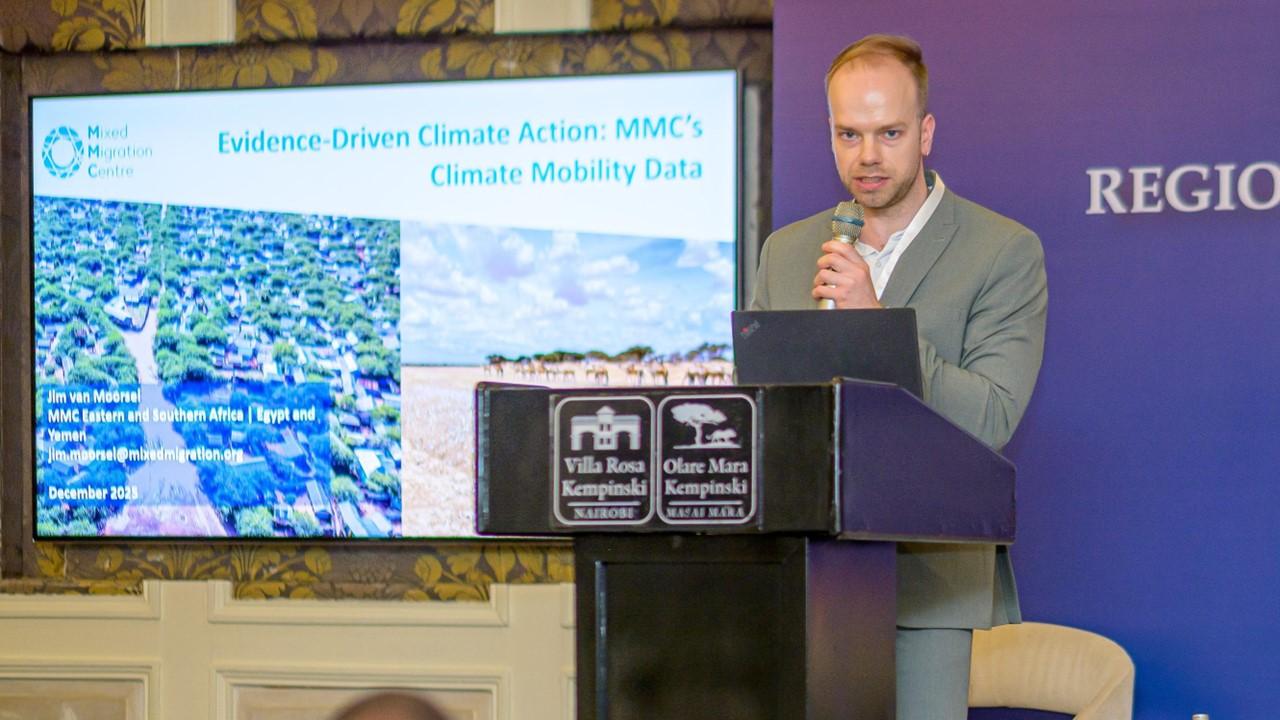
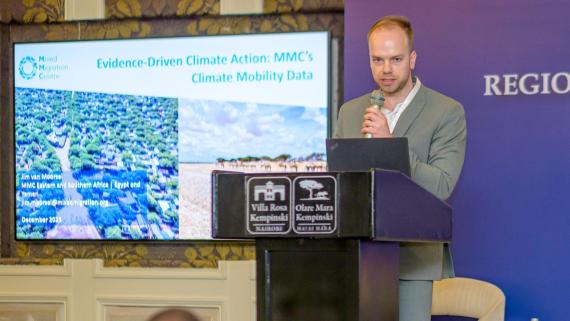
Jim Van Moorsel from the Mixed Migration Centre (MMC), delivered a data-driven presentation on climate mobility. His presentation emphasized the critical and operational shift required to manage climate-induced displacement: moving away from reactive humanitarian aid to proactive, evidence-based anticipatory action.
This was followed by Grazia Paoleri’s presentation centred on three interconnected themes: innovative financing mechanisms, strategic partnerships and financial inclusion for displaced populations. She examined critical pathways for transforming how we address displacement challenges in our region.
In her closing remarks, Susan Natumanya, Project Manager, KAS RP SIPODI EA, emphasized the importance of collaborative and innovative thinking and the possibility of turning the challenges of migration into opportunities for resilience and shared prosperity across the East and Horn of Africa. She also commended the panellists for their engaging discussions and appreciated the participants for dedicating their time to attend, learn and share insights.
About this series
The Konrad-Adenauer-Stiftung, its educational institutions, centres and foreign offices, offer several thousand events on various subjects each year. We provide up to date and exclusive reports on selected conferences, events and symposia at www.kas.de. In addition to a summary of the contents, you can also find additional material such as pictures, speeches, videos or audio clips.