









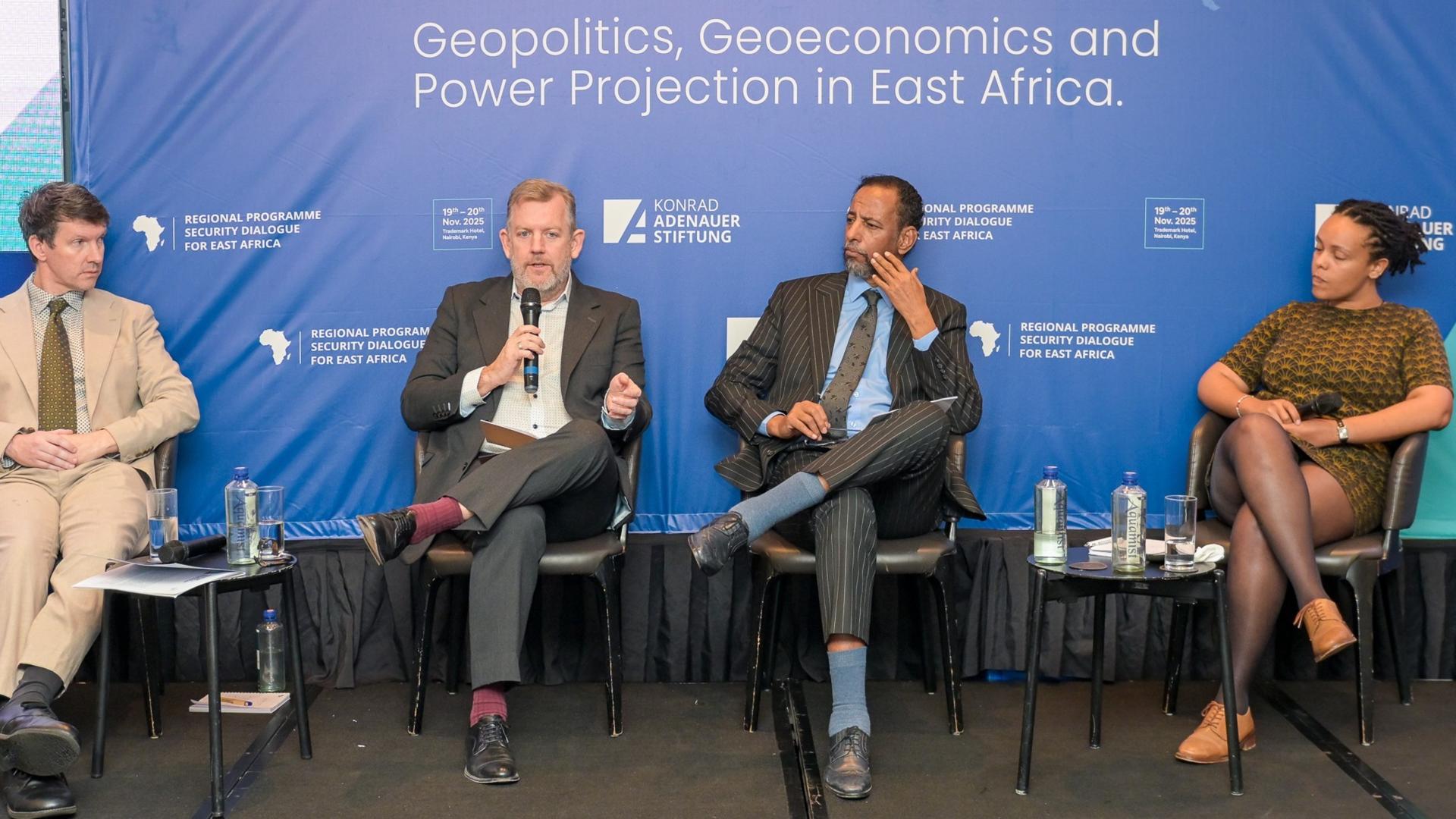
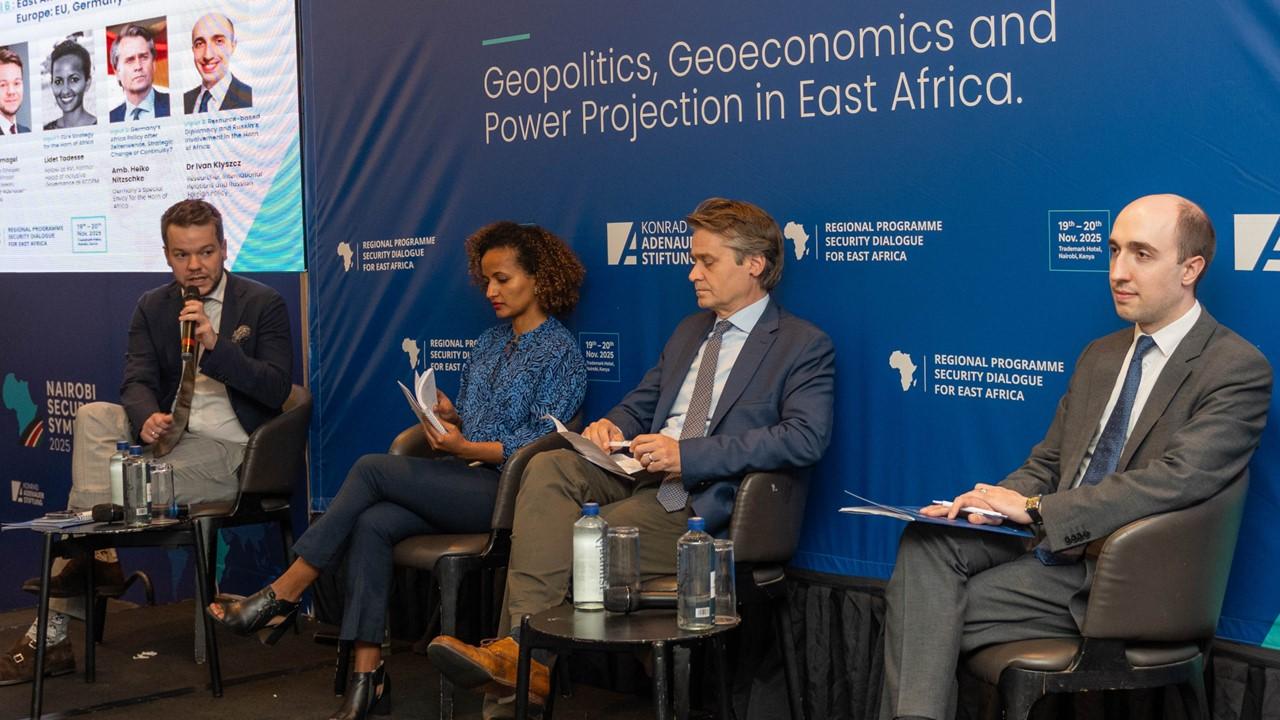
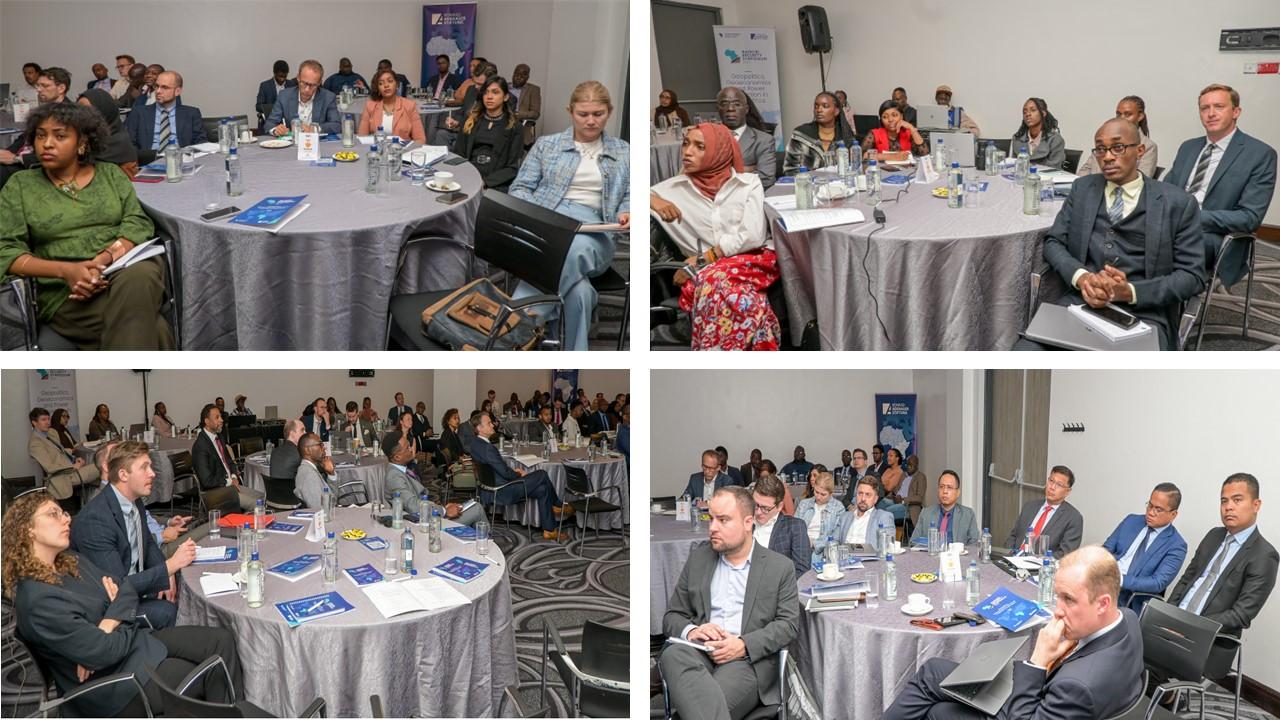
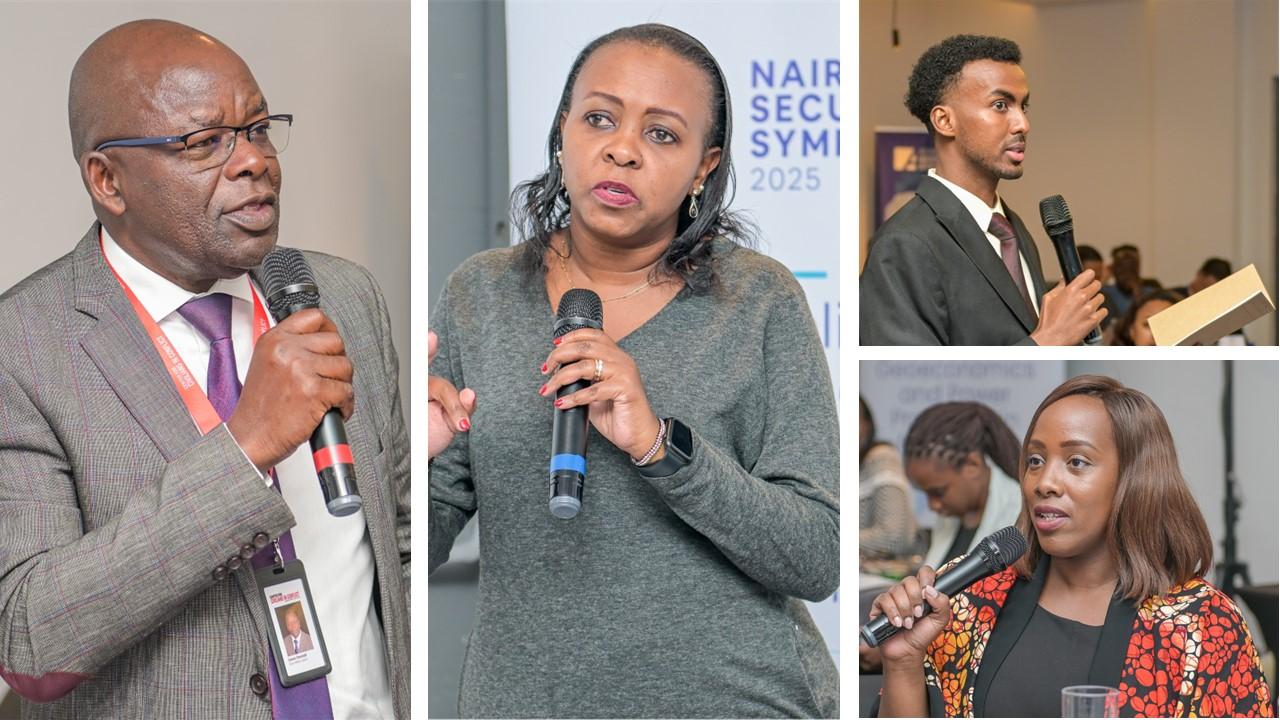

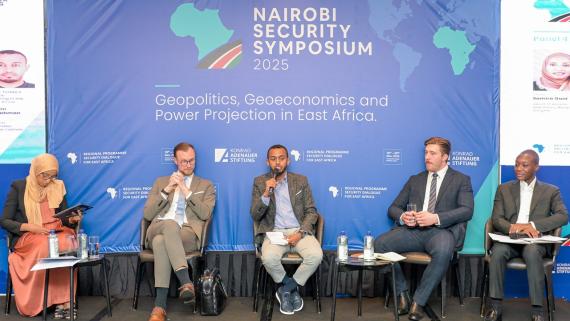
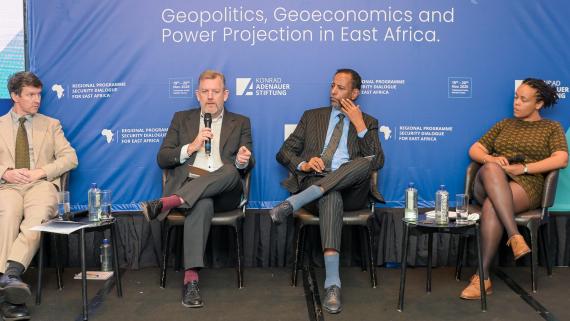
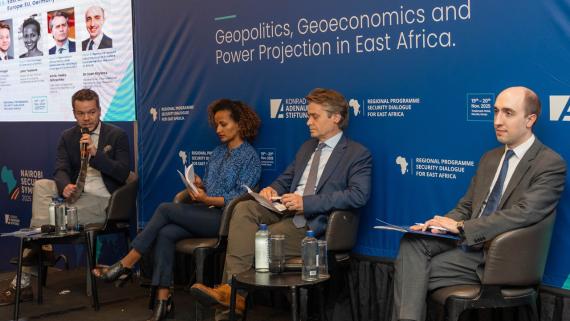
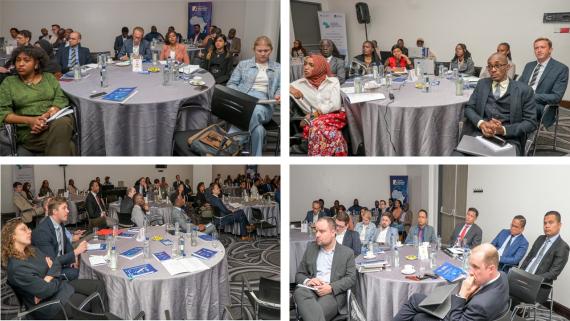
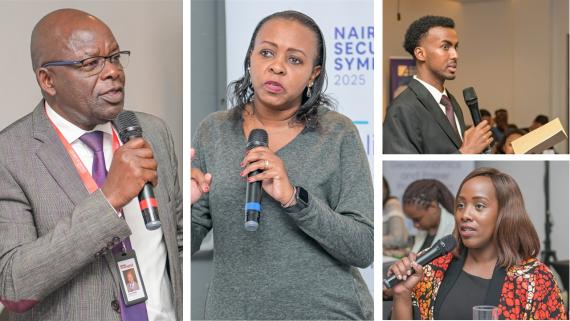
The Symposium themed “Geopolitics, Geoeconomics and Power Projection in East Africa” brought together security experts, diplomats, researchers and practitioners from across the globe to high-level, closed-door discussions focusing on the geopolitical and geoeconomic attributes of the Horn of Africa as well as intraregional dynamics, in view of changing global political and security outlook.
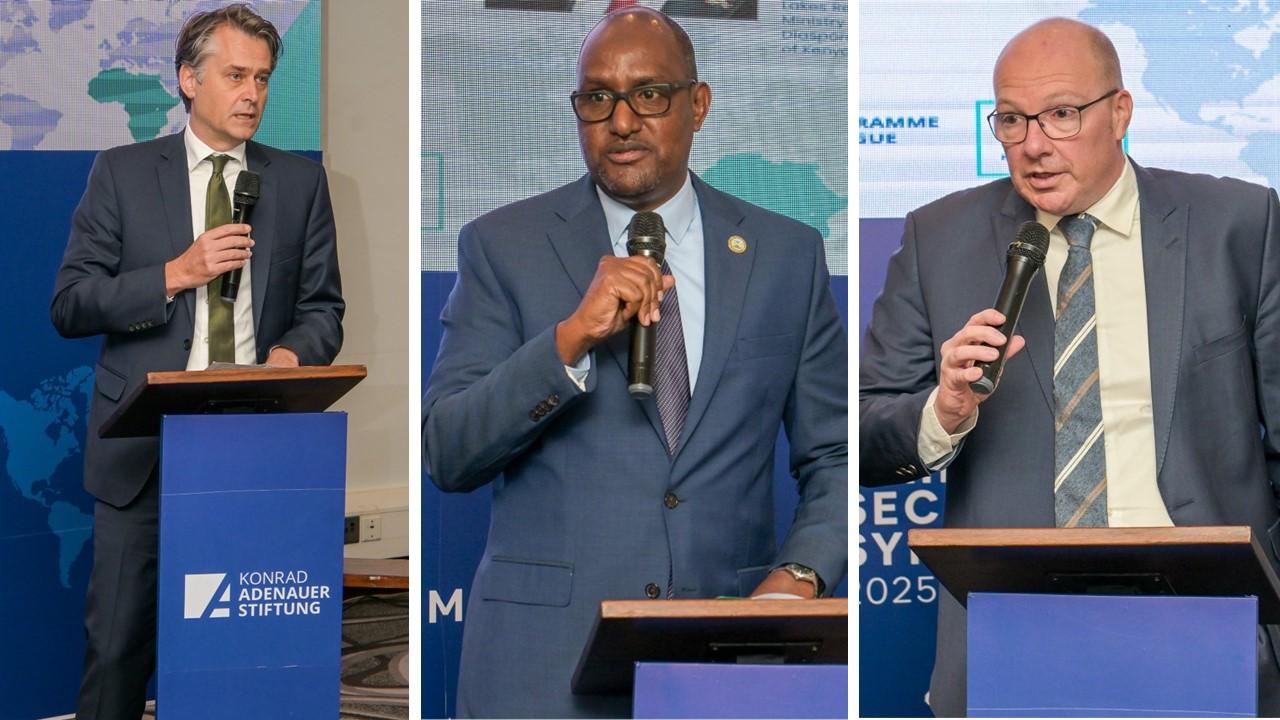
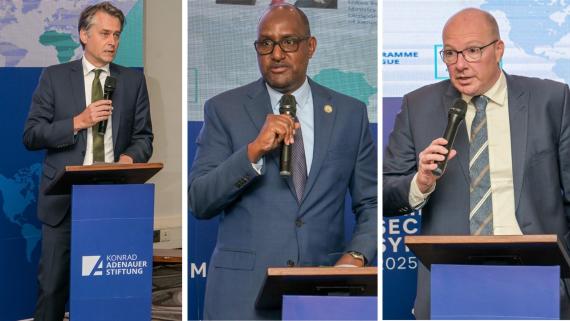
The event, attended by security experts from Africa, Asia and Europe, including five German parliamentary policy advisors, was opened by Nils Wörmer, Director, KAS RP SIPODI EA, who highlighted the Horn of Africa's strategic importance and regional cooperation needs. Keynote speakers included Heiko Nitzschke, Special Representative of the German Federal Foreign Office for the Horn of Africa, who emphasized the need for multilateralism, and Abdishakur Hussein, who represented Dr. A. Korir Sing'Oei, Permanent Secretary, State Department for Foreign Affairs. Abdishakur discussed the evolving geopolitical and economic dynamics— from the traditional Hard Security dynamic through Blue Economy and maritime disputes, including landlocked countries' increasing demand for unrestricted access to seaports, alongside emerging strategic rivalries in infrastructure development.
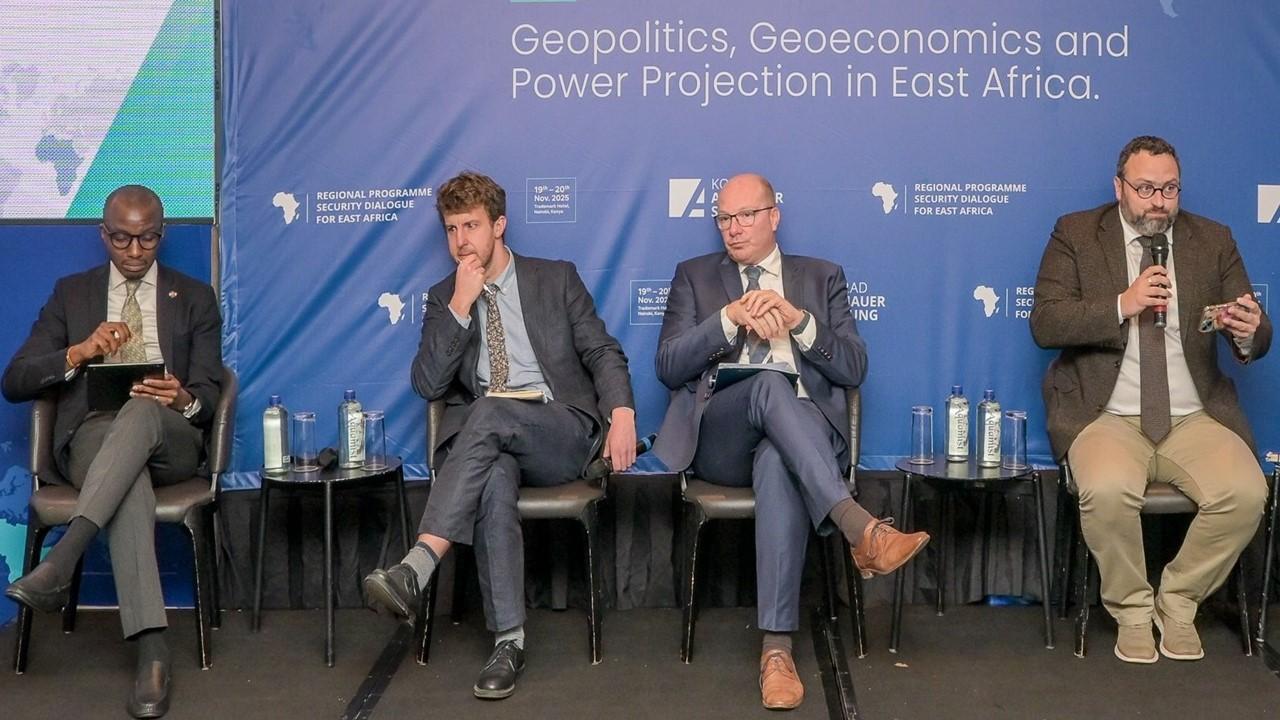
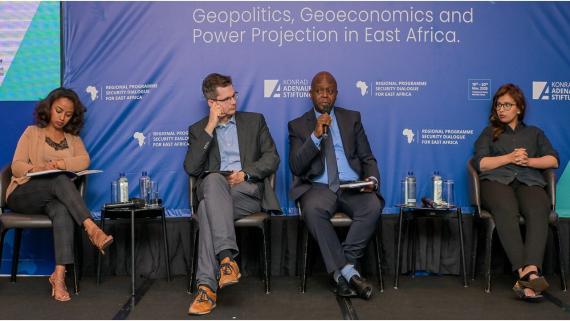
The first panel consisting of Dr Christian E. Rieck, Associate Professor, University of Potsdam, Magnus Taylor, Deputy Project Director, Horn of Africa, International Crisis Group and Raymond Mujuni, Deputy Director, African Institute for Investigative Journalism examined how geographic factors impact global power dynamics, political alliances, and territorial interests, as well as how economic factors and policies shape international relations and sway global markets.
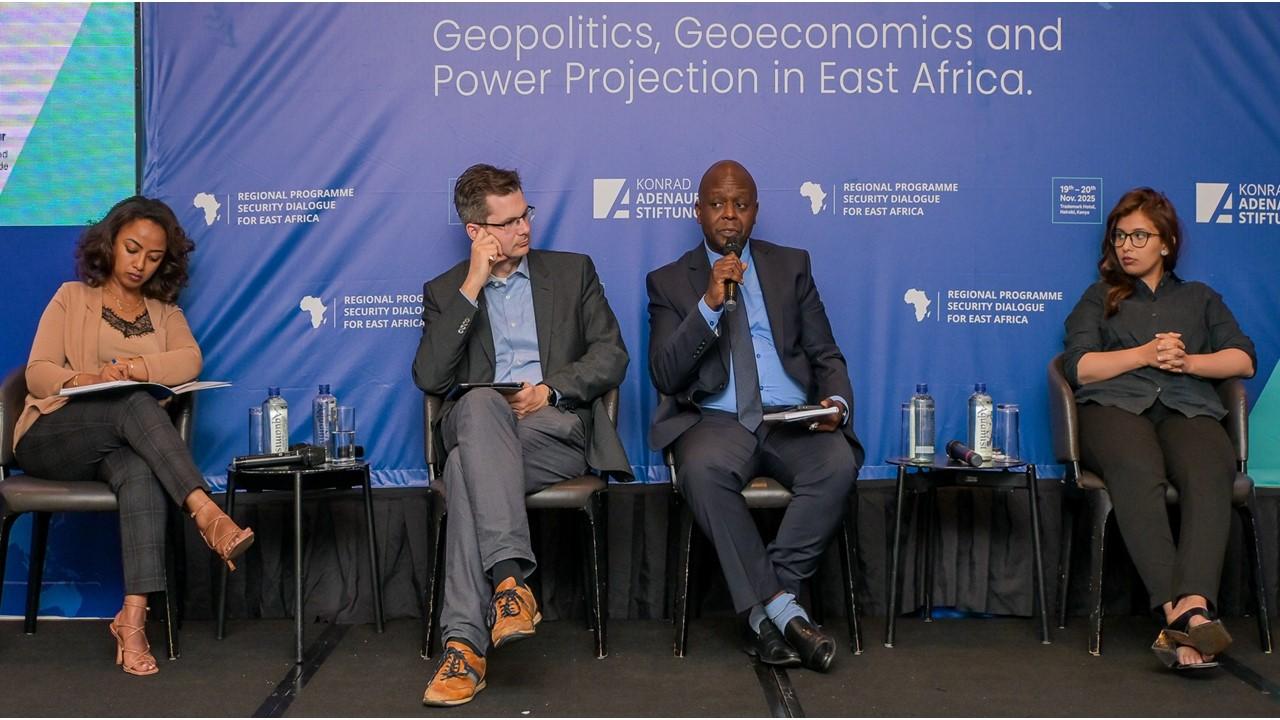
This was followed by the second panel that discussed regional security dynamics and external responses. This panel composed of Dr Gerrit Kurtz, Associate, German Institute for International and Security Affairs (SWP), Dr Hassan Khannenje, Director, HORN Institute for Strategic Studies and Dr Zohra Mohammed Omar, Associate, Institute for Political and Strategic Studies at CERD. Dr. Khannenje highlighted that in a progressively interconnected world, no one is genuinely secure if certain regions stay unstable; therefore, we all share a responsibility for global security, no matter how remote those areas may appear. The notion that African problems should be solely addressed with African solutions must be reconsidered and the panellists emphasized that Africa lacks the financial capacity to tackle these issues independently and, more importantly, we must recognize the importance of mutual support and collaboration.
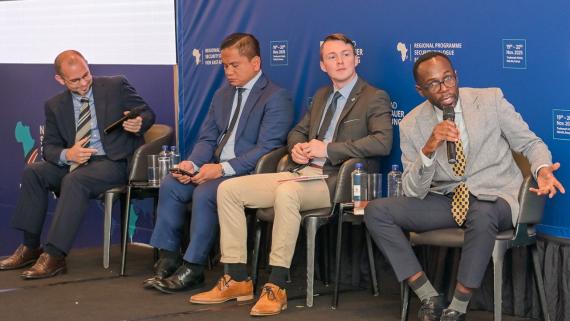
The third panel focused on the East African Coastline as the far-Western Border of the Indo-Pacific Theatre. This panel was comprised of Commodore Jay Tarriela Ph.D., Spokesperson, Philippine Coast Guard, Jan-Ole Voß, Deputy Head Kenya Office, Konrad Adenauer Stiftung and Dr Elijah N. Munyi, Associate Fellow, Mashariki Research and Policy Centre. They examined how East Africa is becoming connected to Indo-Pacific power rivalries, especially the U.S. and China. The discussion highlighted China’s expanding strategic and economic footprint, the U.S. response to this competition, and the resulting pressures on East African states. Overall, the panel emphasized the region’s rising strategic importance, and the difficult choices countries face amid intensifying external competition.
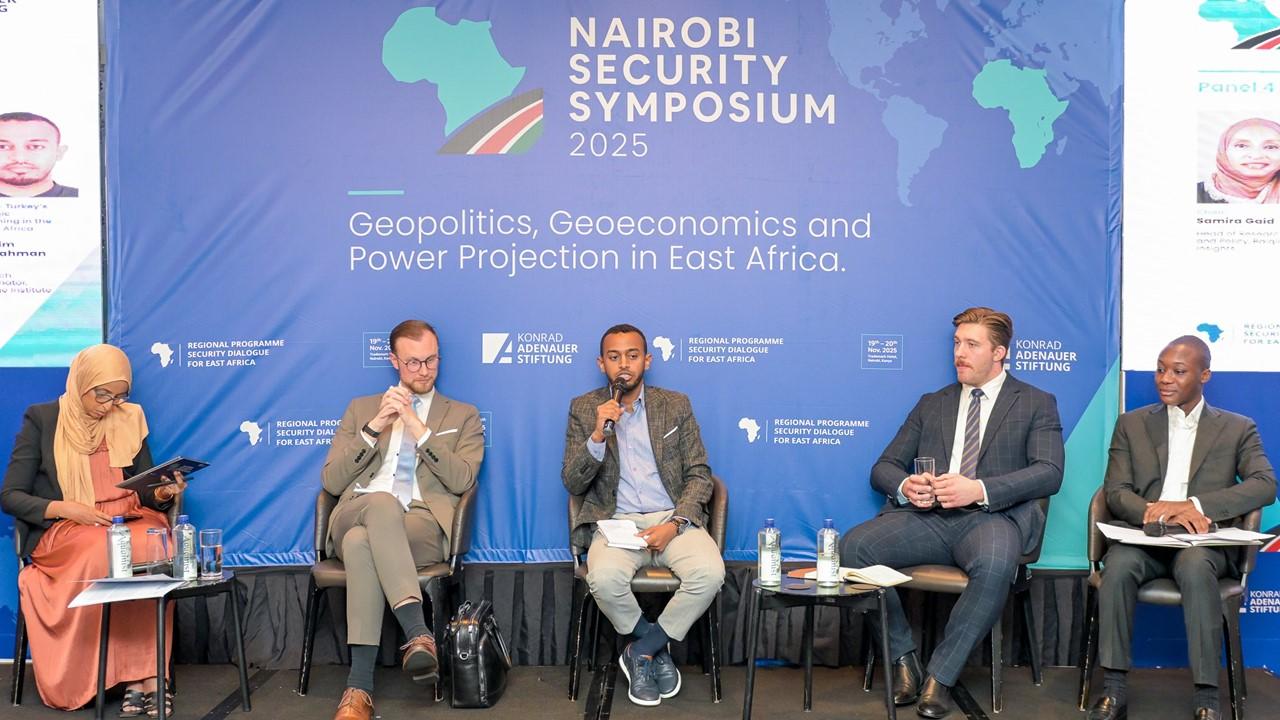
Panel four explored how key Middle Eastern actors; Saudi Arabia, the UAE, Qatar, and Turkey are expanding their political, economic, and security roles in the Horn of Africa. It highlighted Saudi economic and religious influence, the UAE’s hybrid commercial–military approach, Qatar’s mediation efforts, and Turkey’s deepening security engagement. The discussion underscored intensifying Gulf competition and its impact on regional governance and stability. This panel consisted of Philipp Dienstbier, Director, Gulf States Programme, Konrad Adenauer Stiftung, Laurence Jost, War Studies Institute, University of Potsdam, Michael W. Wilson, Senior Researcher, Gulf Research Center Foundation and Ibrahim Abdirahman Rage, Research Coordinator, Heritage Institute for Policy Studies.
The fifth panel that included Wolf Christian Paes, Senior Fellow for Armed Conflicts, IISS, Ahmed Yusuf Hersi, Policy Advisor Expert in Preventive diplomacy, maritime governance and regional security and Dr Colin D. Robinson, Lecturer of War Studies, Cranefield University examined rising security threats in the Red Sea, including Houthi attacks and criminal maritime networks. The discussion assessed the impact on global shipping, the inadequacy of international responses, and how piracy, terrorism, and smuggling intersect with regional instability. It also highlighted the need for stronger capacity-building and coordination among coastal states. Wolf Christian Paes remarked that politically, the region faces a critical question: “where do we go from here”? Despite having the world's strongest military, the US has been unable to defeat the Houthis. Africa, including countries like Kenya and Ethiopia, do not have the capacity to challenge the Houthis either, highlighting the urgent need for a comprehensive solution.
The last panel that composed of Lidet Tadesse, Head, Inclusive governance and accountability, ECDPM, Heiko Nitzschke, Germany’s Special Envoy for the Horn of Africa and Dr Ivan Klyszcz, Researcher, International Relations and Russian foreign policy explored how European actors the EU, Germany, and Russia are shaping their engagement with the Horn of Africa amid shifting global politics. The panel highlighted the EU’s efforts to balance governance, stability, and geopolitical interests; Germany’s post-Zeitenwende adjustments and its aim to support stability without deepening great-power rivalry; and Russia’s resource-driven diplomacy and how its international isolation may influence future partnerships. In his remarks, Ivan U. Kłyszcz emphasised the connection between Russian mining interests in the Horn of Africa and the Kremlin's foreign policy. In seeking to acquire new mining partnerships, Moscow seeks to avoid international isolation and argue for its continued relevance as an economic actor.
The symposium concluded with closing remarks from Nils Wörmer, Director of the KAS RP SIPODI EA, who expressed his gratitude to the KAS staff, commended the panellists for their engaging discussions, and appreciated the participants for dedicating their time to attend, learn, and share insights.
The Symposium themed “Geopolitics, Geoeconomics and Power Projection in East Africa” brought together security experts, diplomats, researchers and practitioners from across the globe to high-level, closed-door discussions focusing on the geopolitical and geoeconomic attributes of the Horn of Africa as well as intraregional dynamics, in view of changing global political and security outlook.
The event, attended by security experts from Africa, Asia and Europe, including five German parliamentary policy advisors, was opened by Nils Wörmer, Director, KAS RP SIPODI EA, who highlighted the Horn of Africa's strategic importance and regional cooperation needs. Keynote speakers included Heiko Nitzschke, Germany’s Special Envoy for the Horn of Africa, who emphasized the need for multilateralism, and Abdishakur Hussein, who represented Dr. A. Korir Sing'Oei, Permanent Secretary, State Department for Foreign Affairs. Abdishakur discussed the evolving geopolitical and economic dynamics— from the traditional Hard Security dynamic through Blue Economy and maritime disputes, including landlocked countries' increasing demand for unrestricted access to seaports, alongside emerging strategic rivalries in infrastructure development.
The first panel consisting of Dr Christian E. Rieck, Associate Professor, University of Potsdam, Magnus Taylor, Deputy Project Director, Horn of Africa, International Crisis Group and Raymond Mujuni, Deputy Director, African Institute for Investigative Journalism examined how geographic factors impact global power dynamics, political alliances, and territorial interests, as well as how economic factors and policies shape international relations and sway global markets.
This was followed by the second panel that discussed regional security dynamics and external responses. This panel composed of Dr Gerrit Kurtz, Associate, German Institute for International and Security Affairs (SWP), Dr Hassan Khannenje, Director, HORN Institute for Strategic Studies and Dr Zohra Mohammed Omar, Associate, Institute for Political and Strategic Studies at CERD. Dr. Khannenje highlighted that in a progressively interconnected world, no one is genuinely secure if certain regions stay unstable; therefore, we all share a responsibility for global security, no matter how remote those areas may appear. The notion that African problems should be solely addressed with African solutions must be reconsidered and the panellists emphasized that Africa lacks the financial capacity to tackle these issues independently and, more importantly, we must recognize the importance of mutual support and collaboration.
The third panel focused on the East African Coastline as the far-Western Border of the Indo-Pacific Theatre. This panel was comprised of Commodore Jay Tarriela Ph.D., Spokesperson, Philippine Coast Guard, Jan-Ole Voß, Deputy Head Kenya Office, Konrad Adenauer Stiftung and Dr Elijah N. Munyi, Associate Fellow, Mashariki Research and Policy Centre. They examined how East Africa is becoming connected to Indo-Pacific power rivalries, especially the U.S. and China. The discussion highlighted China’s expanding strategic and economic footprint, the U.S. response to this competition, and the resulting pressures on East African states. Overall, the panel emphasized the region’s rising strategic importance, and the difficult choices countries face amid intensifying external competition.
Panel four explored how key Middle Eastern actors; Saudi Arabia, the UAE, Qatar, and Turkey are expanding their political, economic, and security roles in the Horn of Africa. It highlighted Saudi economic and religious influence, the UAE’s hybrid commercial–military approach, Qatar’s mediation efforts, and Turkey’s deepening security engagement. The discussion underscored intensifying Gulf competition and its impact on regional governance and stability. This panel consisted of Philipp Dienstbier, Director, Gulf States Programme, Konrad Adenauer Stiftung, Laurence Jost, War Studies Institute, University of Potsdam, Michael W. Wilson, Senior Researcher, Gulf Research Center Foundation and Ibrahim Abdirahman Rage, Research Coordinator, Heritage Institute for Policy Studies.
The fifth panel that included Wolf Christian Paes, Senior Fellow for Armed Conflicts, IISS, Ahmed Yusuf Hersi, Policy Advisor Expert in Preventive diplomacy, maritime governance and regional security and Dr Colin D. Robinson, Lecturer of War Studies, Cranefield University examined rising security threats in the Red Sea, including Houthi attacks and criminal maritime networks. The discussion assessed the impact on global shipping, the inadequacy of international responses, and how piracy, terrorism, and smuggling intersect with regional instability. It also highlighted the need for stronger capacity-building and coordination among coastal states. Wolf Christian Paes remarked that politically, the region faces a critical question: “where do we go from here”? Despite having the world's strongest military, the US has been unable to defeat the Houthis. Africa, including countries like Kenya and Ethiopia, do not have the capacity to challenge the Houthis either, highlighting the urgent need for a comprehensive solution.
The last panel that composed of Lidet Tadesse, Head, Inclusive governance and accountability, ECDPM, Heiko Nitzschke, Germany’s Special Envoy for the Horn of Africa and Dr Ivan Klyszcz, Researcher, International Relations and Russian foreign policy explored how European actors the EU, Germany, and Russia are shaping their engagement with the Horn of Africa amid shifting global politics. The panel highlighted the EU’s efforts to balance governance, stability, and geopolitical interests; Germany’s post-Zeitenwende adjustments and its aim to support stability without deepening great-power rivalry; and Russia’s resource-driven diplomacy and how its international isolation may influence future partnerships. In his remarks, Ivan U. Kłyszcz emphasised the connection between Russian mining interests in the Horn of Africa and the Kremlin's foreign policy. In seeking to acquire new mining partnerships, Moscow seeks to avoid international isolation and argue for its continued relevance as an economic actor.
The symposium concluded with closing remarks from Nils Wörmer, Director of the KAS RP SIPODI EA, who expressed his gratitude to the KAS staff, commended the panellists for their engaging discussions, and appreciated the participants for dedicating their time to attend, learn, and share insights.
About this series
The Konrad-Adenauer-Stiftung, its educational institutions, centres and foreign offices, offer several thousand events on various subjects each year. We provide up to date and exclusive reports on selected conferences, events and symposia at www.kas.de. In addition to a summary of the contents, you can also find additional material such as pictures, speeches, videos or audio clips.