






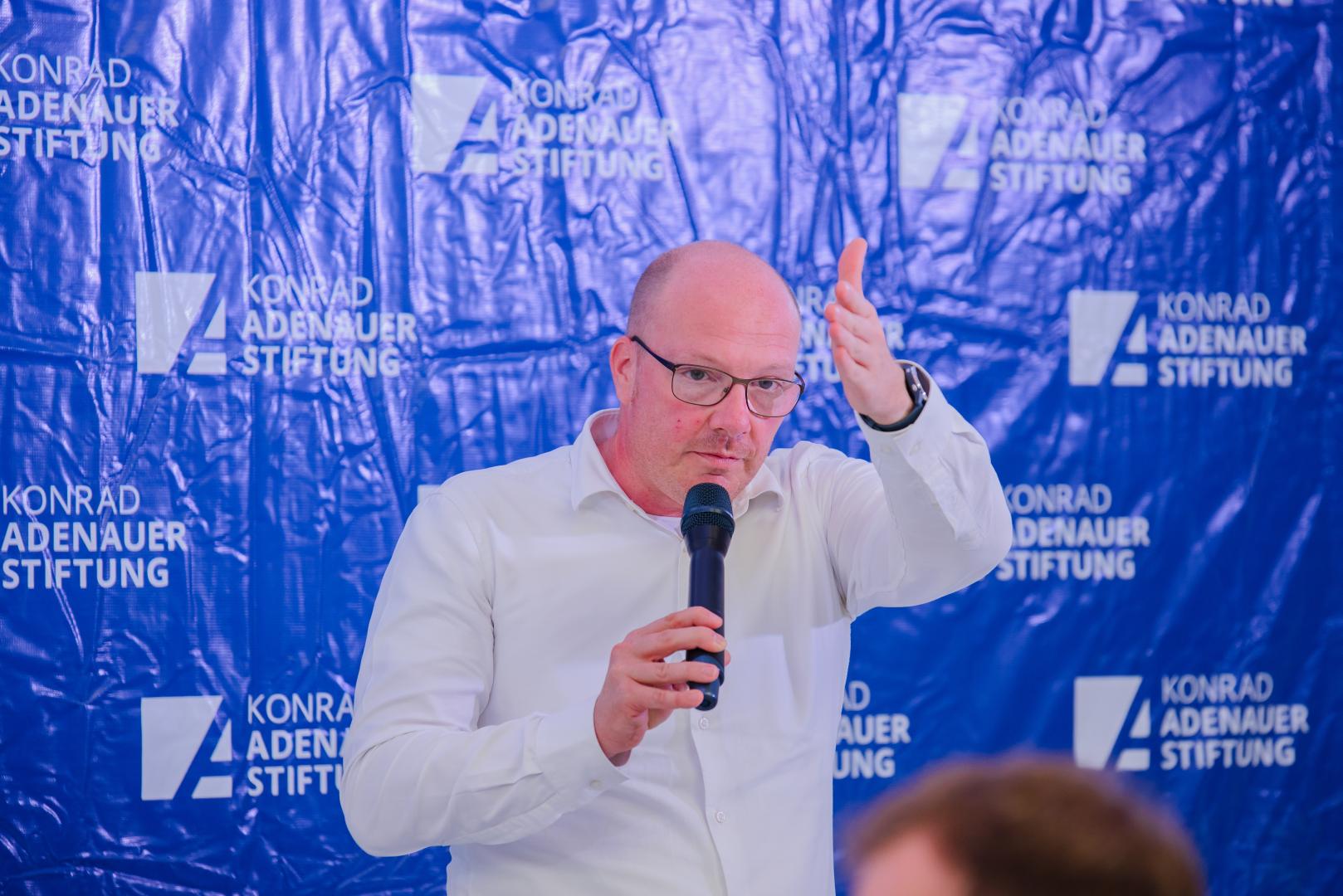
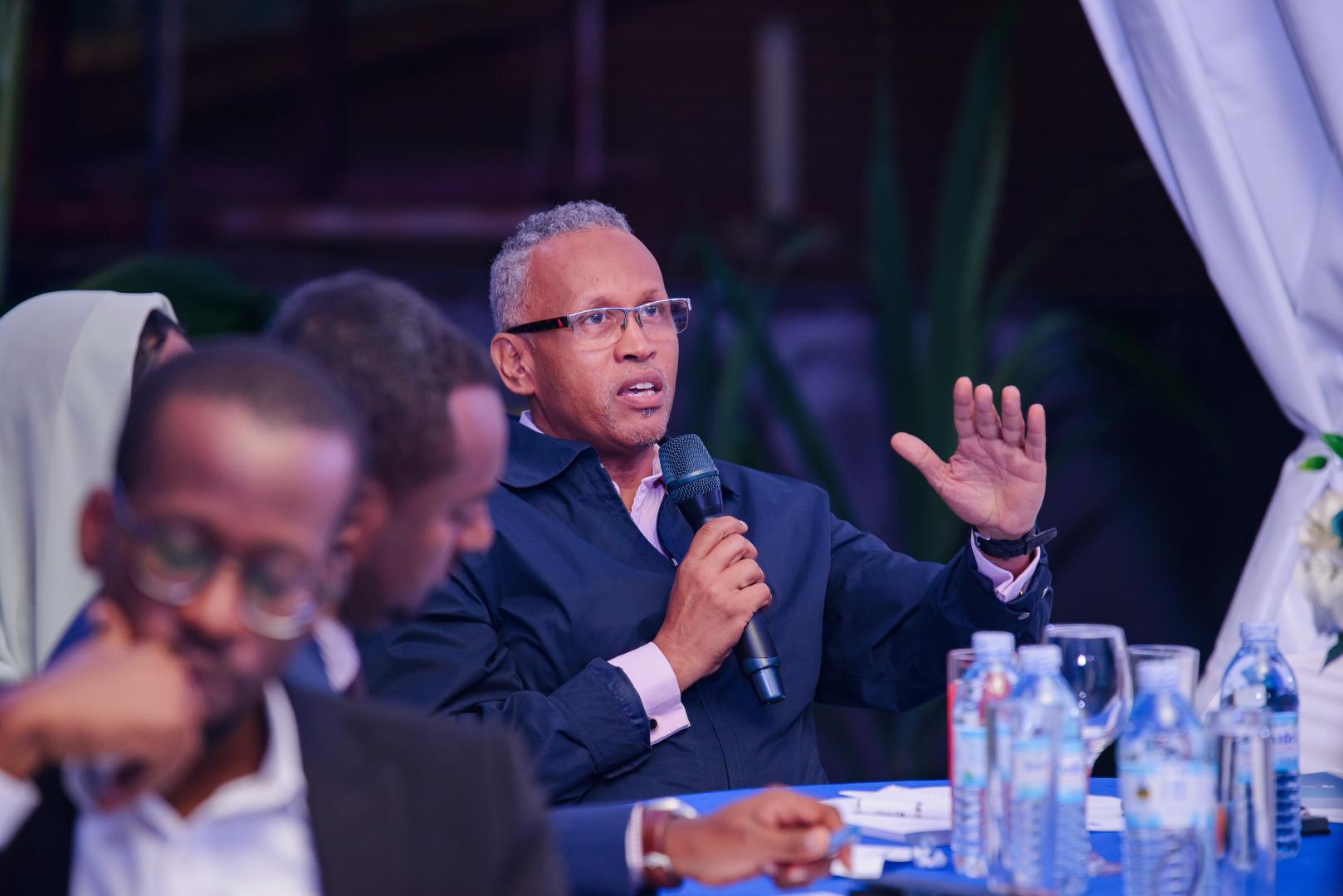
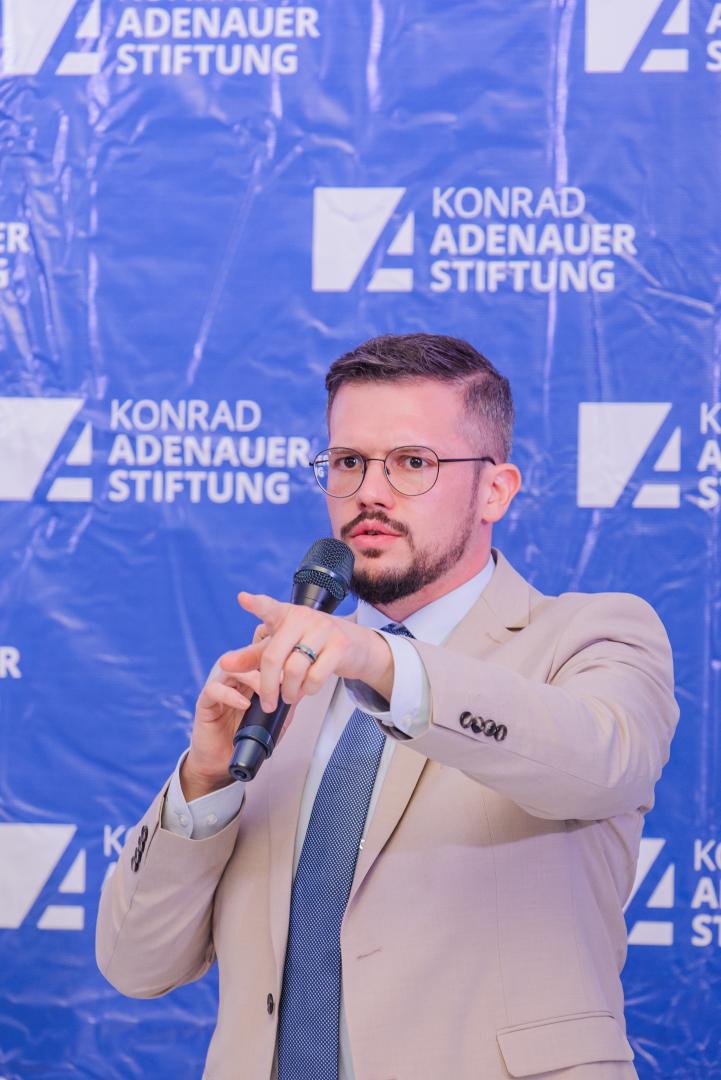
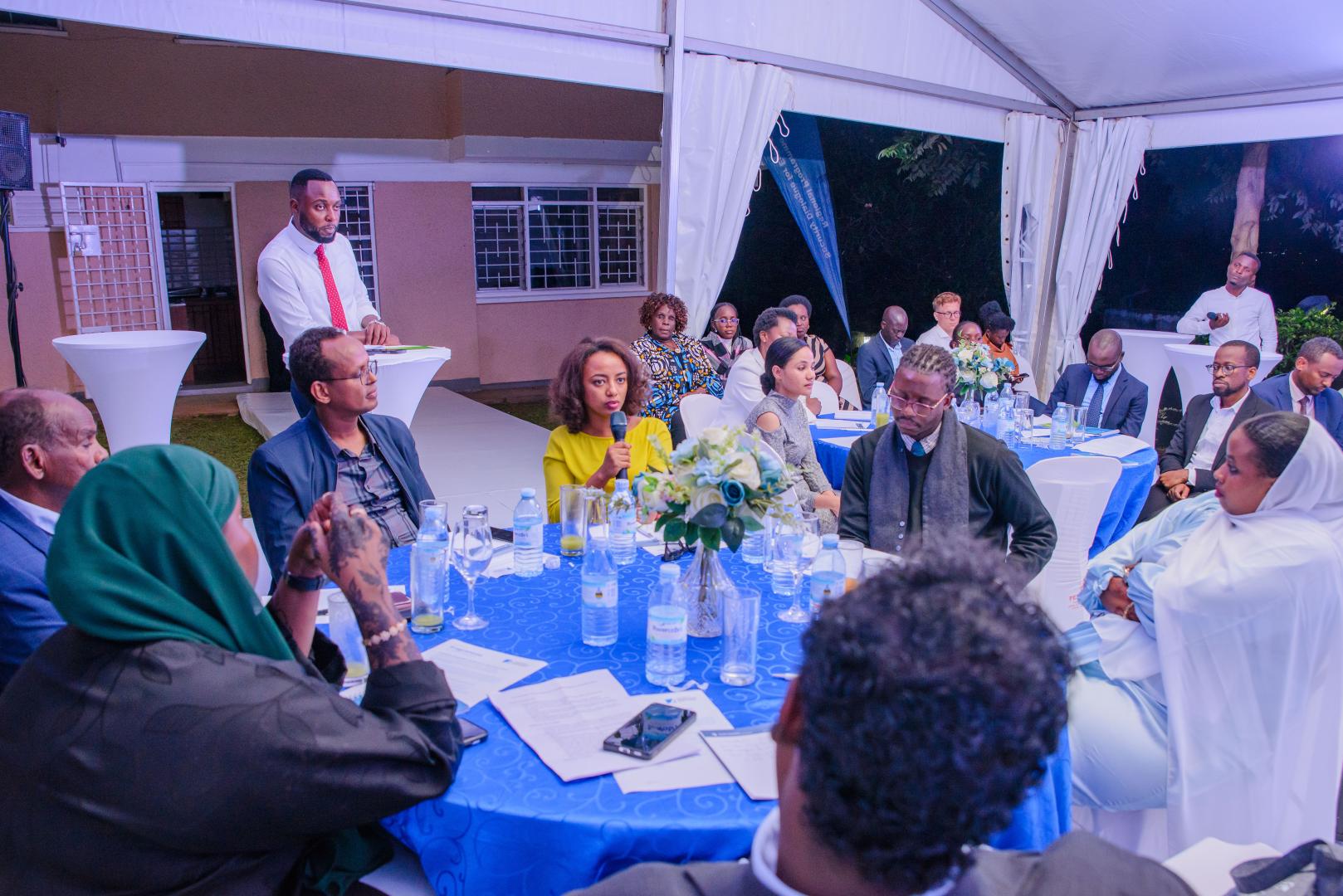
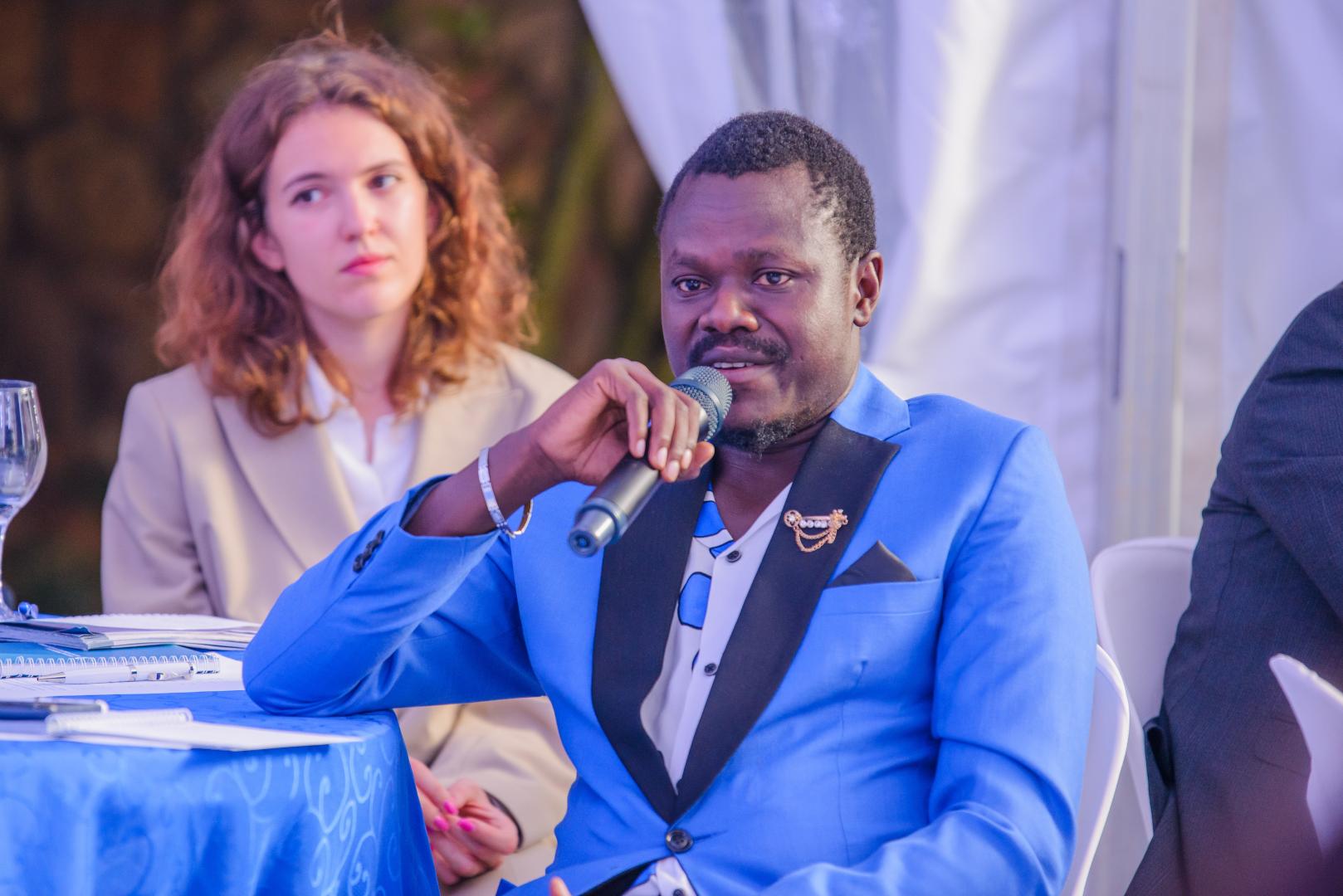
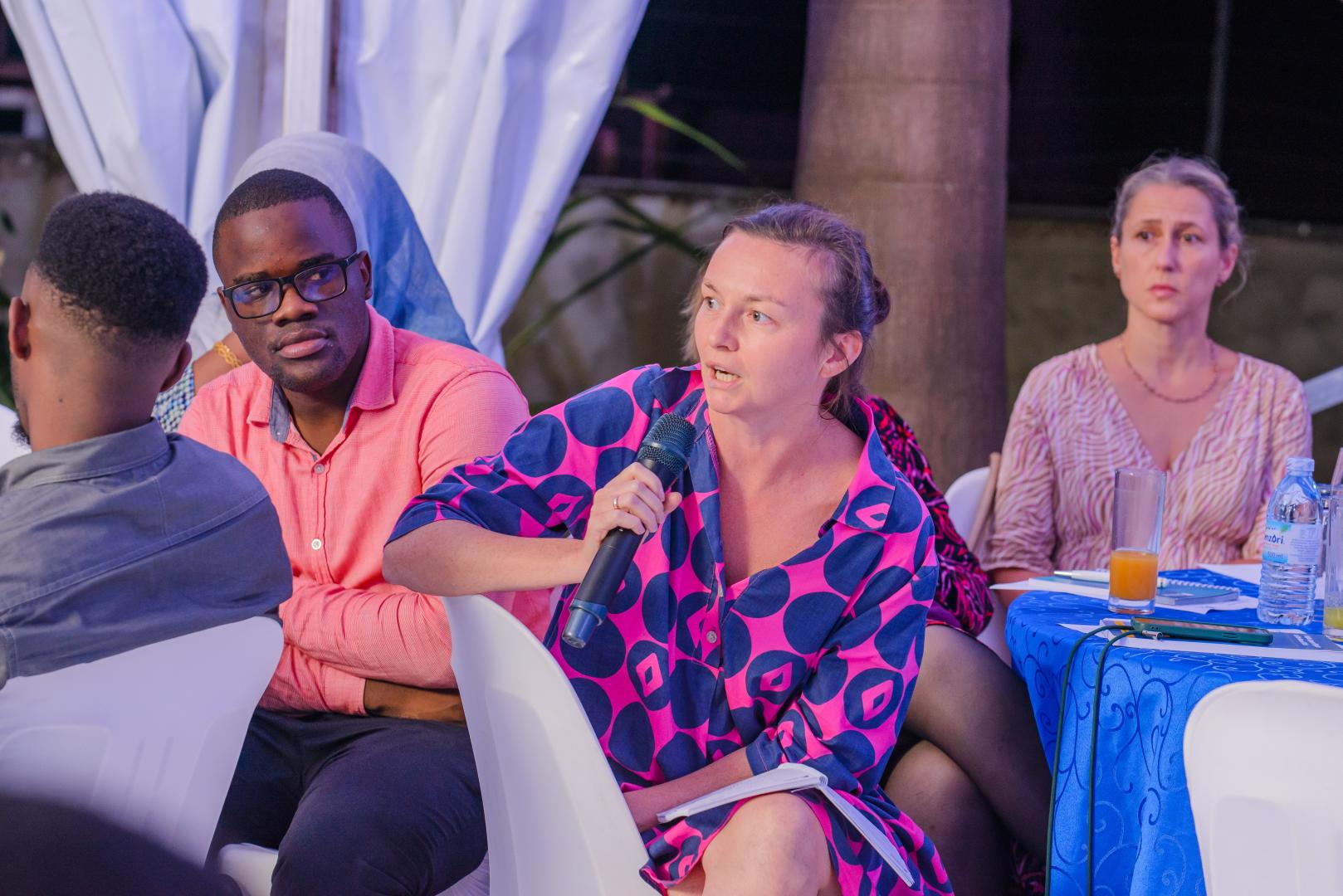
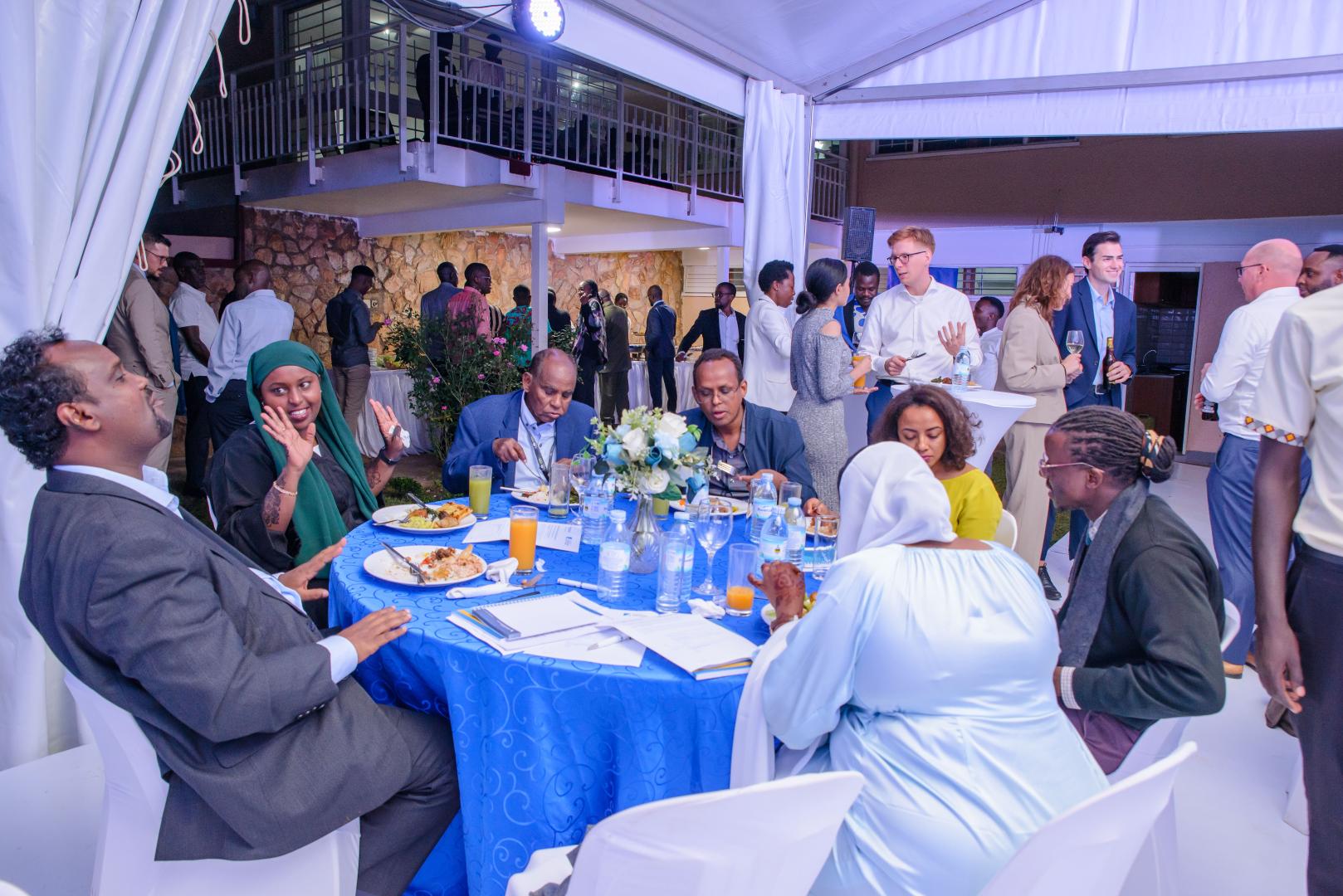
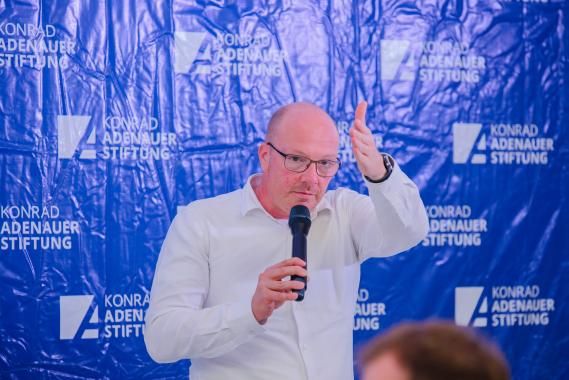
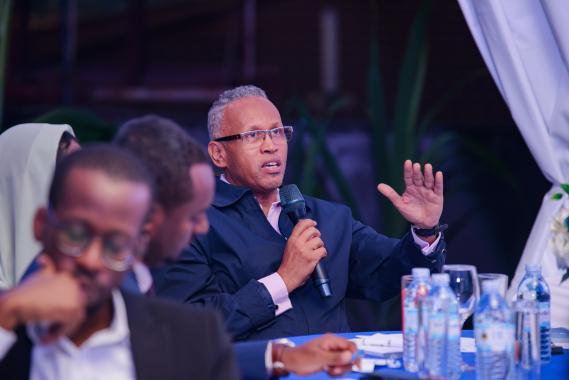
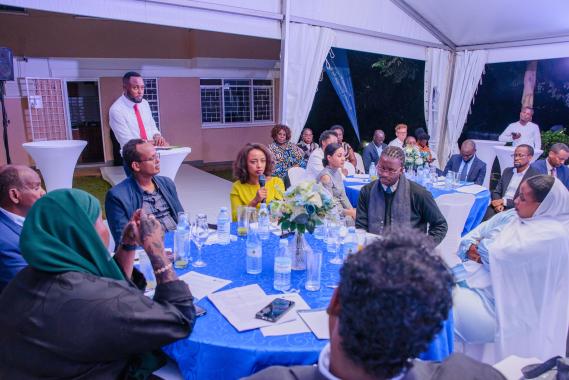

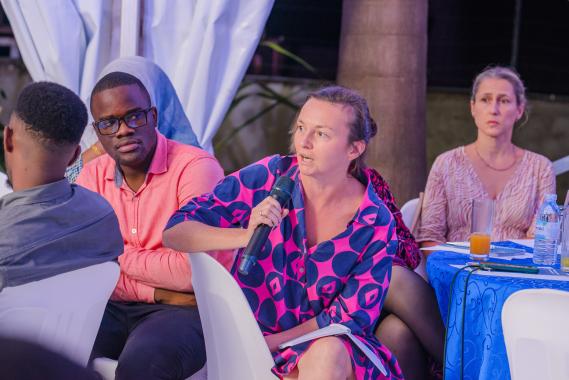
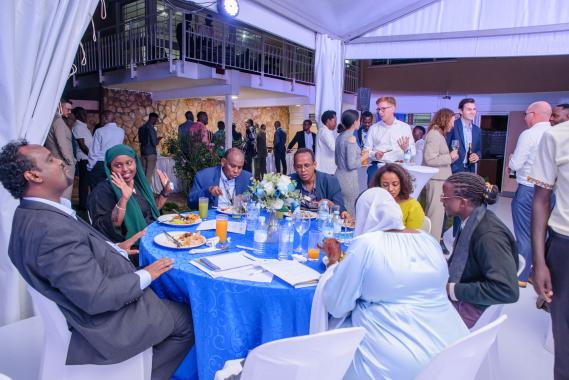
Nils Wörmer, in his opening address, extended a warm welcome to the partners, panellists, and the German delegation, introducing them to the team of the Regional Programme and offering insights into the office's projects and mission. The panel discussion was moderated by Gregory Meyer, Project Manager at the RP SIPODI East Africa, who posed provoking questions and introduced the audience to the central theme of the discussion – the implications of BRICS expansion for Eastern Africa.
Raudhat Saddam, a researcher at the HORN International Institute for Strategic Studies, based in Nairobi, was the first speaker, focusing on the changing international and regional policy dynamics and how Kenya perceives the BRICS expansion, which is mainly viewed positively. She also explored the potential impact of the BRICS alliance on local currencies concerning global trade. Her elaboration concluded with questions for the audience, addressing the concepts of state neutrality, its significance in East Africa, and whether neutrality remains attainable in today's complex geopolitics. She was followed by Godwin Toko, a Ugandan expert in international affairs, providing a broader global perspective on the BRICS members, emphasising their vast population, and touched upon ongoing conflicts in countries soon to join, like Egypt and Ethiopia. He delved into the potential rise in power of Egypt and its implications for the dispute on Nile water resources conflict.
The subsequent discussion engaged the audience in an exploration of critical topics, including food security and the possibility of resource exploitation. Attendees also expressed their concerns and hopes regarding the BRICS expansion, discussing fears and potential positive outcomes. The conversation extended to the possibility of more countries in Eastern Africa joining the BRICS and the associated opportunities and challenges. The panel concluded with an assessment of the feasibility of a unified approach on certain policies within the BRICS and e.g., the potential for a common currency. It was acknowledged that the project of a monetary union was unlikely, due to differing interests among BRICS nations, particularly China's desire for a floating currency and the weakness of Russia's currency.
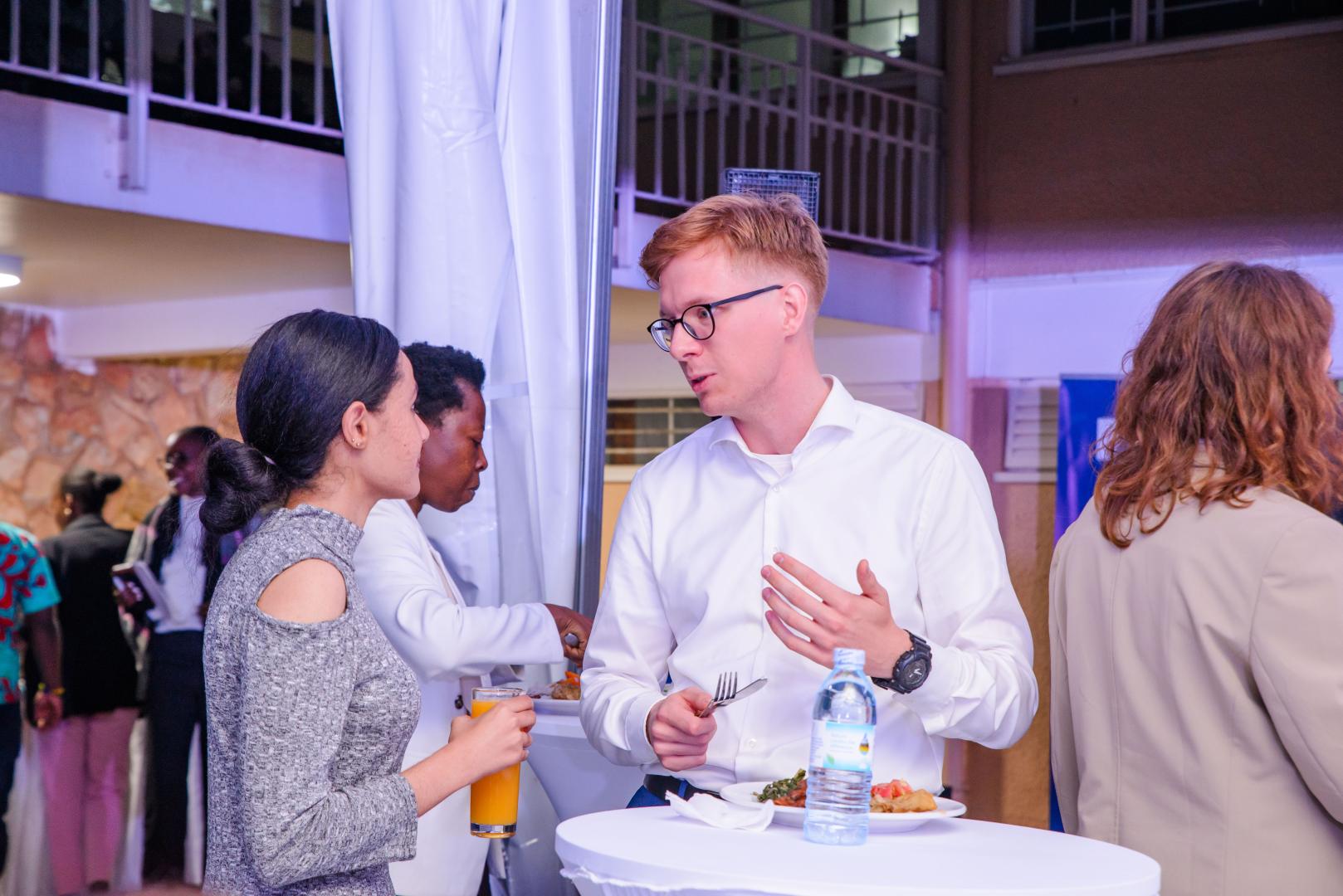
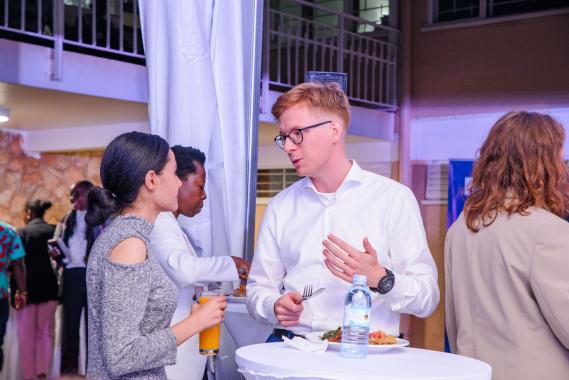
Nils Wörmer offered closing remarks, expressing doubts about the BRICS' potential power, drawing a parallel to the challenges faced by the European Union in finding common ground despite a similar political culture. He emphasised that the BRICS nations may face even greater difficulties in aligning their security affairs. The event concluded with a dinner reception, providing an opportunity for guests to connect and continue the discussions sparked during the panel.
About this series
The Konrad-Adenauer-Stiftung, its educational institutions, centres and foreign offices, offer several thousand events on various subjects each year. We provide up to date and exclusive reports on selected conferences, events and symposia at www.kas.de. In addition to a summary of the contents, you can also find additional material such as pictures, speeches, videos or audio clips.