





Asset Publisher

Publications

Asset Publisher

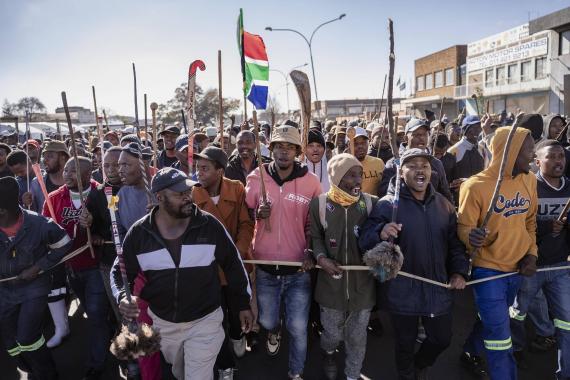
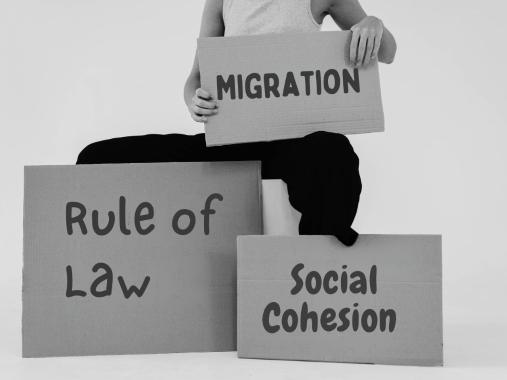
Migration, Rule of Law, and Social Cohesion in Urban South Africa

South Africa's cities are at a crossroads. Deepening unemployment, overstretched institutions, and contested notions of belonging have created fertile ground for xenophobic mobilisation, with real consequences for social cohesion, the rule of law, and democratic stability.

Xinhua, Imago

South Africa’s Fragile Political Centre

Between Polarisation and Populism

South Africa’s political centre is searching for direction in the face of growing populism, social inequality, and a fracturing party landscape. While the Democratic Alliance has the potential to become a catch-all party, reaching voters across classic class and social divides, the question remains: what strategies are needed to secure a majority for centre-right parties?

The Loss of Steven Gruzd

Caroline Kanter heartfelt condolences to Steven's family and his colleagues at SAIIA.

South Africa’s Water Crisis: Between Physical Scarcity and Government Failure

A compact analysis of South Africa’s escalating water crisis, driven not only by physical scarcity but also by structural governance failures, deteriorating infrastructure, and rising criminal activity within the water sector. The report outlines key causes, recent developments, and government countermeasures.

Konrad-Adenauer-Stiftung e. V.

South Africa’s Path to Inclusion: Successes and Limitations

Inclusion worldwide – current status in South Africa

South Africa is at a crucial point in its inclusive development. Despite legal progress and growing political attention, around 5 per cent of the population continues to face barriers to education, employment and participation. At the same time, developments such as the recognition of South African Sign Language and international sporting successes demonstrate the potential that arises when barriers are actively broken down. Dialogue formats and practice-oriented approaches have proven to be effective. However, ensuring the equal participation of people with disabilities requires the continuous commitment of all social actors.

IMAGO / Kyodo News

South Africa’s G20 Presidency

A Signal for Multilateralism

The South African G20 summit was a prestige boost for the country at the Cape. South Africa proved itself a capable host, a skilful negotiator, and a determined advocate of multilateral solutions. However, the presidency faced the challenge that the United States, in particular, increasingly boycotted the format over the course of 2025 and stayed away from the summit itself. In addition, new developments in the war in Ukraine as well as the sobering outcome of the COP30 negotiations shaped international reporting and overshadowed the summit.

Policy Paper – Pathways to Partnership: German Industry in South Africa

How can German businesses leverage their operations in South Africa to facilitate market expansion across Sub-Saharan Africa?

The Future of South Africa’s Public Service

New research from KAS and NSI provides a data-led roadmap for professionalizing the workforce and overcoming systemic recruitment and retention gaps.

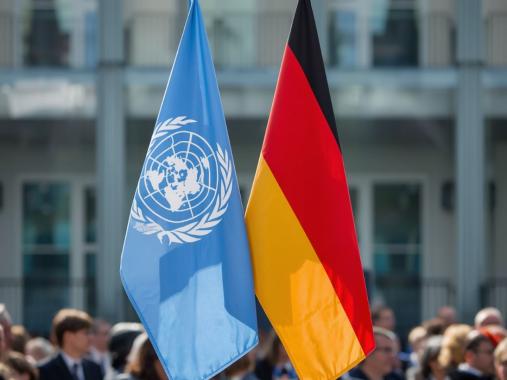
South African Parliamentary Delegation Visit to Germany

Strengthening oversight and cooperation through institutional learning

IMAGO / Brazil Photo Press

South Africa and BRICS+

Foreign policy strategies and economic interests in the BRICS+ area of conflict

South Africa, the most industrialized country on the African continent with a population of around 63 million, has been a member of what was then known as the BRICS grouping of five countries since 2010.