


Asset Publisher

Country Reports

Short political reports of the KAS offices abroad

Publications

DDP & AB Südafrika

South Africa After the 2026 Local Government Elections

ANC Continues to Lose Ground as Coalition Politics Becomes the New Normal

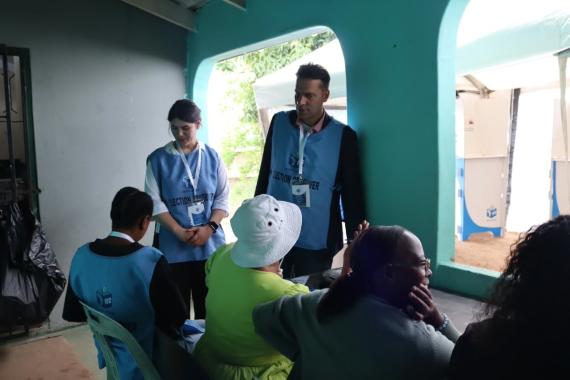
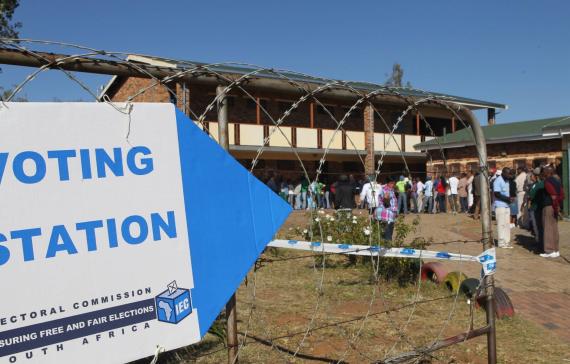
The 2026 local government elections confirmed the continuing decline of support for the African National Congress (ANC), while the Democratic Alliance (DA) further strengthened its position in South Africa’s urban centres. At the same time, increasing political fragmentation has accelerated the shift towards coalition governance, making cooperation between parties an enduring feature of the country’s political landscape. Electoral outcomes were driven primarily by voters’ assessments of local government performance, service delivery, and public accountability rather than by historical loyalties or ideological affiliations. The elections also highlighted growing concerns about political violence, xenophobia, and social cohesion, while raising important questions about the future of South Africa’s Government of National Unity (GNU).

IMAGO / Xinhua

The State of Local Government in South Africa

Between Crisis and Reform

South Africa’s municipalities are entering the 2026 local elections amid a deep governance crisis marked by failing service delivery, deteriorating infrastructure, financial distress, and declining public trust. These challenges have contributed to growing political fragmentation and increased uncertainty over coalition governance in major metropolitan areas. At the same time, a range of reform initiatives seeks to strengthen administrative capacity, improve accountability, and enhance the effectiveness of local government. Policy solutions already exist; their success depends on overcoming chronic implementation shortcomings.

IMAGO / Anadolu Agency

Charged climate ahead of the Local Government Elections: Xenophobic violence in South Africa is on the rise

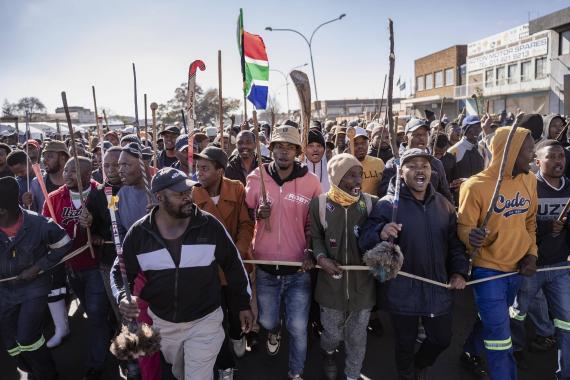
The xenophobic unrest in South Africa reflects a polarised debate on migration, which threatens to destabilise the country both domestically and internationally in the run-up to the 2026 Local Government Elections.

The recent xenophobic unrest in South Africa reflects an increasingly tense domestic political climate in the run-up to the 2026 Local Government Elections, in which migration is becoming ever more polarising. It is being exacerbated by socio-economic pressures, widespread anti-migrant narratives, and the mobilisation of corresponding radical groups. At the same time, it poses significant domestic and foreign policy risks, particularly for the country’s stability and its relations with African partners.

Konrad-Adenauer-Stiftung e. V.

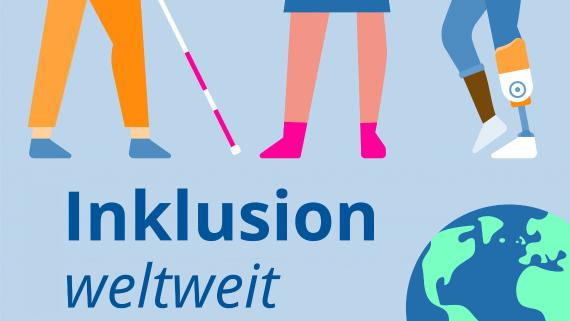
South Africa’s Path to Inclusion: Successes and Limitations

Inclusion worldwide – current status in South Africa

South Africa is at a crucial point in its inclusive development. Despite legal progress and growing political attention, around 5 per cent of the population continues to face barriers to education, employment and participation. At the same time, developments such as the recognition of South African Sign Language and international sporting successes demonstrate the potential that arises when barriers are actively broken down. Dialogue formats and practice-oriented approaches have proven to be effective. However, ensuring the equal participation of people with disabilities requires the continuous commitment of all social actors.

IMAGO / Kyodo News

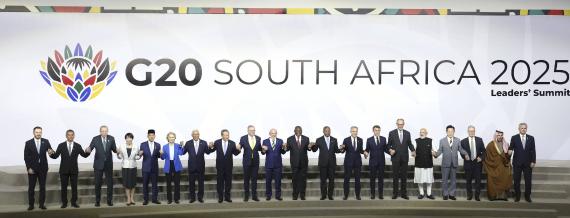
South Africa’s G20 Presidency

A Signal for Multilateralism

The South African G20 summit was a prestige boost for the country at the Cape. South Africa proved itself a capable host, a skilful negotiator, and a determined advocate of multilateral solutions. However, the presidency faced the challenge that the United States, in particular, increasingly boycotted the format over the course of 2025 and stayed away from the summit itself. In addition, new developments in the war in Ukraine as well as the sobering outcome of the COP30 negotiations shaped international reporting and overshadowed the summit.

Retiring the 1994 Generation of Public Servants

How an ageing workforce is reshaping South Africa’s state and why a new generation must be prepared now

New research from KAS and NSI provides a data-led roadmap for professionalizing the workforce and overcoming systemic recruitment and retention gaps.

Securing the Future of South Africa’s Public Service

Tackling the emerging skills crisis through smarter talent management and workforce planning in the health sector

New research from KAS and NSI provides a data-led roadmap for professionalizing the workforce and overcoming systemic recruitment and retention gaps.

IMAGO / Brazil Photo Press

South Africa and BRICS+

Foreign policy strategies and economic interests in the BRICS+ area of conflict

South Africa, the most industrialized country on the African continent with a population of around 63 million, has been a member of what was then known as the BRICS grouping of five countries since 2010.

KAS

Special edition - Country reports with a difference

International comparison of accessibility

This publication provides research, compiled by some of our overseas offices, on the current situation of political participation for people with disabilities, in their respective countries. We hope that their reports will increase awareness of the sadly often persistent inequalities that remain and motivate all of us to pay greater heed to the issue of inclusion.

Economic Growth for Social Cohesion – Promoting a Socially Responsive Market

Cooperation between the Konrad Adenauer Stiftung (KAS) and the Institute for Race Relations (IRR)

Showing 1 to 10 of 109 entries.

Asset Publisher

About this series

The Konrad-Adenauer-Stiftung is a political foundation. Our offices abroad are in charge of over 200 projects in more than 120 countries. The country reports offer current analyses, exclusive evaluations, background information and forecasts - provided by our international staff.

Order details

Editor

Konrad-Adenauer-Stiftung e.V.