




Asset Publisher

Publications

Asset Publisher

IMAGO / Winfried Rothermel

Where America Really Decides

The Political Geography of the 2026 U.S. Midterms

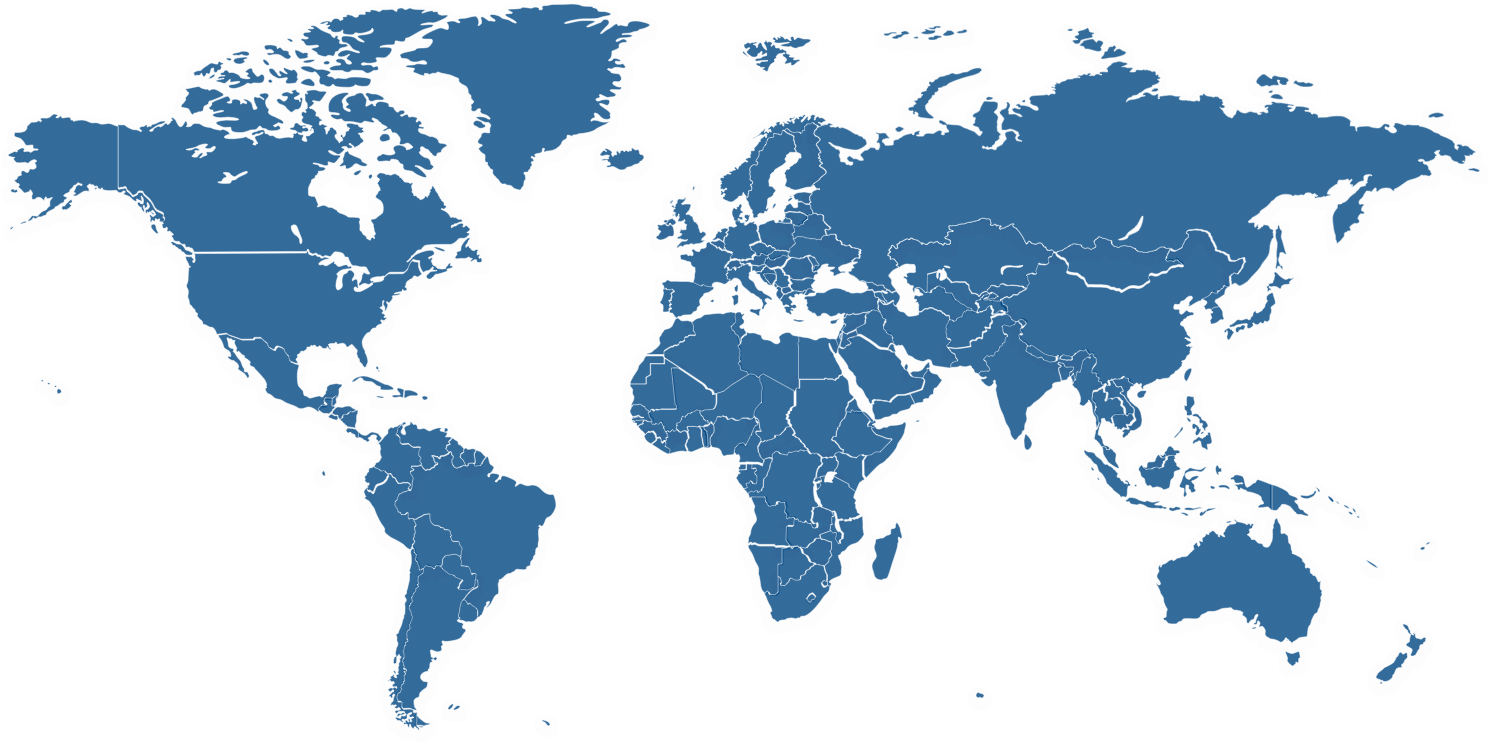
435 seats in the House of Representatives, 35 Senate elections, and numerous additional state and local contests will be on the ballot. Yet control of Congress on November 3 is likely to be decided in only a handful of states and congressional districts. The 2026 midterm elections will be shaped by national issues, but their effects will appear very differently across the American electoral map. While a small group of states will determine the balance of power in the Senate, competition in the House of Representatives will be concentrated in just a few dozen congressional districts. At the same time, the country's political geography continues to evolve: formerly Democratic-leaning industrial regions are voting more Republican, growing suburban areas are in some cases becoming more Democratic, and Donald Trump's much-discussed gains among Hispanic and previously disengaged voters in 2024 have not proven equally durable everywhere. Anyone seeking to understand who will control Congress in the years ahead must therefore look not only at how America votes, but above all at where it votes.

IMAGO / Anadolu Agency

The Final Stretch to the 2026 Midterms

Where America Stands Before Election Day

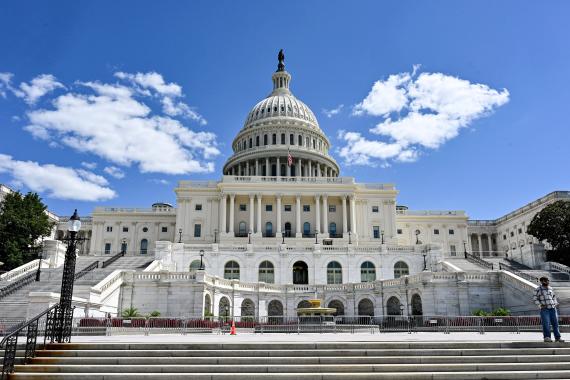
“Pretend that I’m on the ballot.” With this appeal, Donald Trump is seeking to mobilize his supporters for the midterm elections on November 3, even though he himself is not on the ballot. Voters will elect the entire House of Representatives, a portion of the Senate, as well as numerous state-level offices. Just under seven weeks before Election Day, the campaign is being shaped primarily by economic conditions, the political record of the Trump administration, and the question of future majorities in Washington. Following the summer recess, both parties have intensified their campaign efforts. While Republicans are focusing on voter mobilization and support from President Donald Trump, Democrats are emphasizing the rising cost of living and the consequences of the administration’s policies. The political mood after the summer break offers an indication of the issues currently driving the campaign and the challenges both parties face as the election approaches.

The Evolution of NATO Summitry and Priorities

Issue Brief

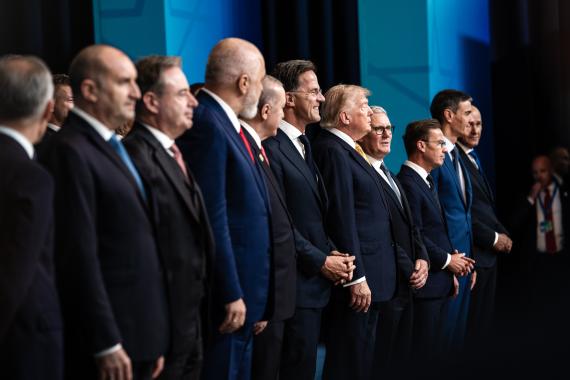
In light of the most recent NATO Summit in Ankara, Dr. Phyllis Berry examines how the Alliance’s priorities have evolved across the 2024 Washington, 2025 Hague, and 2026 Ankara summits in response to Russia’s war against Ukraine, shifting U.S. policy, and Europe’s growing defense responsibilities. She argues that Germany will be central to building a stronger European pillar within NATO and translating higher defense spending into credible military capability.

JAXPORT under cc by 2.0

USMCA vor der Bewährungsprobe

Historie, Stand der Dinge und die Bedeutung für EU und Deutschland

On July 1, 2026, the so-called “Joint Review”—the first regular review of the United States-Mexico-Canada Agreement (USMCA)—was conducted by the signatory states. The result: The U.S. refused to approve the extension of the agreement in its current form. The report is only available in German.

IMAGO / ZUMA Press Wire

250 Years of the United States - The Eternal American Dream

Background and Context on the 250th Anniversary of the United States of America

President Donald Trump announced that this year’s Independence Day and its accompanying celebrations would be “the most spectacular Trump rally of them all.” It is a statement that carries significance. Not only because of its tonality, but also because it places a traditionally bipartisan holiday - one meant to celebrate the nation as a whole -into a political context. Almost as if it were his personal celebration. Between these two images, the nearly timeless ideal of a united country and a present in which national symbols are increasingly viewed through a political lens, the United States is moving toward its 250th anniversary.

IMAGO / Photosport NZ

Background and Analysis on the 2026 FIFA World Cup in the United States

A Summer Fairytale with Stumbling Blocks?

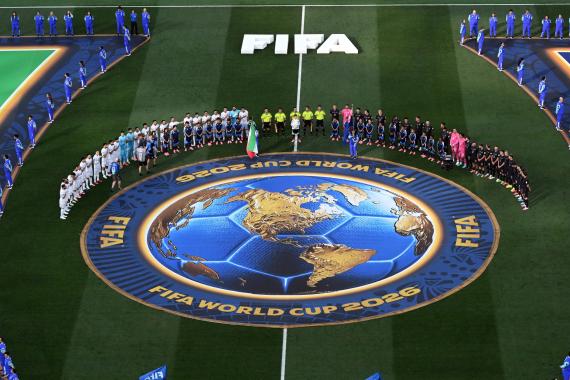
As the opening match of the 2026 FIFA World Cup kicks off in Mexico City, the largest tournament in the competition's history has begun. For the first time, 48 teams will take part, with matches played across the United States, Mexico, and Canada. Yet the most remarkable feature of this World Cup may not lie on the pitch at all. While the tournament's political significance in the United States is hard to miss, public enthusiasm has so far remained surprisingly muted. President Donald Trump has been closely involved in the preparations—establishing a national World Cup task force, appearing at key FIFA events, and announcing that he intends to hand the trophy to the winners himself. At the same time, polls suggest that large parts of the American public are approaching the tournament with comparatively little interest. It is precisely this tension that makes the event such a revealing lens on the United States as host.

IMAGO / Wolfgang Maria Weber

Reactions and Background to the Trump Administration’s Decision to Reduce Troops in Germany

Gradual Withdrawal or New Strategy?

The United States’ decision to withdraw 5,000 troops from Germany over the next year reflects not only President Donald Trump’s displeasure with America’s European allies, but also the continuation of a policy by the Trump Administration to hold American allies responsible for their own security. This move was substantially criticized by members of both houses of Congress, including many of Trump’s Republican allies, for being short sighted, lack of transparency (especially considering the lack of a released Global Posture Review) and demonstrating weakness. This may also be driven by an attempt to shore up Trump’s political base ahead of the 2026 midterm elections after the president’s approval rating sharply fell after the attack on Iran.

Autonomy and Alliance

Aligning Transatlantic Defense Industries for a New Strategic Landscape

"Autonomy and Alliance: Aligning Transatlantic Defense Industries for a New Strategic Landscape" examines the profound transformation underway in transatlantic security relations. As Europe moves to assume greater responsibility for its own defense amid shifting U.S. strategic priorities, the report explores how a stronger European defense industrial base can be built without undermining the indispensable role of NATO and U.S.–European cooperation.

IMAGO / ZUMA Press

U.S. Parties Choose Candidates for the Midterms

Tension in Texas

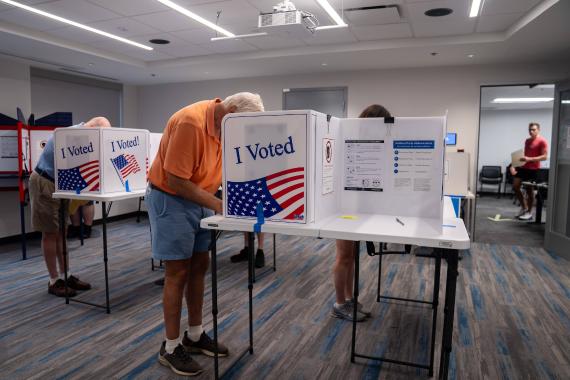
The election year is underway. In Arkansas, North Carolina, and Texas, primary voters have chosen the parties’ candidates for the November elections. For Democrats, the goal is to field contenders capable of winning back the majority in Congress. Republicans, meanwhile, aim to defend their majorities and continue advancing former President Trump’s policy agenda.

Supreme Court vs. Trump

The Tariff Ruling and Its Consequences

In February, the U.S. Supreme Court issued its long awaited ruling on President Trump’s tariff policy. In ‘Learning Resources, Inc. v. Donald J. Trump,’ the court found that the sweeping tariffs imposed under the International Emergency Economic Powers Act (IEEPA) exceeded the president’s authority. (Report in German)

Showing 1 to 10 of 706 entries.