



Asset Publisher

Country Reports

Short political reports of the KAS offices abroad

Publications

IMAGO / Matrix Images

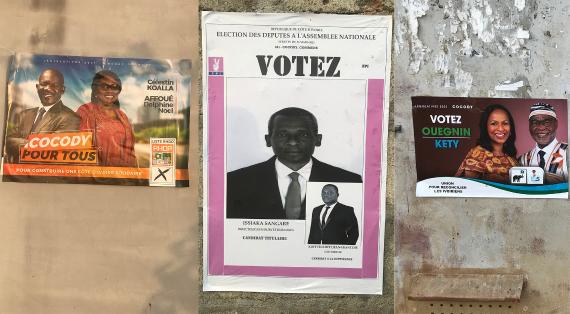
Parliamentary elections in Côte d'Ivoire

Consolidation of Alassane Ouattara’s power

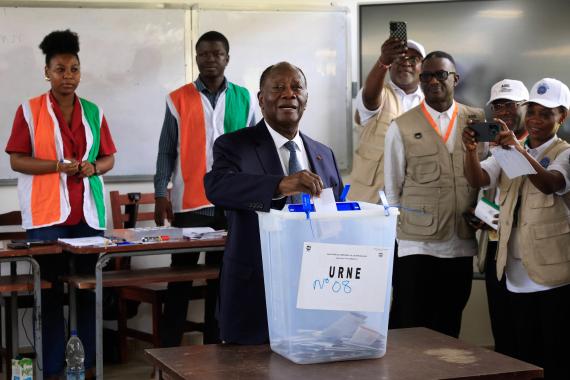
The parliamentary elections in Côte d'Ivoire took place on 27 December 2025, shortly after the presidential elections, and were strongly shaped by this dynamic. They followed only a few weeks after the re-election of President Alassane Ouattara (RHDP), who won the presidential election on 25 October 2025 with 89.77 per cent of the vote in the first round, excluding the most promising opposition candidates, and who now governs the country for a fourth consecutive term. Around 8.7 million voters were called upon to elect the 255 members of the National Assembly. The elections also took place in a situation in which key opposition forces are fragmented. Shortly after the presidential election, the opposition party PPA-CI, led by Laurent Gbagbo, called for a boycott of the parliamentary elections.

IMAGO / Xinhua

Return to Constitutional Order? Presidential Election in Guinea

General Mamady Doumbouya remains in power

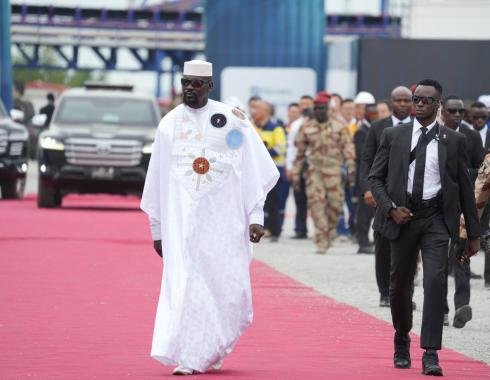
The presidential election held on 28 December 2025 marks, at least institutionally, a decisive turning point in Guinea’s recent political history. Four years after the military coup of September 2021, in which General Mamady Doumbouya overthrew the elected President Alpha Condé, the ballot was officially intended to complete the transition back to constitutional order. In practice, however, the conduct of the election, the field of candidates and the institutional framework raise doubts about its democratic character. Rather than a contest between political alternatives, the election appears primarily as an instrument to legitimise an already established military power structure.

IMAGO / Pond5 Images

Presidential election 2023 in Liberia

Peaceful change of power and hope for progress.

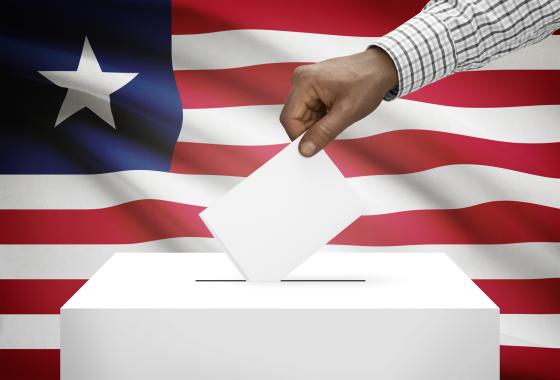
Opposition candidate Joseph Boakai replaces incumbent President George Weah in office and becomes the new head of state of the Republic of Liberia. Hopes for the new government are high.

Flickr / Commonwealth Secretariat / CC BY-NC 2.0

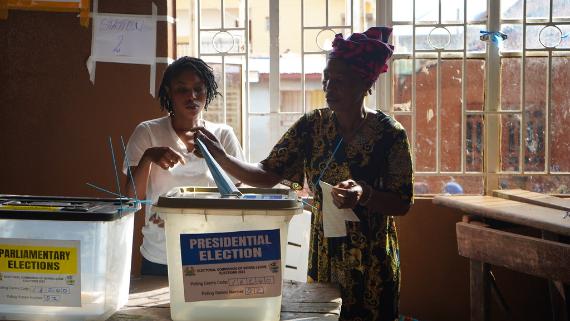
Elections in Sierra Leone in the context of geopolitical instability

Julius Maada Bio was re-elected as Sierra Leone's head of state on June 24, 2023, to lead the country of nearly 9 million people through tumultuous times

The results of the June 24 elections for the president, parliament and local mayors are out. The incumbent head of state Julius Maada Bio was reelected. He must now navigate his country of almost nine million through ever more stormy waters.

Présidence de la République du Bénin / flickr / CC BY-NC-ND 2.0

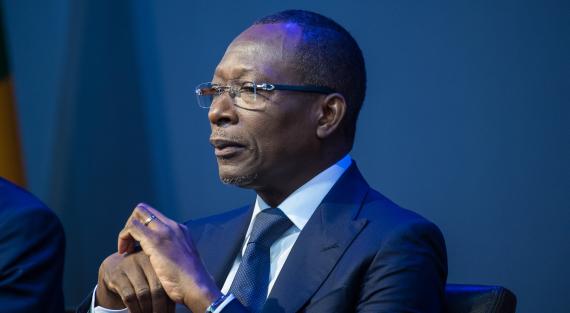
Benin: Anspannung vor den Präsidentschaftswahlen

Beobachter befürchten im Falle einer Wiederwahl des derzeitigen Präsidenten Patrice Talon weitere Rückschritte bei der demokratischen Entwicklung des westafrikanischen Küstenstaats

Als Patrice Talon Ende März 2016 die Präsidentschaftswahl im zweiten Wahlgang mit rund 65% gegen seinen Widersacher und den bis dato amtierenden Premierminister Lionel Zinsou gewann, wiederholte er bei seiner Amtseinführung ein zentrales Versprechen seines damaligen Wahlkampfs: Er strebe nur ein einziges Mandat an und werde dieses zur Umsetzung der allseits geforderten, großen politischen und institutionellen Reformen nutzen. Am 15. Januar dieses Jahres erklärte er nach einer Werbetour durch das gesamte Land seine Absicht, eine zweite Amtszeit anzustreben, um sein Reformwerk weiter voranzutreiben. Auch wenn ihm laut beninischer Verfassung ein zweites Mandat offensteht, brachte ihm diese Entscheidung im Land selbst Kritik ein. Auch in den Nachbarstaaten, in denen das Thema „Amtszeiten“ seit den Präsidentschaftswahlen 2020 in Togo, Côte d’Ivoire und Guinea unzählige Polemiken hervorrief, wird seine Entscheidung kritisch beäugt. Die erste Amtsperiode Talons war vor allem durch seinen stark wirtschaftspolitisch fokussierten Ansatz geprägt und nahm gleichzeitig Rückschritte im Bereich der demokratischen und rechtsstaatlichen Entwicklung fortwährend in Kauf. Angesichts dieser Hintergründe und der jüngsten Entwicklungen bleibt die aktuelle politische Lage in Benin bedenklich.

Konrad-Adenauer-Stiftung e. V.

Parlamentswahlen stabilisieren Côte d’Ivoire

Am 6. März 2021 waren knapp 7,5 Millionen wahlberechtigte Ivorer aufgerufen, eine neue Nationalversammlung zu wählen. Zivilgesellschaftliche Beobachtergruppen qualifizieren die Wahl als inklusiv und heben den überwiegend friedlichen Ablauf hervor. Gut vier Monate nach der Besorgnis erregenden Präsidentschaftswahl mit über 85 Todesopfern gewinnt das Land am Golf von Guinea damit wieder an politischer Stabilität. Gleichzeitig sorgt der krankheitsbedingte Tod von Premierminister Hamed Bakayoko am 10. März 2021 für Trauer und neue Fragezeichen in Côte d’Ivoire. Erst im Juli 2020 verstarb der damalige Premier Amadou Gon Coulibaly, ebenfalls aus gesundheitlichen Gründen.

Afrique Foncier 002

Le magazine du programme Un Monde Sans faim (EWOH 2)

Neil Palmer/flickr/Lizenz CC BY-NC 2.0

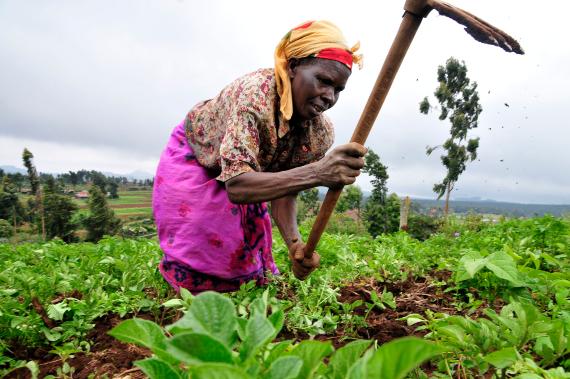
Between Habit and Legislation: Land Rights in West Africa

Approaches for the implementation of women's land rights in Burkina Faso, Benin and Togo

The majority of the population in Burkina Faso, Benin and Togo lives from agriculture and livestock. The legal framework for land management is characterised by a dualism between state laws and traditional customary rights. Local customary laws still mainly govern the ownership, use and transfer of land. Only a few small farmers are officially registered as landowners at state level. In this context, women have de facto no secure access to land – despite legal equality and their key role in agriculture. In order to strengthen the process of implementation of modern land laws and thus the economic role of women and food security, an in-depth dialogue and close cooperation between the women directly concerned, civil society organisations, customary and religious authorities, public authorities and other policymakers is necessary.

Sündenbock und Sehnsuchtsort

Staatsbesuch von Präsident Macron in der Cote d´Ivoire

Der Blick auf die ehemalige Kolonialmacht Frankreich ist in Côte d’Ivoire zwiegespalten. Nun wird Emmanuel Macron zum Staatsbesuch erwartet.

Presidence du Benin / flickr / CC BY-NC-ND 2.0

Ein Präsident überholt sein Land

Die Lage in Benin bleibt angespannt: Wahldebakel, Handelskrieg und nun die Ausweisung des EU-Leiters

Die Ausweisung des deutschen Leiters der EU-Botschaft Oliver Nette vor knapp zwei Wochen ist nur das letzte Glied einer langen Kette von Ereignissen, welche Anlass zur kritischen Betrachtung der jüngsten Entwicklung des westafrikanischen Landes geben. Bereits die Parlamentswahlen im April 2019 markierten einen deutlichen Einschnitt in die demokratische Entwicklung des Landes seit den 1990er Jahren.

Asset Publisher

About this series

The Konrad-Adenauer-Stiftung is a political foundation. Our offices abroad are in charge of over 200 projects in more than 120 countries. The country reports offer current analyses, exclusive evaluations, background information and forecasts - provided by our international staff.

Order details

Editor

Konrad-Adenauer-Stiftung e.V.