



Asset Publisher

Publications

Asset Publisher

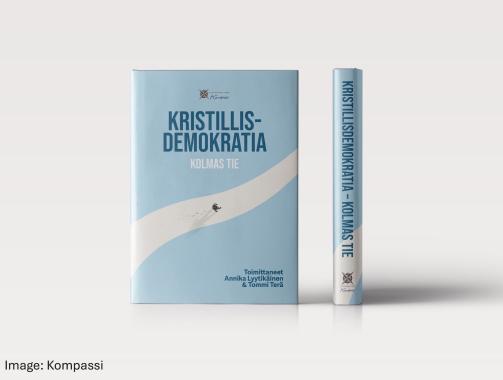
"Christian Democracy - The Third Way"

English Addendum to "Kristillisdemokratia – kolmas tie" (Eds. A. Lyytikäinen & T. Terä; 2025)

This addendum gives an overview and summary of the book Kristillisdemokratia – kolmas tie (2025). The book consists of an introductory chapter followed by three sections dealing with the history, principles, and role of Christian democracy in contemporary Europe, respectively.

Nordic Unity in Arctic Security

Navigating Tensions and Alliances

In recent decades, the Arctic region has increasingly attracted global interest due to its climatic, economic, and political transformations. The Arctic's strategic relevance has been particularly accentuated amidst rising tensions with Russia, especially post-2022 following its attack on Ukraine. This attention has, in turn, amplified the roles of Nordic countries in regional security dynamics. The accession of Finland and Sweden to NATO in 2023 and 2024, respectively, exemplifies the momentum towards deeper Nordic integration in security domains. This trajectory was further highlighted by U.S. President Trump's comments in January 2025 regarding the control of Greenland, drawing international scrutiny to Greenland’s strategic importance and the internal dynamics within the Kingdom of Denmark.

The European Union and the Emerging Arctic Security Landscape

The European Union’s (EU) ever-evolving role as a foreign and security actor is currently being reshaped by a rapidly shifting geopolitical landscape, marked most significantly by Russia’s 2022 full-scale invasion of Ukraine and the current disruptions of the transatlantic relationship. While long defined by its soft power tools, internal diversity, and preference for multilateralism, the EU has found itself increasingly confronted with demands to de-velop a more assertive security posture. This shift is occurring not only in its eastern and southern neighbourhood but increasingly also in its northern backyard – the Arctic, a region that is presently (re-)emerging as a space of geopolitical competition. While the region has traditionally been marginal in, it now intersects with broader concerns over hybrid threats, energy dependence, climate change, and critical infrastructure—all areas where both the EU and the North Atlantic Treaty Organization (NATO) maintain significant (partly overlapping or complementary) competencies.

Russia's Hybrid War: The Northern Front

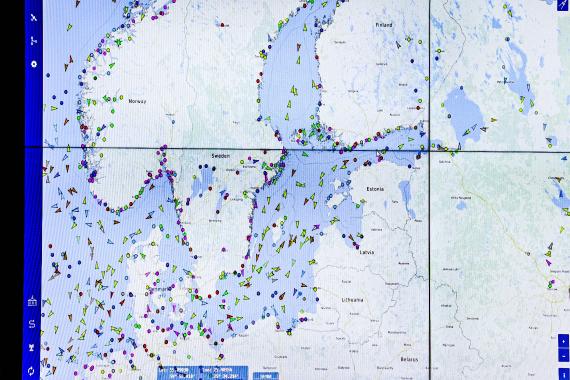
Tracking Russia’s Hybrid Warfare

Northern Europe is not at peace. The battle is real and far more dangerous than the public has grasped. In this war, there are no frontlines. Attack vectors shift daily, probing weaknesses, exploiting vulnerabilities, and seizing opportunities. The weapon of choice is what we in the West call hybrid warfare, targeting our institutions, our infrastructure, our alliances, and our minds. Resilience is necessary, but not sufficient, to win this hybrid war. This book shows how countries on the northern flank are strengthening national capabilities and deepening crossborder cooperation to detect, disrupt, and respond to hybrid threats—offering a blueprint for hybrid deterrence.

IMAGO / NTB

Norway’s 2025 Parliamentary Election

Stability, Energy, and the Stoltenberg Effect

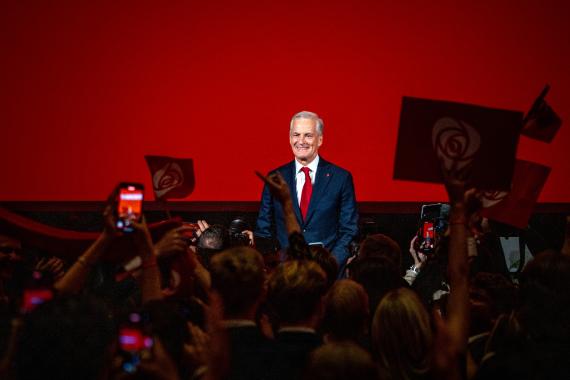
On September 8, 2025, Norwegians went to the polls to elect a new parliament. The governing Labour Party (Ap), led by Prime Minister Jonas Gahr Støre, confirmed its position as the country’s largest political force, winning 28.2 percent of the vote, according to preliminary results from the national election authority. The right-wing populist Progress Party (FrP) emerged as the biggest winner of the night. Boosting its support by 12.3 percentage points, it secured 23.9 percent of the vote, becoming the second-strongest party. The Conservative Party (Høyre), headed by former Prime Minister Erna Solberg, followed in third place with 14.6 percent. Roughly four million citizens were eligible to vote, and turnout reached 78.8 percent, according to official figures released late Monday evening. The election was shaped not only by domestic debates, but also by Norway’s strategic role in Europe’s energy supply and security policy. While not a member of the European Union, Norway is a crucial partner when it comes to gas deliveries, electricity market regulation, and sanctions against Russia.

IMAGO / Bernhard Herrmann

Finland’s Response to Hybrid Threats in the Baltic Sea

Resilience through Comprehensive Security?

Finland’s decision to join the NATO alliance after decades of military neutrality in response to Russia’s full-scale invasion of Ukraine has significantly acerbated relations with its Eastern Neighbour. The latest National Risk Assessment by the Finnish government emphasizes the dangers of hybrid threats, which could challenge Finland’s security environment. Its land border of more than 1,300 kilometres with Russia renders Finland particularly susceptible to Russian hybrid operations. Hybrid threats can take manifold shape, such as cyberattacks, disinformation, instrumentalized migration, or sabotage acts against critical infrastructure, including subsea electricity or data cables.

KAS

Special edition - Country reports with a difference

International comparison of accessibility

This publication provides research, compiled by some of our overseas offices, on the current situation of political participation for people with disabilities, in their respective countries. We hope that their reports will increase awareness of the sadly often persistent inequalities that remain and motivate all of us to pay greater heed to the issue of inclusion.

Julian Tucker (KAS Regionalprojekt Nordische Länder)

Elections in Greenland

A Clear Signal Towards Independence

Greenlanders have elected a new parliament. The clear winner of the election is the liberal Demokraatit party (Democrats) with its leader Jens-Frederik Nielsen. They won by a surprisingly clear margin against the current left-wing coalition government of Siumut ( Forwards) and Inuit Ataqatigiit (Community of the Inuit). Nielsen's party pursues a conservative tax policy, is considered economically liberal and wants to achieve independence from Denmark in a step-by-step fashion. The second strongest party is the nationalist protest party Naleraq (Point of orientation). It was the only party to call for a swift exit from the Danish kingdom and rapprochement with the USA during the election campaign. The upcoming coalition negotiations could prove difficult in view of foreign policy upheavals. Nielson, former Minister for Industry and Minerals, announced his intention to talk to all parties. A broad-based alliance between Inuit Ataqatigiit, the party of previous Prime Minister Múte B. Egede and possibly with the Siumut party could form a stable government.

The Second Foreign and Security Policy Opinion Poll in Greenland

Nasiffik – Centre for Foreign & Security Policy at Ilisimatusarfik (University of Greenland) has conducted a public opinion poll amongst a representative sample of the Greenlandic population on foreign and security policy issues in spring 2024. It is the second survey of its kind after a similar survey report was published in 2021. The data-collection was done by EPINION in Denmark (cf. appendix about methods). The survey is funded by the Konrad- Adenauer-Stiftung in Stockholm, Sweden, Greenland Research Council, Nuuk, Greenland, and Nasiffik at Ilisimatusarfik, Nuuk, Greenland. Since we published a similar survey in 2021,1 Arctic governance has been severely challenged by the ongoing war in Ukraine. The world has witnessed a more turbulent time in relation to security issues; in consequence, international relations have come further to the fore. Some spillover effects from Russia’s (re-)invasion of Ukraine also have regional ramifications in the Arctic. The work in the Arctic Council came to a pause during the Russian chairship in March 2022 and has only very slowly been restored during the Norwegian chairship with online meetings in the working groups including some tentative Russian participation. Naalakkersuisut (the Government of Greenland) took an early decision in consensus with the ‘like-minded states’’ decision to condemn the Russian invasion of Ukraine and therefore the cooperation with Russia has been put on hold.2 The Kingdom of Denmark is taking over the chairship of the Arctic Council in spring 2025 and Greenland has been adamant in playing a key role, as the only country of the Kingdom located in the Arctic. In February 2024, Naalakkersuisut published a strategy on foreign, security, and defense policy, which demonstrates an orientation towards more cooperation towards especially the North American Arctic. The US is seen as a natural shelter country in relation to defense and security based on the long historical ties with the Pituffik Space Base (formerly the Thule Air Base) as the only operating American base in the country.

IMAGO / Panthermedia

Snap Elections in Iceland

A Turning Point for Iceland's Political Landscape

The result of the early parliamentary elections in Iceland represents a clear rebuke to the outgoing coalition. In particular, the Left-Green Movement, which had garnered over 17 percent at the beginning of the coalition, is now fighting for its survival after losing all its seats in parliament. The conservative Independence Party, which has been the strongest party in the Icelandic parliament since Iceland's independence in 1944 – with the exception of 2009 – has also achieved its historically worst result. The task of forming a coalition now lies with the Social Democrats, who will need to find at least two to three coalition partners.