


Asset Publisher

Country Reports

Short political reports of the KAS offices abroad

Publications

Konrad-Adenauer-Stiftung e. V.

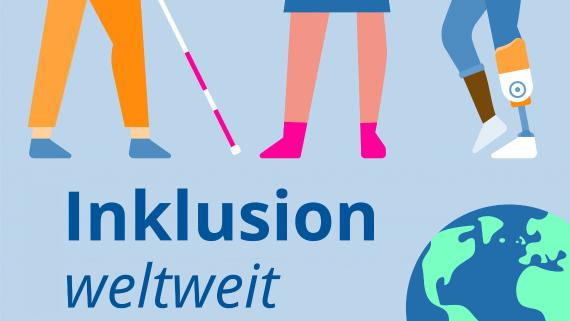
Menschen mit Behinderungen und das Bildungssystem in Belarus

Inklusion weltweit – aktueller Stand aus Belarus

Trotz einer äußerlich relativ guten Situation in dem im Titel angesprochenen Bereich in Belarus – vor allem auf der Ebene der Gesetzgebung – scheint die reale Lage bei einer genaueren Betrachtung von dem schönen Bild, das der Staat vor allem auf der internationalen Bühne darzustellen versucht, weit entfernt zu sein. Der vorliegende Überblick gründet sich auf Berichte belarussischer Menschenrechtler und Empfehlungen des UN-Ausschusses für die Rechte des Kindes vom Februar 2020. Die Lage wird sich seitdem kaum zum Besseren verändert haben, da das in Belarus herrschende Regime seit August 2020 um sein Überleben kämpft und kaum Mittel für signifikante Verbesserungen in diesem arbeits- und ressourcenintensiven Bereich hat. Außerdem wurden seit August 2020 so gut wie alle NGOs, die sich in diesem Bereich betätigen und sich um einen Dialog mit dem Staat zugunsten der Menschen mit Behinderungen bemüht haben, auf Initiative des Regimes zerschlagen.

In the Shadow of War: Lukashenka reaches for lifelong power

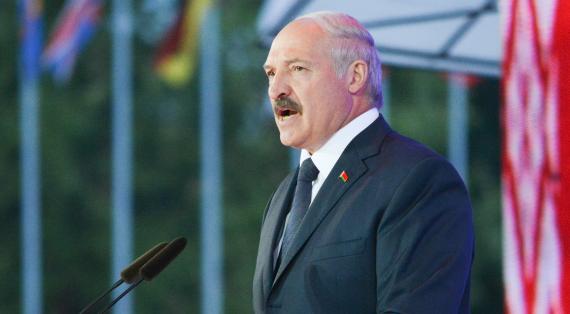
The Belarusian national anthem begins with the line “Belarusians are peaceful people”. For many years it had been a core promise of Minsk’s foreign policy positioning to rule out the possibility of an aggression towards any neighbors. This sentence is now even supposed to become part of the national constitution, despite Russian tanks rolling and missiles flying into Ukraine from Belarusian territory every day. After this Sunday’s referendum, which took place under circumstances which democratic forces call a “de facto military occupation by Russia”, the regime declared that a majority of Belarusians voted in favor of constitutional amendments – although pre-referendum projections suggest that the figures presented are strongly inflated (presumably more than doubled) and the necessary quorum was almost certainly not met in reality. When the amendments will come in place on March 9th, the state setup of Belarus and the country’s formal geopolitical positioning will be changed substantially – at least on paper. For Aliaksandr Lukashenka, the goal is to secure a path to unlimited rule and personal immunity and minimise the "danger" of the “opposition” ever taking over. Although in reality, many question how much control he still has left, apart from repressions. In the foreign policy realm, the country is abandoning neutrality and its non-nuclear status. Hence, the majority of people doesn’t expect any improvements in the country from the constitutional amendments. Many ask: why a new constitution if the current one isn’t being applied anyway? The democratic forces had called for an active boycott of the “illegitimate” referendum beforehand. Faced with their country being dragged into a highly unpopular war against a peaceful neighbour, thousands of Belarusians seized the opportunity to protest – for the first time in over a year.

Migration crisis on the Belarusian-Latvian border

Newest developments on the Belarusian-Latvian border

On August 2, Agnė Bilotaitė, the Lithuanian Minister of Interior signed an order which allowed board guards to send back migrants to Belarus.[1] Following this, there was a rapid increase of migrants crossing the Latvian border from Belarus. In the four days, from August 7 until August 10, 218 illegal migrants had been detained at the border. As the border crisis deepened, on August 10 the Government of Latvia declared a state of emergency in the border municipalities. The state of emergency is in force until November 10.[2]

jo.sau / flickr / CC BY 2.0

Reactions to the Belarusian provocations

Lithuania at the center of Belarusian provocations and illegal migration

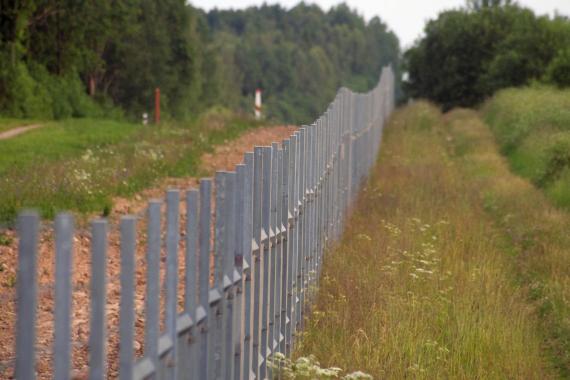
One week after the preliminary apogee of the Belarusian provocations against Lithuania and the EU with a high number of illegal migrants at the Belarusian-Lithuanian border and verbal threats of possible terrorist attacks in Lithuania, the arrival of illegal migrants to Lithuania has initially stopped. However, this situation has led to consequences for the neighboring states of Latvia and Poland. Lukashenka continues to try to destabilize the situation. He wants to prevent illegal migrants from returning to Belarus. In a special session on August 10, the Lithuanian parliament made far-reaching decisions to deal with the crisis. It was decided to build a physical barrier and expand military powers. Not only the EU, but also NATO are now asked to provide support in the crisis.

Okras / Wikimedia Commons / CC BY-SA 4.0

Illegal migration as a political weapon

About the situation on the Belarusian-Lithuanian border

The Belarusian ruler Alexander Lukashenko has repeatedly threatened the EU to allow refugees from war zones to enter the EU in response to the sanctions imposed on his country. The main target is Lithuania, which has an almost 680 kilometer long and mostly unprotected border with Belarus. The increase in illegal migrant flows from Iraq and African countries is actively promoted by the Belarusian regime. According to Ylva Johansson, the EU Commissioner for Home Affairs, this is not just a migration crisis, but an act of aggression aimed at destabilization.

churnosoff / flickr / CC BY-NC-ND 2.0/ creativecommons.org/licenses/by-nc-nd/2.0/

Belarus under a Deep Snow Cover

The wheels are in motion, but there is no sight of a solution to the political crisis.  A snapshot of the situation

While the stem of the thermometer would rarely drop below zero in Belarus in the winter of 2019/20, the second frost wave with stable double-digit negative temperatures is about to hit Belarus at the beginning of February. The country has been under a thick blanket of snow for weeks, and it also seems to many that the “Belarusian summer” is followed by a long winter, reflecting the political situation. But there is much more to this. Belarus has largely disappeared from the German media at the moment, so this report provides an overview of the overall situation and selects focus areas.

Reactions from Belarus to the third EU sanctions package against the Lukashenka regime

On December 17, the EU published the list of the third package of sanctions against the regime in Belarus.

Okras / Wikimedia Commons / CC BY-SA 4.0

Sicherheitspolitische Selbstaufgabe?

Minsk verabschiedet sich von der Rolle als „Spender regionaler Sicherheit“

In früheren Zeiten galt Belarus im Westen militärpolitisch lange als verlängerter Arm Moskaus. Die Neupositionierung des Landes mit einer multivektoralen Außenpolitik in Folge der Ukrainekrise ab 2014 hatte einen Wandel eingeleitet, mit dem ein neues Selbstverständnis als „situativ neutraler“ Konfliktschlichter einherging und der zu einer schrittweisen Annäherung mit dem Westen führte. Belarusische Diplomatie und Think Tanks konnten dies so weit entwickeln, dass Belarus zunehmend als ein diplomatischer Hub in Osteuropa und „Spender regionaler Stabilität und Sicherheit“ wahrgenommen wurde. Die Landesführung sprach von einem zweiten Helsinki-Abkommen und dem Aufbau einer neuen Sicherheitsarchitektur in Europa. All dies wird angesichts der tiefen politischen Krise nach den Präsidentschaftswahlen radikal in Frage gestellt, indem Lukaschenka für den Erhalt seiner Macht ganz auf Moskau setzt und die Brücken zum Westen abbrach.

KAS/Pavlo Kaliuk

Zwischen Solidarität und Vorsicht

Ukrainische Reaktionen auf die Krise in Belarus

Die politischen Entwicklungen der letzten Wochen in Belarus werden in der Ukraine sehr aufmerksam verfolgt. Vielfach lösen die aktuellen Massenproteste in Minsk und anderen belarussischen Städten Erinnerungen an die Proteste in der Ukraine zur Jahreswende 2013/2014 aus, die dann in der Revolution der Würde (Euromaidan) mündeten. Allerdings unterscheiden sich die ukrainischen Reaktionen in Politik und Zivilgesellschaft im Grad ihrer Deutlichkeit.

dpa

Letzter Anlauf zum Unionsstaat?

Russlands Umgang mit der Krise in Belarus

Seit dem Jahr 1999 sind die Russische Föderation und die Republik Belarus zwar formal in einer Union vereinigt, über viele Jahre sah es jedoch so aus, als sei der Vertrag über den Unionsstaat als Anachronismus endgültig in der Schublade verschwunden. Ende 2018 kam es zu einem überraschenden Wiederaufleben der Unionsidee, welches von der russischen Seite befördert wurde, aber auf den Widerstand Lukaschenkos traf. Durch die Anti-Lukaschenko Proteste im Anschluss an die Präsidentschaftswahlen 2020 gewinnt der Prozess aktuell an Dynamik.

Showing 11 to 20 of 36 entries.

Asset Publisher

About this series

The Konrad-Adenauer-Stiftung is a political foundation. Our offices abroad are in charge of over 200 projects in more than 120 countries. The country reports offer current analyses, exclusive evaluations, background information and forecasts - provided by our international staff.

Order details

Editor

Konrad-Adenauer-Stiftung e.V.