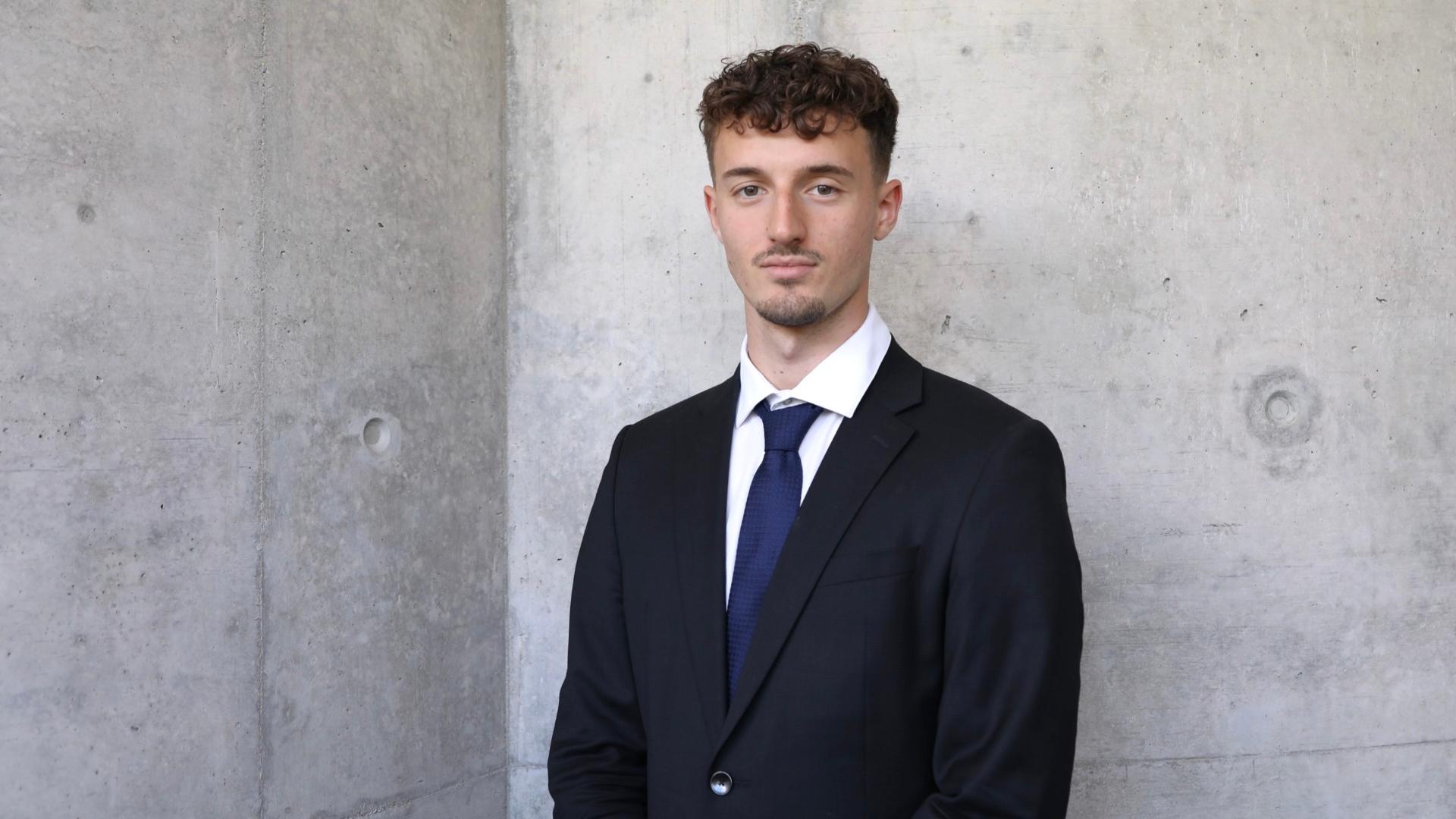
When people in Germany talk about the United States, they often fall back on the same familiar buzzwords: polarization, culture wars, identity politics, gun violence, and unpredictable politics. The dominant image is that of a deeply divided country, where families are torn apart and people are no longer able to have meaningful conversations with one another. Yet in the three years I have now lived in the United States, I have come to know a very different America. Certainly not a country without conflict, nor a perfect one, but one characterized by openness, kindness, optimism, and countless encounters that rarely make the headlines.
Three years ago, after graduating from high school in Berlin, I moved to the United States on a soccer scholarship to study Political Science. I currently attend Texas A&M International University, where I also play for the university's men's soccer team. Like many college athletes, I receive a scholarship that fully covers the otherwise very high cost of tuition. The American college system makes it possible to pursue both elite-level athletics and a university education at the same time. In the United States, academics and sports are not competing priorities they go hand in hand.
This combination is still relatively rare in Europe, and in many ways, it says a great deal about America. College athletics provide young people from a wide variety of backgrounds including those from less privileged families, with access to higher education. Athletic programs are among the flagship institutions of many universities. They attract sponsors and corporate partners, fill stadiums, and generate substantial revenue, not least through merchandise sales. As a result, universities invest heavily in their athletic programs, providing outstanding facilities and extensive support for their student-athletes. Practice schedules are coordinated with class times, free tutoring is available, and academic advisors help students plan their course schedules and degree requirements.
At my university, we train every day from 10 a.m. to 1 p.m. and attend classes in the afternoon. Our team includes players from fourteen different countries: Mexico, the United States, Norway, England, France, Canada, Colombia, Cyprus, Rwanda, Italy, and Japan, among others. We all live together on campus in student residence halls, known as dorms. I share an apartment with three other soccer players from Austria, Spain, and Ecuador.
On the field, it does not matter where someone comes from or what political views their family holds. We all work toward the same goal. Spending so much time together creates a sense of unity that no political debate could ever produce. That is undoubtedly one of the reasons why soccer has such a unique ability to bring people together. Although soccer long remained in the shadow of American football and basketball in the United States, it has experienced remarkable growth in recent years.
I witnessed this especially during the past months surrounding the FIFA World Cup. Many fans traveling across the country have described exactly what I have experienced over the past three years: extraordinary hospitality, openness, and a positive atmosphere that bears little resemblance to the image of America often presented in the media.
Despite all our cultural differences, I have repeatedly experienced how naturally Americans reach out to others, offer help, and make international students feel welcome. Professors, classmates, and the families of my teammates have embraced me with a warmth and generosity that far exceeded my expectations.
Among my most memorable experiences are the Thanksgiving invitations I received during the past two years. Two of my American teammates invited me to celebrate with their families. One family clearly identified as Democratic, the other as Republican. While their political views differed significantly, they were remarkably alike in their hospitality and their genuine curiosity about my background and my perspective on the world. In both homes, I was welcomed as though I had always been part of the family. Political discussions certainly took place, but what impressed me most was the respect people showed for differing opinions. Above all, the focus was simply on spending meaningful time together.
Of course, political tensions exist in the United States. Universities are no exception, and many controversial issues are debated intensely. In Texas, for example, the state has one of the most restrictive abortion laws in the country, as well as relatively permissive gun laws that allow almost any adult over the age of twenty-one to carry a firearm.
Yet my impression is that most people define themselves far more through their work, their sport, or their college community than through politics alone. The helpful neighbor next door, the soccer team made up of players from around the world, and the kindness people show one another rarely find their way into international news coverage.
Especially in these polarized times, we should not lose sight of America's positive qualities. Regardless of political disagreements, Germany and the United States continue to share deep historical, cultural, and personal ties. Millions of people have family members, friends, or cultural connections across the Atlantic. American culture, music, and sports have shaped everyday life in Germany for decades. Most importantly, both countries remain committed to fundamental values such as freedom, democracy, and an open society.
As the United States celebrates the 250th anniversary of its founding, perhaps this is an appropriate opportunity to remember not only what divides us, but also what unites us.
After three years of living in America, I am far from claiming that the country is free of problems. Many developments in both domestic and foreign policy concern me. Yet the America I have come to know is far warmer, more welcoming, and far less divided than I had expected before arriving. To me, America is a country that offers opportunities to young people like myself. It is a country that brings together people from around the world and welcomes strangers with open arms.