





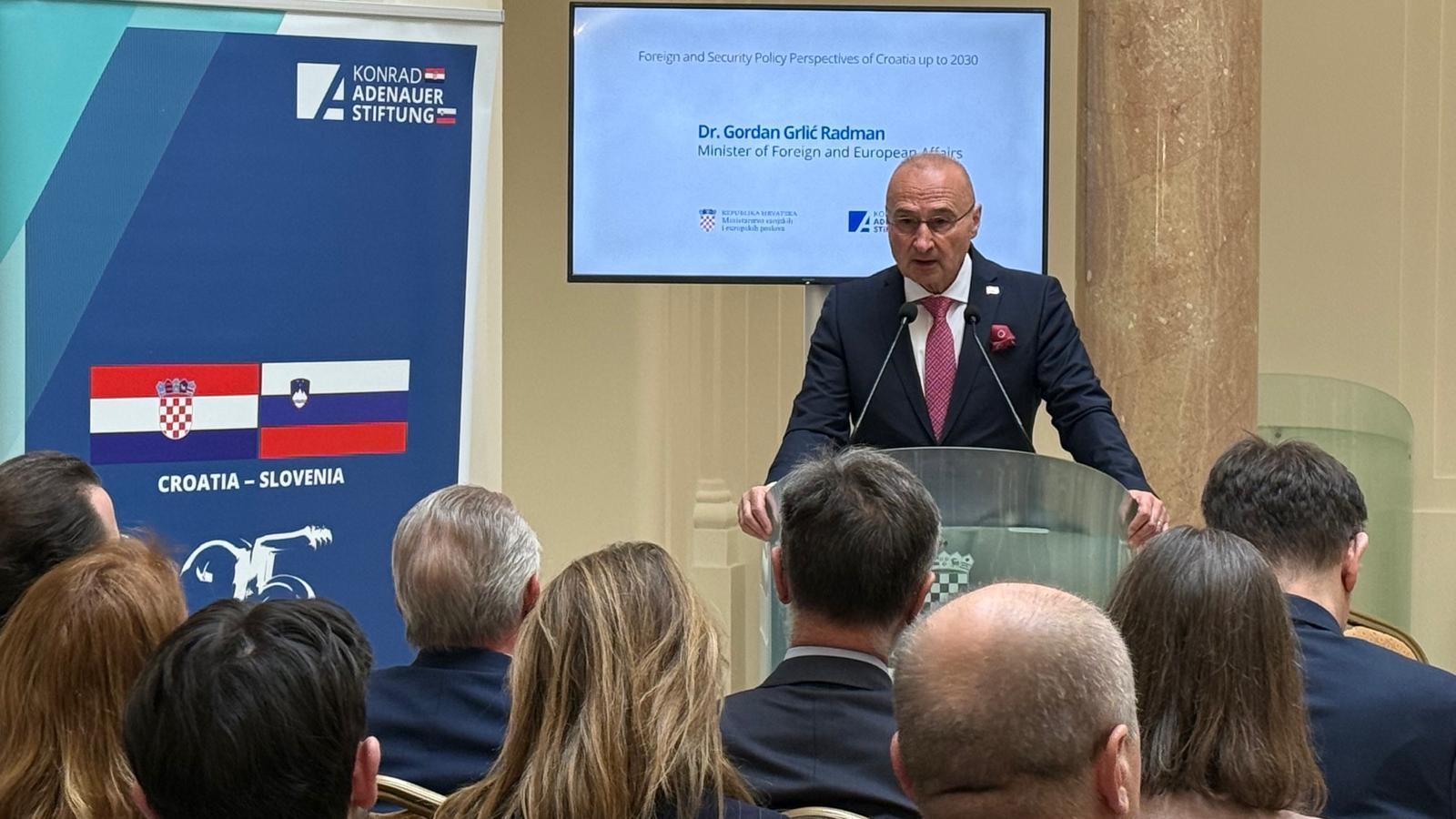
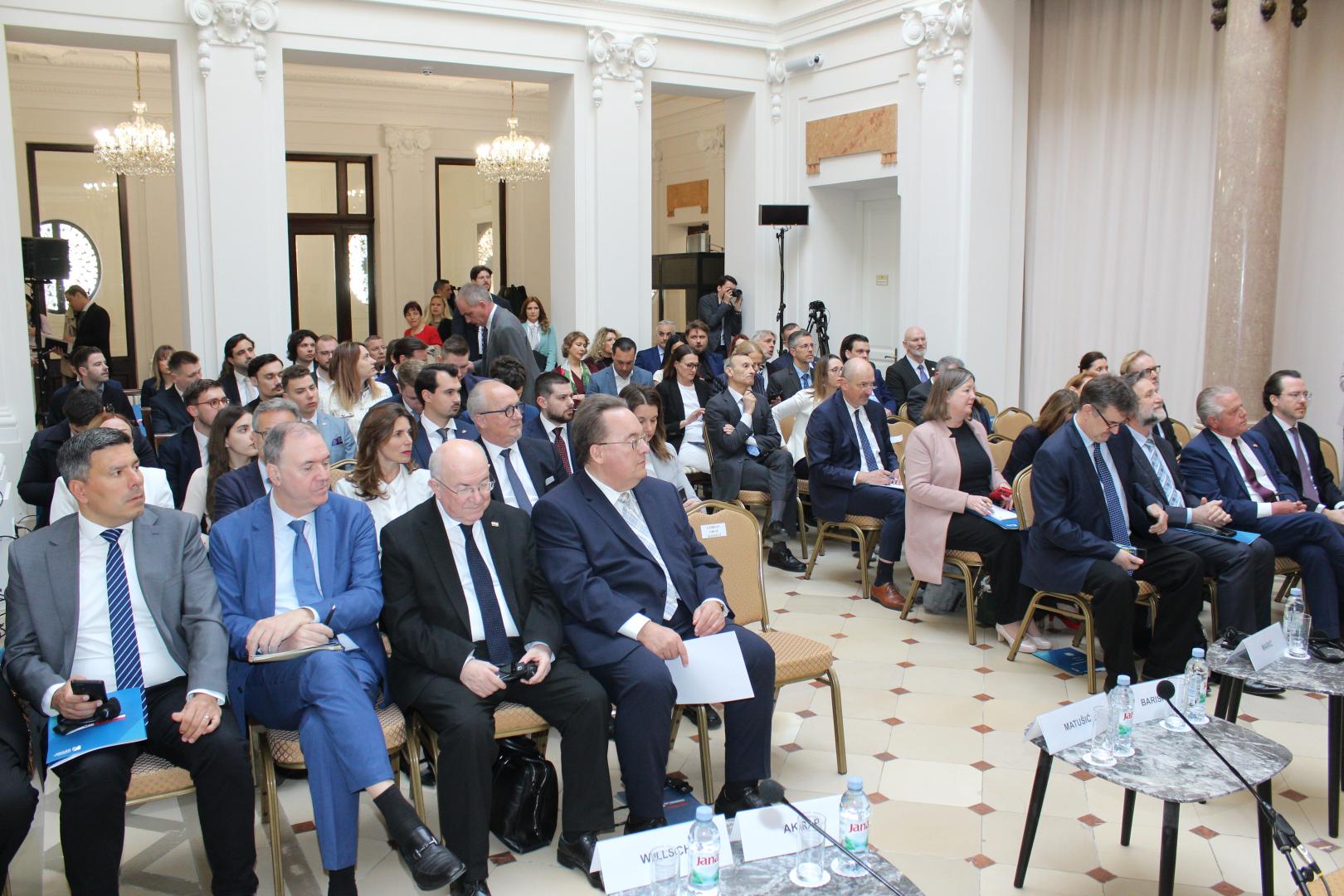
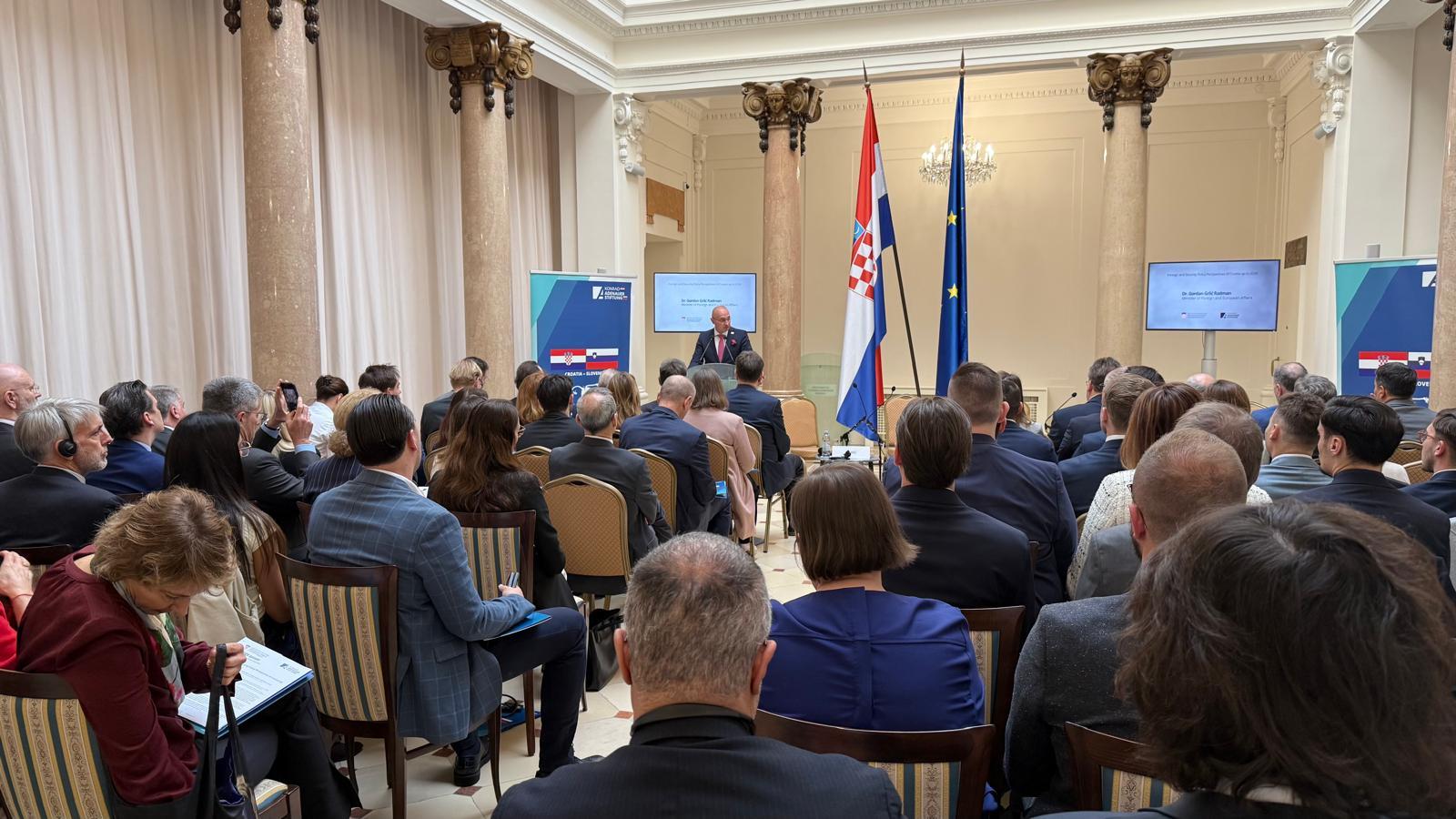
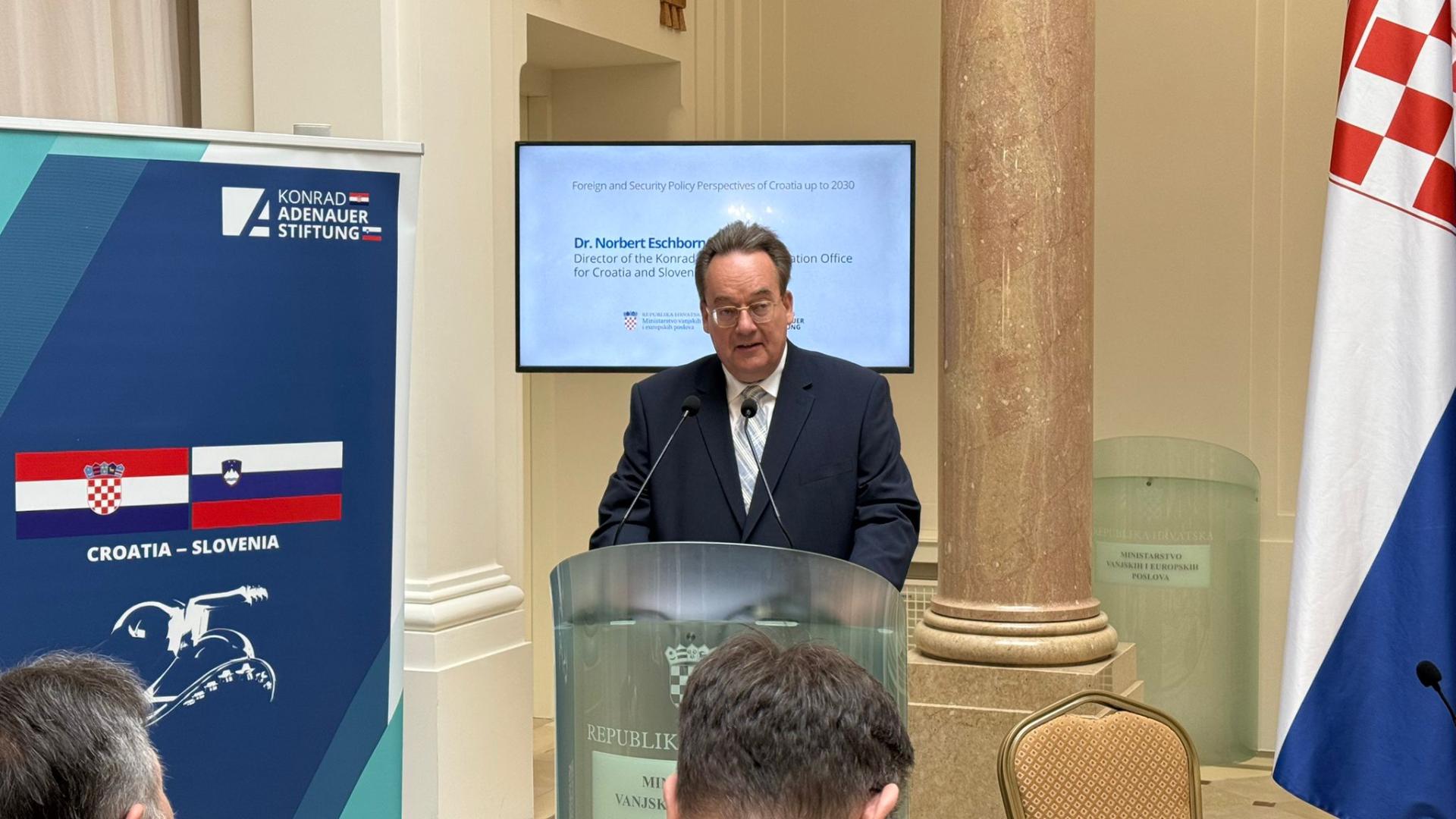
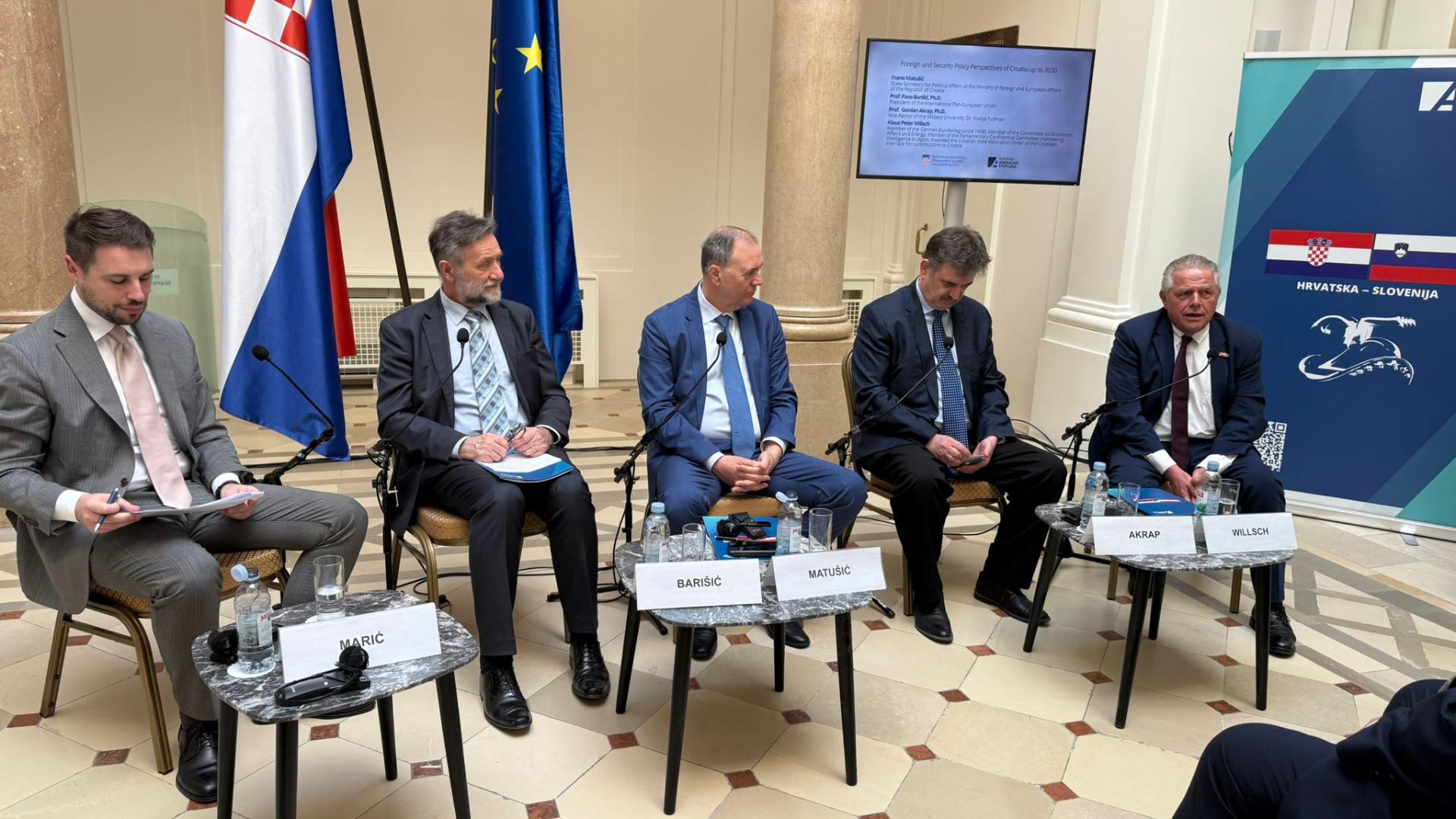
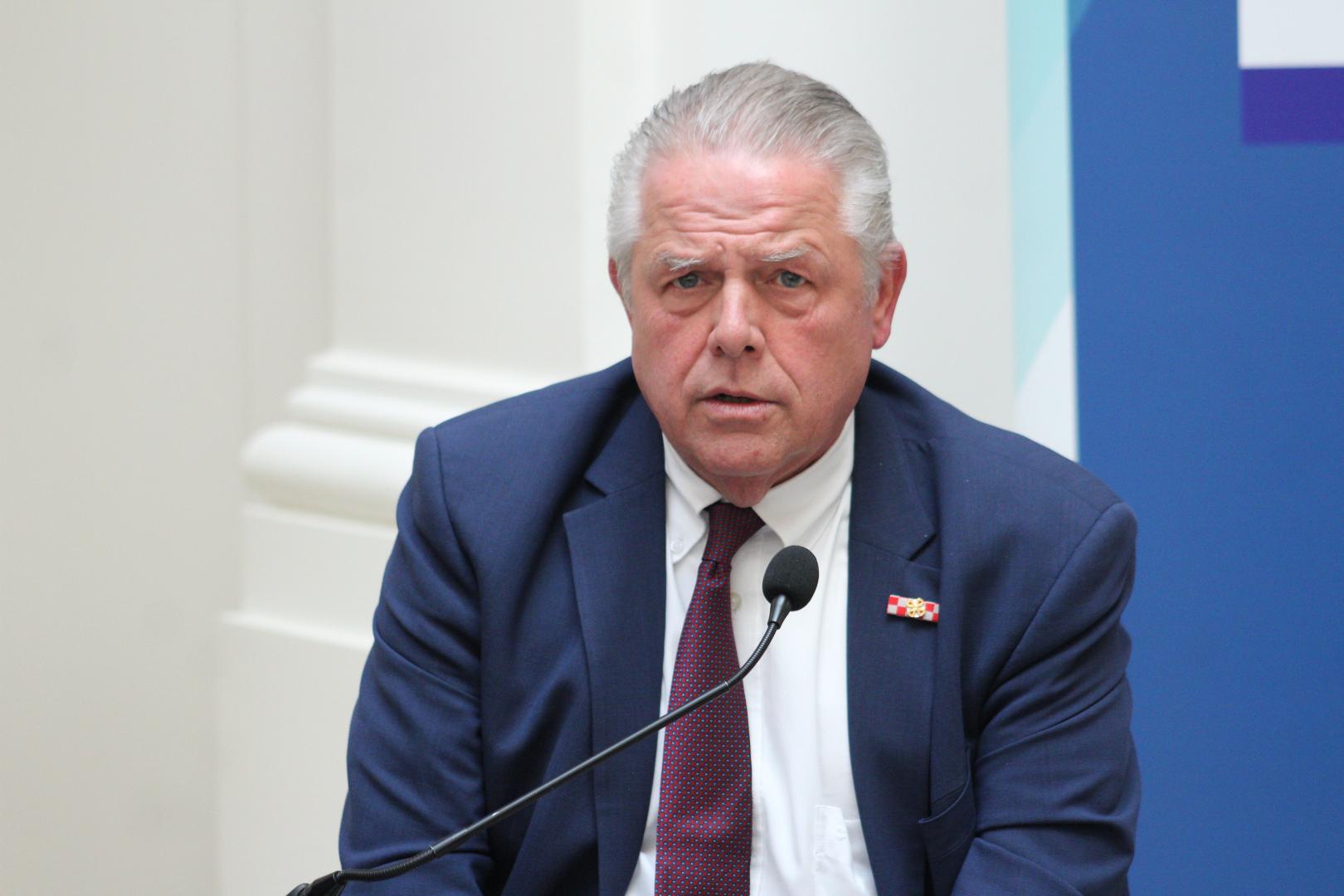
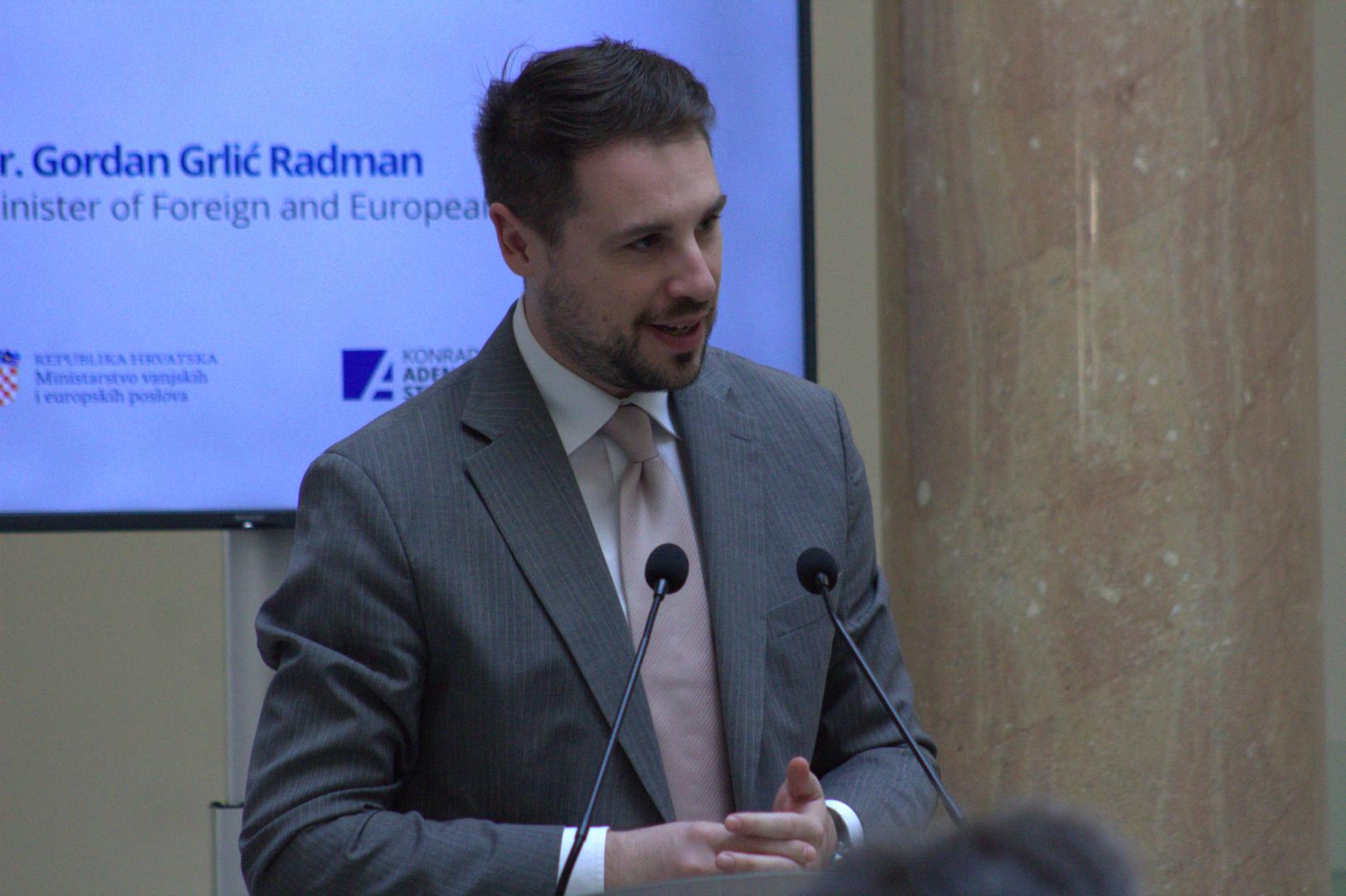
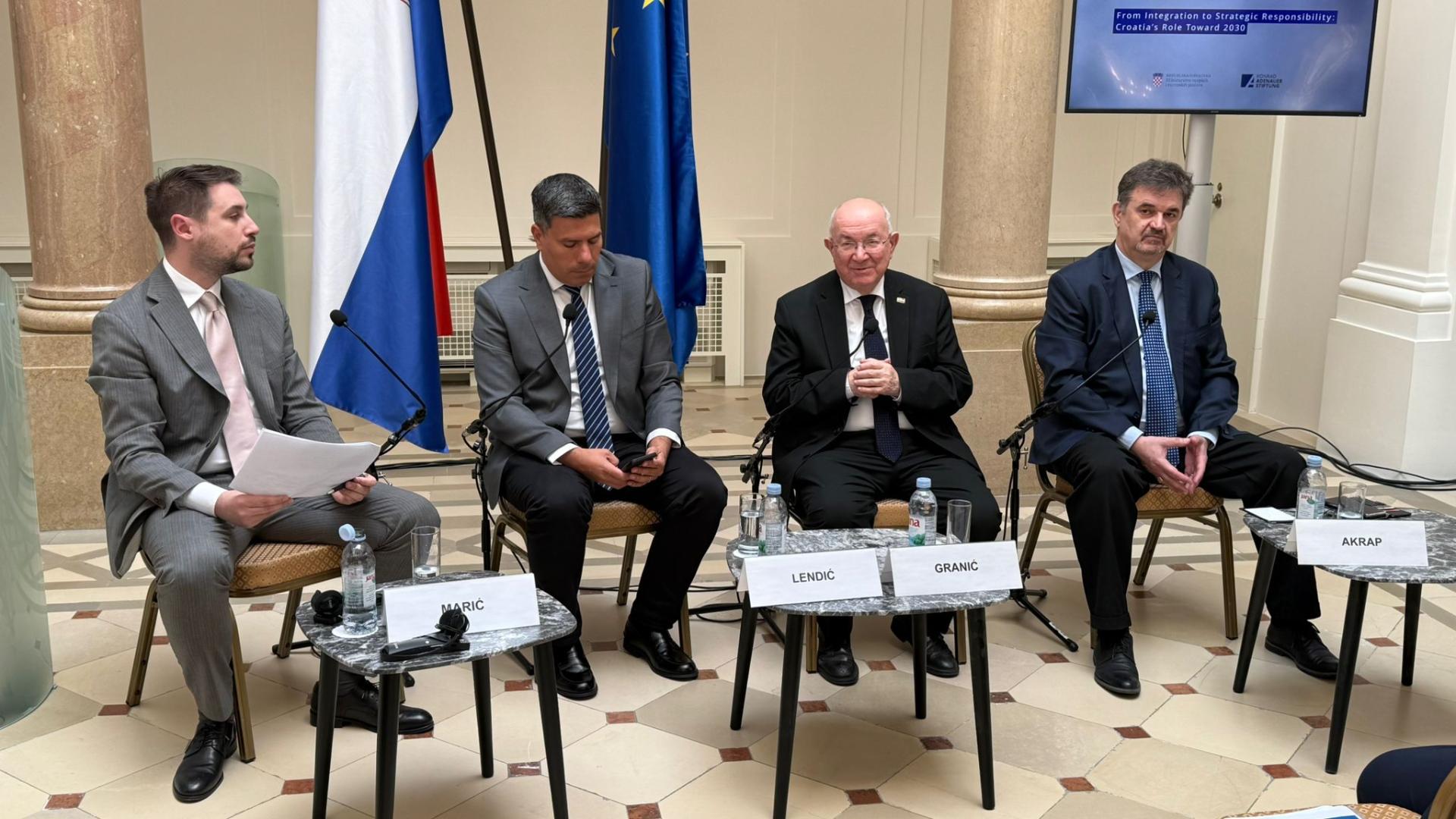
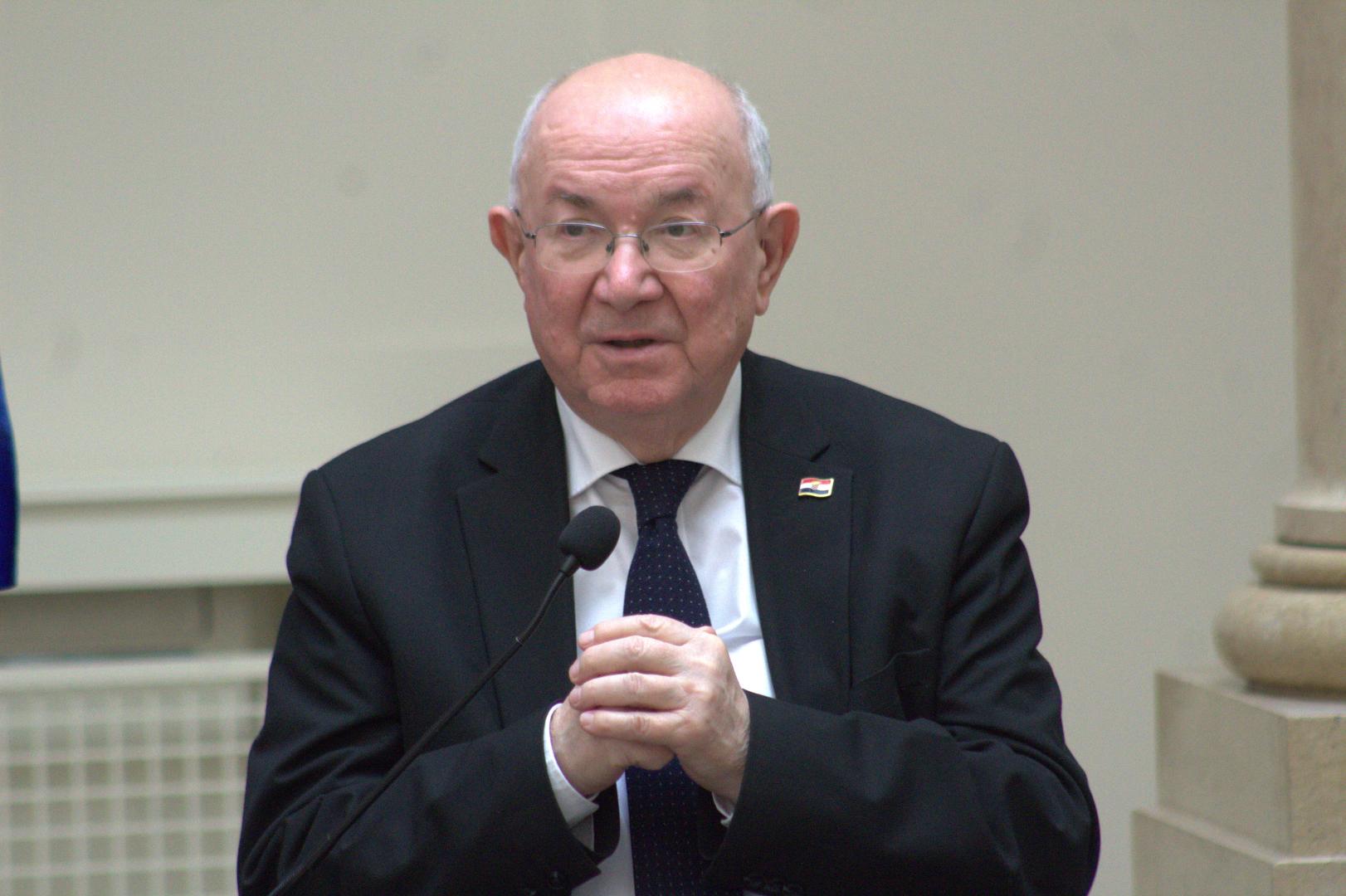
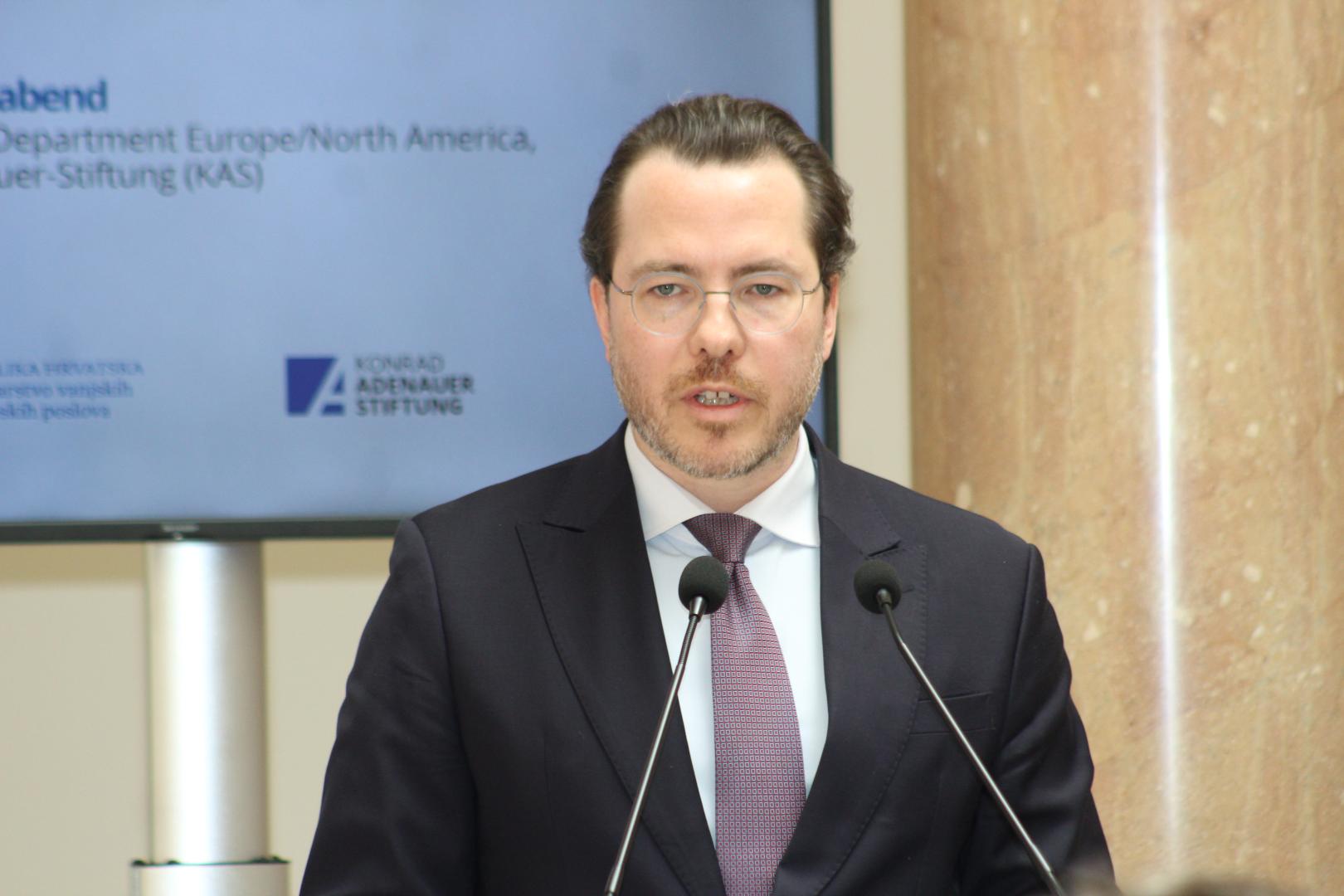
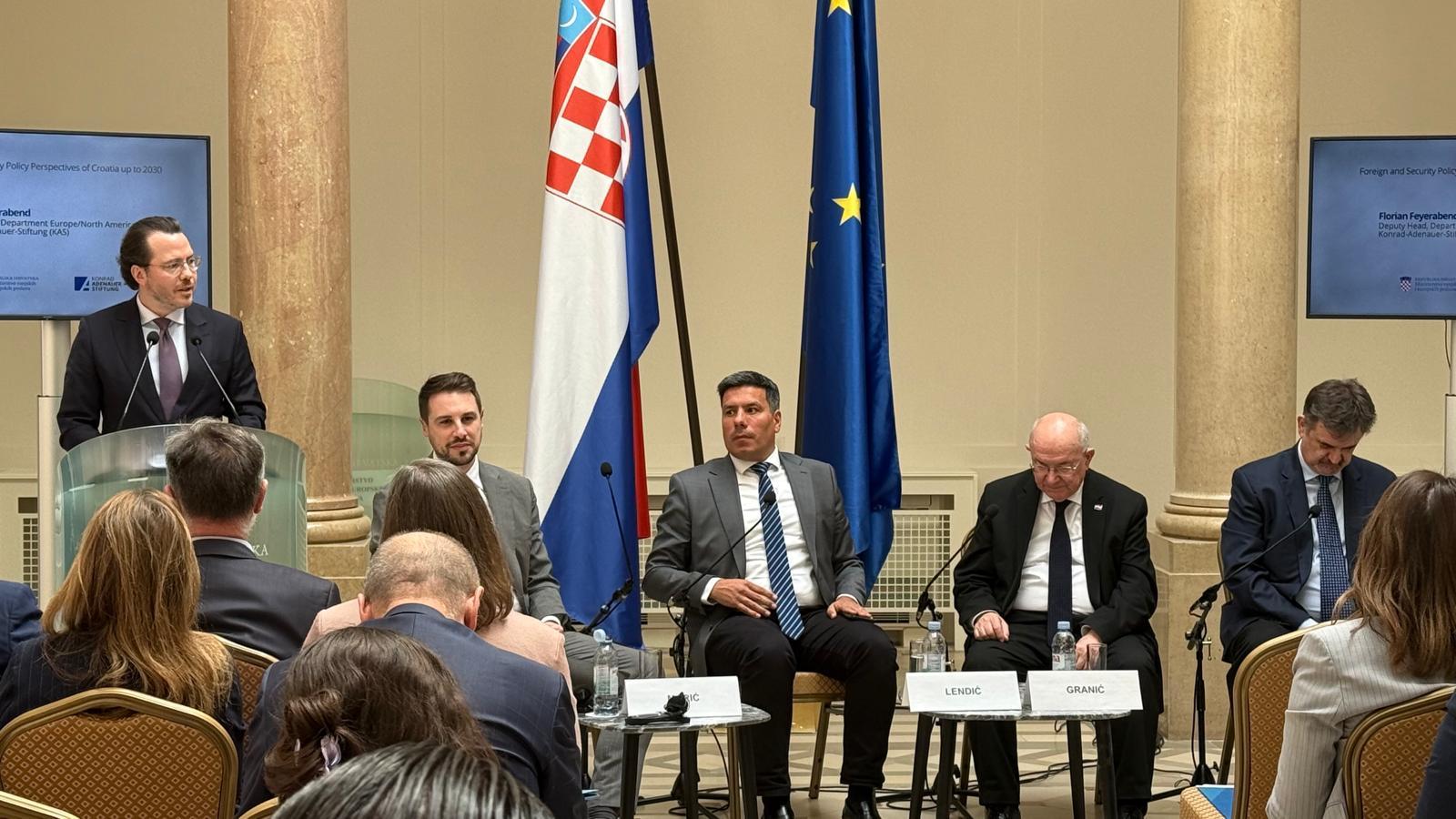
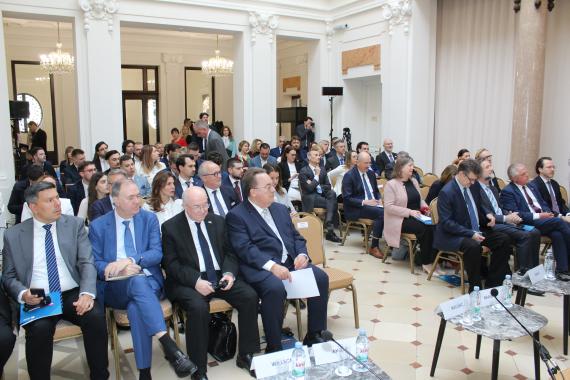
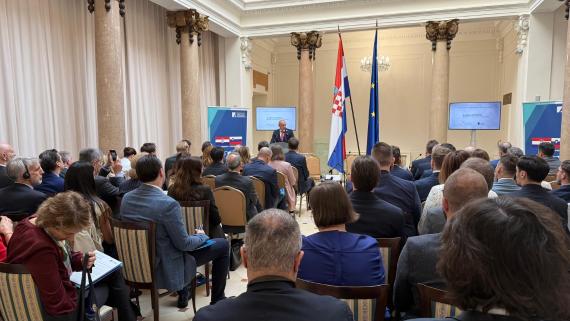
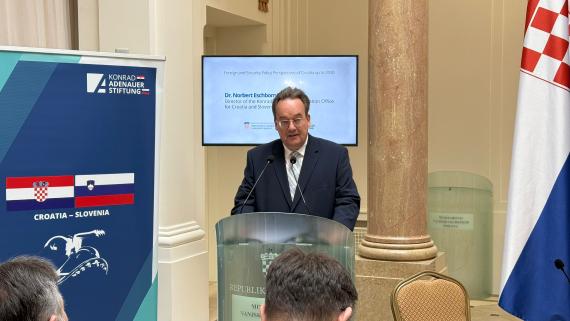
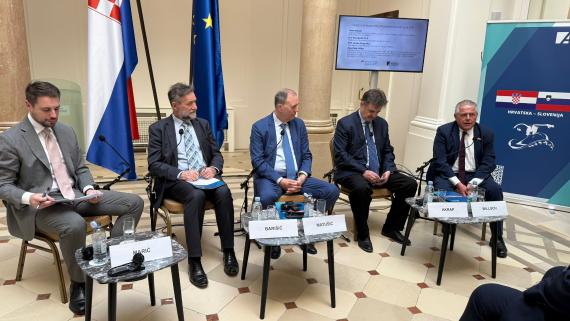
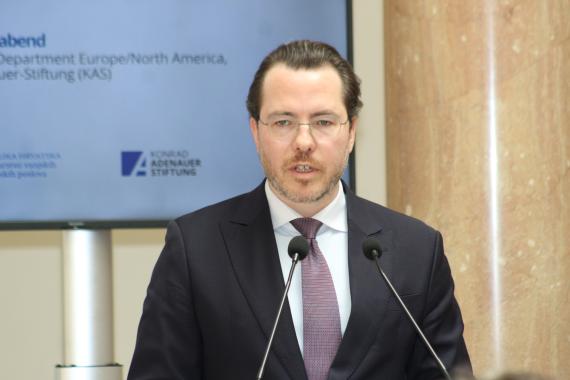
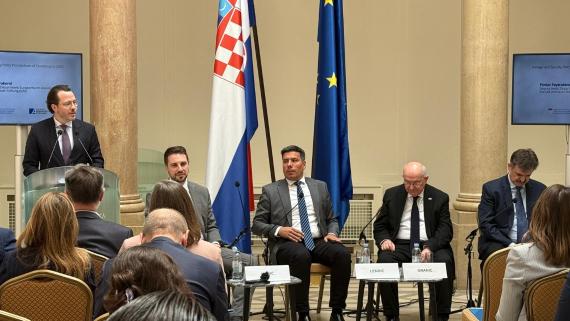
In this context, on April 8th, 2026, the KAS Croatia-Slovenia Office, in cooperation with the Croatian Ministry of Foreign and European Affairs, organized a high-level dialogue event in Zagreb on the topic “Foreign and Security Policy Perspectives of Croatia up to 2030”. The occasion was the visit of the Member of the German Parliament Klaus-Peter Willsch, a long-standing friend of Croatia. The central question addressed was how Croatia, following its successful integration into the EU and NATO, will position itself going forward, and what role it can assume as a co-shaper of European and transatlantic security policy.
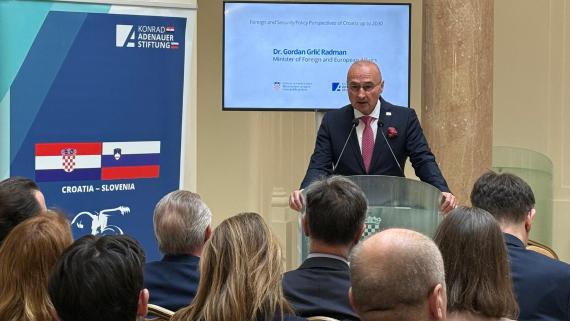
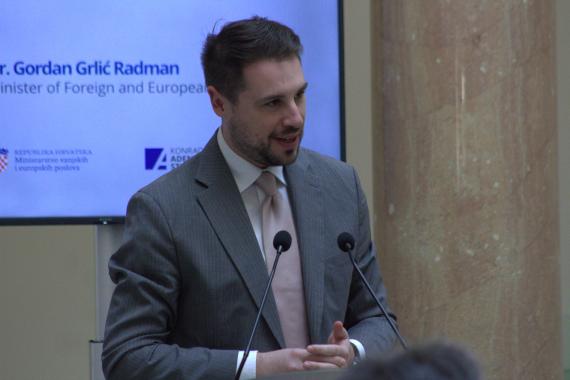
The conference was opened by Croatian Foreign Minister, Dr. Gordan Grlić Radman and the Director of the KAS Croatia-Slovenia Office, Dr. Norbert Eschborn. Both emphasized the importance of political dialogue and international cooperation considering current security challenges, as well as Croatia’s growing role as a constructive contributor to the European security architecture.
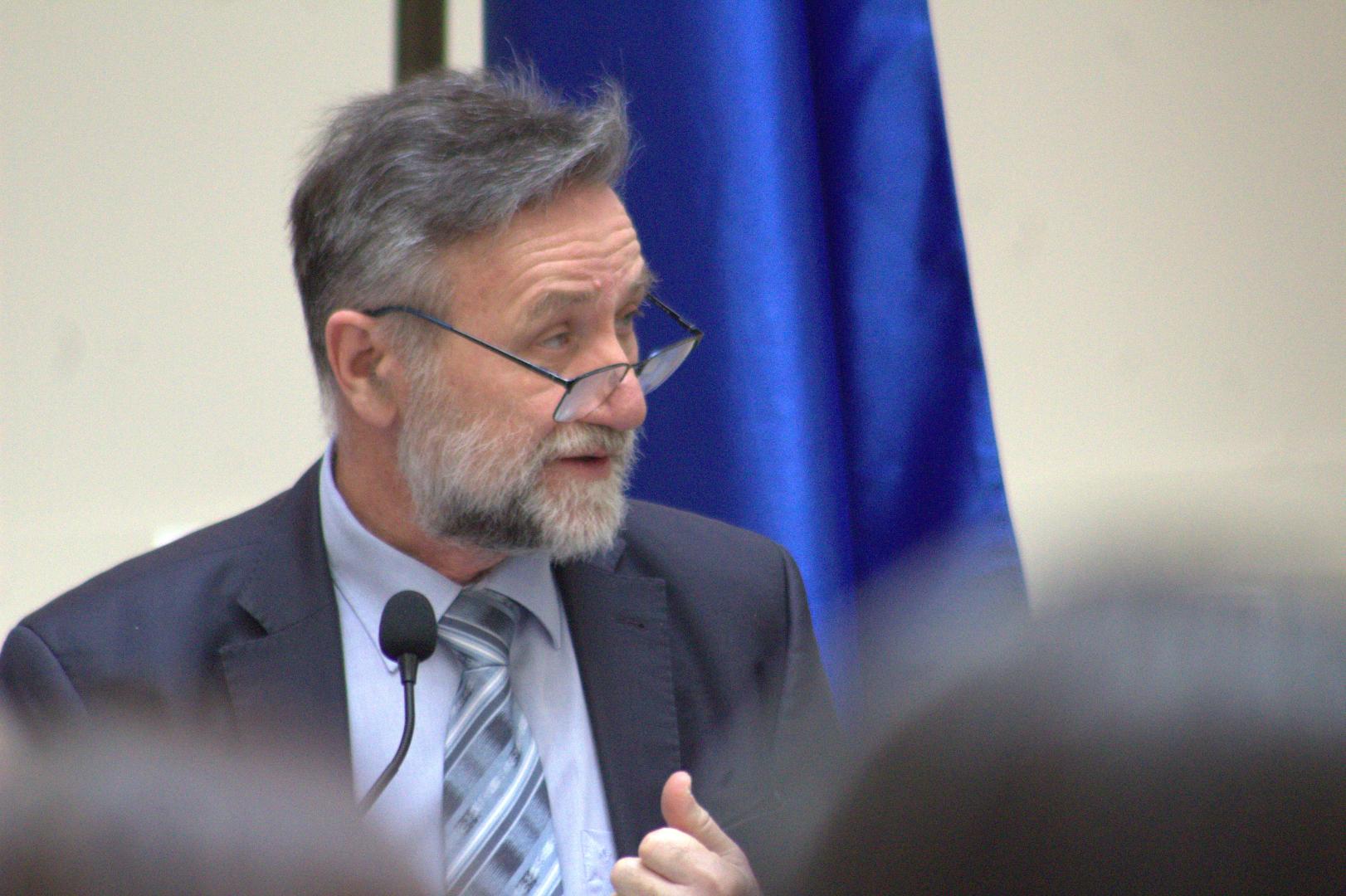
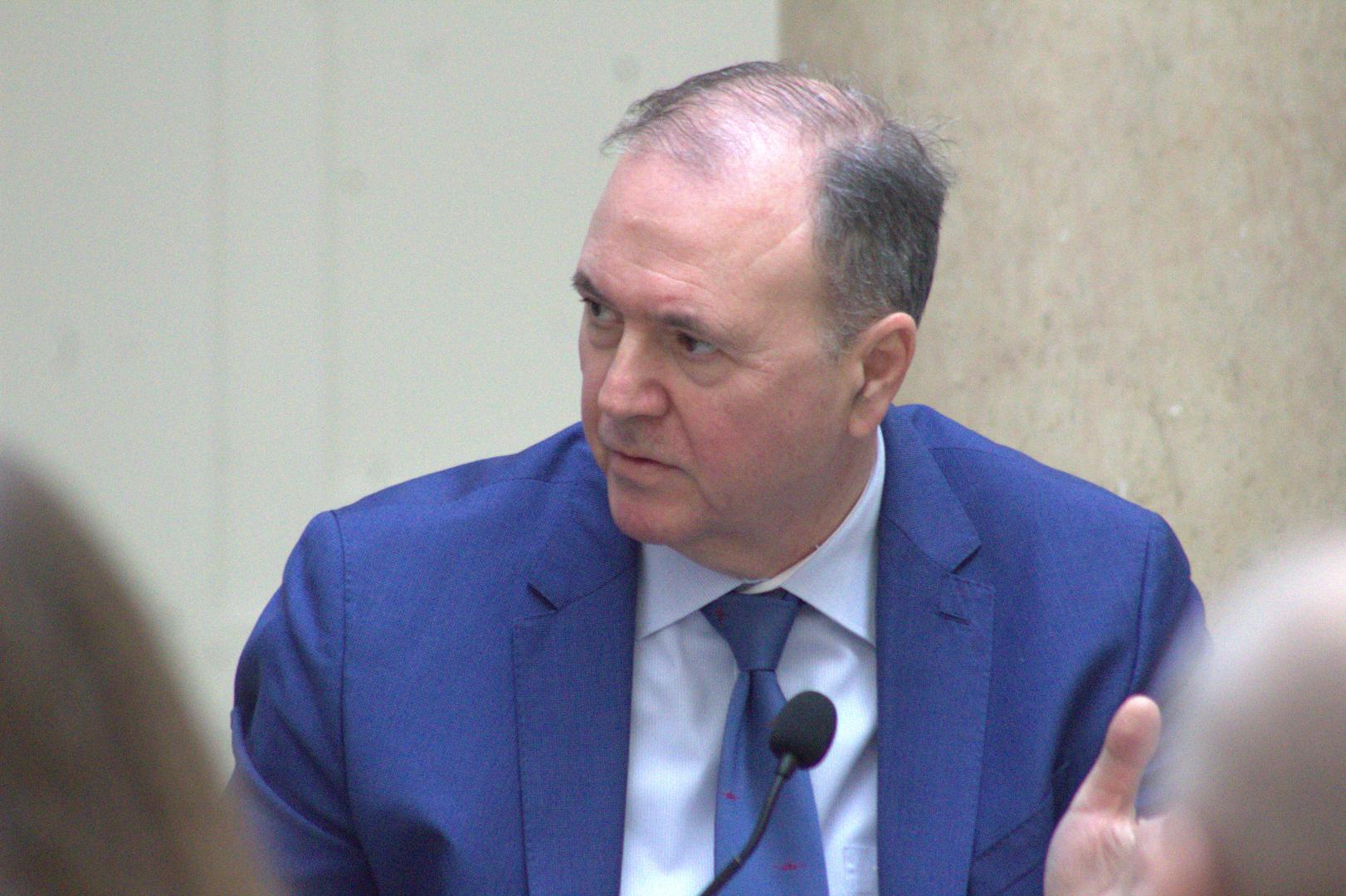
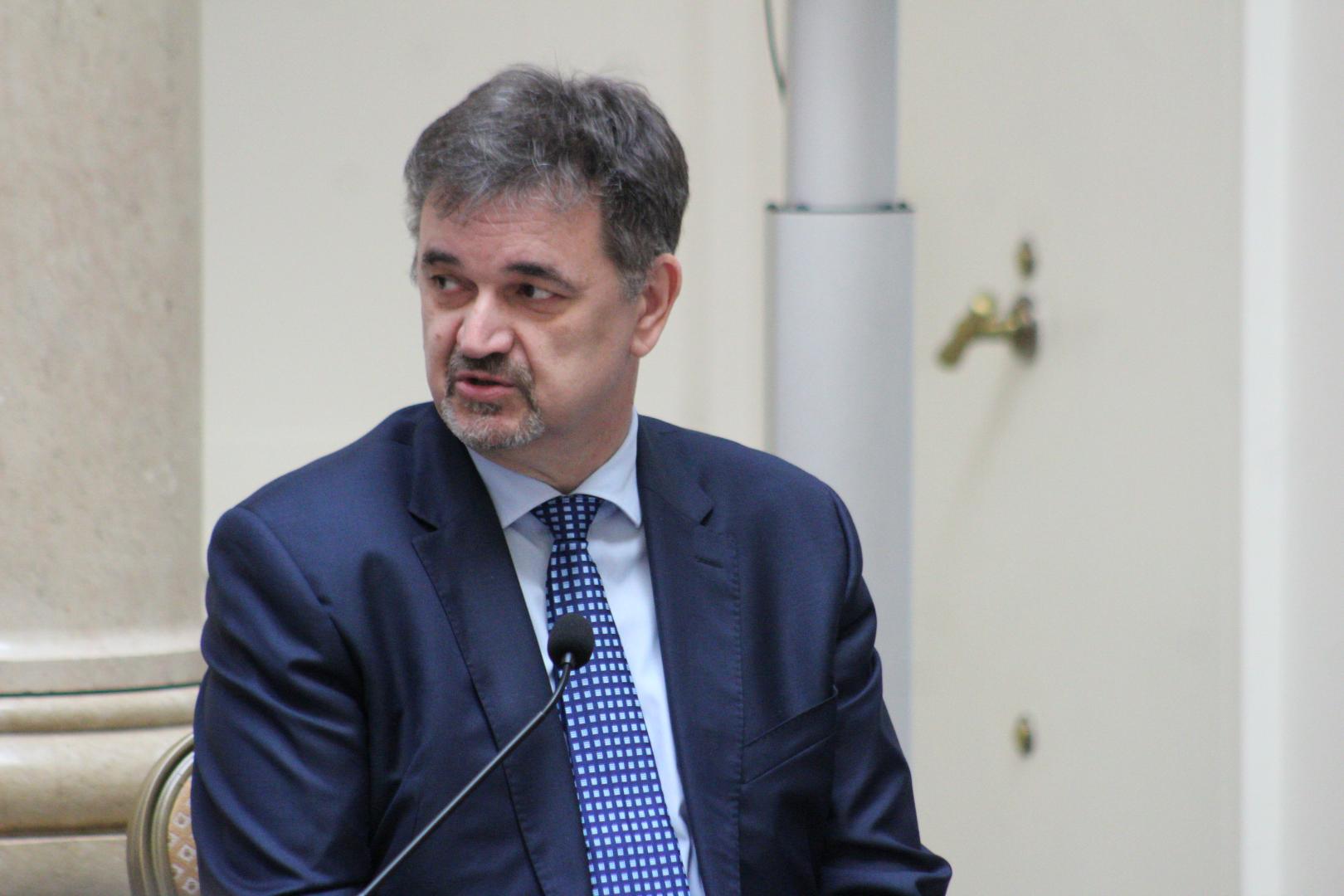
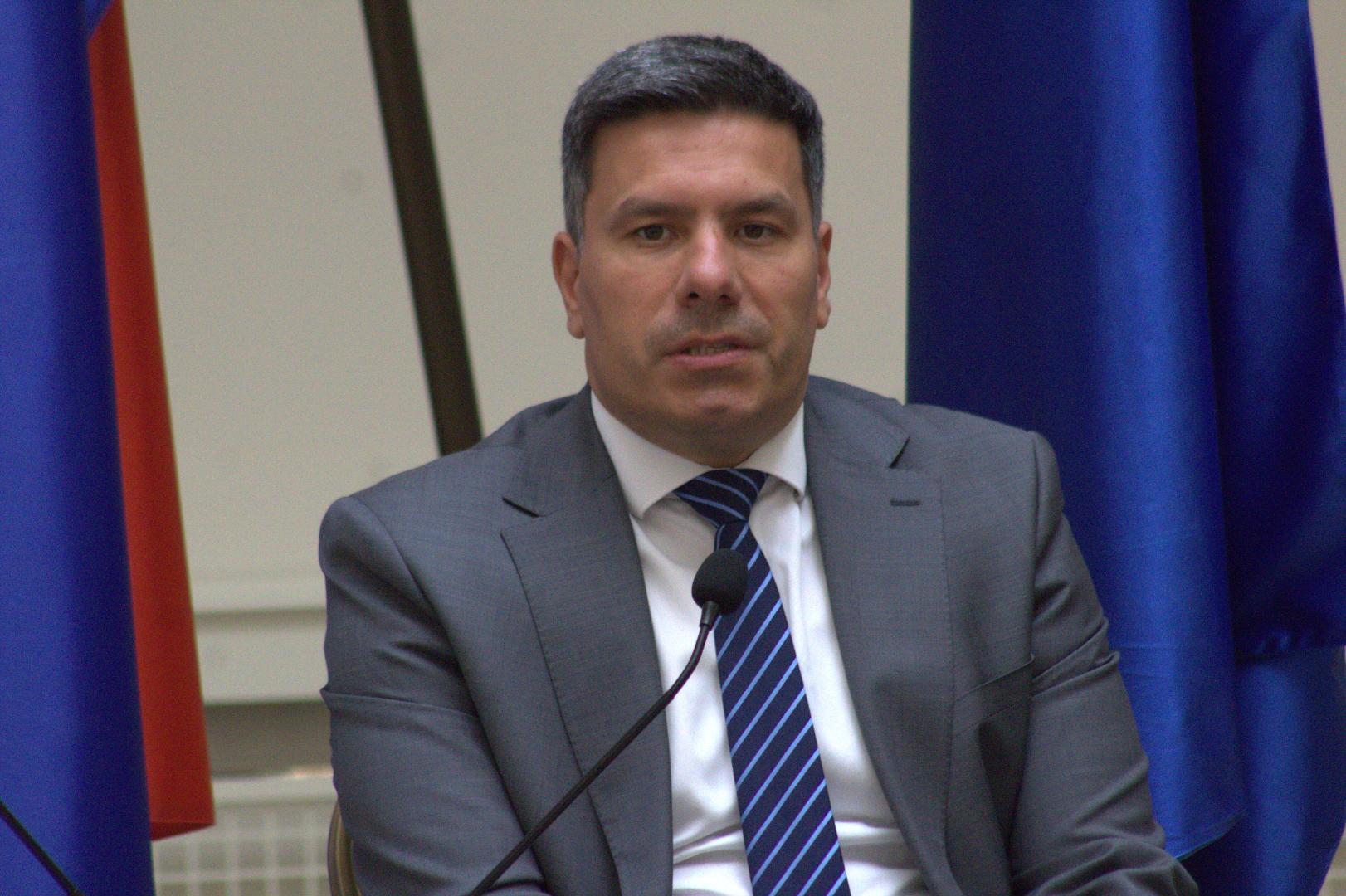
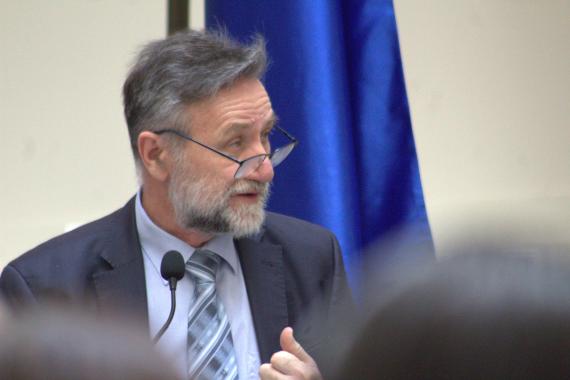
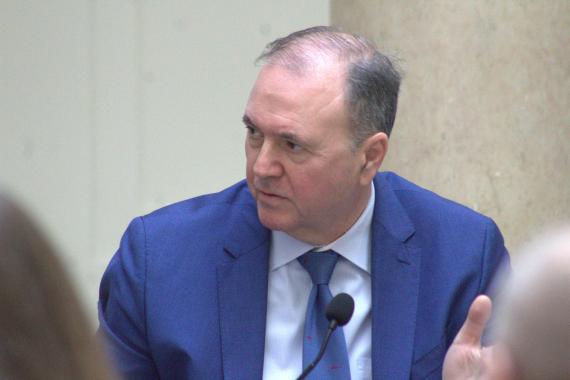
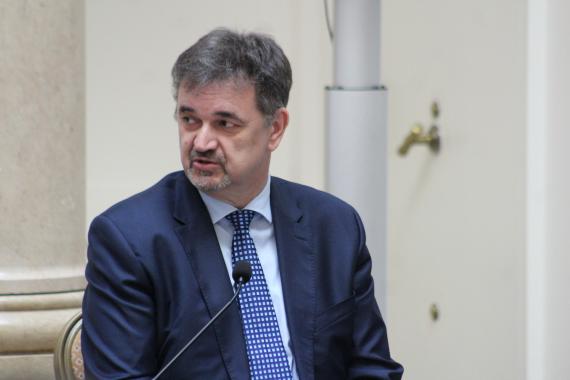
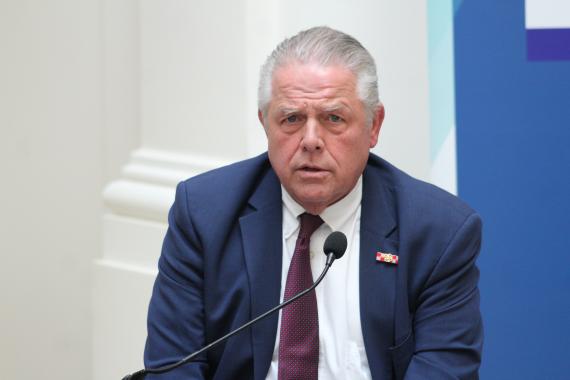
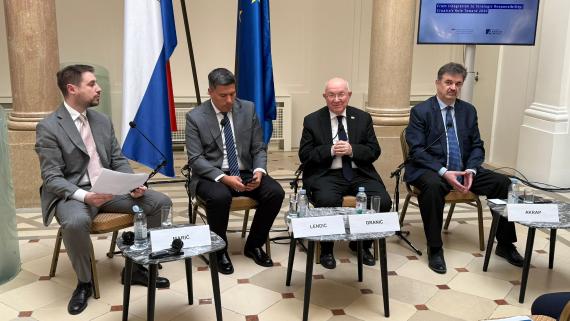
In two high-level panels, representatives from politics, academia, and security practice (including Prof. Pavo Barišić, PhD; Dr. Prof. Gordan Akrap, PhD; Dr. Mate Granić, and Frano Matušić) analyzed Europe’s role in an increasingly fragmented world order. It became clear that Europe’s capacity to act depends significantly on internal cohesion, reliable institutions, and a shared value base. At the same time, Croatia’s development from a case of integration into a strategically responsible actor was highlighted, whose experience in transformation and reform should be incorporated into future foreign and security policy. Domestic political consensus was emphasized as a key prerequisite for foreign policy credibility and stability.
The discussions further underlined that Croatia’s approach to hybrid threats, societal polarization, and external pressure provides valuable insights for other European states and demonstrates its institutional maturity and political resilience. Against the backdrop of growing geopolitical tensions, the participants discussed how European cohesion, institutional resilience, societal stability, and the fight against disinformation can be strengthened.
Overall, the conference demonstrated that in a changing international order, Europe increasingly relies on dialogue, cooperation, consensus, and strategic foresight. It provided a platform for exchange between Croatia and Germany and set impulses for a shared, value-based foreign and security policy. In this context, Croatia was particularly highlighted as a reliable partner and driver of momentum in Southeast Europe. Looking toward 2030, it was emphasized that stable partnerships and integrative approaches are crucial for peace, stability, and democratic development in Europe.