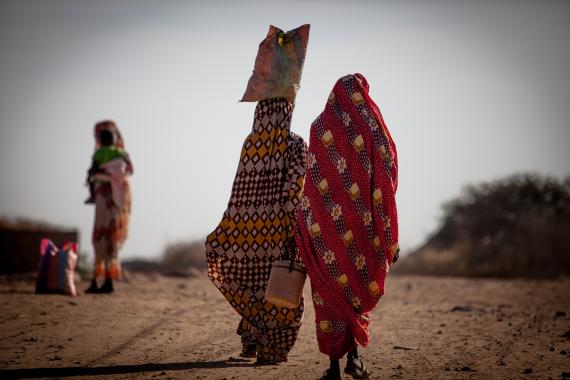



On 28 July 2026, the Geneva Refugee Convention turned 75. Its enduring relevance is particularly evident in light of the record numbers of people forcibly displaced worldwide.
Although the global fight against HIV/AIDS has made remarkable epidemiological and medical progress, its political, financial, and institutional foundations are coming under increas...
Article I(2) of the 1969 OAU Refugee Convention is the ‘most influential conceptual standard of refugee status apart from the [1951] Convention definition itself’.
On Sunday, 14 June 2026, Swiss voters and cantons delivered a clear verdict on the Swiss People's Party's (SVP) initiative to cap Switzerland's resident population at 10 million.
On 14 June, Switzerland will vote on the Swiss People’s Party’s (SVP) 10-million initiative. The SVP aims to strictly limit the population through this measure.
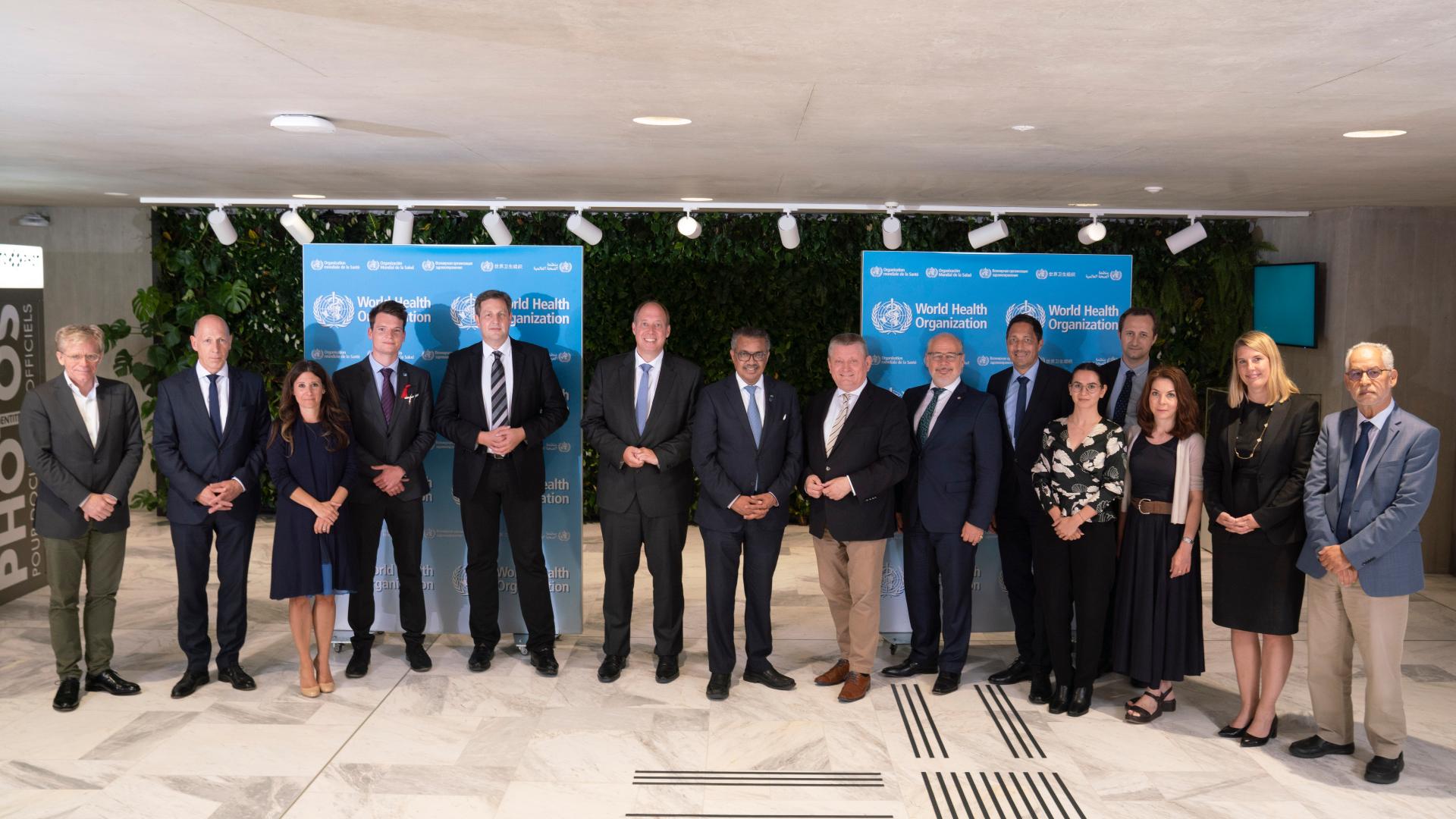
Under the theme “Reshaping global health: a shared responsibility,” the 79th World Health Assembly (WHA) of the World Health Organization (WHO) convened in Geneva from 18 to 23 May ...
Freedom, justice and solidarity are the basic principles underlying the work of the Konrad-Adenauer-Stiftung (KAS). The KAS is a political foundation, closely associated with the Christian Democratic Union of Germany (CDU).
Multipod: WHO macht Fortschritte bei internationalen Gesundheitsvorschriften
Die Covid-Pandemie hat auch auf internationaler Ebene Folgen. Erfahren Sie, wie die Weltgesundheitsorganisation (WHO) und ihre Mitgliedstaaten sich besser für die Zukunft wappnen.
Or adjust your cookie settings under privacy policy.
Statement
Norbert Lammert on the 75th anniversary of the Universal Declaration of Human Rights
"Human rights are not laws of nature. [...], they must be protected & defended by people who take the claim to the inviolability of human dignity seriously".
Multipod: Review of Germany in the UPR
Multipod: Human rights protection starts at home. Germany in the UPR
On 9th November 2023, the United Nation's Human Rights Council discussed the human rights situation in Germany
Or adjust your cookie settings under privacy policy.
Genfreise
Geneva Security Debate zum Krieg in der Ukraine
Prof. Dr. Lammert, Botschafter Dr. Heusgen und Botschafter Greminger zu den Auswirkungen des Krieges in der Ukraine auf den Multilateralismus und die Weltordnung
Delegationsreise
Dialogprogramm des Arbeitskreises Globale Gesundheit der Konrad-Adenauer-Stiftung in Genf
Erfahren Sie mehr über die Delegationsreise zu aktuellen Herausforderungen im Bereich Globale Gesundheit vom 7-9. Juni
Asset Publisher
Asset Publisher
Asset Publisher
Current publications
UN Women/Sayed Habib Bidell
75th anniversary of the 1951 Refugee Convention: Insights from the UNHCR Global Trends report
The "Geneva Telegram" explores events in Geneva-based multilateral organizations on a current topic. This time, the focus is on the 75th anniversary of the 1951 Refugee Convention, ...
Sarah Ultes
July 28, 2026
Geneva Telegram
U.S. Mission / Eric Bridiers / flickr / CC BY-ND 2.0
The global fight against HIV/AIDS amid financial pressures and an uncertain future for UNAIDS
The "Geneva Telegram" explores events in Geneva-based multilateral organizations on a current topic. This time, the focus is on HIV/AIDS.
Linde Buder
July 16, 2026
Geneva Telegram
Advancing Protection under Article I(2) of the 1969 OAU Refugee Convention
Interpretative clarity, operational support and pathways forward for African States Parties
Dr. Tamara Wood
June 26, 2026
Single title
EdvanKun
Analysis of the Swiss vote against capping the population at 10 million
During the 58th UN Human Rights Council, which was held in Geneva from February 24 to April 4, a total of 32 texts were adopted, 20 of them by consensus and 12 after a vote. For the first time since 2011, for example, the Commission of Inquiry on Syria was extended by consensus. Resolutions on Myanmar, Mali, Haiti, North Korea, the role of women in diplomacy, the right to a clean, healthy and sustainable environment with a particular focus on the oceans, on landmines or the establishment of an open-ended intergovernmental working group tasked to draft an international legally binding instrument on the human rights of older persons were adopted by consensus. However, votes were held on the extension of special rapporteurs and investigative mechanisms for Iran, Belarus, South Sudan, Ukraine, Nicaragua or the Palestinian territories. In light of the immense pressure that the human rights system is currently facing, support was voiced by 71 states who headed the call of the High Commissioner for Human Rights that: "We cannot allow the fundamental global consensus around international norms and institutions, built painstakingly over decades, to crumble before our eyes."
Sarah Ultes
April 7, 2025
Map of the Month
Votes on Russia's war of aggression against Ukraine on 24 February 2025 in UN General Assembly and UN Security Council
Map of the Month 02/2025
Drei Jahre nach Beginn des großflächigen Einmarsch Russlands in die Ukraine musste die UN-Generalversammlung am 24. Februar 2025 über zwei verschiedene Resolutionen anstatt über einen einzigen Text abstimmen. Die erste Resolution (L.10) wurde von der Ukraine und europäischen Ländern eingebracht und basiert größtenteils auf einem Text aus dem Februar 2023, welcher damals mit großer Mehrheit (141 Ja-Stimmen, 7 Gegenstimmen, 32 Enthaltungen) angenommen wurde. Die nun vorgelegte Resolution wurde hingegen lediglich mit 93 Stimmen bei 18 Gegenstimmen und 65 Enthaltungen angenommen. Erstmals stimmte auch die USA gegen den Text und brachte sogar einen alternativen Text ein (L.11), welcher jegliche Referenz zur russischen Aggression vermied. Damit vollzog sie einen grundlegenden Positionswechsel. Ihr eigene Resolution wurde in der Generalversammlung zwar auch angenommen, jedoch nur in veränderter Form, da drei europäische Änderungsanträge angenommen wurden. Im UN-Sicherheitsrat brachte die USA hingegen nur wenige Stunden später ihre ursprüngliche Textfassung ohne europäische Änderungen durch, da die Anträge der Europäer überstimmt oder durch russisches Veto abgelehnt wurden. Die Karten des Monats geben Einblick in die Abstimmungen zu den jeweiligen Resolutionen sowie den europäischen und auch russischen Änderungsanträgen.
Sarah Ultes
February 25, 2025
Map of the Month
Support for 37th Special Session of UN Human Rights Council on situation in the east of the DRC
Map of the Month 02/2025
At the request of the Democratic Republic of the Congo (DRC) and with support of 27 Member States as well as 21 Observer States, the UN Human Rights Council convened its 37th Special Session on the human rights situation in the east of the DRC on the 7th of February. The Council adopted a resolution without a vote in which it condemned in the strongest possible terms the human rights violations and abuses being committed in the provinces of North and South Kivu, the unlawful exploitation and looting of natural resources therein as well as the military and logistical support provided by the Rwanda Defence Force to the M23. It decided to urgently establish an international fact-finding mission to investigate and establish the facts, circumstances and root causes of all alleged violations and abuses, collect, consolidate and analyse all evidence, identify persons and entities responsible, make recommendations on accountability and present a first oral update in the 59th Council session in September 2025. It also established an Independent Commission of Inquiry to Continue the work of the Fact-Finding Mission.
Sarah Ultes
February 7, 2025
Map of the Month
Voting behaviour in line with Germany’s and China's positioning in the UN Human Rights Council 2024
Map of the Month 01/2025
The map of the month January illustrates the voting behaviour of the members of the Human Rights Council in line with Germany’s versus China's positioning in the Council in 2024. A total of 91 resolutions were adopted in the UN Human Rights Council last year, 25 of which were put to a vote due to a lack of consensus. In addition to the EU member states, the USA, Montenegro, Japan, Finland and Albania voted most frequently in line with Germany (over 80%); Algeria never did so and Bangladesh, Burundi, Cameroon, China, Eritrea and Sudan only once. Of the Central and South American Council members, Argentina, Paraguay, Costa Rica and Chile voted most frequently in line with Germany (just over 55%); of the African states, Malawi, Ghana and Gambia (just over 35%). By contrast, Eritrea, Cuba and Burundi voted in line with China most frequently, while Albania, Argentina, Bulgaria and the USA never voted with China, and Germany, Lithuania, the Netherlands and Romania hardly ever (4%). China and Germany only voted together once: they supported a text on the Palestinian people's right to self-determination, which the USA rejected.
75th anniversary of the 1951 Refugee Convention: Insights from the UNHCR Global Trends report
On 28 July 2026, the Geneva Refugee Convention turned 75. Its enduring relevance is particularly evident in light of the record numbers of people forcibly displaced worldwide.