





Asset Publisher

Publications

Asset Publisher

ktsimage

Beyond Fragmentation: Policy Options for Digital Harmonization

Reflections from the second KAS-WISC Roundtable on Digital Trade

Writing rules for the digital economy is a balancing act. Everyone agrees that to derive the maximum benefit from the digital economy requires keeping obstacles to trade to a minimum. Yet, there is also a consensus that questions of national security, consumer protection and competition are of crucial importance. For political, economic and strategic reasons every government insists on a degree of sovereignty in striking this balance and it’s no surprise that governments disagree on how best to regulate the digital economy. But industry officials argue forcefully that a marketplace which is regulated in a fragmented manner severely limits opportunities for growth and innovation.

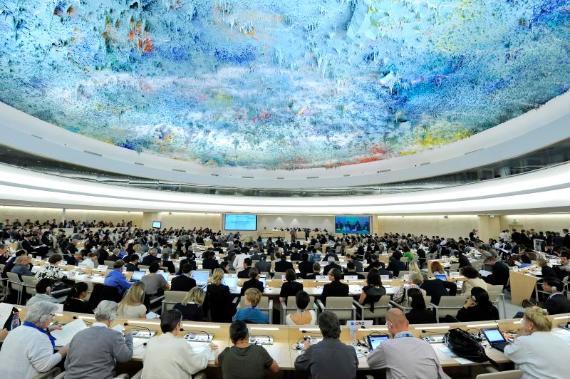
The 80th Session of the UN General Assembly

The 80th General Assembly of the United Nations began under the theme ‘Better together: 80 years and more for peace, development and human rights,’ on 9 September 2025 in New York. To mark the 80th anniversary of the United Nations on 22 September 2025, the Konrad Adenauer Stiftung's Multilateral Dialogue Geneva provided a brief overview of the work of some of the Geneva-based UN organisations and their achievements.

U.S. Mission / Eric Bridiers / flickr / CC BY-ND 2.0

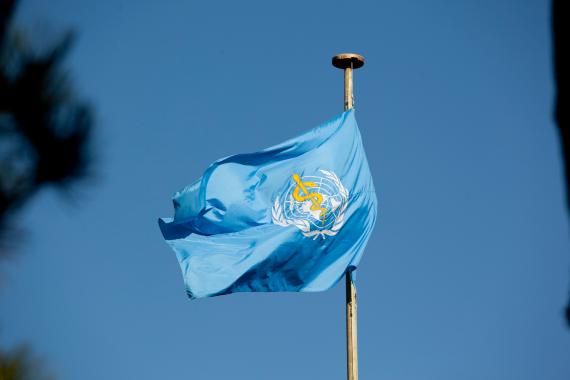
The 78th World Health Assembly of the WHO 2025

Global Health at the Crossroads of Reform and Rivalry

The 78th World Health Assembly (WHA78) offered a realistic reflection of the state of the global health system: on the one hand, member states’ ever-increasing expectations of the WHO; on the other, structural and financial constraints that threaten to severely limit its capacity for action. The Assembly itself took place against a backdrop of persistent geopolitical tensions and challenges—evident, for instance, in the conspicuous absence of the United States and the ongoing dispute over Taiwan’s status within the organisation. Despite unfavourable circumstances, key health policy initiatives with the potential to benefit future generations were adopted or reaffirmed.

U.S. Mission / Eric Bridiers / flickr / CC BY-ND 2.0

Die Bedeutung des WHO-Pandemieabkommens für wirtschaftliche Sicherheit und Gesundheitsschutz in Deutschland

Internationale Gesundheitspolitik ist längst zu einer Frage strategischer Weitsicht geworden. Die COVID-19-Pandemie hat verdeutlicht, wie fragil selbst hochentwickelte Gesundheits- und Wirtschaftssysteme sind – und wie sehr sie auf verlässliche internationale Kooperation angewiesen bleiben. Ein WHO-Pandemieabkommen bietet die Chance, zukünftige Krisen koordinierter zu bewältigen, globale Lieferketten zu stabilisieren und Investitionsanreize für Forschung und Innovation zu setzen. Deutschland steht an einem entscheidenden Punkt: Ein Abkommen kann die eigene Sicherheit stärken, wirtschaftliche Risiken minimieren und multilaterale Strukturen festigen. Der Moment, sich entschlossen für eine tragfähige Lösung einzusetzen, ist jetzt.

KAS Genf

Online Tariffs? What the end of the e-commerce moratorium means for digital trade

This year, the WTO renewed its moratorium on customs duties on electronic transitions—possibly for the last time. Cedric Amon and Pascal Krummenacher examine the potential implications of this decision for businesses, consumers, and the broader global digital trade landscape.

EdvanKun

Klare Absage an Reform der Pensionskassen und an Biodiversitätsinitiative

Am Sonntag, den 22.09.2024 wurden die Schweizerinnen und Schweizer zur Urne gebeten, um über eine Reform der beruflichen Altersvorsorge (BVG) sowie eine Volksinitiative zum Schutz der Biodiversität abzustimmen. Der Reformvorschlag des bürgerlichen Lagers über die BVG-Reform wurde mit 67,12% Nein-Stimmen abgelehnt. Auch die Biodiversitätsinitiative fiel mit 63,03% der Stimmen deutlich bei den Wählerinnen und Wählern durch. Die Stimmbeteiligung für beide Vorlagen lag bei etwa 45%. Im Vergleich zur letzten Abstimmung im Juni hat sich die Beteiligung nicht verändert und reiht sich damit knapp unter dem Durchschnitt der letzten Jahre ein.

ktsimage

Bridging the Transatlantic Digital Divide

Reflections from the KAS-Wilson Center Roundtable on Digital Trade

The digital age is advancing at a dizzying pace, a pace that regulators around the world struggle to match. But the speed of digitization is only part of the challenge facing regulators today; even more demanding is the complexity of the issues they confront. Regulating information technology is not contentious. Adequate protection of privacy and of children’s rights must be ensured and widespread dissemination of misinformation must be forestalled. But by the same token too heavy a regulatory hand can stymie innovation, depress growth and undermine competitiveness.

Victor Chen / flickr / CC BY-NC-ND-2.0

EU–US Divergence on Energy Policy

Differing Economic Structures and Possible Alignment on a Market Based Approach

As part of a joint effort to explore greater alignment between the US and the European Union (EU) on trade related matters, the Wahba Institute for Strategic Competition (WISC) of the Washington DC based Wilson Center and the German Konrad-Adenauer-Stiftung having analyzed each continents differing approaches to promoting an energy transition, hosted a transatlantic discussion (June 12th 2024) exploring the possibilities of alignment on a Carbon Border Adjustment Mechanism (CBAM). The event brought together congressional and parliamentary staff, government officials, business leaders, NGOs and members of research organizations seeking to sift through policy options and find common ground. Read the highlights regarding EU and US Climate Policy in the final report.

U.S. Mission / Eric Bridiers / flickr / CC BY-ND 2.0

Geneva Telegram on the 10th meeting of the negotiating body on the pandemic agreement

The "Geneva Telegram" deals with events in Geneva's multilateral organizations on a current topic, this time the 10th meeting of the Intergovernmental Negotiating Body on the Pandemic Agreement (INB10), which met in Geneva on 16 and 17 July 2024.

After the international community failed to agree on a binding pandemic agreement by the 77th World Health Assembly (WHA) from May 26 to June 1, 2024, a decision was made to continue the negotiation process beyond the May 2024 deadline. On July 16 and 17, 2024, the intergovernmental negotiating body, comprising all member states, reconvened. This two-day meeting had been planned as a purely organizational session back in May, so the focus was on further work planning to conclude the negotiations.

European Union (photo by Dominique Catton)

Geneva Telegram with key insights from UNHCR’s new global trends report

The "Geneva Telegram" explores events in Geneva-based multilateral organizations on a current topic. This time, the focus is on the new global trends report of the UNHCR.

On June 13, 2024, the UNHCR (United Nations High Commissioner for Refugees) presented its new report on global refugee trends. It focuses primarily on developments in the calendar year 2023, in which 117.3 million people were displaced, 8% more than in the previous year which represents the 12th consecutive annual increase in number of people forcibly displaced.

Asset Publisher

Country Reports

Short political reports of the KAS offices abroad

The Konrad-Adenauer-Stiftung is a political foundation. Our offices abroad are in charge of over 200 projects in more than 120 countries. The country reports offer current analyses, exclusive evaluations, background information and forecasts - provided by our international staff.

Event Reports

The Konrad-Adenauer-Stiftung, its educational institutions, centres and foreign offices, offer several thousand events on various subjects each year. We provide up to date and exclusive reports on selected conferences, events and symposia at www.kas.de. In addition to a summary of the contents, you can also find additional material such as pictures, speeches, videos or audio clips.

Map of the Month

The KAS Map of the Month

The "Map of the Month", a new series of the Multilateral Dialogue Geneva of the Konrad Adenauer Foundation, uses maps to illustrate global trends and the role of Germany and Europe in the world on a monthly basis.

Geneva Telegram

The ‘Geneva Telegram’ analyses and documents the processes in Geneva's multilateral organisations on current topics. The reports on multilateral issues draw on the expertise of the KAS Geneva team and external authors. The Geneva Telegram is supplemented by the Maps of the Month, which summarise the voting results of UN member states on selected topics.

Geneva Barometer

The ‘Geneva Barometer’ takes an occasional look at selected developments among international organizations based in Geneva.

Asset Publisher

Asset Publisher