




Asset Publisher

Publications

Asset Publisher

Iceland's EU Referendum: The Road to August 29

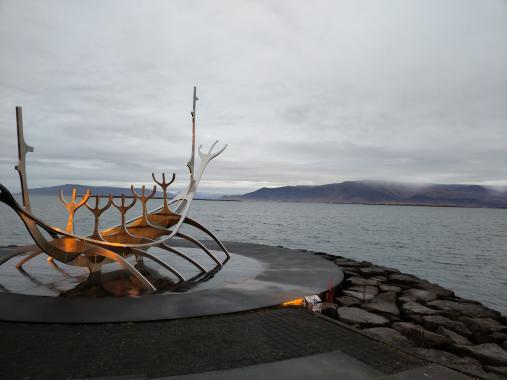
Iceland will hold a referendum on 29 August 2026 on whether to resume EU accession negotiations. While current opinion polls suggest that support for reopening talks exceeds support for full EU membership, public opinion overall remains divided, with fisheries, Iceland’s sovereignty, the introduction of the euro, and national security at the centre of the debate. The vote will determine whether Iceland continues pursuing EU membership, though any final accession agreement would require a second referendum.

IMAGO / Lobeca

Parliamentary Elections in Denmark

Setting the Course for the Country’s Future Direction

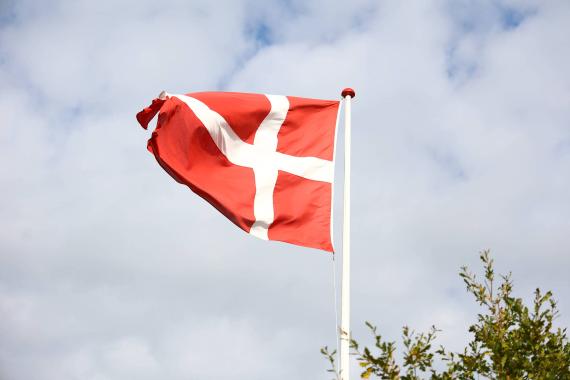
On March 24, 2026, the Danish people elected their new parliament: Prime Minister Mette Frederiksen’s ruling Social Democrats suffered a historic defeat but remained the largest party, securing just under 22 percent of the votes cast. This means the mandate to form a coalition lies with Frederiksen. Approximately 4.3 million Danes were eligible to vote. According to the Danish Election Authority on Tuesday evening, voter turnout was 84 percent. During the campaign, domestic and social policy issues were the subject of heated debate, while there was broad consensus on topics such as defense and stricter immigration rules.

Russia’s Hybrid War: The Northern Front

Northern Europe is not at peace. The battle is real and far more dangerous than the public has grasped. In this war, there are no frontlines. Attack vectors shift daily, probing weaknesses, exploiting vulnerabilities, and seizing opportunities.

© Magnus Fröderberg/Norden.org / CC BY-NC.SA 4.0

Der Umgang mit rechtspopulistischen Parteien in den nordischen Ländern

Zwischen sanfter Ausgrenzung und voller Einbindung

In den nordischen Ländern – Dänemark, Finnland, Island, Norwegen und Schweden – werden politische Konsensbildung, Kompromissfindung und demokratische Teilhabe traditionell großgeschrieben. Doch in den vergangenen 20 bis 30 Jahren haben sich dort, wie in vielen anderen europäischen Ländern auch, die politische Konfrontation und die gesellschaftliche Spaltung verschärft. Die politische Parteienlandschaft ist stärker fragmentiert als früher. Parteien vor allem am rechten Rand gewannen hingegen deutlich dazu. So sind in allen nordischen Ländern, Island ausgenommen , rechtspopulistische Parteien zu einer festen Größe mit signifikantem Einfluss im politischen wie gesellschaftlichen Diskurs geworden.

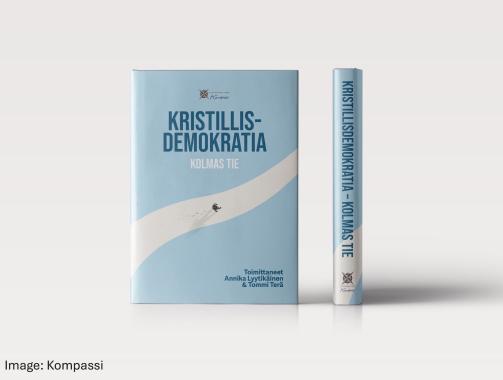
"Christian Democracy - The Third Way"

English Addendum to "Kristillisdemokratia – kolmas tie" (Eds. A. Lyytikäinen & T. Terä; 2025)

This addendum gives an overview and summary of the book Kristillisdemokratia – kolmas tie (2025). The book consists of an introductory chapter followed by three sections dealing with the history, principles, and role of Christian democracy in contemporary Europe, respectively.

Nordic Unity in Arctic Security

Navigating Tensions and Alliances

In recent decades, the Arctic region has increasingly attracted global interest due to its climatic, economic, and political transformations. The Arctic's strategic relevance has been particularly accentuated amidst rising tensions with Russia, especially post-2022 following its attack on Ukraine. This attention has, in turn, amplified the roles of Nordic countries in regional security dynamics. The accession of Finland and Sweden to NATO in 2023 and 2024, respectively, exemplifies the momentum towards deeper Nordic integration in security domains. This trajectory was further highlighted by U.S. President Trump's comments in January 2025 regarding the control of Greenland, drawing international scrutiny to Greenland’s strategic importance and the internal dynamics within the Kingdom of Denmark.

The European Union and the Emerging Arctic Security Landscape

The European Union’s (EU) ever-evolving role as a foreign and security actor is currently being reshaped by a rapidly shifting geopolitical landscape, marked most significantly by Russia’s 2022 full-scale invasion of Ukraine and the current disruptions of the transatlantic relationship. While long defined by its soft power tools, internal diversity, and preference for multilateralism, the EU has found itself increasingly confronted with demands to de-velop a more assertive security posture. This shift is occurring not only in its eastern and southern neighbourhood but increasingly also in its northern backyard – the Arctic, a region that is presently (re-)emerging as a space of geopolitical competition. While the region has traditionally been marginal in, it now intersects with broader concerns over hybrid threats, energy dependence, climate change, and critical infrastructure—all areas where both the EU and the North Atlantic Treaty Organization (NATO) maintain significant (partly overlapping or complementary) competencies.

IMAGO / NTB

Norway’s 2025 Parliamentary Election

Stability, Energy, and the Stoltenberg Effect

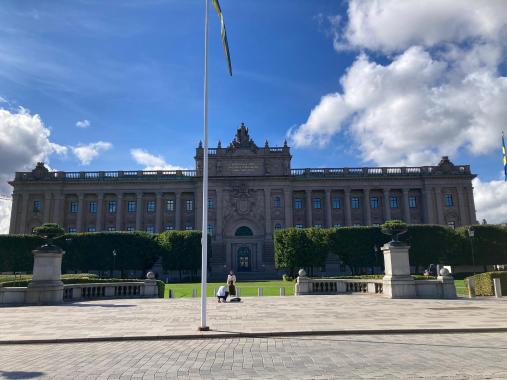
On September 8, 2025, Norwegians went to the polls to elect a new parliament. The governing Labour Party (Ap), led by Prime Minister Jonas Gahr Støre, confirmed its position as the country’s largest political force, winning 28.2 percent of the vote, according to preliminary results from the national election authority. The right-wing populist Progress Party (FrP) emerged as the biggest winner of the night. Boosting its support by 12.3 percentage points, it secured 23.9 percent of the vote, becoming the second-strongest party. The Conservative Party (Høyre), headed by former Prime Minister Erna Solberg, followed in third place with 14.6 percent. Roughly four million citizens were eligible to vote, and turnout reached 78.8 percent, according to official figures released late Monday evening. The election was shaped not only by domestic debates, but also by Norway’s strategic role in Europe’s energy supply and security policy. While not a member of the European Union, Norway is a crucial partner when it comes to gas deliveries, electricity market regulation, and sanctions against Russia.

IMAGO / Bernhard Herrmann

Finland’s Response to Hybrid Threats in the Baltic Sea

Resilience through Comprehensive Security?

Finland’s decision to join the NATO alliance after decades of military neutrality in response to Russia’s full-scale invasion of Ukraine has significantly acerbated relations with its Eastern Neighbour. The latest National Risk Assessment by the Finnish government emphasizes the dangers of hybrid threats, which could challenge Finland’s security environment. Its land border of more than 1,300 kilometres with Russia renders Finland particularly susceptible to Russian hybrid operations. Hybrid threats can take manifold shape, such as cyberattacks, disinformation, instrumentalized migration, or sabotage acts against critical infrastructure, including subsea electricity or data cables.

KAS

Special edition - Country reports with a difference

International comparison of accessibility

This publication provides research, compiled by some of our overseas offices, on the current situation of political participation for people with disabilities, in their respective countries. We hope that their reports will increase awareness of the sadly often persistent inequalities that remain and motivate all of us to pay greater heed to the issue of inclusion.