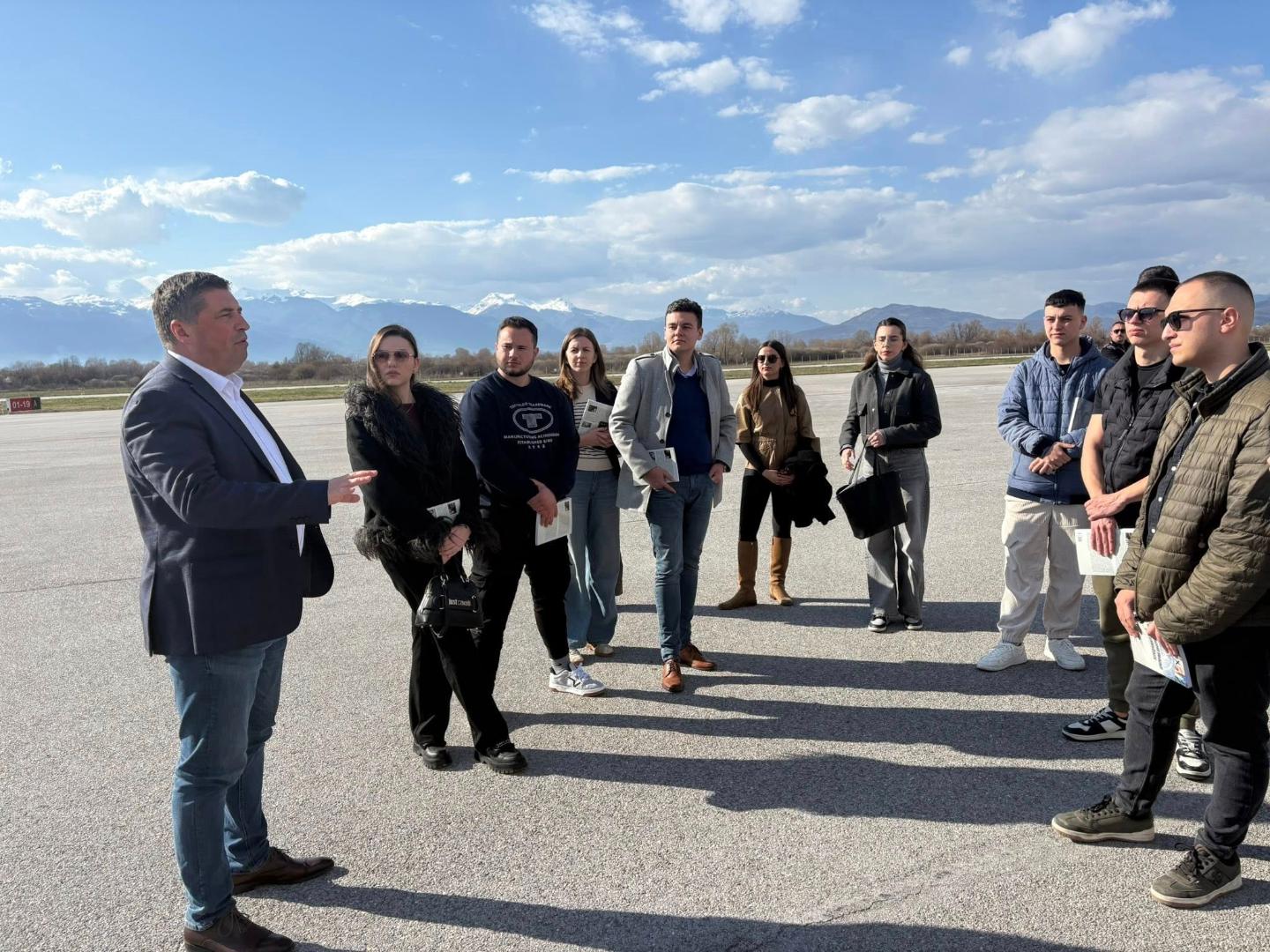
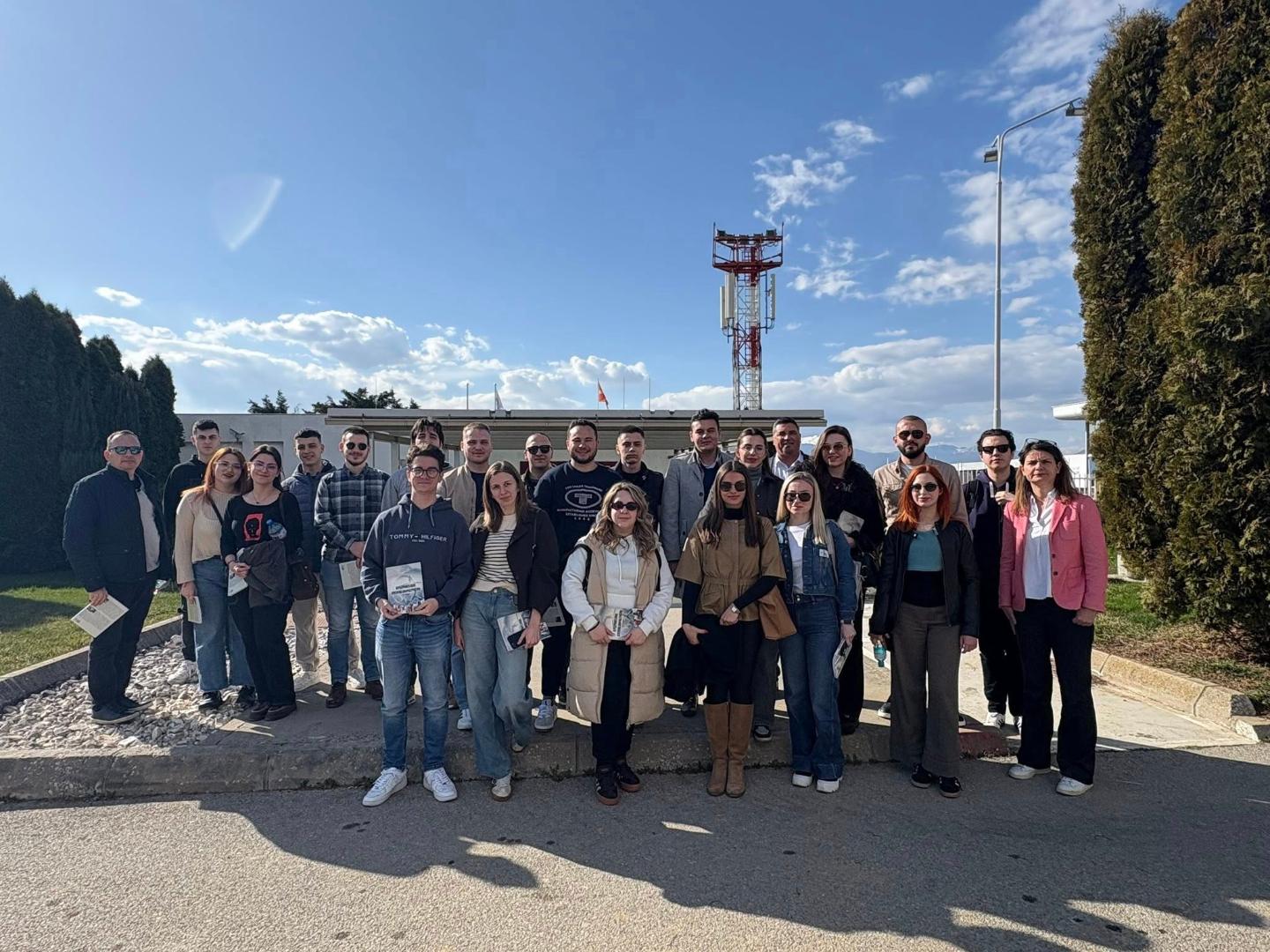
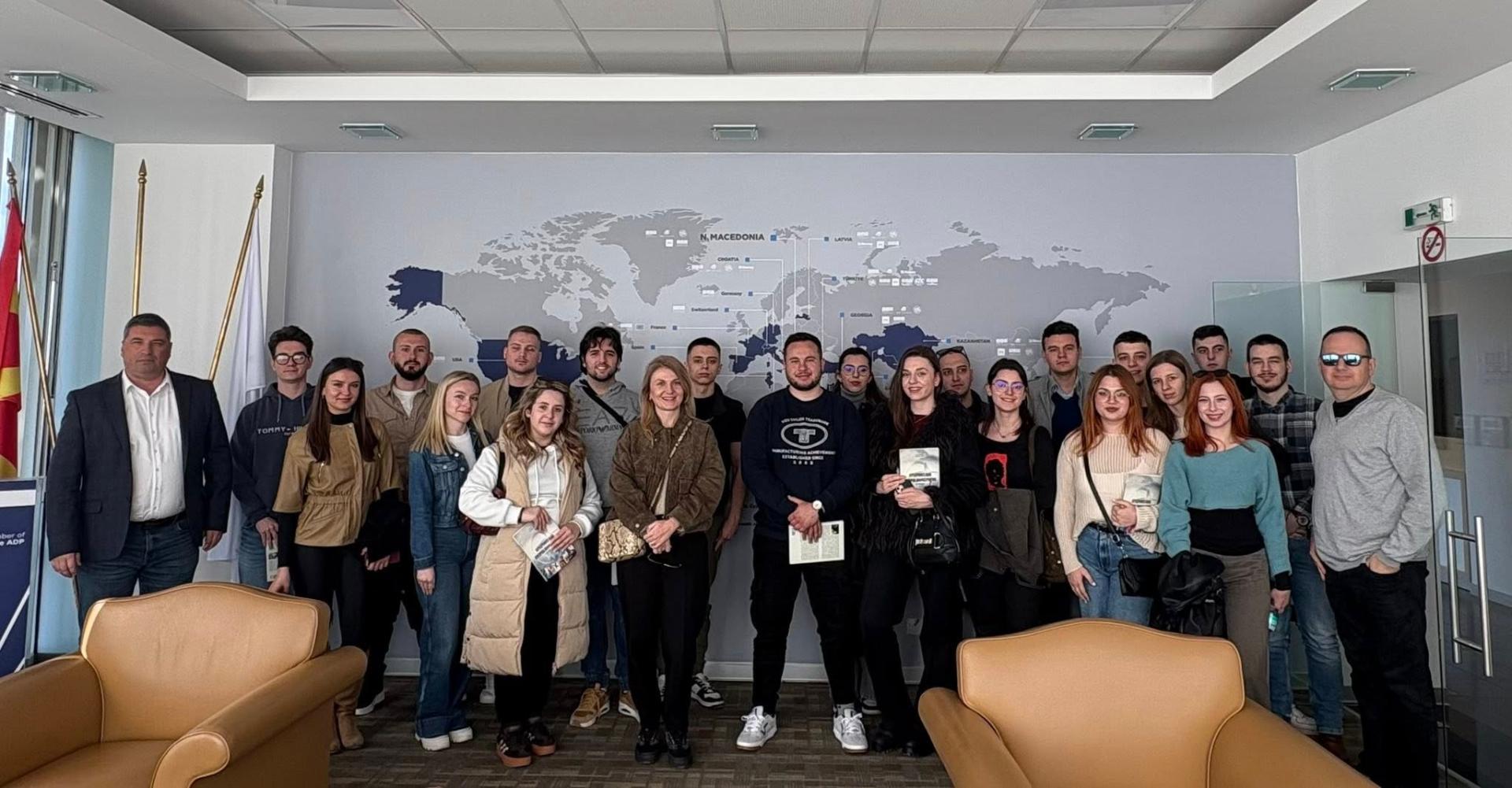
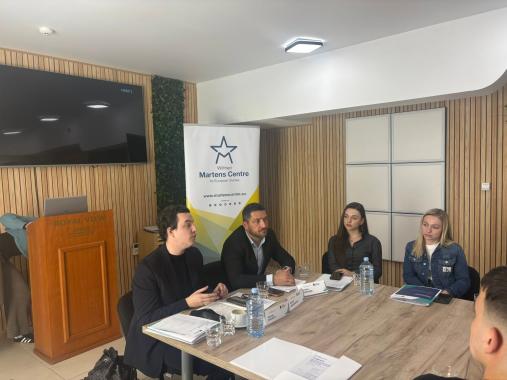
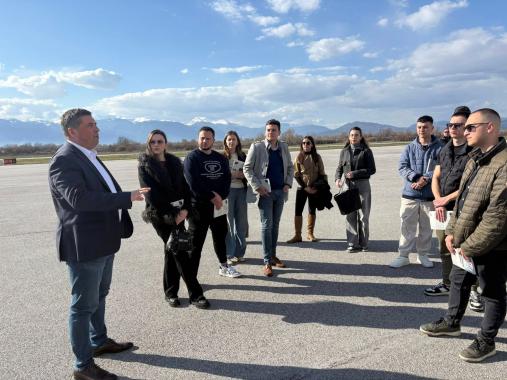
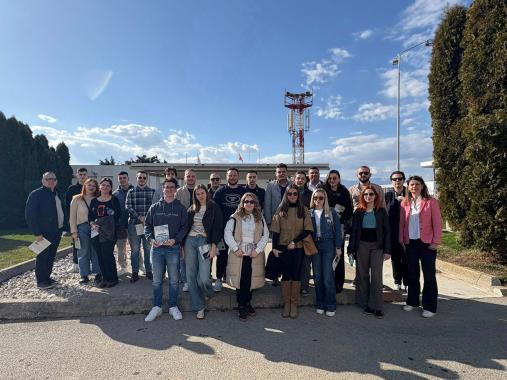
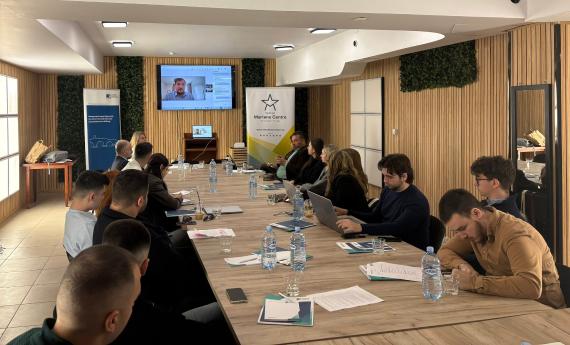
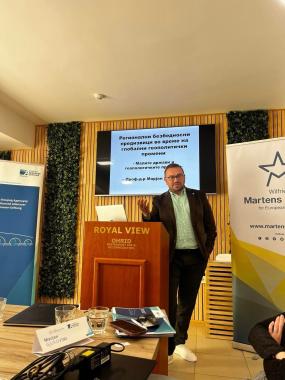
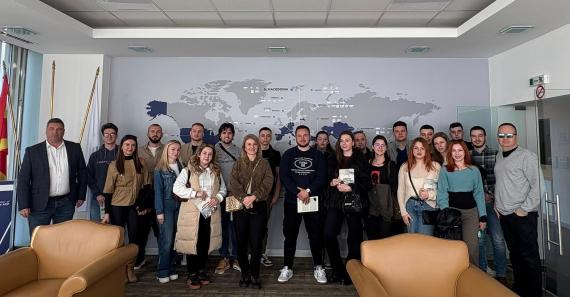
The programme commenced with the arrival of participants at Ohrid, followed by a field-oriented session at Ohrid Airport focusing on the protection of critical infrastructure. The discussion, led by Prof. Gjorgji Alcheski from the Faculty of Philosophy in Skopje and Director of the Ohrid Aiport, provided participants with practical insights into contemporary vulnerabilities and resilience mechanisms in critical systems.
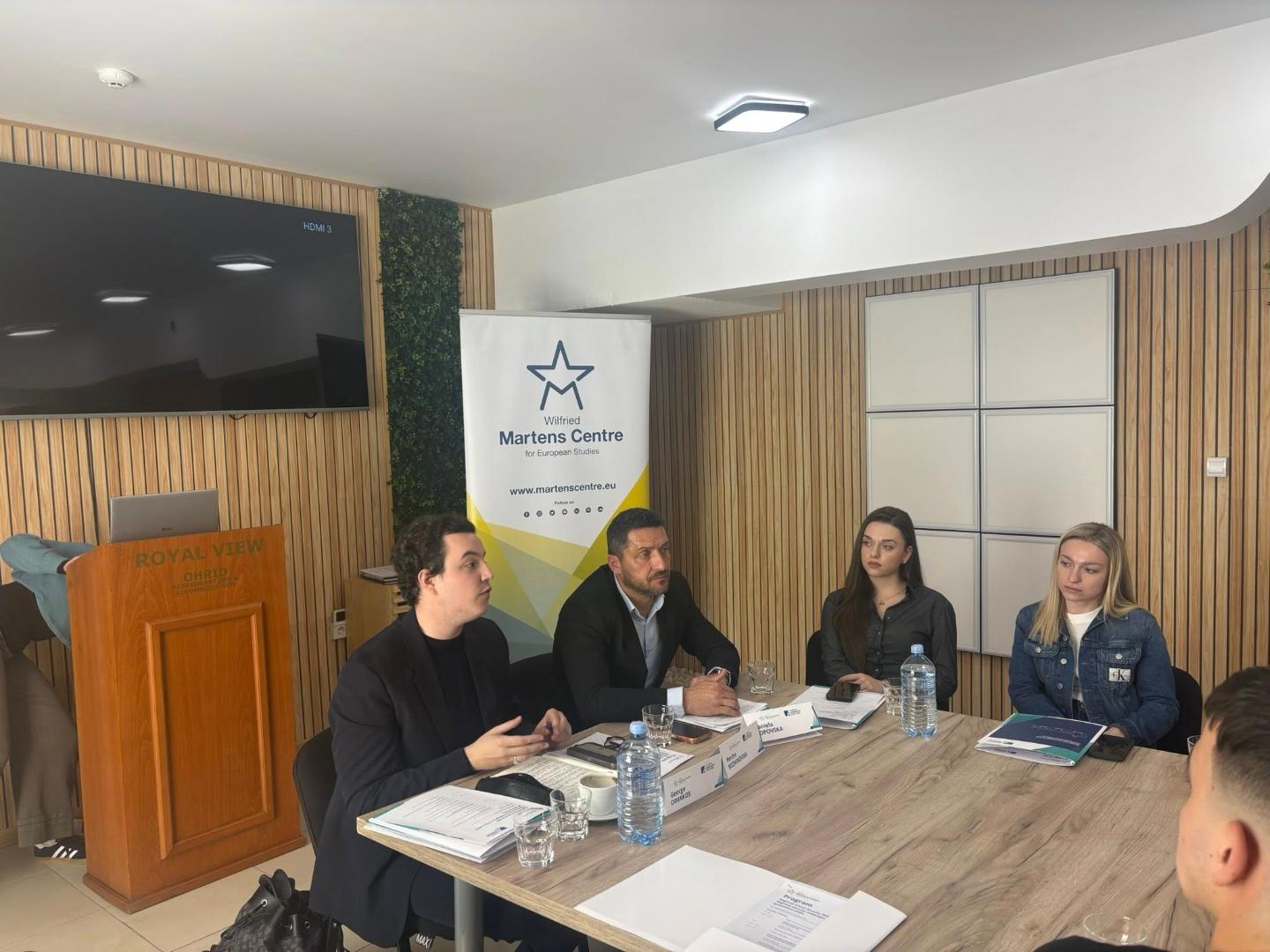
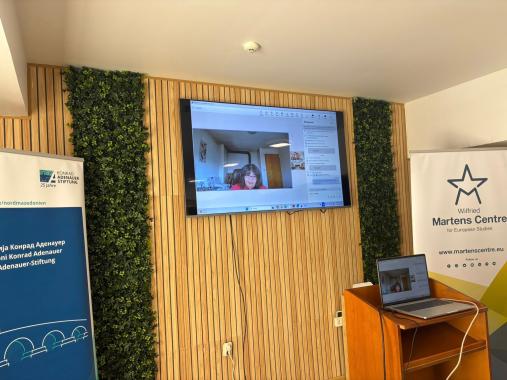
The official opening of the school took place at Hotel Royal View, where welcoming remarks were delivered by Daniela Popovska (KAS North Macedonia), George Dimakos (Wilfried Martens Centre for European Studies), and Percho Bozhinovski, Deputy Mayor of Ohrid. The speakers highlighted the importance of regional cooperation and dialogue in addressing shared security challenges.
An interactive session allowed participants to engage directly with the speakers, followed by an ice-breaking activity led by KAS scholar Anastasija Sasha Tofoska, fostering a collaborative and inclusive atmosphere among attendees. The first day concluded with a workshop on religious radicalization as a security challenge, delivered by Elena Dimovska from the Faculty of Security-Skopje, which encouraged critical discussion on one of the most sensitive issues affecting Europe and the region.
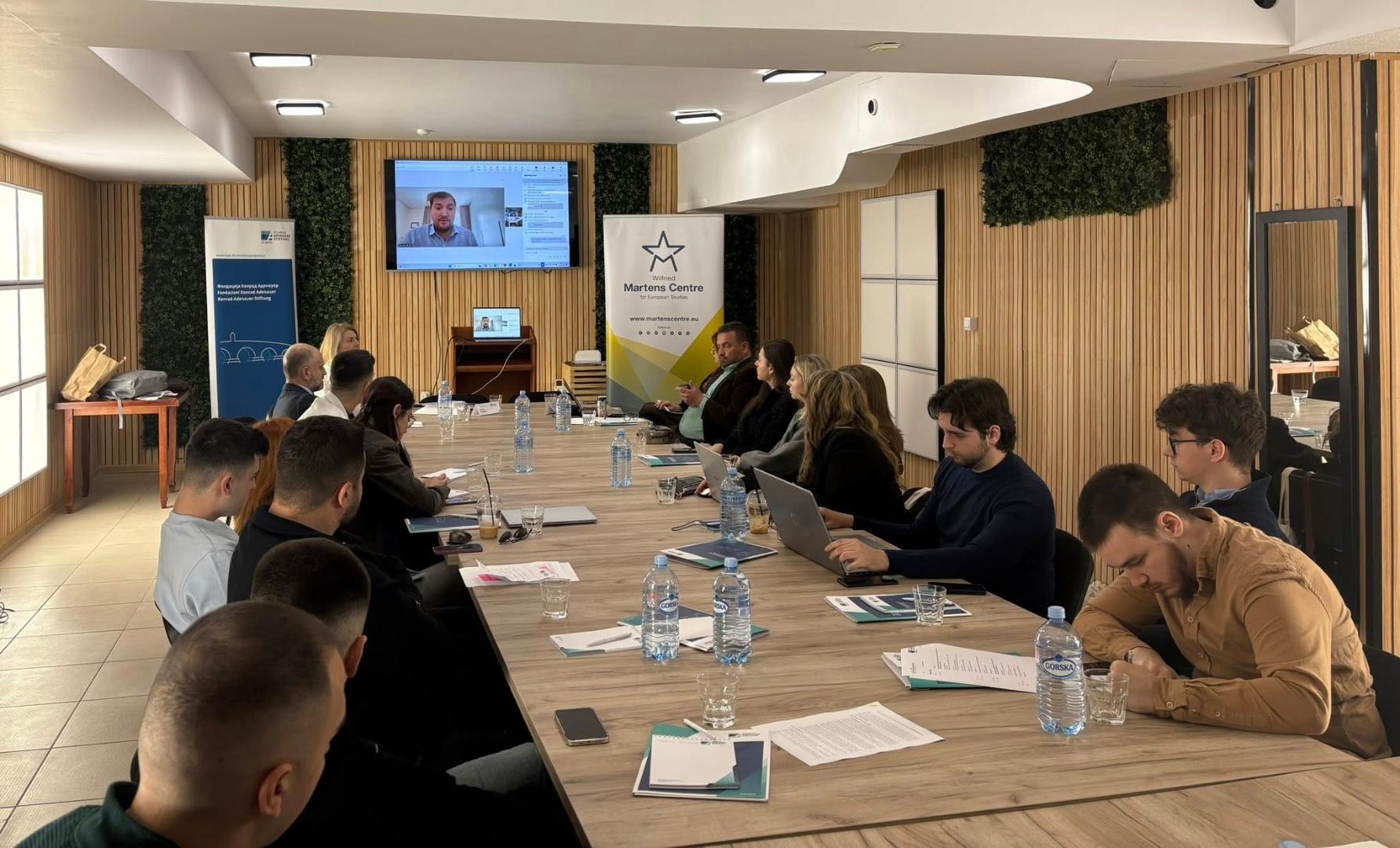
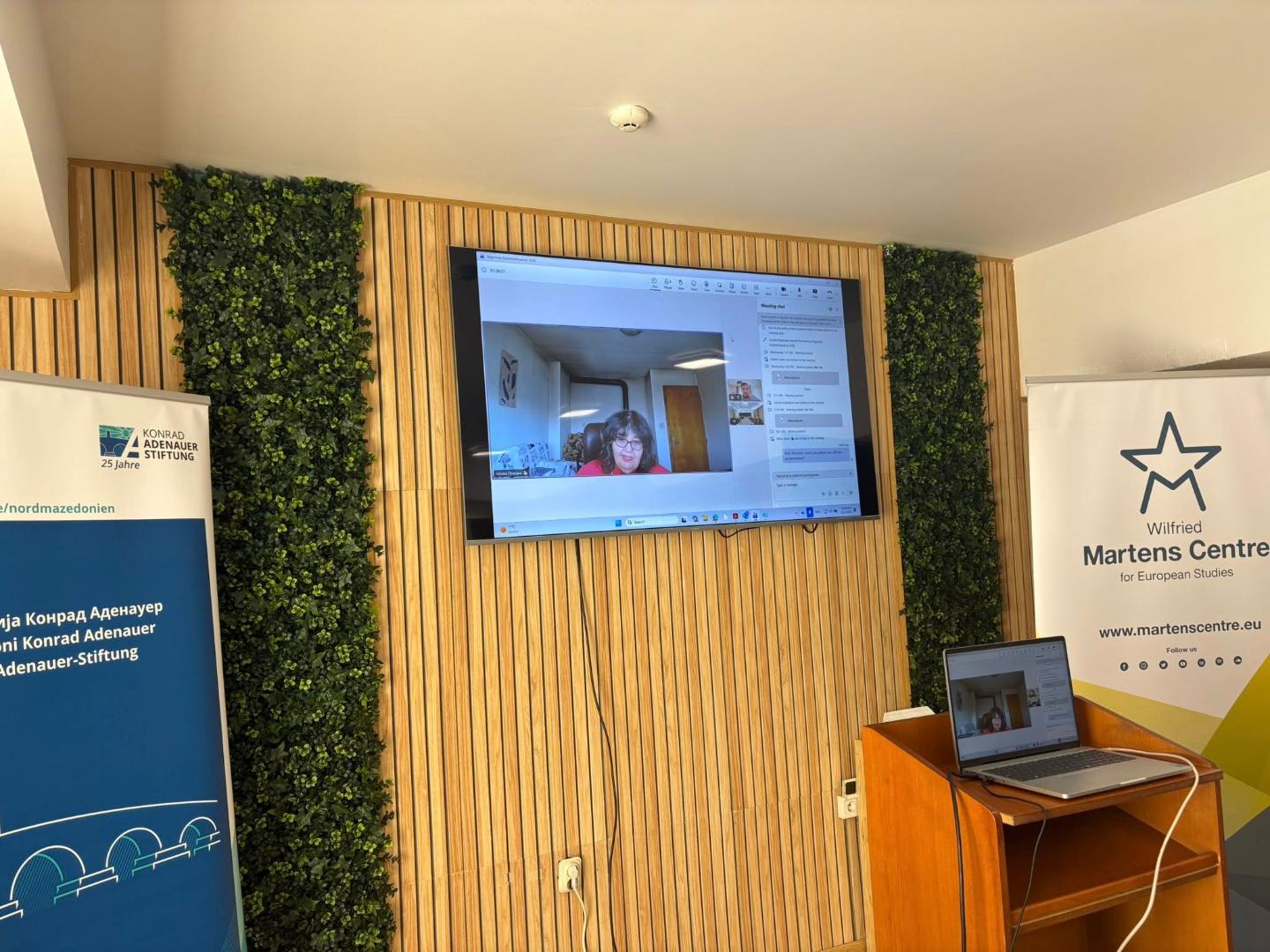
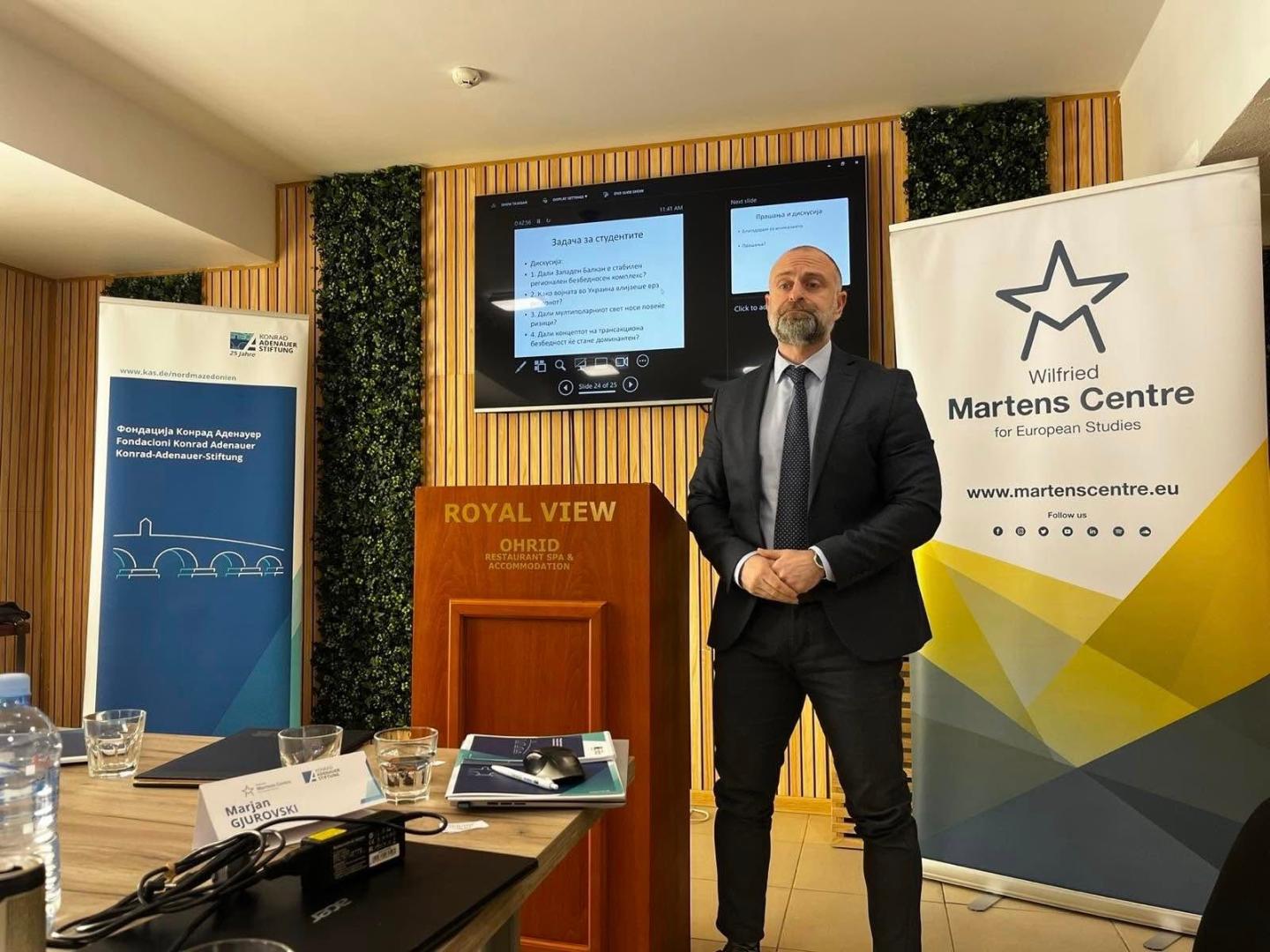
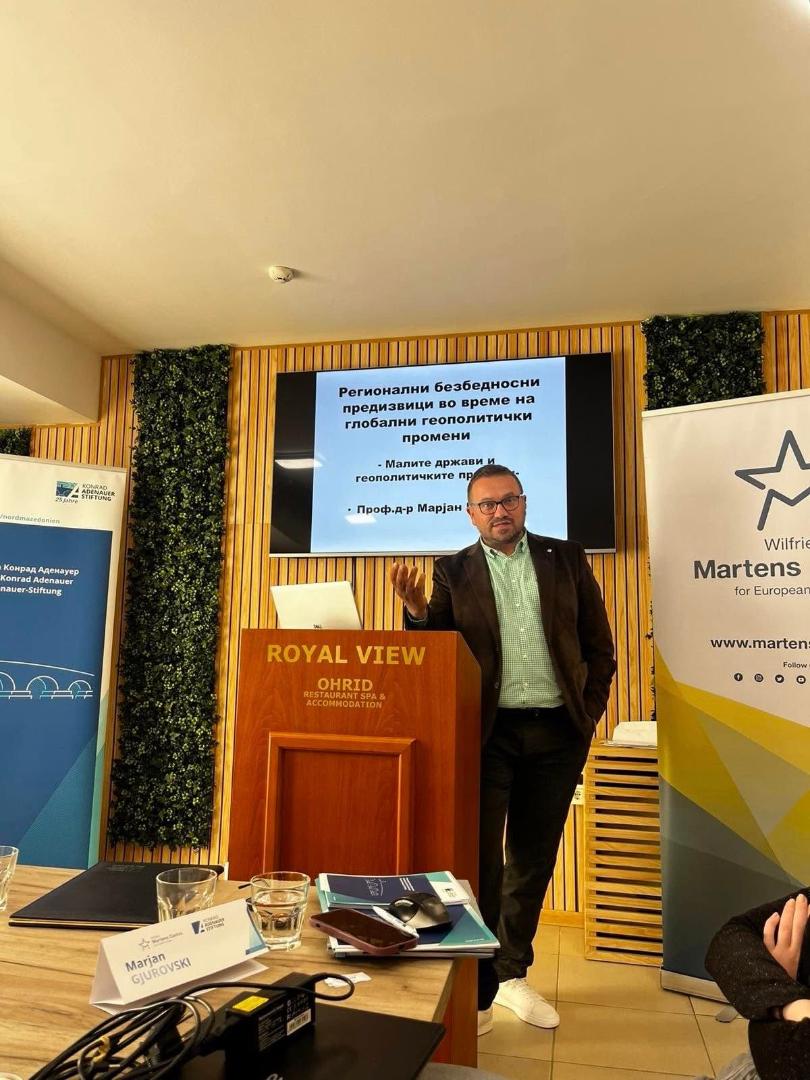
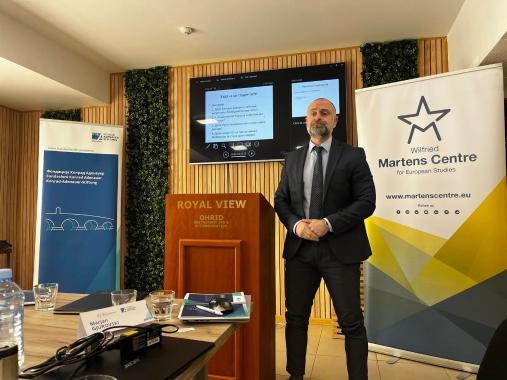
The second day focused on broader regional security challenges in times of global geopolitical shifts. The session, moderated by Prof. Marjan Gjurovski from the Faculty of philosophy-Skopje, featured contributions from distinguished experts including Prof. Zoran Ivanov from the Institute of National History-Skopje, Prof. Tatyana Dronzina from the Department of Political Science from the Sofia University, and Milan Krstic from the Department of Political Science at the University of Belgrade. The discussions addressed external influences in the Balkans, the changing nature of global power relations, and their implications for regional stability.
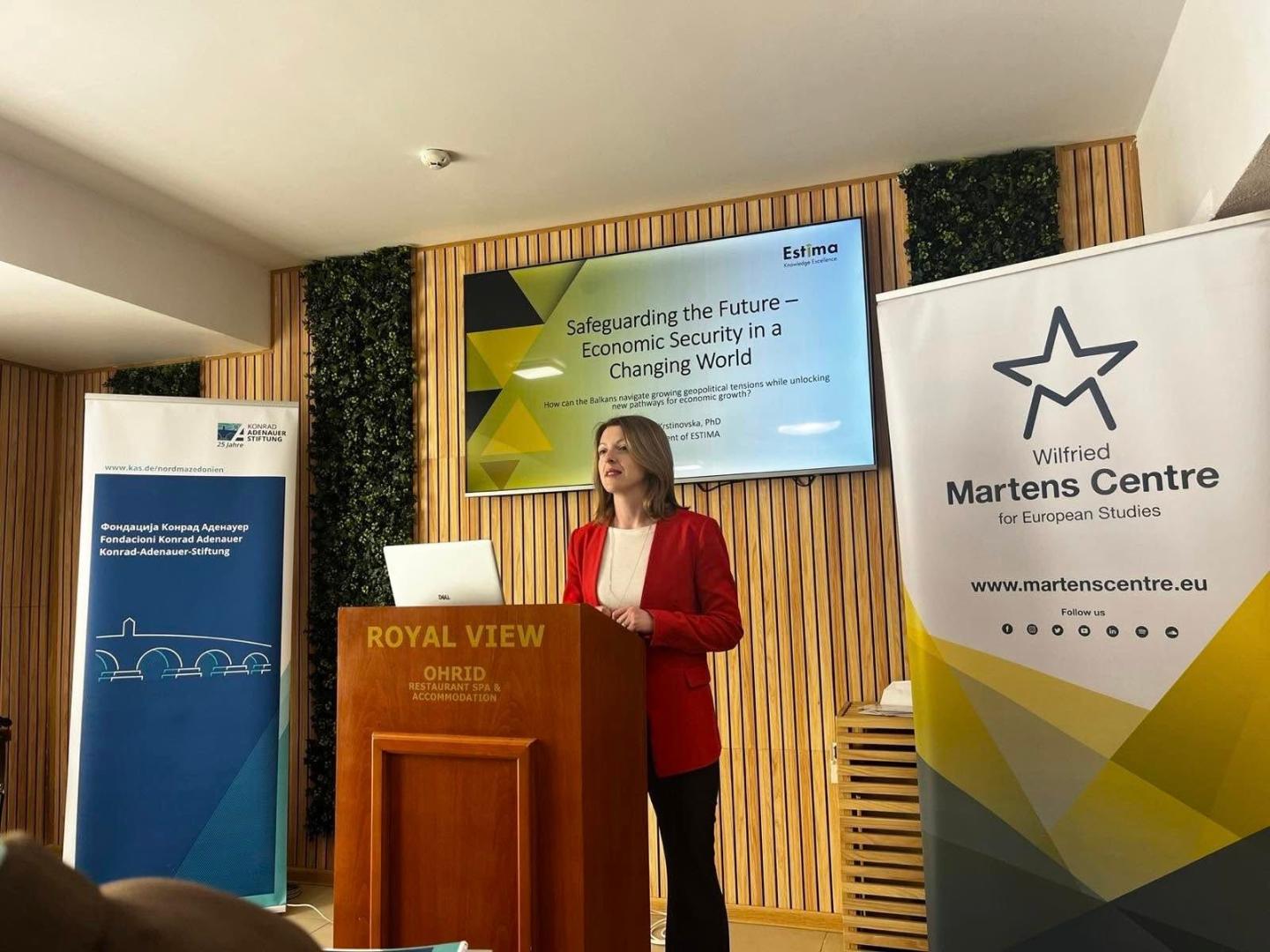
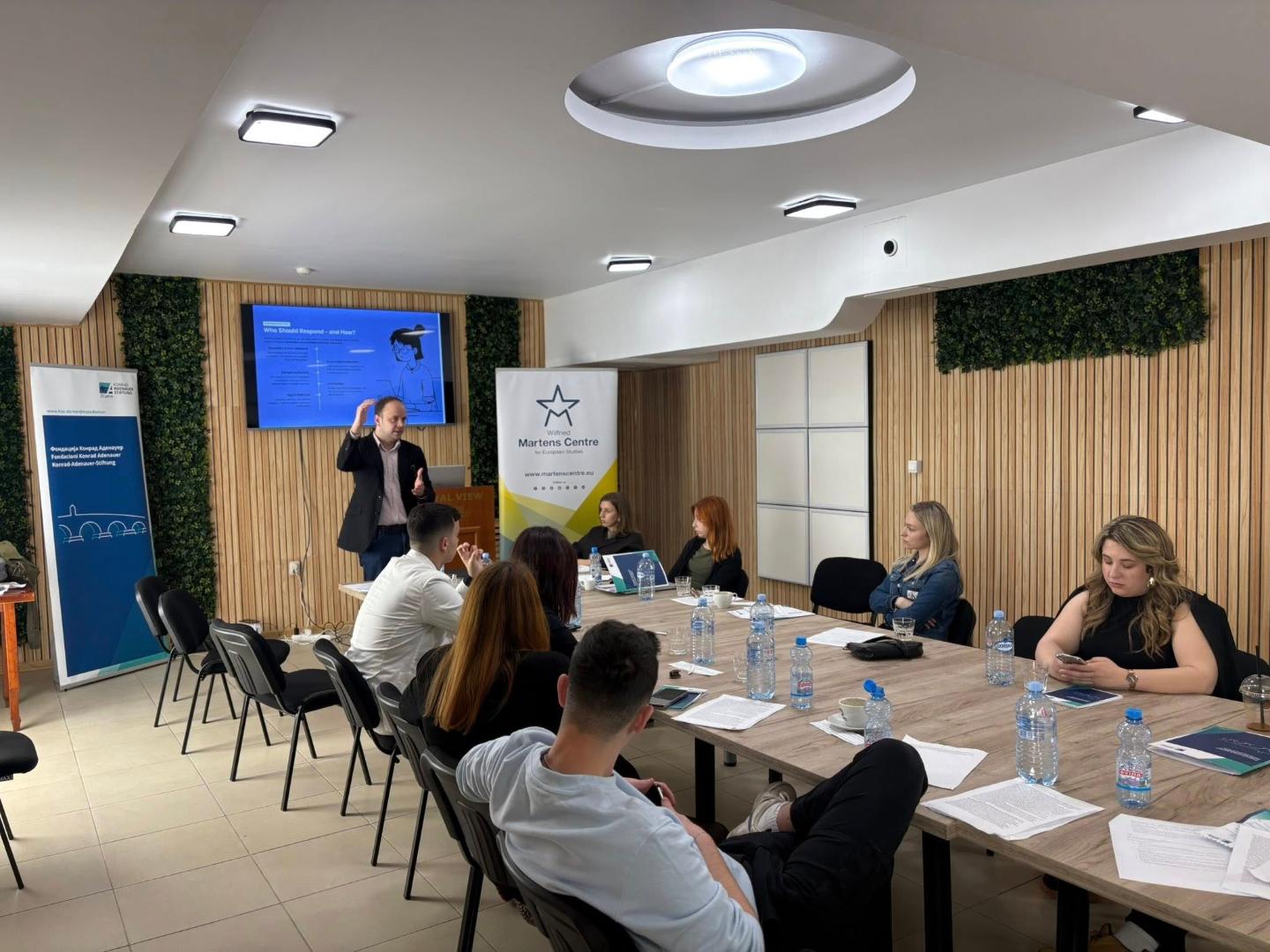
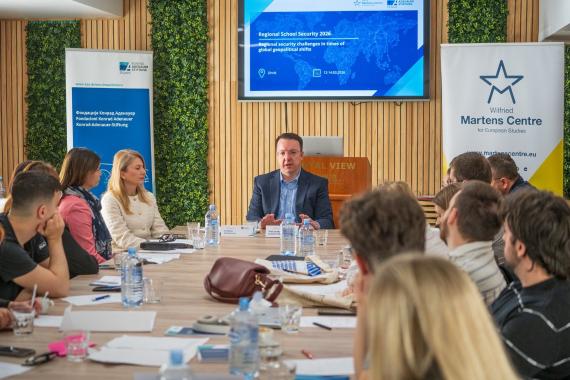
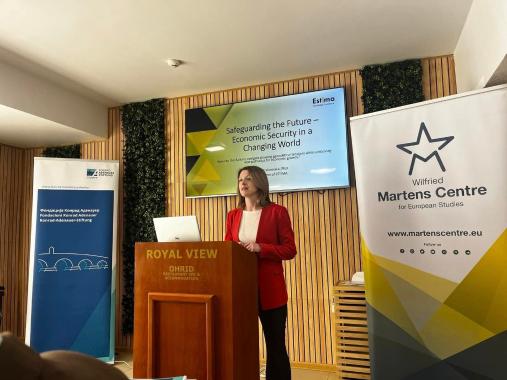
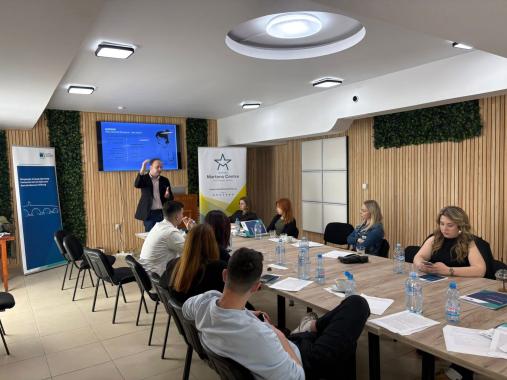
Participants then engaged in interactive working groups. The first set of discussions explored economic security in a changing global environment, under the guidance of Ana Krstinovska from the EISTIMA Think-Tank. The second set of working groups addressed security risks related to artificial intelligence, led by Dragan Sekulovski from the Macedonia Journalist Association and Nikolay Krastev, Journalist at the ulgarian National Television BNT. These sessions enabled participants to develop policy-oriented recommendations while strengthening their analytical and teamwork skills.
In addition to the academic programme, participants took part in a cultural and historical tour of Ohrid, enriching the experience through informal exchange and regional networking.
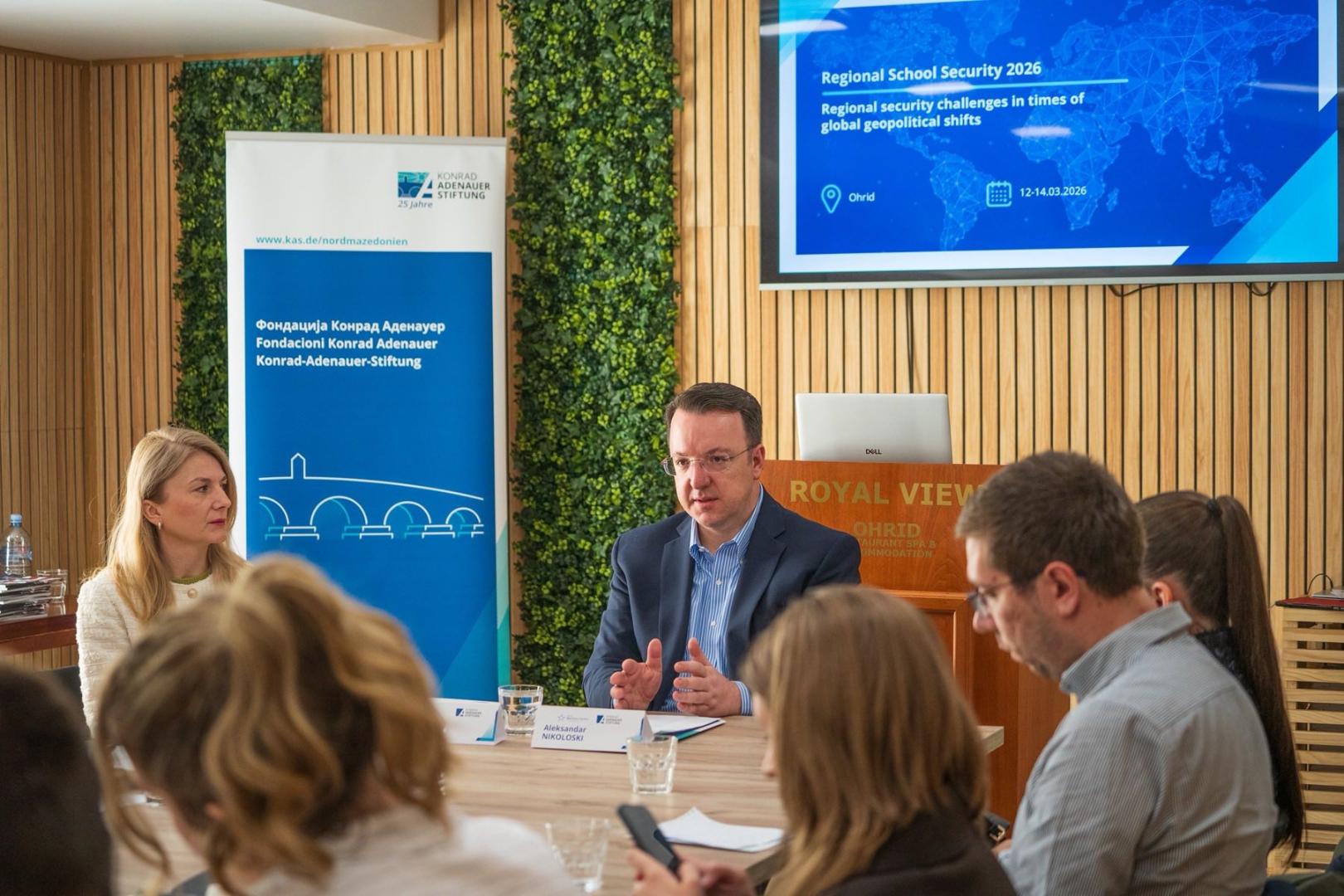
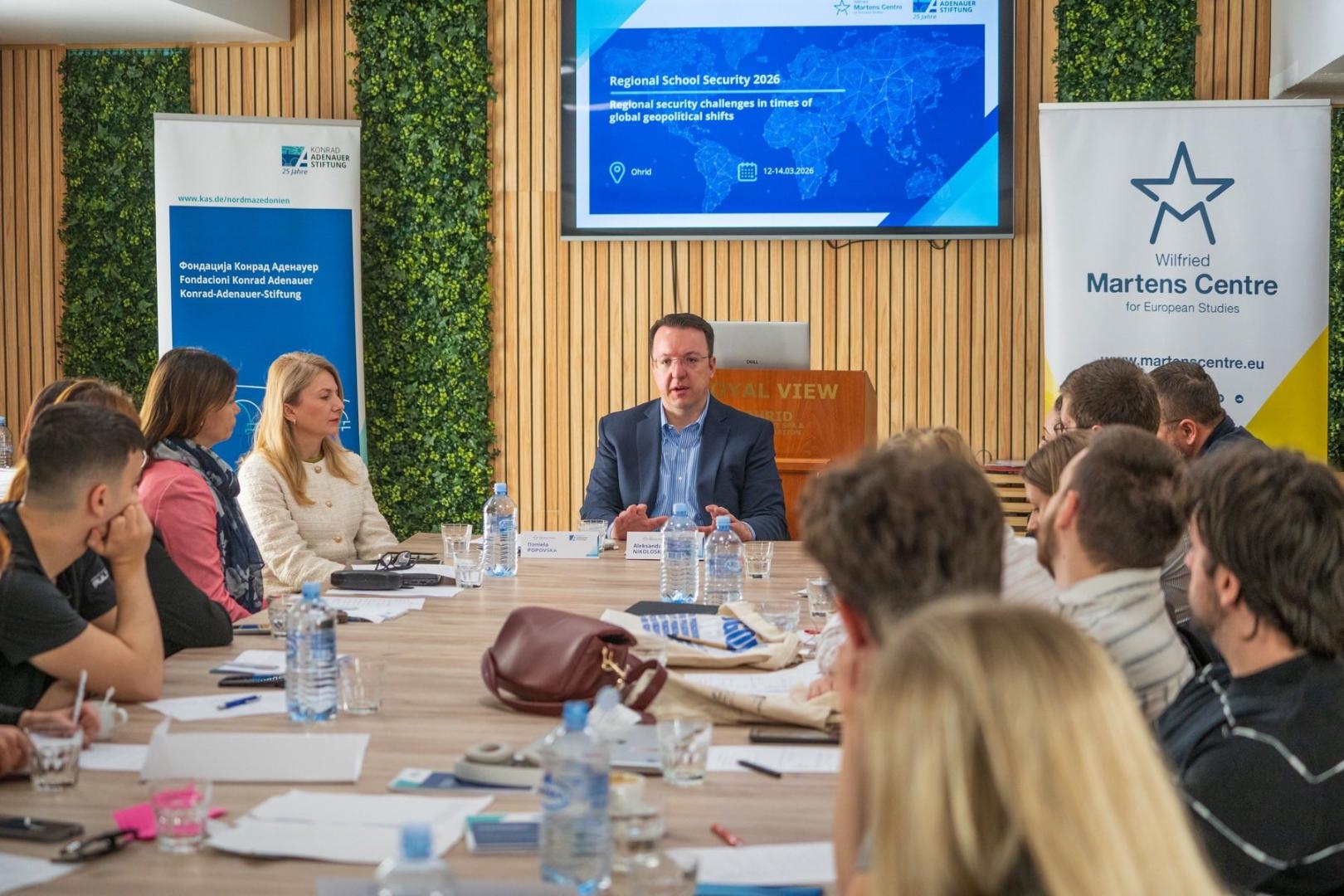
The final day was dedicated to the presentation of the working group results, where participants showcased their analyses and proposed solutions to contemporary security challenges. This was followed by a high-level discussion with Aleksandar Nikoloski, Minister of Transport of North Macedonia, who emphasized the importance of trust-based regional cooperation for long-term security and prosperity.
The initiative which the KAS and the WMCES are implementing in the past years reaffirmed the importance of dialogue, knowledge exchange, and regional cooperation in addressing complex security issues in a rapidly changing global environment.