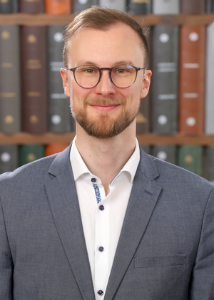
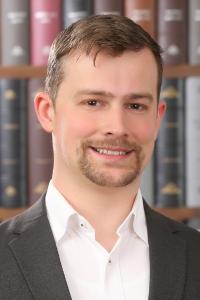
From 21-26 April 2025, the Konrad-Adenauer-Stiftung (KAS)’s Regional Programme Gulf States organised a delegation visit to Riyadh, Abu Dhabi, and Dubai for four parliamentarians from the newly elected CDU/CSU Parliamentary Group in the German Bundestag: MP Tilman Kuban, MP Jan Metzler, MP Johannes Volkmann, and MP Vanessa-Kim Zobel. The dialogue programme allowed these members of the strongest party in Germany’s upcoming ruling coalition to obtain firsthand insights into Saudi Arabia’s and the United Arab Emirates (UAE)’s ambitious domestic economic transformation agendas and the two Gulf powers’ political positioning in a rapidly transforming region. Moreover, the visit – the first such trip undertaken following the federal elections in February – sent a powerful message to Riyadh and Abu Dhabi that Berlin means business with the Gulf states under Germany’s new, CDU-led government.
In Riyadh, the parliamentary delegation met with H.E. Deputy Foreign Minister Waleed Elkhereiji and H.E. Deputy Speaker of the Shura Council Dr Mishaal Alsulami. These meetings focused on regional and global political developments. Led by MP Tilman Kuban, the members of the German Bundestag lauded Saudi Arabia’s role as an anchor of stability in the region. They also reaffirmed Germany’s commitment to the two-state solution to the Israeli-Palestinian conflict and lauded the Kingdom’s efforts to achieve a lasting peace along these lines. Finally, they emphasised that Berlin intends to deepen its economic relationship with Riyadh through a broader defence industrial exchange, promoting bilateral trade in green and blue hydrogen, and embracing carbon capture and storage technologies alongside preventive approaches to mitigating climate change.
The delegation also pursued economic appointments with prominent Saudi representatives of institutions involved with Vision 2030, including H.H. Prince Mohammed bin Turki Al Saud, Senior Advisor to the Minister of Economy and Planning, H.E. Albara Alaskandarani and H.E. Dr Fahad Alhumaidah, both deputy ministers at the Ministry of Economy, Dr Manar Al-Moneef, Chief Investment Officer (CIO) of NEOM, and representatives of the Public Investment Fund (PIF). Meetings at NEOM and the PIF furnished behind-the-scenes insights into the implementation and funding of Saudi Vision 2030, while interlocutors at the Ministry of Economy explained the Kingdom’s economic approach beyond 2030, particularly with respect to leveraging diplomacy to unlock economic opportunities abroad, dismantling bureaucratic hurdles for foreign investors, privatising big-budget economic sectors, and leveraging oil rents to make production-boosting investments, as opposed to spending them on consumption.
In the UAE, the delegation was again received by high-level political actors, headlined by H.E. Omar Al Olama, Minister of State for Artificial Intelligence, H.E. Anwar Gargash, Senior Diplomatic Advisor to the President of the UAE, H.E. Mariam Almheiri, Head of the Office for International Affairs at the Presidential Court, and H.E. Marwan Al Muhairi, Deputy Head of the Emirati-German Parliamentary Friendship Group at the Federal National Council. Across these high-level meetings in Abu Dhabi and Dubai, the German parliamentary delegation’s announcement of more pragmatism in Berlin’s relations with Gulf capitals was met with great enthusiasm. This approach echoes the emphasis on practicality and economic win-wins that the UAE has placed at the forefront of its relations with a diverse array of regional and global actors, from Israel to Russia to Iran. These relations undergird the value proposition articulated to the German delegation by numerous high-level Emirati actors: as the gateway to Africa, Asia, and the Middle East, the UAE is not a country of 10 million inhabitants, but rather a market of 3 billion people.
Next to these informative exchanges with high-level politicians, the members of parliament visited the beating hearts and gleaming edifice of the UAE’s economic model: oil-giant ADNOC, the renewables hub of Masdar City, and the bustling port and free zone of Jabal Ali. In the process, the delegation learned about the interplay between old and new, between renewable and non-renewable, and between congregating and traversing the world that characterises the modern UAE. Viewed as contradictions elsewhere, the Emirates gather these seemingly divergent ideas and unite them under the banner of producing more and providing everything.
In the contemporary global geopolitical and economic landscape, Saudi Arabia and the UAE see themselves as heavyweights capable of shaping events, alliances, and partnerships on the international stage. The parliamentary visit to the Gulf demonstrated that despite their differences, the interests of Berlin, Abu Dhabi, and Riyadh overlap in numerous areas, from the desire to uphold a rules-based, international order to investing in cutting-edge technologies and energy sources of the present and future. It also underlined that closer relations with both Gulf states reverberate beyond their immediate borders, as both economic power-houses can serve as platforms for trilateral cooperation with Germany in places such as India, Yemen, Syria, or Egypt. Even more significantly, the dialogue programme demonstrated that Riyadh and Abu Dhabi welcome the new German government’s switch toward a pragmatic, practical approach to international affairs with open arms. Berlin can and should capitalise on this momentum.