








Asset Publisher

Policy Reports

Analyses of current topics in the Gulf region

Asset Publisher

IMAGO/Depositphotos

Migration Policy Reforms and Mobility Decision-Making

High-Skilled Second-Generation Residents in Qatar, the UAE, and Saudi Arabia

Gulf Cooperation Council (GCC) countries have introduced far-reaching migration reforms to attract and retain global talent. These reforms have affected a distinct group: second-generation residents born and raised in the Gulf who remain non-citizens despite deep social integration. Yet, while some perceive recent reforms as opening pathways to extended residence and stability, others continue to experience structural limits to long-term belonging. This policy report examines how legal frameworks shape mobility decisions, education and career strategies and whether current reforms are sufficient to retain the Gulf’s own home-grown talent in an increasingly competitive landscape.

SmarterPix/Kenchiro75

Retaining Talent

Strategic Pathways for Highly Skilled South Asian Migrants in Saudi Arabia’s Knowledge Economy

Saudi Arabia’s Vision 2030 seeks to build a knowledge-based economy, placing highly skilled migrants at the centre of its economic transformation. While the Kingdom has introduced initiatives to attract global talent, limited long-term residency pathways and perceptions of permanent temporariness present challenges for retaining skilled professionals and fully leveraging their contribution to national development. This policy brief examines how highly skilled migrants and long-term residents perceive residency frameworks, career progression, and long-term prospects in Saudi Arabia, and assess the implications for strengthening talent retention to advance the Kingdom’s knowledge economy ambitions.

© Smarterpix/Pazemin

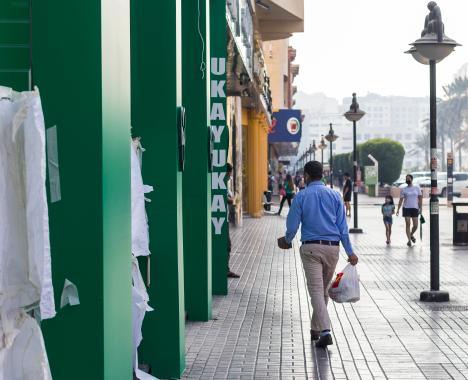
Second Generation Highly Skilled Pakistanis in Dubai

Drivers of Secondary Migration

The United Arab Emirates has experienced a sharp rise in highly skilled migrant professionals, reflecting its strategic shift toward a knowledge-based economy. For Pakistan – one of the UAE’s key migrant-sending countries – this transformation presents new opportunities for skilled workers, while also raising questions about long-term integration, stability, and talent retention. This policy report explores how migration policies and legal frameworks shape professional and personal trajectories. It examines the implications of emerging residency schemes, such as the Golden Visa, and derives policy considerations to support the UAE’s long-term economic and development objectives.

© Smarterpix/vladimka

Beyond the Gulf

Rethinking Stepwise Migration, Citizenship Penalty, and Filipino Nurses in the UAE

The United Arab Emirates has become a key destination for highly skilled healthcare professionals from the Global South, with Filipino nurses forming the backbone of its expatriate healthcare workforce. Yet, despite strong qualifications and critical contributions, wage disparities and limited career advancements due to nationality-based labour market hierarchies persist. This policy report examines the professional experiences and migration trajectories of Filipino nurses in the UAE, explores how labour market hierarchies and residency frameworks influence career mobility, job security, and onward migration intentions, and assesses the implications of recent labour reforms.

New Narratives of the Nation

History-telling and national identity formation in Saudi Arabia

Nowadays, national history and identity are being thought and written anew in Saudi Arabia, particularly as the influence accorded to Mohammad bin Abd al-Wahhab and the Wahhabi movement in the founding and expansion of the state is curtailed. This reduction of Wahhabism’s role and the associated exclusive focus on the Al Saud family are not as black and white as often described, however. The policy report explains how, why, and under which circumstances the Saudi historical narrative is changing under Vision 2030. The contribution argues that the new Saudi Arabia does not seek to establish a top-down, comprehensive founding myth for the nation. This new politics of history thus opens space for a variety of bottom-up historical narratives to exist alongside the Al Saud story.

IMAGO / Depositphotos

From Vision 2030 to Zeitenwende

A blueprint for Saudi-German security cooperation

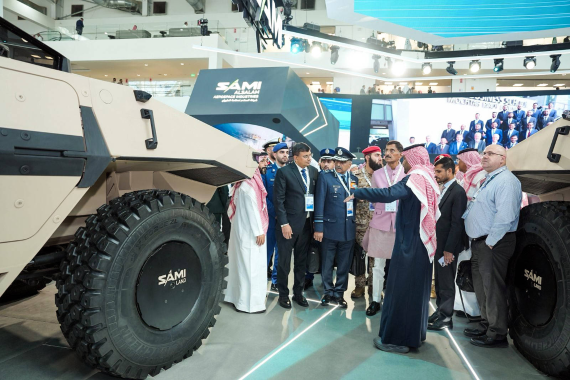
In today’s multipolar world, where shifting U.S. priorities mean Washington is no longer the sole global hegemon, middle powers with advanced technological capabilities now have greater space to lead. Saudi Arabia and Germany share an orientation toward technological innovation and seek to build strategic agency. Accordingly, natural potentials for partnership between the two countries exist in the defence and security space. This policy report outlines concrete steps for Saudi Arabia and Germany to deepen their defence cooperation. In doing so, the two countries can offer a blueprint for strengthening EU–GCC relations in security and defence, demonstrating how targeted bilateral initiatives can inspire more ambitious frameworks at the regional level.

Drivers of Grassroots Social and Political Transformation: Enhancing Saudi-German underground art spheres

Enhancing Saudi-German underground art spheres

Underground cultures in art, politics, and philosophy play a pivotal role in shaping societal debates. Germany and Saudi Arabia both host vibrant underground communities comprised mainly of youth from diverse backgrounds. These communities have witnessed and accompanied entire social and political transformations in the past and can thus be considered drivers of grassroots societal progress and creative problem-solving through artistic collaborations. Given these similarities between the Saudi and German underground scenes, this policy report analyses opportunities and obstacles for closer cooperation between representatives of the countries’ respective underground scenes.

IMAGO / ZUMA Press Wire

US-Iran Talks at a Crossroads

Tehran’s Red Lines, Trumpian Maximum Pressure, and Regime Survival

Negotiations between the Islamic Republic of Iran and the United States have reached a turning point. While Washington's position is continuously evolving, the regime in Teheran is hardly willing to make meaningful concessions. Shortly before the next round of talks, a resolution remains elusive.

iStock.com/EyeEm Mobile GmbH

A View from South Asia Countries of Origin: Changing Contexts, Perceptions, & Policies

Special Issue on Vision 2030 and the Socio-Economic Reform Process: The Future of Labour and Migration in Saudi Arabia

This policy report analyses how labour migration from South Asia intersects with Saudi Arabia’s Vision 2030 reform programme, focusing on Bangladesh, India, Pakistan, and Sri Lanka. It examines how sending-country stakeholders perceive Saudi labour market reforms, institutional settings, and policy instruments, such as Saudization, Nitaqat, and changes to the kafala system, and how these perceptions influence migration decisions and flows. While South Asian workers remain central to the Kingdom’s labour market and remittance linkages, concerns persist regarding wage disparities, worker vulnerability, rights protection, and limited pathways for family unification. The report concludes with forward-looking insights on emerging global and regional trends and offers policy recommendations to better align labour mobility, worker protection, and Saudi Arabia’s socio-economic transformation goals.

iStock.com/vdvornyk

International Science Faculty in Saudi Arabia: Research Experiences and Challenges

Special Issue on Vision 2030 and the Socio-Economic Reform Process: The Future of Labour and Migration in Saudi Arabia

One of Saudi Arabia's aims in Vision 2030, is to transform the Kingdom into a global research powerhouse however, is the current ecosystem equipped to deliever? This policy report analyses Saudi scientific publications and interviews with international researchers which reveal a divide between elite academic institutions and the broader university landscape in Saudi. While visibility is growing, challenges in funding, infrastrucutre and career pathways persist. This report details the critical reforms needed to bridge the gap between Saudi Arabia's scientific ambitions and its current research reality.

Asset Publisher

About this series

The Policy Reports of the Regional Programme Gulf States offer insights and analyses on current developments in the Gulf States and the Gulf region at large. They contribute to a better understanding of the region and serve as a platform for German, European and the Gulf scholars to exchange and disseminate ideas and knowledge about the region for the broader policy community.

Philipp Dienstbier
Philipp Dienstbier_Portrait
Director of the Regional Programme Gulf States
philipp.dienstbier@kas.de +962 6 59 24 150