South Africa's State-Owned Entities (SOEs) remain central to the country's economic development, infrastructure delivery and public service mandate. However, persistent governance failures, weak organisational performance and recurring financial challenges continue to undermine their effectiveness. Against this backdrop, the Konrad-Adenauer-Stiftung (KAS) and the Organisation Undoing Tax Abuse (OUTA) have partnered on a new research series examining the governance and remuneration of SOE boards, with a particular focus on accountability, ethical leadership and institutional performance.
The series brings together leading governance experts to explore how board remuneration, director accountability and appointment processes influence the effectiveness of public institutions.
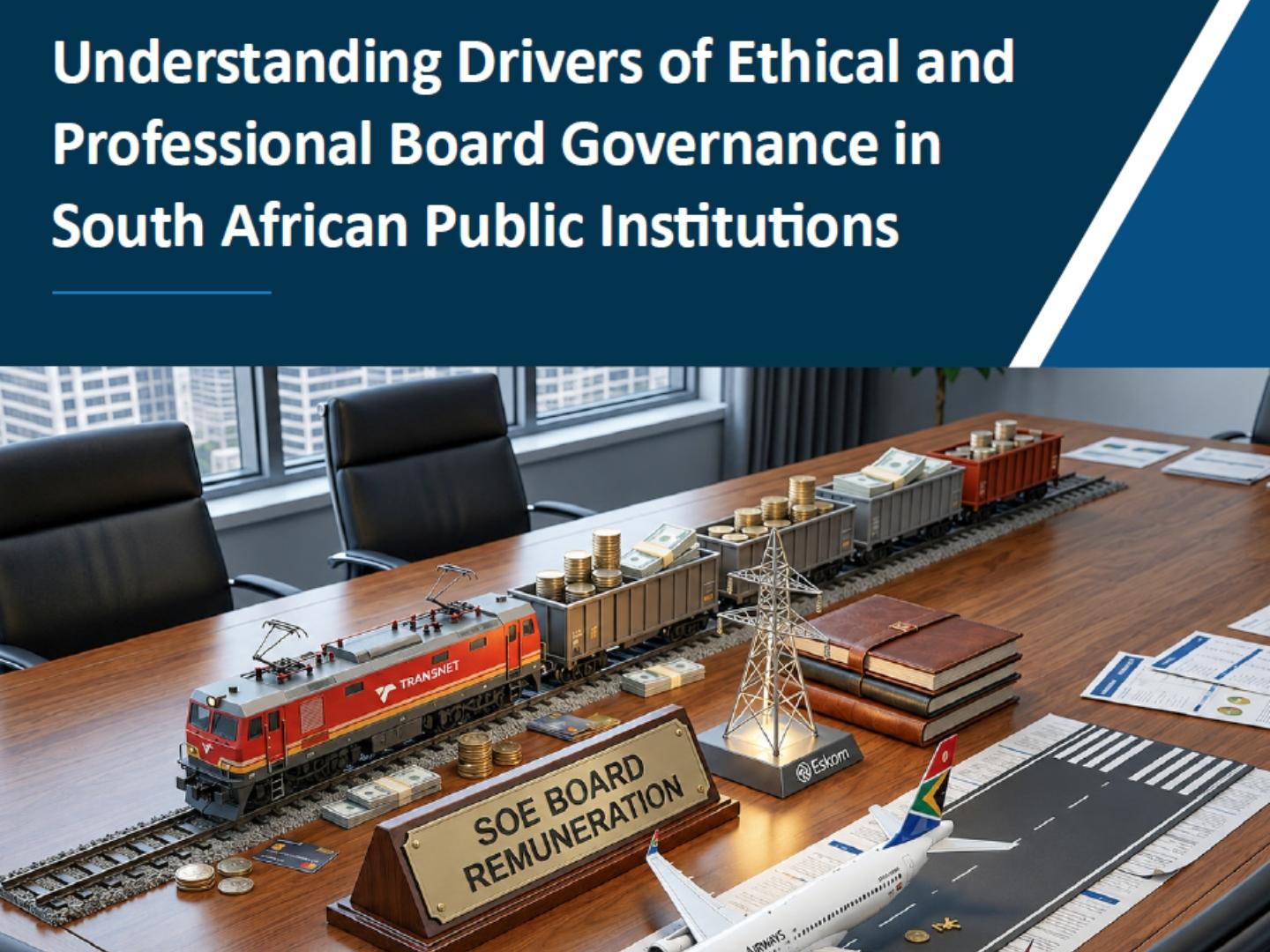
Paper 1: Understanding Drivers of Ethical and Professional Board Governance in South African Public Institutions
Author: Kris Dobbie (The Ethics Institute)
Governance failures at South Africa's State-Owned Enterprises did not end with state capture. Persistent organisational underperformance and growing bailout dependence suggest that the underlying weaknesses remain. This paper interrogates whether remuneration reform can, by itself, address these governance failures. The paper concludes that remuneration governance reform, while necessary, must form part of a holistic approach in which meritocratic appointment, at board and executive level, is treated as the foundational precondition for all other governance interventions to take effect.
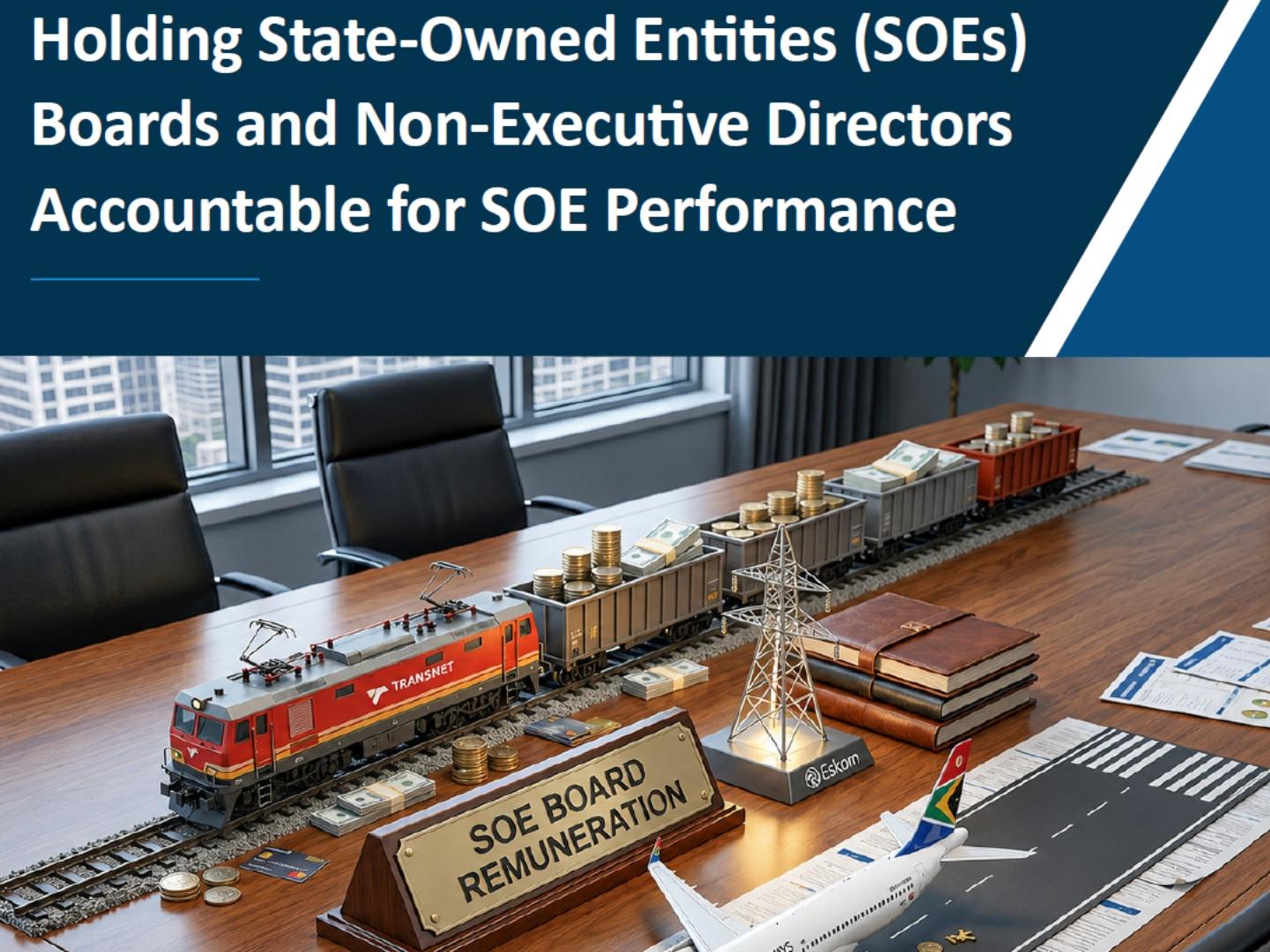
Paper 2: Holding State-Owned Entities Boards and Non-Executive Directors Accountable for SOE Performance
Author: Fatima Rawat (The Ethics Institute)
State-Owned Entities (SOEs) play a vital role in South Africa's economic development, infrastructure investment, and public service delivery. Despite an extensive legislative and governance framework, many SOEs have experienced persistent governance failures, declining organisational performance, financial instability and repeated dependence on government support. Public debate has increasingly focused on the remuneration of Non-Executive Directors (NEDs), particularly where Boards continue to receive remuneration despite poor organisational outcomes. This paper argues that the principal weakness within South Africa's SOE governance framework is not the remuneration model applicable to NEDs. Fixed remuneration remains appropriate because it protects director independence and supports objective governance oversight. Rather, the governance deficiency lies in the absence of a coherent accountability framework capable of evaluating Board effectiveness, assessing the contribution of individual NEDs and applying meaningful consequences where governance failures contribute materially to organisational underperformance.
The paper considers recent SOE governance reforms and suggests that the next phase of SOE governance reform should focus on strengthening governance accountability in a manner that preserves board independence while reinforcing responsible stewardship, public confidence and sustainable SOE organisational performance.